Field Hunting Snow Geese in the Fraser Delta
For many waterfowlers in British Columbia, the dream of a large-scale snow goose hunt can feel like an impossible puzzle. The sheer numbers of these birds descending upon the Fraser Delta are astounding, yet consistently getting into them in a field setting presents a unique set of challenges—from securing access to predicting their unpredictable movements. This guide is here to walk you through everything you need to know to transform that dream into a successful reality, focusing on the tactics, gear, and regulations specific to chasing snow geese in this iconic region.
Understanding Snow Geese in the Fraser Delta Ecosystem
The Fraser Delta, particularly the sprawling farmlands and estuaries stretching from Richmond down to Boundary Bay, is an absolutely vital wintering ground for a staggering number of migratory birds along the Pacific Flyway. Among these, the Lesser Snow Goose (Chen caerulescens caerulescens) stands out. These birds undertake one of the longest migrations of any North American waterfowl species, travelling thousands of kilometres from their Arctic breeding grounds. Witnessing their arrival in the fall and their departure in the spring is truly a spectacle, a natural event that connects us directly to the wild heart of the north.
The Annual Migration and Numbers
The annual migration of snow geese into the Fraser Delta begins typically in late September or early October, peaking through November and December. You'll see their numbers swell dramatically, often reaching tens of thousands, sometimes even hundreds of thousands, as they gather in immense, noisy flocks. These birds are looking for reliable food sources and safe roosting areas, and the delta provides both in abundance. The fields offer plenty of waste grain, grasses, and emergent vegetation, while the extensive mudflats and shallow waters of places like Roberts Bank and Boundary Bay provide secure overnight roosts away from predators. It’s this combination of feeding and roosting habitat that makes the Fraser Delta so critical for their survival. Understanding these patterns is your first step to a successful hunt; knowing when they are here in force is crucial. For detailed seasonal information, checking resources like the annual British Columbia Game Bird Seasons is always a good starting point to confirm specific dates and bag limits.
Feeding Habits and Field Preference
Snow geese are primarily grazers, meaning they feed on vegetation. In the Fraser Delta, their diet largely consists of waste grains left after harvest, such as corn and oats, as well as various grasses and agricultural cover crops. This makes them highly attractive to hunt in agricultural fields. However, they aren't static. These birds are intelligent and adapt quickly to pressure. A field that holds thousands one day might be completely empty the next if disturbed too much, or if the food source is depleted. They are also known to "puddle" fields, which means they prefer wet, soft ground where they can easily dig up roots and rhizomes. This often means freshly flooded fields or those with heavy dew are prime targets. Scouting these fields and understanding their current feeding patterns is paramount. Look for fresh droppings, trampled vegetation, and areas where they have visibly "grubbed" for roots. This acute observation of their behaviour, rather than just their presence, will significantly increase your odds.
Essential Gear and Setup for Field Hunting
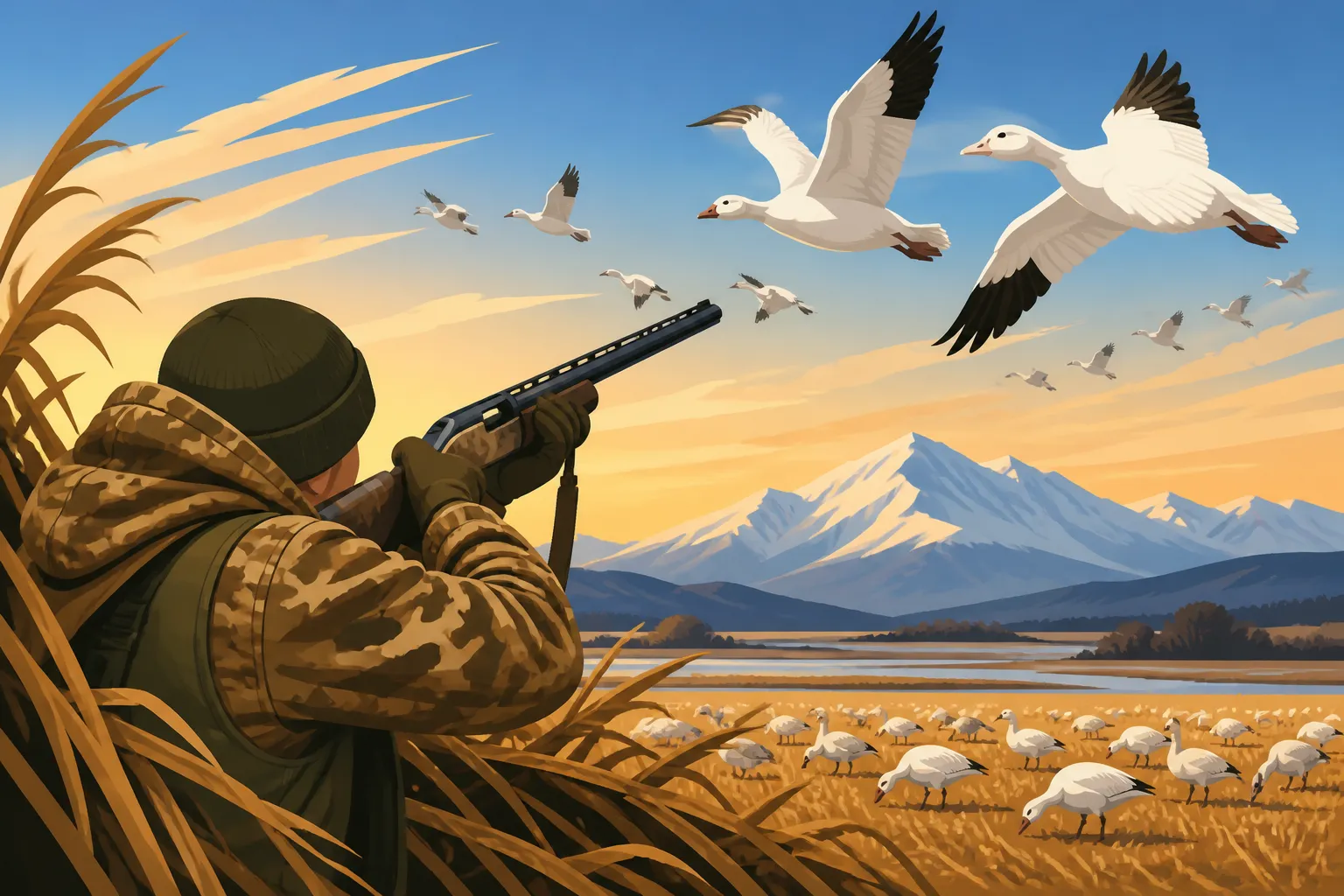
Hunting snow geese effectively in the open fields of the Fraser Delta demands specialized gear and a strategic setup. These birds have incredible eyesight and are notoriously wary, making camouflage and concealment absolutely critical. You can't just throw out a few duck decoys and expect them to commit. It requires a dedicated approach that mimics their preferred environment and offers hunters maximum invisibility.
Decoy Spreads and Types
When it comes to snow geese, quantity often trumps quality, but a blend of both is ideal. A large decoy spread is non-negotiable; you need to simulate a massive flock to convince wary geese that your field is safe and inviting. A minimum of 500-1000 decoys is often considered a starting point, with serious hunters deploying thousands. The types of decoys matter too:
- Full-bodied decoys: These are the most realistic and expensive, offering excellent visual appeal. They're great for the kill hole or directly in front of the blinds to add realism.
- Socks or Silhouettes: These are lightweight, affordable, and incredibly efficient for building large numbers quickly. White "tuff-sock" decoys that flutter in the wind are excellent for simulating movement. Brands like Sillosock and White Rock Decoys are popular among serious snow goose hunters.
- Motion decoys: Flags or "flappers" operated by hand can add crucial movement, especially on calm days. Rotational wing decoys, while more commonly associated with ducks, can also attract attention from a distance, though they're not as critical as sheer numbers and good flagging.
The spread itself should be designed to create a "landing zone" or "kill hole" where the geese feel comfortable descending. This usually means a wide, somewhat irregular "U" or "J" shape, with the open end facing the prevailing wind and the blinds concealed within or at the base of the spread. Consider the natural way a large flock feeds and moves across a field to make your spread look as authentic as possible.
Blinds and Concealment
Snow geese have extraordinary eyesight, often spotting hunters from hundreds of metres up. This means your concealment needs to be absolute. Layout blinds are the gold standard for field hunting snow geese.
- Layout blinds: These low-profile blinds allow hunters to lie flat on their backs, camouflaged to blend into the stubble or cover of the field. They are incredibly effective when properly brushed in with natural vegetation from the surrounding area. Brands like Avery Outdoors (now Banded) and Final Approach make excellent layout blinds that are designed for rugged use.
- Brushing in: Simply placing a layout blind in a field isn't enough. You must brush it in meticulously. Collect stubble, corn stalks, grass, or any other natural cover from the field you're hunting and weave it into the blind's stubble straps. The goal is for your blind to disappear entirely into the landscape. Pay attention to shadows and contours.
- Clothing: Your outer hunting clothing should also match the field environment, typically camouflage patterns designed for agricultural settings (e.g., corn, stubble, dry grass). Even the smallest patch of uncamouflaged clothing or exposed skin can spook incoming birds. Ensure your face and hands are covered, either with face paint, balaclavas, or gloves.
Remember, the success of your setup hinges on convincing these intelligent birds that your spread is just another safe feeding opportunity. Any unnatural glint, silhouette, or movement will send them flying in another direction.
Effective Strategies for a Successful Hunt
Field hunting snow geese in the Fraser Delta is as much an art as it is a science. It's about patience, observation, and adaptability. These birds are constantly changing their patterns, and what worked last week might not work tomorrow. To consistently put birds on the ground, you need to employ a multifaceted strategy that includes rigorous scouting, intelligent calling, and precise shooting.
Scouting for Active Fields
This is arguably the most critical component of a successful snow goose hunt. You can have the best gear and the most elaborate spread, but if you're not in the right field, you're just enjoying an expensive nap. Scouting needs to be an ongoing process, not just a one-off before the season.
- Glassing: Use good quality binoculars or a spotting scope to observe fields from a distance. Look for large concentrations of birds actively feeding. Pay attention to how they enter and exit the field, which sections they prefer, and if they're particularly wary.
- Timing: Scout both in the mornings and evenings. Geese will often fly to a feeding field in the morning, stay for a few hours, then might move to a different field or return to a roost. Observing these patterns helps predict their movements.
- Access: Once you identify an active field, the next challenge is gaining permission from the landowner. The Fraser Delta is primarily private agricultural land. Approach landowners respectfully, well in advance, and always be prepared to offer to help with any potential crop damage (though snow geese generally feed on waste grain, the perception of damage can be an issue). Platforms like GoHunt can sometimes offer insights into public land boundaries or help identify land ownership for asking permission, though direct door-knocking is often the most effective method in these areas. Always respect "no trespassing" signs.
- Pressure: Be mindful of other hunters. If a field has been heavily pressured, the geese will likely abandon it quickly. Look for untouched fields if possible. Fresh sign is key. You're looking for areas that have been recently used or are currently being used, not just fields that could hold geese.
Calling Techniques and Timing
Snow goose calling is a loud and chaotic affair, often reflecting the natural sounds of a massive flock. Unlike ducks or Canada geese, where subtle calls are often effective, snow geese respond well to a lot of noise.
- Mass calling: You'll want multiple callers, all making a cacophony of snow goose sounds. The goal is to replicate the sound of thousands of birds feeding and chattering. Don't be shy about volume.
- Types of calls: Most snow goose calls are "flute" style calls designed to mimic the high-pitched "kwo-kwo-kwo" sounds of snow geese. Some callers also use electronic calls (where legal, always check current BC regulations on electronic calls for waterfowl) to supplement their calling, especially in areas where large numbers are expected.
- Rhythm and intensity: Vary your calling. When birds are far out, call loudly and continuously to grab their attention. As they get closer, reduce the intensity slightly, but keep the chatter going. If they start to turn away, ramp up the volume and intensity again. The goal is to sound like an inviting, happy flock.
- Flags: Pair your calling with flagging. A white flag waved at distant birds can mimic a landing bird's wings or a bird stretching, acting as a visual beacon. As they approach, reduce flagging to subtle movements, only picking it up again if they start to flare.
Shot Selection and Bird Behavior
Snow geese are tough birds, and proper shot selection is vital for clean kills and minimizing cripples. Their large bodies and thick feathering can absorb a lot of lead.
- Non-toxic shot: In British Columbia, as with all waterfowl hunting in Canada, Non-Toxic Shot Rules in British Columbia are strictly enforced. Steel shot, bismuth, or tungsten alloys are mandatory. Ensure your ammunition matches your shotgun's choke and is appropriate for the range you expect to shoot.
- Shot size: Typically, BB or BBB steel shot is preferred for snow geese due to their size and durability. Larger shot delivers more energy.
- Choke: A modified or improved modified choke is a good all-around choice. Some hunters prefer a full choke for longer shots, but it requires more precise aiming.
- Targeting: Aim for the head and neck if possible, or the front half of the bird to hit vital organs. Avoid shooting at the tail or a bird flying directly away from you, as these shots are less likely to be lethal.
- Decoying birds: Wait until the birds commit to the spread and have their feet down or are gliding in. Resist the urge to shoot at the first bird you see overhead. The goal is to bring them into that 20-35 yard sweet spot for ethical, clean shots. Many hunters make the mistake of shooting too early, flaring the entire flock. Patience is a virtue in snow goose hunting.
Navigating Regulations and Conservation
Hunting snow geese in British Columbia, especially within the sensitive Fraser Delta, requires a thorough understanding of federal and provincial regulations. These rules are in place not only to manage wildlife populations but also to ensure ethical hunting practices and the safety of all participants. Ignorance of the law is never an excuse, and penalties for violations can be severe.
Federal and Provincial Regulations
Waterfowl hunting in Canada falls under both federal and provincial jurisdiction. The federal government, through Environment and Climate Change Canada, sets the overall framework for migratory bird hunting, including species, bag limits, and shooting hours. The province of British Columbia then further defines seasons, management unit boundaries, and specific methods.
- Federal Migratory Game Bird Hunting Permit: Before you even step foot in a field, you need a valid The Federal Migratory Game Bird Permit. This permit is mandatory for hunting all migratory game birds, including snow geese. You'll also need to purchase a Canadian Wildlife Habitat Conservation Stamp, which is affixed to your federal permit. These funds directly support wetland conservation efforts across the country.
- British Columbia Hunting Licence: In addition to the federal permit, you must possess a valid British Columbia hunting licence, specific to the current year. You don't typically need a specific "tag" for snow geese beyond the general hunting licence and federal permit, due to their abundant populations.
- Season Dates and Bag Limits: Always consult the current year's British Columbia Hunting and Trapping Synopsis. This document is your bible. It will detail the specific season dates for snow geese in the Fraser Delta (which usually falls within Region 2, Lower Mainland), daily bag limits, and possession limits. These can change year to year based on population assessments. You can find information on specific Goose Season Dates by Region within the synopsis.
- Shooting Hours: There are strict British Columbia Shooting Hours for migratory birds, typically from one half-hour before sunrise to one half-hour after sunset. These hours are designed to align with biological activity and ensure fair chase.
- Method of Hunting: Be aware of rules regarding electronic calls, baiting, and the use of motorized vehicles to pursue birds. Generally, baiting is illegal for migratory birds, and while electronic calls might be permitted in some snow goose hunts in the US, always verify the current regulations in BC.
Conservation and Ethical Considerations
Snow geese have rebounded dramatically from historical lows, leading to their classification in some areas as an overabundant species. However, this doesn't mean ethical considerations go out the window. Responsible hunting is paramount.
- Respect for the Land: The Fraser Delta is a working agricultural landscape. Always respect private property, landowner requests, and farm operations. Leave gates as you find them, avoid driving on wet fields, and pack out all your trash, including spent shell casings. Build a good relationship with landowners, and you might just secure future hunting opportunities.
- Meat Care: Snow geese provide excellent table fare. As with all game, proper meat care is crucial. Field dress birds promptly and keep them cool, especially during warmer early season hunts. Wasting edible game meat is not only unethical but illegal in British Columbia.
- Impact on Other Wildlife: Be mindful of other species that share the habitat. The Fraser Delta is also home to many non-game birds, including endangered species, and other waterfowl like wigeon, mallards, and various shorebirds. Ensure you can positively identify your target before shooting. Do not harass non-target species.
- Contributing to Data: Many jurisdictions, including potentially British Columbia through federal programs, encourage hunters to report their harvest data. This information is vital for wildlife managers to accurately assess populations and set future regulations. Participate if possible.
- The Future of Hunting: By adhering to regulations, practicing ethical hunting, and respecting the environment, you contribute to a positive image of hunting and help ensure these opportunities remain available for future generations. Remember, we are stewards of the land and its wildlife.
Field hunting snow geese in the Fraser Delta is an exhilarating experience, a true test of a waterfowler's skill and dedication. It demands meticulous preparation, tireless scouting, and a deep respect for the birds and their habitat. With the right approach, you can join the ranks of those who successfully navigate the challenge and come away with a freezer full of delicious wild game and memories that will last a lifetime.
Disclaimer
Hunting is an inherently risky activity. This guide provides general information and recommendations. All hunters are responsible for understanding and complying with all current federal, provincial, and local hunting regulations. Always prioritize safety, responsible firearm handling, and ethical hunting practices. Conditions in the field can change rapidly, and proper preparation, including emergency planning, is crucial for your safety and success.