Judging a Boar From a Sow With Cubs
It's an age-old challenge for bear hunters in British Columbia: being out in the field, spotting a beautiful black bear, and then facing the agonizing question – is it a boar or a sow with cubs hidden nearby? This uncertainty can be incredibly frustrating and even dangerous, not to mention the legal and ethical implications of mistakenly harvesting a sow with dependent young. This guide aims to clear up that confusion by providing a comprehensive look at how to confidently distinguish a boar from a sow, ensuring you make the right call every time.
Why Accurate Identification Matters Immensely
Let's be honest, few things are more disheartening than making a mistake in the field, especially when it comes to wildlife. The distinction between a boar and a sow, particularly one with cubs, isn't just a fine point of wildlife biology; it's a critical aspect of responsible hunting that impacts safety, ethics, and the sustainability of British Columbia's black bear population.
The Ethical and Legal Imperative
Hunting sows with cubs is strictly prohibited in British Columbia, and for very good reason. These cubs are entirely dependent on their mother for survival for at least their first year, often longer. Removing the sow means an almost certain death sentence for her offspring. As ethical hunters, our commitment to conservation extends beyond just following the letter of the law; it's about upholding the spirit of sustainable wildlife management. The regulations are in place to protect these vulnerable family units, ensuring future generations of bears and hunting opportunities. Getting it wrong can lead to severe fines, licence suspension, and a tarnished reputation for all hunters. This is why understanding British Columbia Bear Bag Limits is so crucial, as they often include prohibitions against harvesting sows with cubs.
Safety First: Understanding Bear Behavior
Beyond the legal and ethical considerations, bear identification is a matter of personal safety. A sow with cubs is, by nature, a highly protective animal. While most black bears are shy and will avoid human confrontation, a sow perceiving a threat to her cubs can become aggressive very quickly. You might not even see the cubs initially, but an agitated sow is a clear indicator they're nearby. Knowing how to read their behaviour and confidently identify a sow allows you to give these family units a wide berth, preventing potentially dangerous encounters. Always remember, when you're hunting black bears, you're entering their home, and respecting their space, especially when cubs are present, is paramount for Bear Safety While Hunting in British Columbia.
The Frustration of Ambiguity in the Field
I've been there, staring through binoculars, trying to pick out subtle differences, second-guessing every angle. It's incredibly frustrating when that big, dark blob on a distant hillside could be a trophy boar, or it could be a protective mother. The light might be flat, the bear might be partially obscured, or it might not present a clear profile. This ambiguity often leads to passing on shots, which is the right thing to do if you're not 100% certain, but it doesn't make it any less irritating when you've put in the effort. Hunters who diligently prepare by scouting and understanding bear habits increase their chances of a clear shot and positive identification, whether they are Glassing Logging Roads for Spring Bears or checking berry patches in the fall.
Key Physical Indicators for Boars vs. Sows
When you're trying to differentiate between a boar and a sow, you need to become a detective, looking for a combination of clues rather than relying on just one. Bears are individuals, and there's always overlap, but these physical traits are your best bets.
Size and Build: The "Truck-Like" Boar
One of the most reliable indicators, especially with mature bears, is overall size and body shape. Boars tend to be significantly larger and more robust than sows. Think of a boar as a "truck" and a sow as a "car."
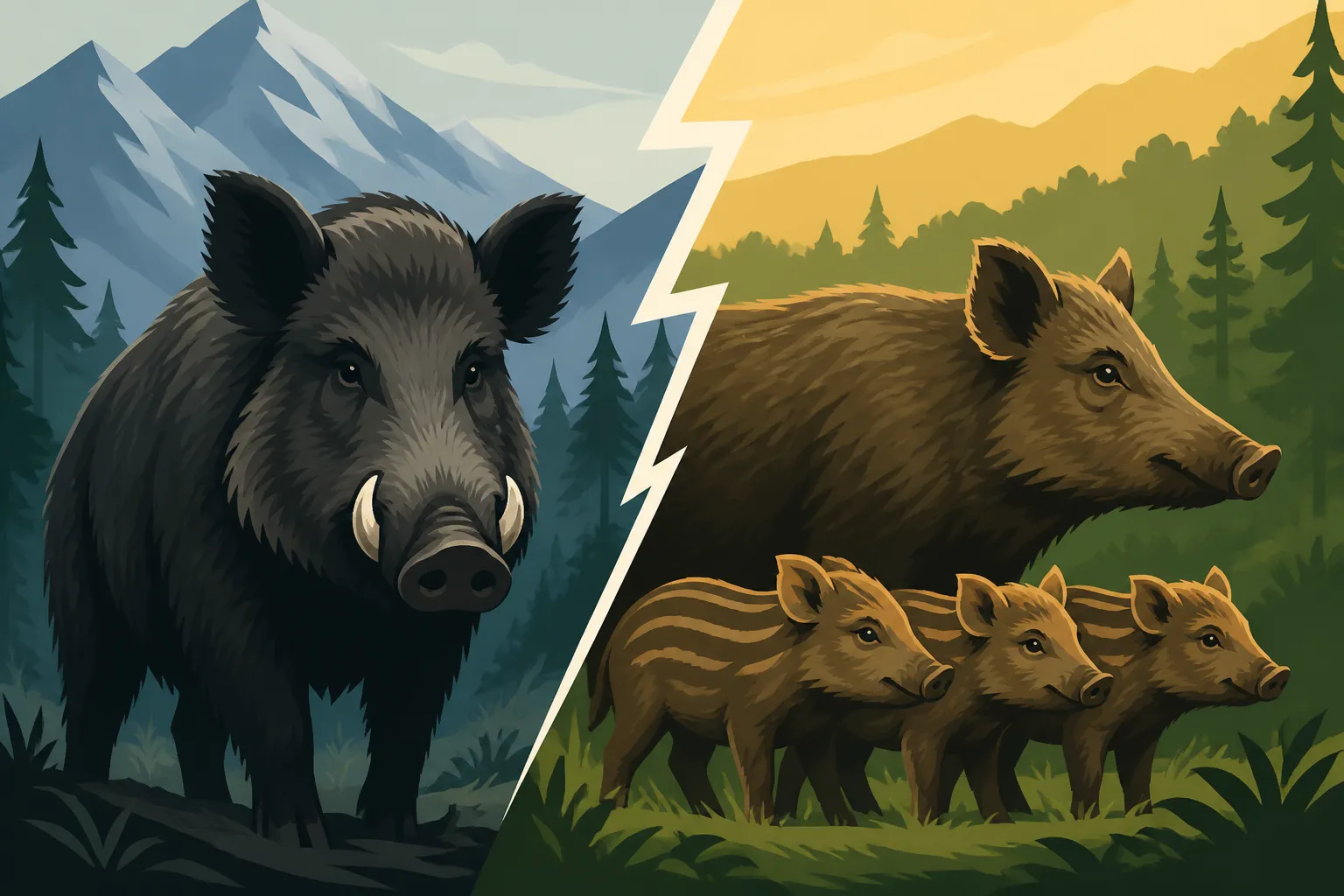
- Boars: Picture a blocky, muscular animal. They often have a noticeably wider, thicker neck that blends seamlessly into their shoulders, giving them a "no-neck" appearance. Their shoulders are usually broader, often appearing higher than their rump, especially when they're feeding with their head down. When standing, a mature boar will look heavy-bodied, with a noticeable sag in their belly even when not particularly fat. Their gait is often slower, more deliberate, and powerful. A mature boar in British Columbia, especially those on the coast, can be quite massive. To put it in perspective, What a Coastal Black Bear Weighs can often exceed 300 pounds for a large boar, with some giants pushing 500 or more!
- Sows: Sows are generally smaller and more slender in comparison. They often have a more defined neck, which can appear longer and thinner than a boar's. Their body profile might be more balanced or even slightly higher in the rump than the shoulders. While a sow can be big, she rarely has the sheer bulk and muscularity of a mature boar. Their movements tend to be quicker and more agile. When they’re in good condition, they might appear sleek, but rarely possess the ‘powerhouse’ look of a large boar.
Here's a quick comparison table:
| Characteristic | Boar (Male) | Sow (Female) |
|---|---|---|
| Size | Generally larger, heavier, and more robust | Generally smaller, more slender |
| Neck | Thicker, wider, often blends into shoulders ("no-neck" look) | More defined, often appears longer and thinner |
| Shoulders | Broader, often appears higher than rump | More balanced, sometimes slightly lower than rump |
| Head Shape | Wider, blockier, heavier jawline, smaller ears relative to head | Narrower, more triangular, larger ears relative to head |
| Forehead | Flat profile from nose to ears | More pronounced forehead hump |
| Legs | Appear stockier, thicker in proportion to body | Appear longer, more proportionate to body |
| Gait | Slower, deliberate, powerful | Quicker, more agile |
Head and Neck: Jawline, Ears, and Forehead
The head and neck can offer some surprisingly consistent clues, especially when viewed through quality optics like those you might scout with from GoHunt.
- Boars: Look for a wider, blockier head with a heavy jawline. Their muzzle tends to be thicker and more blunt. The ears on a mature boar will often appear relatively small in proportion to their massive head. Imagine a flat profile from the bridge of their nose straight back to the ears. This flat forehead is a key characteristic.
- Sows: Sows typically have a narrower, more triangular head. Their muzzle might be a bit more pointed. Their ears tend to appear larger relative to their head size. Crucially, many sows will have a more pronounced forehead hump, creating a noticeable curve or "dish" in their profile from the nose up to the ears. This difference can be subtle but is very helpful once you train your eye.
It's about the overall impression. Does the head look like it belongs on a massive body, or does it seem a bit more refined? These are the details you're trying to pick out.
The Role of Scars and Wear Marks
Experienced, dominant boars often carry the battle scars of their lives. These can be valuable indicators, though not foolproof.
- Boars: Look for torn ears, nicks, scars on their face, neck, or shoulders. These are often the result of territorial fights with other boars, especially during the rut. A mature boar has been through a few scraps. Patches of missing hair or rougher fur could also be signs of these encounters.
- Sows: While sows can also get scars, they're generally less common or less severe than those seen on dominant boars. If you see a bear with a remarkably clean, unblemished face and ears, it might lean towards being a sow, though this is a less definitive sign than the presence of battle scars on a large, blocky bear.
Remember, Colour Phases in British Columbia Black Bears can vary wildly, from jet black to cinnamon or even blonde, and this colouration has no bearing on sex. So focus on the physical structure and scars, not just the fur colour.
Behavioral Cues to Watch For
Sometimes, physical characteristics aren't enough, or the bear isn't cooperating by standing still in good light. That's when you turn to behavior. These cues can often provide the most definitive answers.
Presence of Cubs: The Definitive Indicator
This is, without a doubt, the most critical and unambiguous sign. If you see cubs, no matter how small or how brief the glimpse, that bear is a sow, and she is off-limits.
- Observing Cubs: Cubs are usually born in the den in late winter and will emerge with their mother in the spring. In British Columbia, this often happens sometime after When British Columbia Bears Leave the Den, typically in late April or May. They can be incredibly small and shy at first, often staying very close to the sow. Sometimes, only a tiny head or a quick flash of movement will give them away. They might be trailing behind her, playing nearby, or even climbing a tree if she's feeding on the ground.
- Sow Behavior with Cubs: A sow with cubs will almost always be more vigilant, frequently looking around, standing on her hind legs to get a better view, or moving towards cover if she senses your presence. If you observe a bear exhibiting overly cautious or protective behavior, constantly glancing behind itself or at a specific area, there’s a high probability cubs are nearby, even if you can’t see them yet. Her movements will revolve around the cubs' safety and feeding. Pay close attention if you’re Hunting British Columbia's Logging Road Network where bears often forage, as sows will quickly usher their cubs into thick cover.
Always err on the side of caution. If there's any doubt, and the bear appears to be acting defensively or constantly checking its surroundings, assume there are cubs present and let it walk.
Body Language and Demeanor
The way a bear carries itself and interacts with its environment can also provide clues.
- Boars: A mature boar often displays a more confident, almost swaggering demeanor. They tend to move with purpose, spending more time focused on feeding, scent-marking, or searching for sows during the breeding season. They might be less jumpy or skittish than a sow with cubs, often more concerned with other large bears or their food source. During the spring, boars are often focused on finding food after denning and asserting dominance.
- Sows: Sows, especially those without cubs, might be a bit more wary, but a sow with cubs will show heightened alert behavior. She'll be less focused on just feeding and more on her surroundings. If a bear seems unusually agitated, frequently stops to sniff the air, or looks back over its shoulder repeatedly without any obvious external threat, these could be subtle hints that cubs are nearby. Think about how a protective mother would act, constantly assessing threats.
Denning Habits and Seasonal Movements
Understanding the bear's annual cycle can give you an edge in identification, particularly for Spring Bear Hunting British Columbia's Logging Roads or Hunting Fall Bears on British Columbia Berry Slopes.
- Spring: When bears emerge from dens in the spring, sows with cubs will often be among the last to appear. They might also stick to more secluded, dense cover initially before venturing out more openly. Boars, on the other hand, are often out earlier, focused on replenishing lost weight and, as the season progresses, seeking out sows. Areas like coastal estuaries, where bears feed on nutrient-rich grasses, can hold both boars and sows, so vigilance is key when you're Hunting Bears on a Coastal Estuary in May.
- Summer/Fall: As the summer progresses into fall, cubs grow, but they are still easily distinguishable from yearlings and will remain with their mother. Bear activity on berry slopes can be intense, and it's common to see multiple bears. Observing interaction patterns can be helpful. A solitary bear of significant size in a prime feeding area is more likely to be a boar, whereas a bear constantly shadowed by smaller individuals is clearly a sow.
Knowing these broader patterns, often gleaned through preseason scouting or using mapping tools like GoHunt to analyze historical game data, can help you form a better mental picture of what to expect in a given area.
Tools and Techniques for Better Observation
Proper identification isn't just about knowing what to look for; it's about being able to see it clearly and give yourself the best chance to observe.
Using Optics Effectively
Your binoculars and spotting scope are your most important tools for identification. Skimping on optics is like trying to read a blurry map in the dark; it simply won't work.
- Quality Matters: Invest in the best binoculars you can afford (10×42 or 10×50 are generally excellent all-around choices) and a powerful spotting scope (20-60x or 25-75x with a 60-85mm objective lens) if you're hunting open country. Quality glass allows you to pick out subtle details at long distances, especially in challenging light conditions.
- Stable Platform: Use a tripod for your spotting scope and, ideally, your binoculars too. Even slight hand shake can make it impossible to resolve fine details like ear size relative to head, or the subtle curve of a forehead. A stable image is crucial for prolonged observation.
- Patience and Magnification: Don't just glance and make a quick judgment. Set up, get comfortable, and really study the bear. Zoom in and out, look for those physical cues, and most importantly, watch its behavior for an extended period. Look for the presence of cubs, even if they're small and hiding. They often reveal themselves over time. This patient glassing is essential whether you're searching for black bears or doing some serious Glassing an Interior Hillside for Mule Deer.
Scouting and Trail Camera Intelligence
Pre-season scouting and the strategic use of trail cameras can provide invaluable intelligence that aids in sex identification long before you ever carry a rifle or bow into the woods.
- Pre-Season Reconnaissance: Spend time in your chosen Management Unit before the season opens. Identify prime bear feeding areas, natural travel corridors, and denning potential. Use a resource like GoHunt to understand the terrain and historical animal movements in specific areas, which can give you a heads-up on bear activity. The more time you spend in the field, the more familiar you become with the resident bears and their patterns.
- Trail Cameras: Deploy trail cameras in areas with high bear sign, especially near food sources like berry patches or along game trails. Reviewing camera footage can allow you to identify specific bears, determine their sex, and observe if they have cubs. A sow might visit a camera location regularly with her young, while a large boar might be a more solitary visitor. This advance intel is a game-changer and can save you from making a hasty decision in the heat of the moment. It also allows you to pattern specific animals, a tactic that applies equally well if you're Scouting a British Columbia Management Unit.
Patience and Position
Finally, the most powerful tools in your arsenal are patience and your ability to position yourself for optimal observation.
- Wait and Watch: Never rush a shot if you're unsure. Set up, stay concealed, and wait for the bear to give you more clues. It might turn, stand up, move into better light, or reveal cubs. Sometimes, the best shot is the one you don't take.
- Angle and Light: Try to observe the bear from different angles if possible. A bear might look one way from the front and entirely different from the side. Early morning or late evening light can make identification difficult due to shadows and low contrast, so be extra cautious during these times. Moving to improve your observation angle can make all the difference, but always do so carefully, minding the wind and potential for detection.
By combining detailed physical observation with behavioral analysis and leveraging your optics and scouting efforts, you'll dramatically increase your confidence in judging a boar from a sow with cubs, ensuring an ethical and responsible hunt in British Columbia's incredible wild spaces.
Disclaimer
The information provided in this guide is for general educational purposes only and is not a substitute for reviewing the current British Columbia Hunting and Trapping Regulations Synopsis. Hunters are responsible for understanding and adhering to all provincial hunting laws and regulations. Wildlife behavior can be unpredictable, and caution should always be exercised in the field.