Boat-Based Coastal Hunts in British Columbia
British Columbia's coastline is a maze of islands, fjords, and rugged wilderness, offering some of the most spectacular, yet challenging, hunting opportunities on the planet. For many hunters, getting to these remote, game-rich areas feels like an impossible feat, especially when considering the sheer volume of gear required and the formidable terrain. This guide is dedicated to demystifying boat-based coastal hunts, providing a comprehensive look at how they unlock unparalleled access and what you need to know to make your maritime hunting adventure a success.
Why Choose a Boat-Based Hunt for British Columbia's Coast?
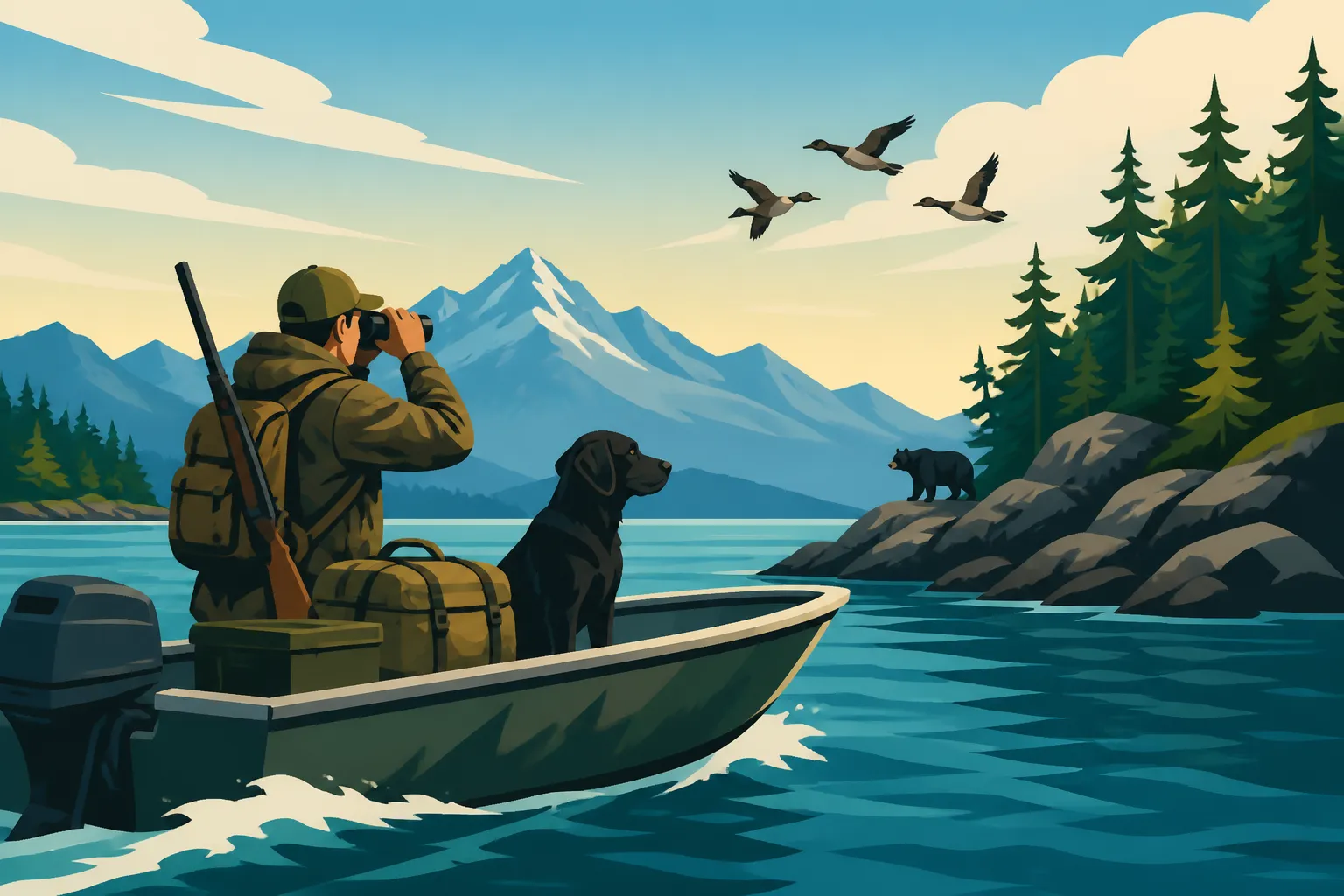
The allure of British Columbia's vast coastline isn't just its breathtaking beauty; it's the promise of truly wild hunting experiences in places rarely touched by conventional vehicle access. A boat isn't just transportation here; it's often the key to unlocking these pristine areas, acting as your base camp, your gear hauler, and your pathfinder through the intricate network of inlets and islands.
Unlocking Remote Access and Untouched Areas
Imagine looking at a map of British Columbia's coast, seeing all those intricate shorelines, deep inlets, and countless islands. So many of these places simply don't have roads. Traditional truck-and-quad hunting methods fall short here, leaving vast tracts of prime habitat virtually untouched by human pressure. This is where a boat truly shines. It transforms impossible terrain into accessible hunting grounds, allowing you to bypass dense forests, steep logging roads, and even deactivated routes that might otherwise block your way.
With a boat, you can navigate deep into fjords that cut miles inland, reaching the mouths of salmon-bearing rivers or secluded bays. You can island-hop, exploring diverse ecosystems for blacktail deer that have never seen a human hunter. The ability to launch from one location and travel dozens, even hundreds, of nautical miles to a truly isolated spot means you're hunting animals that are less pressured and often exhibit more natural behaviours. Whether it's a hidden estuary brimming with spring bears or a remote island where blacktail flourish, the boat gets you there.
The Comfort and Logistics Advantage of a Floating Camp
Anyone who has spent a week spike camping in British Columbia's coastal rain knows the challenges. Everything gets wet, drying gear is a constant battle, and the relentless damp can grind down even the most hardened hunter. A boat-based hunt offers a game-changing alternative: a floating camp. Your vessel becomes your dry, warm sanctuary, providing comfortable bunks, cooking facilities, and a secure place to store and dry gear.
Think about it: after a long day of Hunting in British Columbia's Coastal Rain, you can step aboard your boat, shed your wet layers, and warm up with a hot meal. There's no tent to pitch or break down daily, no need to pack heavy camp supplies into a backpack for every move. All your provisions, extra clothing, and hunting equipment are stowed securely, readily available. This logistical ease means more energy for hunting and a much more enjoyable experience, especially during extended trips. From a robust cabin cruiser to a spacious zodiac with a small cabin, having a stable, weather-protected base makes all the difference in a climate known for its moisture.
Targeting Specific Coastal Species and Habitats
Certain game species thrive in British Columbia's unique coastal environment, and many of their prime habitats are intrinsically linked to the water's edge. Trying to reach these spots by foot from a distant road can be inefficient, if not impossible. A boat, however, allows for precise targeting of these specific locations and species.
For instance, black bears are famously drawn to coastal estuaries in spring to feed on early sedges and grasses after denning. Later in the fall, they often patrol shorelines, feasting on salmon in rivers or gorging on berries on accessible slopes. A boat lets you glass these crucial areas with stealth, moving quietly along the shorelines at first light or last light. Black-tailed deer, too, frequent beaches and lower slopes, especially during periods of heavy snow in higher elevations. By cruising shorelines and dropping into remote bays, you can systematically cover vast areas of potential deer habitat. Whether you're interested in What Bears Eat on a Coastal Estuary or finding a secluded cove for blacktail, the boat offers unparalleled access to these specific, productive ecosystems.
Types of Boat-Based Hunts and Vessels
Boat-based hunting isn't a one-size-fits-all endeavour. Depending on your experience, budget, and residency status, there are several distinct approaches you can take, each with its own requirements and advantages. Understanding these options is crucial for planning a successful trip.
Do-It-Yourself (DIY) Boat Hunts
For experienced resident hunters with marine knowledge and a suitable vessel, a DIY boat hunt can be an incredibly rewarding and cost-effective way to access British Columbia's coast. This approach offers maximum flexibility and the ultimate sense of self-reliance. However, it demands a significant skillset beyond just hunting. You're not just a hunter; you're also the captain, navigator, mechanic, and chief safety officer.
You'll need a reliable boat, capable of handling coastal conditions – think sturdy aluminum vessels, robust zodiacs, or even smaller cabin cruisers. Equipping it with essential marine electronics like GPS, a depth sounder, and a reliable VHF radio is non-negotiable. Furthermore, you must have a deep understanding of coastal navigation, tidal patterns, weather forecasting, and emergency procedures. British Columbia's coast is beautiful but unforgiving, and help can be hours or even days away. Planning fuel consumption, food storage, water supply, and contingency plans for mechanical failures or unexpected weather is paramount. This option is for those who truly embrace the challenge and freedom of being completely self-sufficient in the wilderness.
Guided Boat Hunts with an Outfitter
For many, especially non-resident hunters who are legally required to hunt with a licensed guide or under a The Permit to Accompany Explained arrangement, a guided boat hunt is the most practical and safest option. Even residents often opt for a guided experience for the peace of mind, expertise, and access to an outfitter's specialized equipment. Outfitters operating on the coast have dedicated vessels, often ranging from comfortable live-aboard yachts to purpose-built hunting boats designed for navigating shallow waters and deploying hunters ashore.
When you book a guided boat hunt, you're not just paying for a guide; you're investing in their intimate knowledge of specific hunting areas, local game movements, tidal fluctuations, and marine conditions. They provide all the necessary safety equipment, ensure navigation is handled, and cook your meals. This allows you to focus solely on the hunt. Many British Columbia Outfitters on the Coast specialize in these types of trips, offering packages for black bears, black-tailed deer, and even waterfowl, all accessed by boat. They know the best anchorages, the most productive estuaries, and the safest routes through challenging waters. It's a premium experience designed to maximize your chances of success and minimize the logistical headaches.
Drop-Off or Water Taxi Services
Sometimes, you want the independence of a DIY hunt once you're on shore, but lack the boat or marine expertise to get there yourself. This is where a drop-off or water taxi service can be an excellent middle-ground. These services involve hiring a vessel to transport you, your gear, and your hunting partners to a pre-determined remote coastal location, dropping you off, and then returning to pick you up at an agreed-upon date and time.
This option is ideal for those who are prepared to establish their own spike camp on shore, bring all their own provisions, and handle all hunting activities independently. It eliminates the need for you to own or operate a boat for the duration of the trip. However, it requires meticulous planning. You must be completely self-sufficient for the entire duration of your stay, accounting for food, water, shelter, emergency communication, and bear safety. Missing your pick-up date or location due to unforeseen circumstances can be a serious issue, so clear communication with your water taxi operator is vital. Ensure you understand their protocols for delays or emergencies. While not permitted everywhere, drop-off services can be a fantastic way for resident hunters to access truly remote areas for focused hunts.
Key Considerations for Coastal Hunting Success
Hunting British Columbia's coast by boat is an experience unlike any other, but it comes with its own unique set of challenges that can make or break a trip. Understanding and preparing for these elements is absolutely crucial for success and safety.
Understanding Tides and Weather Patterns
The rhythm of the ocean profoundly influences coastal hunting. Tides dictate access to many areas, especially estuaries and shallow bays where game might feed. Hunting an estuary for bears, for example, often means timing your approach with a falling or low tide, allowing you to walk the exposed flats where bears browse on nutrient-rich sedges. Conversely, a high tide might cover these feeding areas, or make it impossible to land your boat in a shallow creek mouth. You need to be intimately familiar with local tidal charts and understand how they interact with the specific terrain you plan to hunt.
Beyond tides, British Columbia's coastal weather is legendary for its unpredictability. Sunny mornings can quickly give way to gale-force winds and torrential rain, sometimes within minutes. Navigating Fog on a British Columbia Coast Hunt can be disorienting and dangerous. A deep understanding of marine forecasts, knowing how to interpret them, and having the flexibility to adapt your plans are non-negotiable. Always pack for the worst-case scenario – robust rain gear, warm layers, and emergency shelters are your best friends. High winds can make travel impossible and even dangerous, so a safe anchorage and a solid backup plan are essential.
Navigation and Safety on British Columbia's Coast
The intricate network of islands, channels, and inlets on British Columbia's coast is stunning, but it can also be incredibly challenging to navigate, even for experienced mariners. Accurate charts (both paper and electronic), a reliable GPS, and a good compass are absolute must-haves. Understanding currents, shoals, and hazards is vital. Getting caught out in rough seas, or running aground in a remote area, can quickly turn a dream hunt into a nightmare.
Safety extends beyond just navigation. A VHF marine radio is critical for communication with other vessels and emergency services in areas with cell service gaps. However, many remote hunting grounds lack cellular coverage entirely. This makes a satellite communication device, like an inReach or satellite phone, a crucial piece of safety gear for Satellite Communication on a Remote Hunt. Moreover, bear safety is paramount. You're entering prime grizzly and black bear country. Carrying bear spray, knowing how to use it, and understanding how to react to encounters is essential, even when operating from a boat. Bear Safety While Hunting in British Columbia should be at the forefront of every hunter's mind. Always leave a detailed float plan with someone reliable on shore.
Logistics of Meat Care and Trophy Handling
Once you've successfully harvested an animal, the real work begins, and on a boat-based coastal hunt, this comes with its own set of logistical challenges. Getting a heavy animal from a remote shoreline, up a bank, and onto your vessel requires careful planning and often significant physical effort. Field dressing efficiency is key, not only for cooling the meat but also for reducing weight and making transport easier.
You'll need sturdy game bags to protect the meat from flies and debris. On the boat, proper cooling is critical, especially in early season hunts where temperatures can still be mild. Large coolers packed with ice are essential for preserving meat until you can get it to a processor. For trophies, like bear hides or deer antlers, protecting them from the elements and ensuring they are properly cared for is equally important. Hides need to be cooled quickly, fleshed, and salted if you're going to be out for an extended period, or at least kept cool until you can get to a freezer. Field Dressing in British Columbia's Wet Weather and Meat Care in British Columbia's Warm Early Seasons require specific strategies to prevent spoilage in a damp environment.
Species to Target on a Coastal Boat Hunt
British Columbia's coast is a biological hotspot, offering unique opportunities to pursue several game species. A boat provides distinct advantages for targeting these animals in their preferred coastal habitats.
Black Bears
The British Columbia coast is renowned for its healthy black bear populations, and boat-based hunting is one of the most effective ways to pursue them. These bears are drawn to the rich food sources found along the ocean's edge and in adjacent river systems. In spring, they emerge from hibernation, seeking out nutrient-rich green-up on estuaries and shoreline meadows. Later in the fall, they congregate along salmon-spawning rivers and feed heavily on berry-laden slopes.
A boat allows you to quietly cruise shorelines, glassing prime areas like estuaries, clear-cuts that run down to the water, and avalanche chutes visible from the boat. You can spot a bear from a distance, then execute a quiet beach landing for a spot-and-stalk approach. The ability to cover vast stretches of coastline means you can search for fresh sign, track active feeding patterns, and maximize your chances of encountering a mature bear. Hunters often target specific inlets or river mouths known for good bear activity. Hunting Fall Bears on British Columbia Berry Slopes can be particularly productive with boat access.
Black-Tailed Deer
The coastal black-tailed deer is a truly iconic species of British Columbia's rainforests. While notoriously elusive in the dense timber, boat access can significantly improve your chances of success. These deer inhabit the islands and mainland coastal areas, often frequenting beach fringes, second-growth timber, and areas where logging has created new browse.
With a boat, you can explore numerous islands and remote peninsulas, looking for concentrations of deer. Cruising quietly along the shorelines at dawn and dusk, you might spot deer feeding on beach grass or crossing open areas near the water. The boat allows you to access remote bays where you can make a quiet landing and then still-hunt or track through the coastal forest. Access to various micro-habitats that might be otherwise inaccessible is key. This approach is especially effective on places like Vancouver Island, which has a strong Blacktail Numbers on Vancouver Island population, or the many smaller islands where deer populations can be robust due to fewer predators or less human pressure. Focusing on areas with a mix of old growth and newer clear-cuts, which can be easily accessed from the water, can prove very productive for Hunting British Columbia's Coastal Blacktail.
Mountain Goat (Limited Access)
While not a typical "boat hunt" in the same way as bears or deer, a boat is often the only way to access the base of the incredibly rugged coastal mountains where mountain goats reside. These magnificent animals live at high elevations, far above timberline, in steep, broken rock and alpine meadows. Getting to their domain requires a significant uphill climb.
A boat can drop you off at the very head of a fjord or a remote bay, providing the crucial starting point for your arduous ascent. Without the boat, many of these formidable peaks would be completely out of reach. From your boat, you'd glass the upper reaches of the mountains, scouting for goat activity before committing to the climb. This type of hunt is not for the faint of heart and demands extreme physical fitness, mountaineering skills, and a deep understanding of alpine safety. The boat is an essential logistical tool, not the primary hunting platform. Hunting Mountain Goat on British Columbia Rock is a true wilderness experience, starting from sea level and climbing thousands of feet vertically.
Planning Your Boat-Based Hunt
A successful boat-based hunt on British Columbia's coast requires meticulous planning. From selecting your hunting grounds to packing the right gear and understanding the legal landscape, every detail matters.
Choosing a Region and Management Unit
British Columbia's coast is immense, stretching from the Lower Mainland up past Haida Gwaii and into the Alaskan Panhandle. Each segment offers different terrain, weather patterns, and game concentrations. Therefore, narrowing down your options to a specific region and management unit (MU) is crucial. Researching past success rates, general game populations, and access points for your target species within different MUs will save you a lot of time and effort.
For blacktail, areas around Hunting British Columbia's Vancouver Island or the smaller islands of the Georgia Strait can be excellent. For spring bear, many of the remote inlets along the central coast in regions like the Great Bear Rainforest offer fantastic opportunities, where you might also find Hunting British Columbia's Great Bear Rainforest a helpful read. Consider how remote you want to be, the length of your trip, and the size of the area you want to cover. Online mapping tools and the British Columbia Hunting and Trapping Synopsis are invaluable resources for understanding MU boundaries and specific regulations.
Essential Gear for Coastal Conditions
The old adage "there's no bad weather, only bad gear" rings especially true on the British Columbia coast. Dampness and rain are constant companions, so your gear choices are paramount for comfort and safety. Layering is key, with a focus on quick-drying synthetics and wool.
Your top priority should be high-quality, absolutely waterproof outer layers – a robust rain jacket and pants that can withstand prolonged downpours. Good rubber boots are almost mandatory for beach landings and traversing wet ground. Beyond clothing, reliable optics are essential for glassing vast shorelines and mountainsides; a good pair of binoculars and a spotting scope will be your best friends. Ensure all critical items are stored in dry bags. For navigation, always have redundant systems: a reliable marine GPS, detailed paper charts, and a compass. Don't forget a well-stocked first-aid kit, emergency fire starters, and enough non-perishable food to last longer than your planned trip, just in case weather delays your return.
Here's a quick comparison of key aspects between DIY and Guided Boat Hunts:
| Feature | DIY Boat Hunt (Resident) | Guided Boat Hunt (Non-Resident/Resident) |
|---|---|---|
| Vessel & Operation | Hunter owns/rents boat, operates, navigates. | Outfitter provides vessel, crew, and navigation. |
| Marine Experience | Required: Strong navigation, safety, boat handling skills. | Not required, handled by experienced crew. |
| Cost | Lower initial trip cost, but high equipment investment. | Higher package cost, covers all logistics. |
| Knowledge & Expertise | Relies on hunter's research and personal experience. | Benefits from outfitter's deep local knowledge of area and game. |
| Safety & Logistics | Hunter responsible for all aspects: emergency, provisions, etc. | Outfitter handles emergency protocols, camp, food, and gear drying. |
| Species Targeted | Hunter's choice, based on regulations and access. | Tailored by outfitter to specific game/seasons. |
| Flexibility | High: complete control over itinerary and hunting style. | Moderate: structured around outfitter's schedule and package. |
Legalities, Licenses, and Permits
Before you even dream of setting foot on a boat for a hunt, you must ensure all your legal ducks are in a row. British Columbia has specific regulations for hunting, and marine environments can sometimes introduce additional rules. First and foremost, you need a valid British Columbia hunting licence and the appropriate species tags for the animals you intend to hunt. British Columbia Hunting Licences and Fees vary, and non-residents face different requirements than residents.
Review the current British Columbia Hunting and Trapping Regulations Synopsis thoroughly. Pay close attention to season dates, bag limits, and specific regulations for the management unit you plan to visit. Are there any restricted areas? Are you in a General Open Season or a Limited Entry Hunting (LEH) zone? If you're a non-resident, remember the requirement to either hunt with a licensed guide or possess a Permit to Accompany from a qualified resident. Beyond hunting regulations, ensure your boat itself meets all federal marine safety requirements, including proper lighting, life jackets, flares, and fire extinguishers. Familiarize yourself with non-toxic shot rules if you'll be hunting waterfowl in coastal estuaries. Resources like GoHunt and BookYourHunt can be great starting points for identifying outfitters who operate within these regulations and offer the specific type of boat-based hunt you're looking for. Always check with the relevant authorities for any specific marine park or ecological reserve rules that might impact your hunting plans.
Disclaimer
This article is for general informational purposes only and does not constitute professional advice. Laws, prices and regulations vary by location and change over time. Consult a qualified professional for guidance on your specific situation.