Hunting the Kettle River Country
The Kettle River Country, stretching across the southern Interior of British Columbia, holds a unique allure for hunters, but it often frustrates those unfamiliar with its blend of open grasslands, timbered hillsides, and patchy private land. Many hunters struggle to pinpoint exactly where to find public access and how to effectively pursue game in this mosaic landscape. This guide will walk you through the nuances of hunting the Kettle River region, helping you unlock its potential and navigate its challenges.
Understanding the Kettle River Country's Hunting Landscape
The Kettle River region, part of the Boundary Country and falling mostly within Region 8 (Okanagan), is a diverse environment that truly tests a hunter's adaptability. It's not the vast, uninterrupted wilderness of the north, nor is it the dense coastal rainforest. Instead, it's a fascinating blend of ecological zones, often changing dramatically within a few kilometres. This mix is what makes it both rewarding and incredibly challenging to hunt.
The Mosaic of Terrain and Vegetation
Imagine rolling hills covered in ponderosa pine and Douglas fir, interspersed with expansive grasslands and sagebrush flats. Then picture deep, timbered draws, pockets of trembling aspen, and riparian zones lining the Kettle River itself and its tributaries. This varied topography means game animals often utilize different habitats depending on the season, weather, and pressure. Mule deer, for instance, might be found browsing in the open sagebrush at dawn, then bedding down in a thick timber patch on a north-facing slope during the heat of the day. Elk might stick to denser timber on higher elevations, while black bears forage in berry patches along creek bottoms in the fall. The key here is understanding that no single habitat type dominates, and animals move between them constantly. This requires a hunter to be versatile in their approach, ready to glass open areas, still-hunt timber, and check brushy draws.
Navigating Public and Private Land Intersections
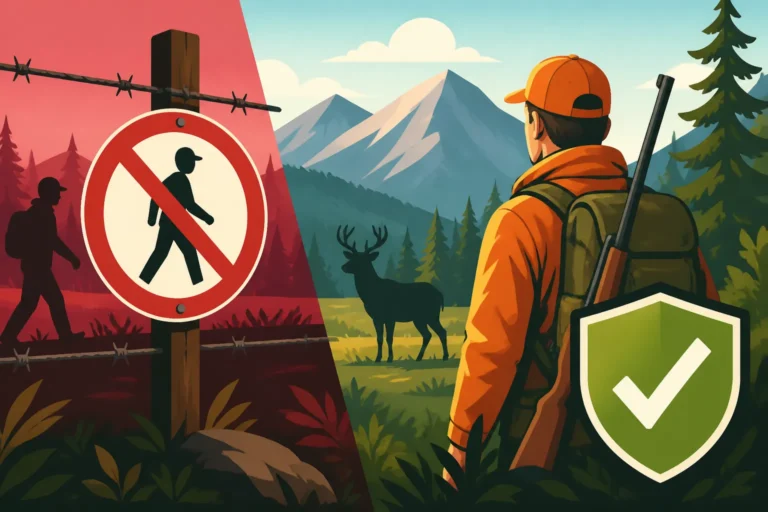
One of the biggest hurdles for hunters in the Kettle River Country, and indeed much of the southern Interior, is the complex patchwork of public Crown land and privately owned parcels. You'll often find excellent hunting habitat bisected by private ranchlands, logging company holdings, or small rural properties. This isn't just an inconvenience; it can be a genuine barrier if you don't do your homework. Many hunters become disheartened after scouting what looks like promising ground, only to find "No Trespassing" signs blocking their way. This is where tools like onX Hunt become invaluable, allowing you to clearly see property boundaries and identify legal access points. Ignoring these boundaries, even unintentionally, can lead to serious legal trouble and give all hunters a bad name. Always confirm your location, and if in doubt, choose another spot. Understanding British Columbia Trespass and Private Land Law is paramount here.
Key Game Species and Seasons in the Kettle River Region
The Kettle River Country offers a fantastic variety of hunting opportunities, primarily for deer, elk, and black bear, with opportunities for smaller game and predators too. Knowing what to expect and when to pursue specific species is crucial for a successful trip.
Mule Deer and White-tailed Deer Opportunities
This region is prime deer country. You'll find healthy populations of both mule deer and white-tailed deer, often in the same areas, though they tend to favour slightly different habitats. Mule deer are often found in the more open, sagebrush-dominated grasslands and the sparse pine forests on south-facing slopes. They're masters of using contours and broken terrain to disappear. What a British Columbia Mule Deer Weighs can vary greatly depending on habitat and age, but the region is known for producing solid bucks. White-tailed deer, on the other hand, typically prefer the thicker cover along riparian areas, creek bottoms, and dense pockets of timber, often closer to agricultural lands. They thrive in areas with a mix of cover and feed. Seasons for both species typically run from early September with archery options, moving into rifle seasons through October and November. Always check the specific regulations for the Management Unit (MU) you plan to hunt, as antler point restrictions, such as British Columbia's Four-Point Antler Restriction, can vary.
Elk and Black Bear Hunts
While not as renowned for vast elk herds as some other parts of the province, the Kettle River Country does hold resident populations of Rocky Mountain elk. These animals tend to be found in the higher elevation timbered areas, often sticking to less accessible slopes and dense pockets of cover. They can be challenging to locate, requiring patience and thorough glassing of timbered draws and openings. Their rut typically peaks in September, offering exciting bugling opportunities, though their presence in the Kettle River is more subtle than the coastal Roosevelt herds. Black bears are abundant throughout the region, utilizing the diverse habitat. Spring bear hunting can be excellent as bears emerge from dens and seek out green-up on south-facing slopes or along logging roads. Fall bears are often found in berry patches or feeding on mast crops in the timber. The region's mix of open and treed country can make glassing for bears particularly effective, allowing you to cover vast areas from a good vantage point.
Predators and Small Game
Beyond big game, the Kettle River Country offers opportunities for predators like coyotes and, less commonly, cougars and wolves. Coyotes are prevalent across the open grasslands and forest edges, providing year-round hunting options. Calling predators can be very effective here. Small game, such as various grouse species – ruffed, spruce, and blue grouse – can be found in different habitats, providing a fun bonus for hunters with a shotgun. Ruffed grouse often inhabit the alder bottoms and regenerating clearcuts, while blue grouse prefer the higher, drier pine ridges. Walking Up Blue Grouse on a Logging Road is a classic British Columbia experience.
Here's a quick overview of common game and their general seasons in the Kettle River Country:
| Species | Primary Habitat | General Season Timing | Typical Method | Notes |
|---|---|---|---|---|
| Mule Deer | Open grasslands, pine forests, sagebrush | Sept-Nov (Archery/Rifle) | Spot-and-stalk, still-hunt | Antler point restrictions common. |
| White-tailed Deer | Riparian areas, dense timber, agricultural fringes | Sept-Nov (Archery/Rifle) | Still-hunt, stand hunt | Often found near human activity. |
| Rocky Mountain Elk | Higher elevation timber, dense cover | Sept-Oct (Archery/Rifle) | Spot-and-stalk, calling | Less common, requires more effort. |
| Black Bear | Forested areas, berry patches, creek bottoms | Apr-Jun (Spring), Sept-Nov (Fall) | Spot-and-stalk, still-hunt | Excellent numbers, diverse colour phases. |
| Coyote | Grasslands, forest edges, agricultural areas | Year-round | Calling, opportunistic | Good for predator calling practice. |
| Ruffed Grouse | Alder bottoms, regenerating clearcuts | Sept-Nov | Walk-up, opportunistic | Excellent table fare. |
Navigating Access and Terrain Challenges
Hunting the Kettle River Country is as much about understanding access as it is about knowing your quarry. The road network and elevation changes demand careful planning.
Forest Service Roads and Logging Activity
The region is crisscrossed by an extensive network of Forest Service Roads (FSRs) and old logging tracks. These roads are your primary means of accessing hunting areas away from major highways. However, many of these roads can be in rough condition, especially after heavy rains or snowmelt. High-clearance 4×4 vehicles are often essential, and sometimes even quads or ATVs are needed for side trails. It’s also critical to be aware of active logging operations. Log haul roads are dangerous, and you must respect industrial traffic, often using specific radio channels. For a full rundown, refer to Finding Open Forest Roads in British Columbia and understand that many roads might be deactivated beyond a certain point, requiring you to walk or bike in. A deactivated road might have cross-ditches or have the bridge pulled, but still offer excellent foot access into prime country.
Private Land and Recreation Sites
As mentioned, private land is a significant factor. Always use a reliable mapping application like onX Hunt to identify property lines. If you suspect an area is private, always seek permission from the landowner before entering. Trespassing, even accidentally, can lead to fines and loss of hunting privileges. On the flip side, some private timber companies may offer access permits, so it's worth researching if large tracts are owned by specific companies. British Columbia also has numerous recreation sites on Crown land, which can be fantastic base camps for hunting trips. These sites often have basic amenities like fire rings and pit toilets, and provide a legal, designated spot to set up camp while you explore the surrounding Camping Rules on British Columbia Crown Land. Remember, random camping is also permitted on most Crown land, provided you follow "leave no trace" principles.
Elevation Changes and Physical Demands
While not as dramatic as the Northern Rockies or Coast Range, the Kettle River Country still features significant elevation changes. You'll often be hunting rolling hills that transition into steeper, more rugged terrain. Expect to do a fair amount of walking, especially if you're trying to get away from road noise or access areas behind gates. A good pair of broken-in boots is non-negotiable. If you're planning to target elk or push into less accessible deer areas, your fitness level will be a major determinant of your success. Packing out a deer, let alone an elk or bear, from a deep draw or a kilometre off the road can be a serious physical undertaking, particularly when you factor in warm early-season temperatures. Consider how you'll manage Getting Meat Out of Steep British Columbia Country before you ever pull the trigger.
Essential Gear and Strategies for the Kettle River Hunter
Having the right equipment and a sound strategy are vital for a successful hunt in the Kettle River Country. The diverse conditions mean you need to be prepared for a range of scenarios.
Optics and Scouting Tools
Given the mix of open country and timber, quality optics are paramount. A good pair of 10x binoculars will be your best friend for glassing hillsides, checking distant openings, and picking apart timber edges for deer and bears. A spotting scope can be incredibly useful if you're planning to hunt larger, more open areas, allowing you to evaluate animals from a distance without disturbing them. Coupled with your optics, a modern GPS device or a robust mapping app like onX Hunt or even GoHunt on your smartphone (with downloaded offline maps!) is absolutely essential. These tools not only show property boundaries but also terrain features, water sources, and potential game trails. You can effectively Scouting a British Columbia Management Unit Online by pouring over these maps, marking potential spots, and planning your routes long before you ever set foot in the field.
Clothing, Footwear, and Safety
Layering is key for clothing. Temperatures can fluctuate wildly, from frosty mornings to warm afternoons, and conditions can change rapidly. Think waterproof and windproof outer layers, insulating mid-layers, and moisture-wicking base layers. For footwear, durable, waterproof hiking boots with good ankle support are a must. You'll be covering varied terrain, from rocky trails to damp creek bottoms and slippery pine needles. Don't skimp here. For safety, always carry a first-aid kit, fire-starting materials, a knife, and sufficient water. Cell service can be spotty to non-existent in many parts of the Kettle River backcountry, so a satellite messenger or personal locator beacon (PLB) is highly recommended for emergencies. Bear spray is also a wise inclusion, particularly when hunting areas with good bear populations. Learning Bear Safety While Hunting in British Columbia is not just good advice, it's a necessity.
Hunting Tactics for Mixed Habitat
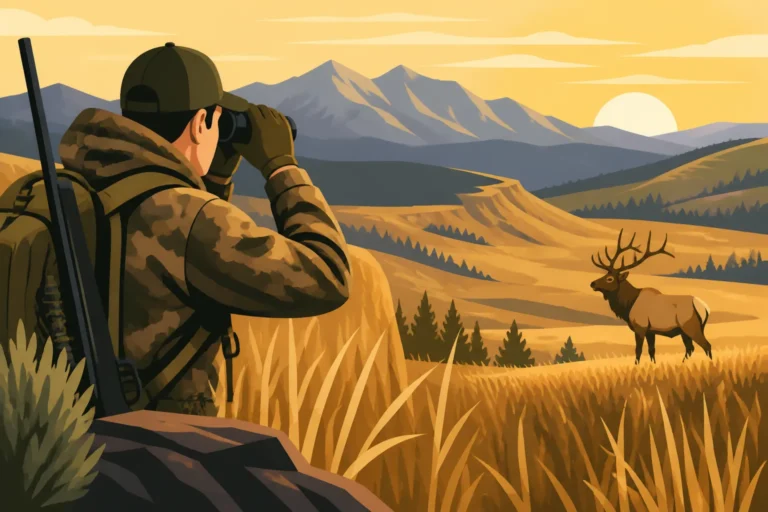
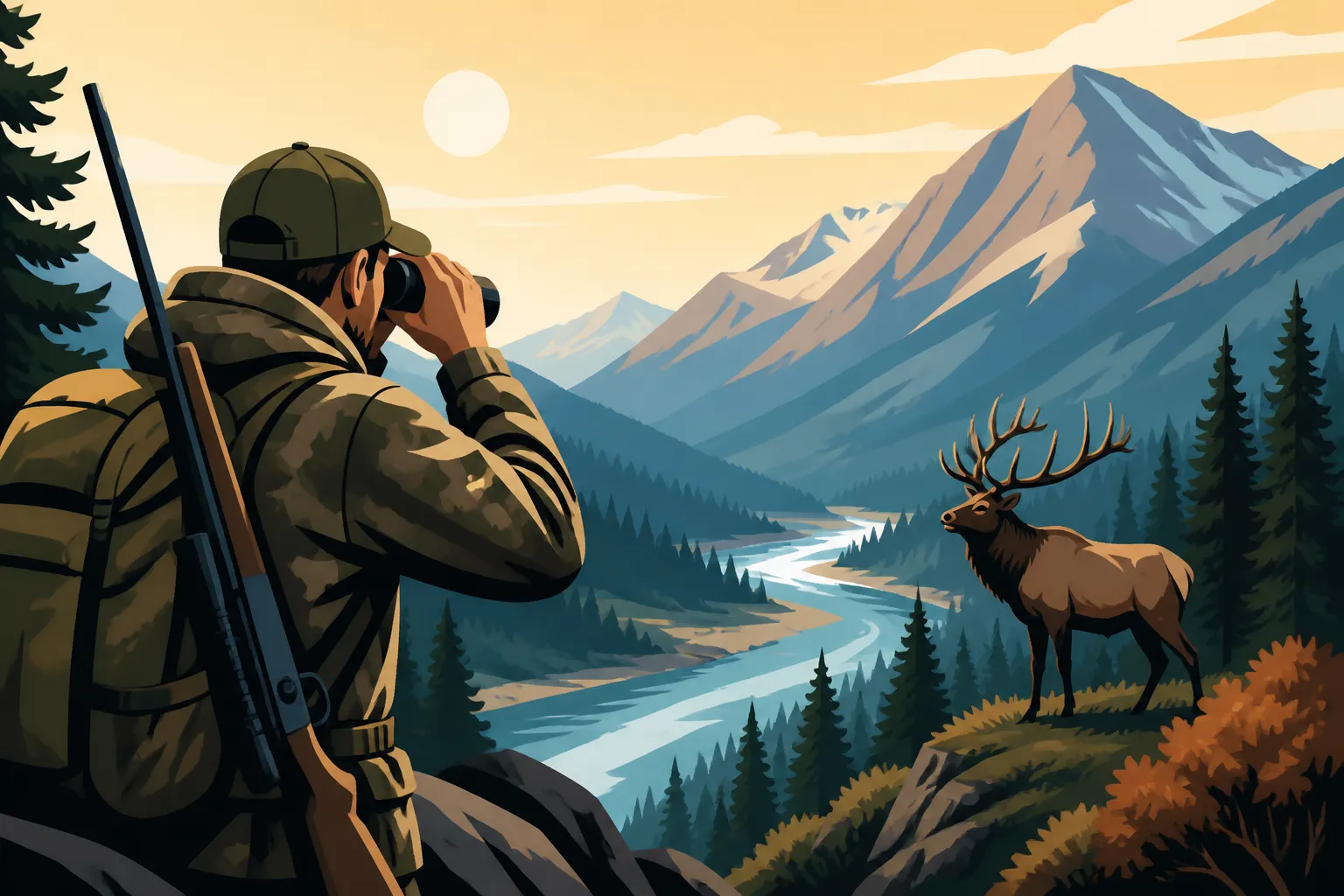
Your hunting tactics need to adapt to the varied landscape. In the open sagebrush and grasslands, spot-and-stalk is often the most productive method for mule deer. Get to a high vantage point at first light, use your binoculars to systematically glass every fold and shadow, and once you spot an animal, plan a careful approach. In the timbered areas and along creek bottoms, a slower, more deliberate still-hunt can be effective for both deer species and bears. Move slowly, pause frequently to look and listen, and pay attention to wind direction. Calling can also be successful, especially for moose (if in the right zones, which are less common in the Kettle River but worth knowing for other areas), elk during the rut, and coyotes. Remember, patience is paramount in this country. Game animals often hold tight in cover, and a quick scan might miss them. Take your time, break down the habitat, and hunt methodically. Whether you are Stalking a Bedded Buck in Open Timber or Glassing an Interior Hillside for Mule Deer, your patience will be rewarded.
Disclaimer
This article is for general informational purposes only and does not constitute professional advice. Laws, prices and regulations vary by location and change over time. Consult a qualified professional for guidance on your specific situation.