Where British Columbia’s Big Bulls Come From
The dream of spotting a truly colossal bull, antlers wide and heavy, is what drives many hunters deep into British Columbia's rugged wilderness. It's not just about luck; finding where British Columbia's big bulls come from means understanding a complex interplay of genetics, habitat, age, and hunting pressure. This guide will peel back the layers to reveal the secrets behind those impressive racks, helping you target the right areas and adopt the strategies that give you the best chance at a truly memorable hunt.
The Recipe for Antler Greatness: Genetics, Age, and Nutrition
It's easy to look at a massive set of antlers and think it's purely a matter of the animal having good genes, but the truth is far more nuanced. While genetics certainly lay the foundation, they interact profoundly with environmental factors and the animal's life history. A bull needs the right blueprint, yes, but it also needs the right building blocks and enough time to construct its masterpiece.
Genetic Predisposition and Regional Strains
Just like people from different families might naturally be taller or have different hair colours, certain populations of moose and elk within British Columbia carry the genetic potential for larger antler growth. These regional strains have evolved over generations in specific environments, leading to discernible differences. For example, some moose populations in the far northern reaches of the province are known for their exceptional antler mass and spread, often exceeding those found in more southern, pressured areas. This isn't just hearsay among local hunters; it's a pattern observed through decades of harvest data and biological studies. These genetic traits can be passed down, meaning that if a dominant bull with exceptional antlers breeds successfully, his offspring carry that potential forward. However, even with the best genes, a bull still needs the opportunity to express them fully.
The Critical Role of Age
This might sound obvious, but an old bull is almost always a big bull when it comes to antlers. Antlers are a metabolically expensive commodity for an animal to grow each year, requiring immense amounts of calcium, phosphorus, and protein. A young bull, typically in its first few years of antler growth, is still dedicating a lot of its energy to body growth. It's building bone, muscle, and generally maturing. As a bull matures, usually reaching its prime between 6 to 10 years of age, its body growth slows down, and more resources can be diverted specifically to antler production. This is when you start seeing those incredible increases in mass, tine length, and overall spread. If hunting pressure in a particular area is high, it often means that few bulls survive long enough to reach this prime age class, thus limiting the number of truly massive racks seen. Conversely, low-pressure zones or areas managed for older age classes will naturally produce more trophy-calibre animals. Understanding how to find areas that allow bulls to reach maturity is often a key piece of the puzzle.
Fueling the Rack: Habitat and Nutrition
No matter how good a bull's genes are or how old it gets, without top-tier nutrition, it simply won't grow exceptional antlers. The quality of a bull's habitat directly translates to the quality of its diet, which in turn directly impacts antler development. Moose, for example, are browsers, and their diets often consist of a variety of willow, birch, aspen, and other woody browse. Elk are primarily grazers, preferring grasses and forbs, but will also browse on shrubs and young trees.
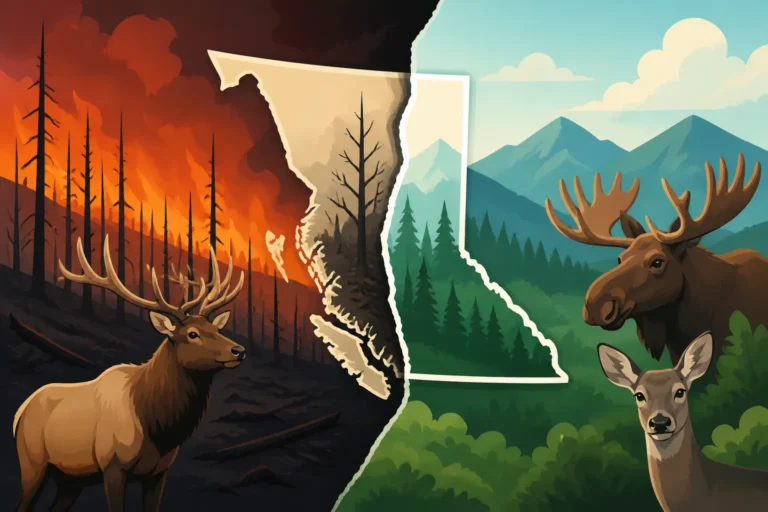
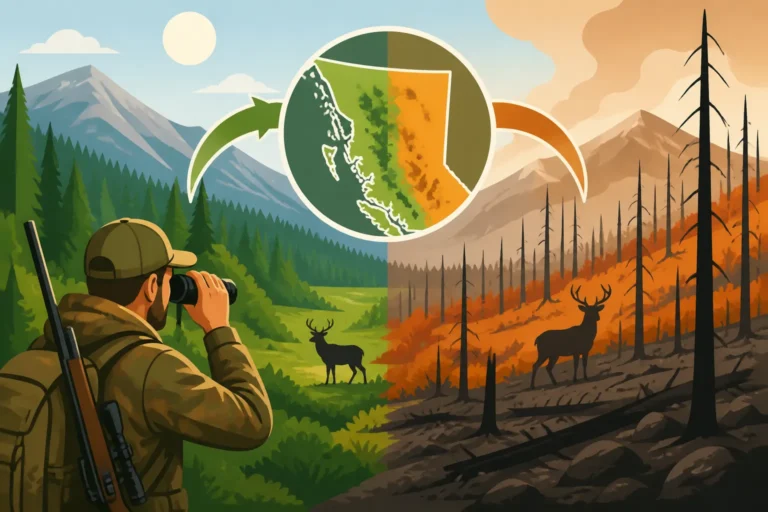
Areas with abundant, high-quality forage rich in essential minerals like calcium, phosphorus, copper, and zinc are critical. This often means mosaic habitats that offer a variety of plant species, access to mineral licks, and good soil quality. Think of lush willow flats after a wildfire has opened up the canopy, or old growth edges that provide diverse undergrowth and mineral-rich soils. Areas that have recently seen natural disturbances like fires or well-managed logging operations can create an explosion of new growth, providing a bounty of fresh, nutritious forage for several years. This is why you might find hunters focusing on a British Columbia burn two years on, or a recent cutblock in its third year. These dynamic landscapes provide the perfect combination of food and cover to help bulls maximize their antler growth.
British Columbia's Trophy Hotbeds: Regions and Habitats
British Columbia is a vast province, and the distribution of truly large bulls isn't uniform. Certain regions and specific habitat types consistently produce animals with impressive headgear due to the unique combination of factors we've discussed. Understanding these geographical nuances is crucial for any hunter hoping to connect with a true trophy.
Northern BC: The Land of Giants Moose Focus
When most hunters think of gargantuan moose, their minds often drift north. Regions like the Skeena, Omineca, and Peace Country are legendary for their moose populations, and more importantly, for the sheer size of the bulls that roam these immense landscapes. The vastness of this wilderness plays a significant role; lower human population density and often challenging access mean that many areas experience reduced hunting pressure. This allows bulls to age, giving them the critical years needed to develop truly massive antlers.
The habitat here is also a huge factor. You'll find extensive tracts of boreal forest, teeming with the willow, aspen, and birch that moose thrive on. Huge expanses of muskeg flats in Northern British Columbia, braided river bars, and countless small lakes create a perfect mosaic of food, water, and cover. Consider areas around Dease Lake and Cassiar, or the Spatsizi Plateau, where untouched wilderness stretches for hundreds of kilometres. These are places where a bull can live its entire life relatively undisturbed, gorging on nutrient-rich browse. If you're serious about Moose Hunting British Columbia's Interior and North and looking for a true giant, these remote northern regions are often where British Columbia's big bulls come from, if you're willing to put in the effort to get there.
Kootenays and Peace Country: Elk Strongholds
While the north might be synonymous with moose, the Kootenays and the Peace Country are celebrated for their Rocky Mountain Elk. These regions present a different kind of landscape, often characterized by a mix of open grasslands, timbered slopes, and agricultural interfaces. The Kootenays, in particular, with areas like the Elk Valley for bulls or the Rocky Mountain Trench, have historically produced some phenomenal elk. Here, the bulls benefit from rich valley bottom forage, combined with the security of steep, timbered slopes and high alpine meadows. The mix of open country grazing and dense cover allows elk to feed efficiently and find refuge.
Similarly, the Peace Country offers a unique blend of productive farmland and dense bush, where elk can thrive. These animals will often utilize the edges of grain fields in the Peace Country for abundant nutrition, retreating into the thick forests for cover during the day. While these areas might see more hunting pressure than the far north, strategic hunting during the rut, coupled with an understanding of where these herds winter and summer, can yield exceptional bulls. For those targeting Elk Hunting in British Columbia, focusing on these established strongholds, especially where specific management units might have limited entry draws for older age class bulls, can pay off handsomely.
Coastal Roosevelt Elk: Unique Opportunities
For a completely different challenge and another opportunity at a big bull, turn your attention to British Columbia's coast, home to the magnificent Roosevelt Elk. These are the largest-bodied elk in North America, and while their antlers might not always match the massive spread of some Rocky Mountain Elk, they carry immense mass and a unique character. The coastal rainforest habitat is incredibly dense and challenging to hunt, often requiring hunters to penetrate deep into second-growth timber blocks or old growth edges. This natural difficulty often translates to lower pressure, allowing some bulls to reach impressive maturity.
Areas on Vancouver Island, like the valleys around Port Alberni, and portions of the mainland coast, especially where undisturbed river systems flow into the ocean, provide the lush, wet environment these elk adore. Their diet here consists of a mix of grasses, forbs, and browse found in the damp undergrowth of the rainforest. Hunting a coastal inlet from a boat, or Hunting Roosevelt Elk in British Columbia Old Growth, requires a different approach than hunting open country. But the reward of connecting with one of these forest giants, especially one that has survived to develop a truly heavy rack, is unparalleled. Don't underestimate How Heavy a Roosevelt Elk Bull Gets; they are truly impressive creatures in their own right.
Strategies for Locating British Columbia's Big Bulls
Finding a big bull in British Columbia is rarely a casual affair. It demands diligent preparation, smart use of modern tools, and often, an unwavering commitment to getting away from the crowds. While every hunt is different, a solid strategy built on knowledge and persistence is your best bet for success.
Scouting Smart: Tools and Techniques
The days of simply heading into the woods hoping to stumble upon a trophy are largely gone, especially if you're after those truly big bulls. Smart scouting is your most potent weapon. Start your research from home by using online mapping tools and digital resources. A platform like GoHunt, for instance, can be invaluable for e-scouting, allowing you to pour over topographic maps, satellite imagery, and even historical burn data. You can identify potential bedding areas, feeding zones, travel corridors, and access points without ever leaving your desk. Look for areas with diverse habitat, elevation changes, and proximity to water sources. This pre-season reconnaissance is critical for Scouting a British Columbia Management Unit Online and understanding the lay of the land before you even pack your boots.
Once you hit the ground, physical scouting is about confirming your assumptions and finding fresh sign. Look for heavily used game trails, rub lines, fresh droppings, and distinct tracks. In areas known for big bulls, you'll want to find where British Columbia's big bulls come from by identifying old core areas that offer year-round forage and minimal disturbance. Focus on transition zones – where timber meets open areas, or where different forest types merge. These are often high-traffic areas for big game. Don't forget to pay attention to details like natural mineral licks, which can be hotspots for mature animals.
Understanding Seasonal Movements and Rutting Behaviour
Big bulls, whether moose or elk, are creatures of habit, but their habits shift dramatically throughout the year. Understanding these seasonal movements is paramount. In the pre-rut, bulls are often focused on feeding heavily, trying to pack on weight and build up their antler strength. They might be found in rich, secluded feeding grounds, away from cows and younger bulls.
When the rut kicks in, however, everything changes. For elk, When British Columbia's Elk Rut Peaks is a period of intense activity, bugling, and fighting, drawing bulls into more open areas as they seek out cows. This is a prime time to use calling techniques, trying to elicit a response or draw a bull in. Similarly, Calling Moose in the Rut can be incredibly effective when those big northern bulls are actively searching for mates. They become less cautious and more vocal, making them more susceptible to an aggressive calling sequence. Post-rut, bulls will be exhausted and often seek out secure, high-calorie food sources to recover before winter sets in. They might be found in dense cover, focusing purely on recovery. Timing your hunt to coincide with these predictable behavioural patterns can significantly increase your chances of encountering a truly mature animal.
Patience and Persistence in Low-Pressure Zones
One of the most consistent factors in finding where British Columbia's big bulls come from is getting into areas with low hunting pressure. This usually means putting in the effort that most other hunters aren't willing to. Forget the easily accessible logging roads; while you might pick up a smaller animal there, the giants typically gravitate to more remote, harder-to-reach country. This could involve backpacking deep into the alpine in September, utilizing a horse pack train for Horseback Hunting British Columbia's Backcountry, or even float hunting a British Columbia river to access untouched drainages.
Patience is a virtue, especially when hunting for a trophy. It might mean sitting on a vantage point for hours, glassing a subalpine basin at first light, or still-hunting through dense timber in an old growth draw, moving slowly and deliberately. When you find a promising area, don't rush it. Take the time to understand the animal's patterns, watch its movements, and plan a careful stalk. Dealing with British Columbia's challenging terrain and often unpredictable weather, from coastal rain to mountain snow, requires robust gear and mental fortitude. It’s the combination of preparation, strategic location, and sheer grit that ultimately puts you in front of those truly impressive big bulls.
| Factor | High-Potential Big Bull Area (General) | Average Bull Area (General) |
|---|---|---|
| Hunting Pressure | Low to Very Low | Moderate to High |
| Access | Difficult (backpack, horse, boat, plane) | Easy (road access, closer to towns) |
| Habitat Quality | Diverse, abundant, nutrient-rich forage | Variable, potentially lower quality or less diversity |
| Age Class | Strong presence of mature (6+ year old) bulls | Dominance of younger (2-5 year old) bulls |
| Genetics | Populations with known trophy potential | Mixed or less renowned populations |
| Forage | Lush willows, high-protein forbs, mineral licks | Common grasses, sparse browse |
| Terrain | Remote, rugged, extensive cover | More accessible, potentially fragmented habitat |
Disclaimer
This article is for general informational purposes only and does not constitute professional advice. Laws, prices and regulations vary by location and change over time. Consult a qualified professional for guidance on your specific situation.