Why Blacktail Are Hard to See
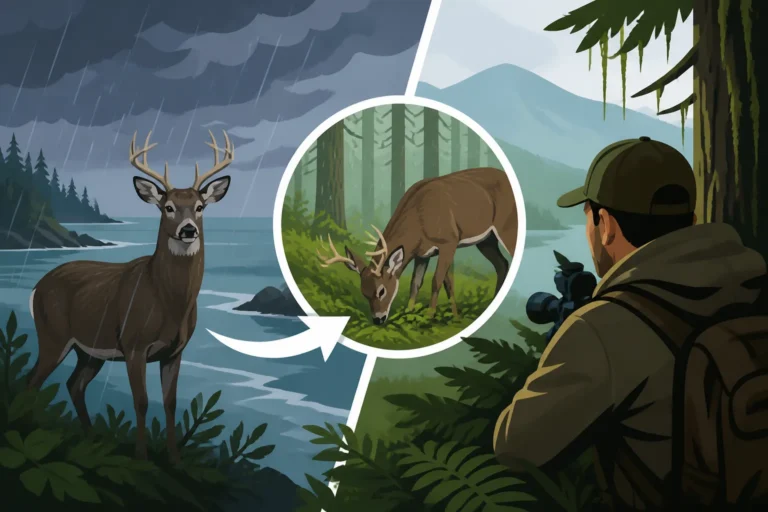
You've spent countless hours meticulously still-hunting, patiently glassing, or carefully moving through the dense, rain-soaked British Columbia coastal forests, yet the elusive blacktail deer seems to vanish into thin air, leaving you wondering if they're even there. It's a frustration many hunters share, feeling like you're chasing ghosts. This comprehensive guide will break down exactly why blacktail deer are so incredibly difficult to spot, from their natural camouflage and clever behaviours to the challenging environments they call home, and how you can adapt your approach.
Masters of the Coastal Camouflage: Understanding Blacktail Blending
One of the primary reasons blacktail deer are such a challenge to spot lies in their incredible natural camouflage, perfectly adapted to the varied, often dark, and perpetually green landscapes of British Columbia's coast. They aren't just brown; they are a masterclass in blending.
The Art of the Coat: Blending with the Backcountry
A blacktail deer's coat is generally a dark, reddish-brown in summer, fading to a more greyish-brown in winter. This colour palette is no accident. Think about the dominant colours in their typical habitat: the deep greens of Douglas fir and cedar, the dark browns of ancient bark and damp soil, and the muted grey light filtering through a persistent coastal drizzle. Their coat allows them to seamlessly melt into this backdrop. When a blacktail stands motionless in the shadows of an old growth timber, or even in the dappled sunlight of a new cutblock, their irregular patches of darker and lighter fur break up their outline, making them incredibly hard to distinguish from the surrounding foliage and shadows. You often hear hunters say they just "appear," and that's precisely because their camouflage is so effective at making them part of the scenery. It's not about being invisible; it's about being indistinguishable.
Size and Silhouette: The Advantage of Being Compact
Blacktail deer are generally smaller and more compact than their mule deer cousins found in the interior, especially the Sitka blacktail found in northern coastal regions and on Haida Gwaii. This smaller stature is another significant factor in their elusiveness. A smaller animal presents less of a target, but more importantly, it allows them to navigate and hide within much denser cover. A big moose or a larger mule deer needs more open space to move and disappear. A blacktail, on the other hand, can slip through thick salal, tangled alder bottoms, or a maze of second-growth timber with remarkable ease, its compact body allowing it to stay almost completely concealed. They can lie down in a small thicket, and unless you're practically on top of them, they're simply not visible. This ability to make themselves small and use the densest vegetation is a key survival trait.
Habitat Choices: Where Blacktail Disappear in British Columbia
Beyond their physical appearance, the environments blacktail deer choose to inhabit are intrinsically designed for concealment. From the darkest timber to the thickest regenerating clearcuts, their home turf works against the hunter's ability to spot them.
Dense Coastal Forests and Second Growth
Blacktail thrive in the rugged, heavily vegetated coastal forests of British Columbia. This often means steep terrain covered in impenetrable second-growth timber, dense old growth with a thick understory, or extensive clearcuts in various stages of regeneration. These areas offer an endless labyrinth of cover. When you're Still-Hunting Second Growth for Blacktail, you quickly realize how difficult it is to see more than a few yards in any direction. The visibility is usually terrible, especially if you're Hunting British Columbia's Coastal Rain. Blacktail will often bed down in the thickest parts of these habitats, relying on the cover to protect them. Even when moving, they prefer to skirt the edges of clearings or use established game trails that are often tunnels through the brush, making them incredibly difficult to intercept or even catch a glimpse of. They are masters of using every bit of structure for their advantage.
Transition Zones and Edges: The Blacktail's Secret Playgrounds
While dense cover is their refuge, blacktail are also frequently found in transition zones – the edges where one type of habitat meets another. This could be where an old clearcut borders mature timber, the fringe of a river bottom, or the interface between a rocky bluff and a brushy slope. These edges provide both food sources and immediate access to security cover. A blacktail might step out for a few moments to browse on fresh new growth in a sunny spot before melting back into the shadows with surprising speed. Hunting these areas requires extreme patience and vigilance, as a blacktail can appear and disappear like a phantom. They use these liminal spaces to their advantage, maximizing both feeding opportunities and their chances of escape. Many experienced hunters understand that Hunting a British Columbia Island Clearcut Edge means focusing on those transitional lines where deer feel most secure.
Elusive by Nature: Blacktail Behavioural Traits
Beyond their physical adaptations and preferred habitat, the inherent behaviours of blacktail deer contribute significantly to their reputation as "ghosts of the forest." They are wired for survival in a predator-rich environment, and this manifests in their constant vigilance and stealthy movements.
Hyper-Vigilance and Wariness
Blacktail deer are notoriously wary animals. Living in a landscape with cougars, wolves, and bears (even grizzlies in some coastal areas), they are constantly on alert. Their senses of smell and hearing are acutely tuned to detect danger, and they will pick up on the slightest anomaly in their environment long before a human hunter ever gets close. A snapped twig, a subtle change in wind direction, or an unfamiliar scent can send them bolting into the thickest cover. This hyper-vigilance means they are often aware of your presence before you are aware of theirs, giving them a significant head start to vanish. This inherent caution makes still-hunting particularly challenging, as any sound or movement on your part can compromise the hunt.
The "Ghosting" Phenomenon: Disappearing Act
It's not just that they're hard to spot; it's how they disappear. Many hunters describe the experience of seeing a blacktail, only for it to seem to evaporate into the landscape the moment they look away, or even for a split second. This "ghosting" phenomenon is a combination of their incredible camouflage, their ability to remain motionless, and their silent movement through dense vegetation. A blacktail, once it senses danger, will often freeze perfectly still, banking on its coat to render it invisible. If that fails, it will move with astonishing stealth, weaving through brush without a sound, making it almost impossible to track visually. They don't crash through the woods; they flow through it, leaving little trace. This is why even when you're focusing on Hunting Vancouver Island Blacktail in Second Growth, a deer you've seen one moment can be completely gone the next.
Nocturnal and Crepuscular Tendencies
While blacktail can certainly be active during the day, especially during the rut or in areas of low pressure, they are largely crepuscular (active at dawn and dusk) and often exhibit significant nocturnal activity. This natural timing of movement allows them to avoid predators and human disturbance. They'll feed and move under the cover of darkness, or in the low light of early morning and late evening, making it extremely difficult for hunters to intercept them. During daylight hours, particularly in high-pressure areas, they tend to bed down in dense cover, only moving minimally. This means that a large part of their active period falls outside prime hunting light, forcing hunters to be out at the very fringes of the day to catch a glimpse.
The Environmental Gauntlet: Weather and Terrain Challenges
British Columbia's coastal environment itself plays a massive role in making blacktail deer so difficult to see. It's a land of thick cover, relentless rain, and often challenging visibility, all of which favour the deer.
Dense Vegetation and Limited Sightlines
The sheer density of vegetation along the British Columbia coast is unparalleled. From the ground-level salal, huckleberry, and ferns to the thick understory of alder, vine maple, and young conifers, the forest floor is often an impenetrable tangle. This severely limits sightlines for hunters. In many areas, you might only be able to see 10-20 yards, sometimes even less. This close-quarters environment means you have to be incredibly stealthy and observant, constantly scanning for the smallest hint of a deer: an ear flick, a patch of dark fur, or the horizontal line of its back among the vertical lines of trees. Many hunters rely on tools and apps like GoHunt to pore over satellite imagery and topographic maps, trying to identify areas where vegetation might thin out just enough to offer a shooting lane or a better vantage point, but even then, the reality on the ground is often far thicker.
Rain, Fog, and Low Light Conditions
The coastal climate is famous for its precipitation, and this constant moisture contributes significantly to the blacktail's elusiveness. Rain, mist, and fog are common, especially during the hunting seasons. These conditions reduce visibility even further, obscuring deer at distances where you might normally spot them. The low light conditions, even on a cloudy day, make it harder to differentiate a deer from the shadows and background. Furthermore, the constant dampness means the forest is often wet and noisy to move through, making stealth even more difficult for the hunter. The deer, however, are perfectly accustomed to these conditions and move through them with ease. When you're Reading Blacktail Sign in Wet Ground, you're often doing it in conditions that make spotting the actual animal a monumental task.
Rugged and Steep Terrain
Much of the blacktail habitat along the coast is incredibly rugged, characterized by steep slopes, deep ravines, and broken terrain. This makes quiet movement challenging for the hunter and provides endless opportunities for deer to move undetected. They can use the contours of the land, small benches, and draws to travel unseen, even when they're relatively close. The uneven ground also forces hunters to focus on their footing, diverting attention that could otherwise be spent scanning for deer. This combination of thick cover and difficult terrain means you're often hunting "blind," relying more on sound and quick reflexes than on long-range glassing.
Overcoming the Stealth: Strategies for Hunting Wary Blacktail
Given all these factors working against the hunter, successfully pursuing blacktail deer requires a shift in mindset and tactics. You can't hunt them like open-country mule deer; you need to embrace the challenges and adapt your approach.
Slow Down and Use Your Eyes (and Ears)
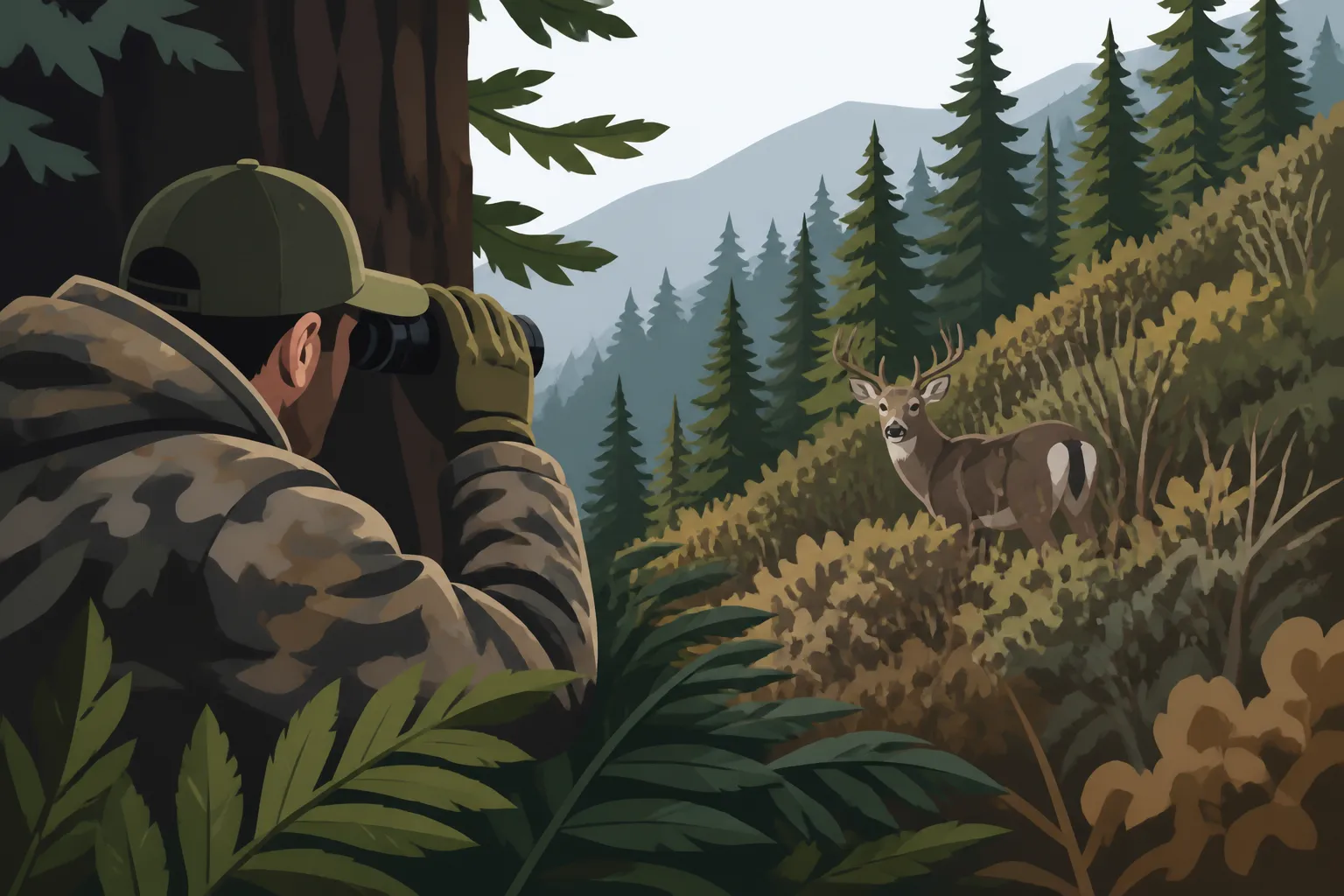
The most crucial advice for hunting blacktail is to slow down, sometimes to a near crawl. Still-hunting, where you take a few steps, then stop and scan for minutes, is often the most effective method. Focus on details: a horizontal line in a vertical world, a patch of solid colour that doesn't quite match the background, the flick of an ear, or the glint of an eye. Use your binoculars often, even in thick cover, to pick apart shaded areas. It's amazing what you'll see once you force yourself to slow down and use optics to dissect the brush. Listen intently, too; the rustle of leaves, a snapped twig, or even the subtle thump-thump of hooves can alert you to a nearby deer long before you see it.
Understand Their Movement Patterns
Blacktail are creatures of habit, often using the same trails, bedding areas, and feeding zones. Hunting British Columbia's Coastal Blacktail means understanding these patterns. During low-light hours, they'll often move from their bedding areas in heavy timber to more open feeding areas, like the edges of clearcuts or recent burns. As pressure increases or the day progresses, they retreat to the thickest cover. Scouting, both pre-season and during the hunt, is vital. Look for fresh tracks, droppings, rubs, and browse sign to identify high-traffic areas. Use mapping tools, perhaps even a subscription service like GoHunt, to identify promising topographical features, access points, and dense cover zones before you even step foot in the woods. This helps narrow down where the deer are most likely to be.
Patience and Persistence
Hunting blacktail tests your patience like few other species. There will be days, or even entire hunts, where you see little to nothing. It's easy to get discouraged. But remember, the deer are there; they're just masters of concealment. Persistence is key. Keep pushing into those thick, often unpleasant, areas where other hunters might shy away. Those seemingly impenetrable thickets, the steep, wet ravines, and the deep shadows often hold the biggest, wariest bucks. Embrace the struggle, and remember that every small sign you find, every faint track, is a piece of the puzzle.
The Advantage of the Rut
While blacktail are generally elusive, there are periods when they become more visible and less cautious. The blacktail rut, typically peaking in mid-November to early December, is one such time. During this period, bucks are actively seeking does and are more willing to move during daylight hours and cover more ground. This is when Calling a Blacktail Buck With a Fawn Bleat can be surprisingly effective, as bucks respond to perceived competition or potential breeding opportunities. However, even during the rut, they still rely heavily on cover, so don't expect them to be walking through open fields. You'll still need to put in the hard work in their preferred habitat, but your chances of catching them moving are significantly higher.
Here's a summary of the challenges and corresponding hunter adaptations:
| Challenge Category | Blacktail Trait/Environmental Factor | Hunter Adaptation |
|---|---|---|
| Camouflage | Dark, blending coat; compact size | Slow movement, deliberate scanning, use of optics |
| Habitat | Dense second-growth, old growth, clearcut edges | Hunt transition zones, focus on trails and thickets, scout rigorously |
| Behaviour | Wary, ghosting, nocturnal/crepuscular | Patience, early/late hunting, understand rut movements |
| Environment | Limited sightlines, rain/fog, rugged terrain | Micro-terrain analysis (GoHunt), stealth, keen listening, focus on close shots |
Ultimately, hunting blacktail deer in British Columbia is a deeply rewarding challenge precisely because of how hard they are to see. It forces you to become a more patient, observant, and skilled hunter. By understanding their incredible adaptations to their environment, you can begin to unlock the secrets of these forest ghosts and, with enough persistence, perhaps even catch a glimpse of one that doesn't immediately vanish.
Disclaimer
This article is for general informational purposes only and does not constitute professional advice. Laws, prices and regulations vary by location and change over time. Consult a qualified professional for guidance on your specific situation.