Lynx, Bobcat and Wolverine in British Columbia
Oh, the wild corners of British Columbia! Many of us spend countless hours in the bush, yet certain creatures remain almost mythical in their elusiveness. We hear tales, see tracks, but getting a glimpse of animals like the lynx, bobcat, or wolverine? That's a true badge of honour. This guide is dedicated to shedding light on these incredible, often unseen, furbearers and their place in the diverse ecosystems of our province, helping you understand their lives and the challenges and rewards of pursuing them.
Introducing British Columbia's Wild Carnivores: Lynx, Bobcat, and Wolverine
When you think about the vast, untamed wilderness of British Columbia, your mind probably first jumps to the iconic grizzly bears, towering moose, or elusive mountain sheep. But tucked away in the dense forests, rocky peaks, and mixed habitats are three other incredible carnivores that capture the imagination of hunters, trappers, and wildlife enthusiasts alike: the lynx, the bobcat, and the wolverine. These animals, while smaller than their grizzly and wolf cousins, are no less formidable or fascinating. They represent the wild spirit of our province, navigating harsh environments and playing crucial roles in maintaining ecological balance. Understanding them is key to appreciating the true depth of British Columbia's natural heritage.
The Place of These Furbearers in the Ecosystem
These three species aren't just isolated residents; they are integral threads in the intricate tapestry of British Columbia's ecosystems. Lynx, with their specialized diet of snowshoe hares, directly influence the hare population cycles, which in turn affect forest regeneration and other predators. Bobcats, being more opportunistic, help control rodent and rabbit populations in more varied landscapes, including areas closer to human habitation. Wolverines, as nature's ultimate scavengers and opportunistic predators, are vital for nutrient cycling in remote, high-elevation environments, breaking down carrion that might otherwise go uneaten. Their presence often indicates a healthy, undisturbed ecosystem, free from excessive human encroachment and with robust prey bases.
Each of these furbearers acts as a barometer for the health of its specific niche. A decline in lynx numbers, for instance, could point to issues with snowshoe hare populations, which might stem from habitat loss or disease. Similarly, stable wolverine populations suggest that vast, wild spaces remain intact, as these animals require enormous territories to thrive. For hunters and trappers, understanding these ecological roles isn't just academic; it informs ethical harvest practices and fosters a deeper respect for the animals we pursue. It encourages us to look beyond the individual animal and consider the broader natural systems at play, something that tools like GoHunt can help with by providing data that supports this kind of holistic understanding of wildlife.
General Characteristics and Habitats
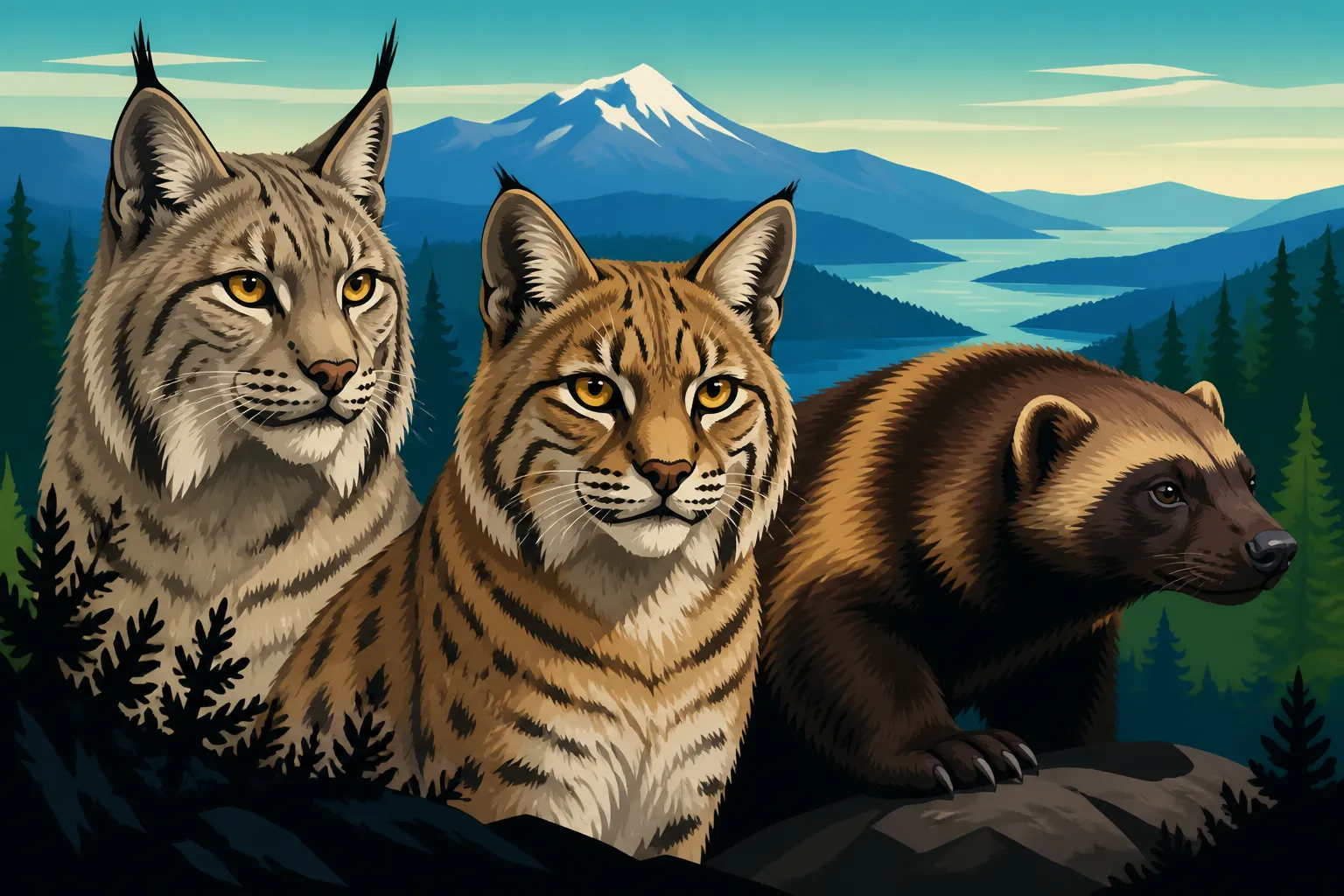
While all three are members of the carnivore order, they possess distinct physical characteristics and inhabit different environmental niches within British Columbia. The lynx is unmistakably adapted for deep snow, with huge paws acting like natural snowshoes and prominent ear tufts. It thrives in the boreal and sub-boreal forests where its primary prey, the snowshoe hare, is abundant. Bobcats are smaller, more lightly built, and prefer a wider range of habitats from semi-arid sagebrush flats to coastal rainforest edges, often overlapping with human activity more frequently than lynx. Wolverines are built for sheer power and endurance, possessing a stocky, muscular physique, dark fur, and a distinctive band of lighter fur running along their flanks. They are primarily creatures of the alpine and remote subalpine forests, preferring rugged, high-elevation terrain with reliable snow cover, even into the summer.
Geographically, their distributions vary significantly across the province. Lynx are more prevalent in the central and northern interior, where coniferous forests and snowshoe hare populations dominate. You might find them in areas like the Cariboo and Omineca regions. Bobcats are typically found in the southern half of the province, especially in the Okanagan, Fraser Canyon, and parts of Vancouver Island and the Kootenays, where there's a mix of open country, mixed forest, and scrub. Wolverines are found across the province's mountainous regions, from the Coast Range to the Rocky Mountains, often in areas accessed by rugged backcountry routes and high-elevation passes. Each species' unique adaptations allow it to exploit a particular segment of British Columbia's incredibly diverse landscape.
Here's a quick overview of these fascinating furbearers:
| Species | Average Weight (lbs) | Typical Habitat | Primary Diet | Key Identifier |
|---|---|---|---|---|
| Lynx | 18-35 | Boreal & sub-boreal forest (deep snow) | Snowshoe hare | Large, tufted ears; huge paws |
| Bobcat | 15-30 | Mixed forests, scrub, semi-arid, coastal | Rabbits, rodents, birds | Short, 'bobbed' tail; barred legs |
| Wolverine | 20-55 | Alpine, remote subalpine forest, tundra | Scavenger, small game | Stocky build; broad head; brown/tan stripe |
The Enigmatic Lynx of British Columbia
The Canada Lynx is truly one of British Columbia's most iconic, yet seldom-seen, furbearers. Known for its almost ethereal presence and specialized hunting prowess, the lynx embodies the quiet mystery of our northern forests. Hunters and trappers who have the privilege of encountering a lynx in the wild often describe it as a moment of profound connection with the wilderness, a testament to the animal's remarkable ability to blend seamlessly into its snowy surroundings. Its life cycle is intimately tied to the rhythms of the boreal forest, a dance between predator and prey that has unfolded for millennia.
Identifying the British Columbia Lynx
Spotting a lynx in the wild can be a once-in-a-lifetime experience, and even then, identification is key. These medium-sized wild cats are unmistakable once you know what to look for. Their most prominent features are their incredibly large, heavily furred paws, which act like natural snowshoes, allowing them to traverse deep snow with ease. They also have distinctive, long tufts of black hair on their ears and a short, black-tipped "bobbed" tail. Their fur is typically a beautiful greyish-brown or tawny colour, often with subtle spotting, providing excellent camouflage in the shadows of coniferous forests. They have a short face and large, intelligent eyes that seem to hold the secrets of the forest.
Comparing them to their bobcat cousins, lynx are generally larger, with longer legs and more prominent ear tufts. The tail of a lynx is always black-tipped, whereas a bobcat's tail might have multiple black bands and a white tip. When you're out Hunting a British Columbia Cutblock Edge or exploring deeper into the Cariboo or Omineca regions, knowing these subtle differences can make all the difference in positive identification, which is crucial for ethical hunting and trapping. Their tracks in the snow are also a giveaway: much larger and rounder than those of a comparably sized domestic cat or even a bobcat, with the prints often showing little to no claw marks as their claws are usually retracted.
Habitat and Prey Dynamics, Especially Snowshoe Hares
The lynx's existence in British Columbia is inextricably linked to the availability of its primary food source: the snowshoe hare. This predator-prey relationship is one of the most studied and dramatic cycles in the natural world. Lynx populations boom and bust in direct response to the cyclical rise and fall of snowshoe hare numbers, which typically occur every 8-11 years. When hare populations are high, lynx thrive and reproduce successfully. When hare numbers inevitably crash, lynx populations follow suit, leading to leaner years where they may travel great distances in search of alternative prey or succumb to starvation.
Their preferred habitat mirrors that of the snowshoe hare: dense, coniferous and mixed-wood forests with plenty of undergrowth, thickets, and younger trees that provide cover and food for hares. You'll find them in the vast interior plateau of British Columbia, in areas rich with lodgepole pine, spruce, and fir, often at mid-elevations. They are less common on the coast or in the drier southern interior where bobcats are more dominant. This close ecological relationship means that successful lynx hunting or trapping often involves understanding the current phase of the hare cycle and targeting areas where hares are known to be abundant.
Hunting and Trapping Opportunities and Challenges
For those interested in pursuing lynx, British Columbia offers opportunities primarily through trapping, though limited hunting seasons may exist in specific areas. The challenge lies in their elusive nature and the vastness of their preferred habitat. Finding sign – tracks in the snow, kill sites, or scat – is paramount. Trappers often use baited sets, incorporating lures, and rely heavily on their deep knowledge of lynx behaviour and movements within a particular territory. Trapping British Columbia's Furbearer Populations requires patience, perseverance, and a profound understanding of the land.
Hunters, while having more limited opportunities for lynx, might pursue them incidentally or during specific open seasons. Success often comes down to luck or dedicated effort, perhaps during a winter tracking hunt. Regardless of the method, both hunting and trapping lynx demand respect for the animal and its environment. It's not a pursuit for the faint of heart; it requires venturing into remote, often snowy, wilderness and a commitment to ethical practices. Always ensure you are familiar with British Columbia Trapping Season Dates and the specific regulations for the Management Unit you plan to operate in. Tools like GoHunt can assist in checking these regulations and mapping out potential areas, ensuring you're always informed and compliant.
British Columbia's Resilient Bobcat
In contrast to the lynx's deep-forest specialization, the bobcat is British Columbia's adaptable opportunist. While still a wild and secretive cat, the bobcat is far more tolerant of varied habitats and can sometimes be found in closer proximity to human settlements, making it a familiar, if often unseen, resident across much of the province. Their resilience and ability to thrive in diverse landscapes make them a fascinating subject for wildlife enthusiasts and a rewarding challenge for hunters and trappers.
Distinguishing Features and Range in BC
Bobcats, though similar in appearance to their lynx cousins, have several key differences that aid in identification. They are generally smaller and more slender than lynx, with shorter legs and smaller paws, which are less suited for deep snow. Their ear tufts are much less prominent, almost unnoticeable. The most definitive identifier is their tail: while short and "bobbed" like a lynx's, a bobcat's tail will typically have several black bars and a white tip on the underside, whereas the lynx's tail is entirely black on the tip. Their fur varies greatly in colour, from reddish-brown to grey, often with distinct black spots or bars, especially on their legs and flanks, providing excellent camouflage in patchy cover.
Bobcats are primarily found in the southern half of British Columbia, where the climate is milder and snow cover less persistent. Their range extends through the Okanagan's dry ponderosa pine and sagebrush country, the mixed forests and clearings of the Fraser Canyon, and into the Kootenays. They even have a presence on Vancouver Island, often inhabiting the mosaic of mature forests, second-growth areas, and open clearings. You're less likely to encounter a bobcat in the dense boreal forests of the north where lynx dominate, but their adaptable nature allows them to exploit a remarkable variety of landscapes, from rocky canyons and Hunting an Interior Douglas Fir Bench to agricultural fringes.
Adaptability and Dietary Habits
What truly sets the bobcat apart is its incredible adaptability. While snowshoe hares are a staple for lynx, bobcats have a much more generalized diet. They are expert hunters of rabbits and hares (including snowshoe hares where available), but they readily prey on a wide array of rodents like mice, voles, and squirrels, as well as birds, and even small deer fawns if the opportunity arises. This broad dietary preference is a major factor in their ability to thrive in such diverse habitats, allowing them to switch prey species based on availability. Their hunting strategy typically involves stalking and ambushing, relying on their keen senses and explosive speed over short distances.
Their versatility extends to their habitat preferences. You might find them denning in rock crevices in arid country, under fallen logs in timbered areas, or even in dense brush patches near agricultural fields. They are masters of using cover and navigating fragmented landscapes, often utilizing riparian corridors, thickets, and rocky outcrops as travel routes and ambush points. This adaptability is a testament to their evolutionary success and why they remain a consistent presence in British Columbia's Predators and Furbearers.
Pursuing Bobcats in British Columbia
For hunters and trappers, bobcats offer a challenging and rewarding pursuit. Trapping is a common method, using similar techniques to lynx with baited sets and lures, often placed along known travel corridors or near good cover. Their curiosity can sometimes be an asset for trappers. For hunters, calling is a popular and effective method. Using distress calls that mimic small prey animals like rabbits or rodents can often bring a curious bobcat within range. This is especially true in areas with good visibility but also enough cover for the cat to feel secure in approaching.
Hunting bobcats requires patience and careful observation. They are notoriously stealthy, moving through the landscape like shadows. Early morning and late evening hours are often the most productive. Understanding the local terrain and identifying areas of high small game activity is crucial. Many hunters combine bobcat hunting with pursuits like coyote calling, as the techniques and locations often overlap. Remember, checking local regulations, including bag limits and open seasons, is always the first step. For more details on specific regions and their furbearer regulations, consulting your British Columbia's Nine Hunting Regions guide or checking the regulations synopsis is essential. Using platforms like GoHunt can also provide up-to-date harvest data and season information, helping you strategize your hunt more effectively.
The Untamed Wolverine of British Columbia's High Country
Of the three furbearers, the wolverine is arguably the most mysterious and formidable. Often referred to as "the ghost of the north," the wolverine, or Gulo gulo, inspires awe and respect in equal measure. These powerful animals embody the ruggedness of British Columbia's remote wilderness, thriving in some of the most challenging environments the province has to offer. Encounters are exceedingly rare, making any sighting a truly special event and a testament to the wilderness character of the area.
The Wolverine's Unique Traits and Appearance
Wolverines are distinct and instantly recognizable. They are the largest terrestrial member of the weasel family (Mustelidae), resembling a small, stocky bear or a very large, muscular badger. They typically have a broad head, small eyes, and powerful jaws capable of crushing bone. Their fur is usually dark brown, almost black, with a characteristic lighter, yellowish-tan stripe running from each shoulder along their flanks and meeting at the base of their short, bushy tail. Their paws are large, with semi-retractable claws, making them adept at digging through snow and ice, climbing, and tearing apart carrion. They possess a musky scent gland, hence their other nickname, "skunk bear."
Their reputation for ferocity and strength is well-earned. Despite their relatively small size (typically weighing between 20-55 pounds), wolverines are incredibly strong and tenacious, capable of taking down prey much larger than themselves or defending a carcass from bears and wolves. This raw power, combined with their incredible endurance and resilience, allows them to survive in environments where few other animals can. Their physical adaptations are perfectly suited to the harsh realities of their high-country existence, making them true survivors of the wild.
Remote Habitats and Behavior
Wolverines are creatures of vast, remote, and often high-elevation wilderness. In British Columbia, this means they inhabit the alpine and subalpine zones of mountain ranges like the Coast Range, the Rockies, the Cariboo Mountains, and the Skeena Mountains. They prefer areas with deep snowpacks that persist well into the spring and summer, as these conditions are crucial for denning and provide access to prey that might be trapped or struggling. You'll find them ranging over enormous territories, often covering hundreds of square kilometres, utilizing a mix of mature forests, open alpine tundra, and rocky slopes. Hunting a Mountain Pass in British Columbia might bring you into wolverine territory.
Their behaviour is largely solitary and crepuscular (active at dawn and dusk), contributing to their elusive nature. Wolverines are opportunistic omnivores, with scavenging forming a significant part of their diet. They are incredibly efficient at finding and utilizing carrion, often digging through deep snow to access frozen carcasses. They will also prey on small mammals like marmots, ground squirrels, and voles, and occasionally larger animals like deer or caribou, especially if they are weakened by winter or injury. Their ability to survive by combining scavenging with active predation highlights their remarkable adaptability to resource-scarce environments.
Hunting and Trapping the Ghost of the North
Hunting and trapping wolverines is an extremely challenging endeavor, reserved for only the most dedicated and experienced individuals. Seasons for wolverines are typically very restrictive, often limited to specific management units and brief windows, reflecting their relatively low population densities and the need for careful management. Trapping is the primary method, usually employing powerful, humane snares or foothold traps at bait stations. These stations are often located in remote, hard-to-access areas, reflecting the wolverine's preference for undisturbed wilderness. British Columbia Trapping Licences are, of course, a prerequisite.
For hunters, pursuing a wolverine is often a matter of immense dedication and patience, or a fortunate incidental encounter during other high-country hunts. Unlike lynx or bobcats, calling a wolverine is not a widely effective technique. Success usually comes from extensive scouting, tracking in fresh snow, and being in the right place at the right time in their vast territories. The physical demands of accessing wolverine habitat are significant, often requiring long treks into rugged, snowy terrain. It's a true test of one's bush skills and endurance, and anyone attempting it needs to be thoroughly prepared for the challenges of remote British Columbia backcountry. Platforms like GoHunt can sometimes provide historical data on harvest locations, which, while not current, can offer insights into general distribution patterns for research.
Regulations and Management for Furbearer Hunting and Trapping
Managing furbearer populations like lynx, bobcat, and wolverine in British Columbia is a complex undertaking, balancing conservation goals with sustainable harvest opportunities for hunters and trappers. These regulations are designed to ensure healthy populations for future generations, taking into account the unique biology and ecological roles of each species. For anyone interested in engaging with these magnificent animals, whether through hunting or trapping, a thorough understanding of the rules is not just recommended, but absolutely mandatory.
Overview of Licences and Seasons
First and foremost, participating in any hunting or trapping activity in British Columbia requires the appropriate licences. For furbearers, this typically means a basic hunting licence or a specific trapping licence, along with any necessary species tags for hunting. Trapline Registration in British Columbia is a critical step for trappers, linking them to specific management areas and ensuring accountability. Seasons for these species are often quite limited in duration and geographical scope, varying significantly between Management Units and regions. For instance, some areas might have a general open season for bobcats, while lynx and wolverine seasons are more restricted and often draw-based or only open to trappers.
Bag limits are also strictly enforced to prevent overharvesting. For lynx, bobcat, and wolverine, these limits are generally low, reflecting their wild nature and population dynamics. It's not uncommon for bag limits to be one per hunter or trapper per season for some of these species. Checking the current British Columbia Hunting and Trapping Synopsis, which is released every two years, is absolutely non-negotiable before you even think about heading out. This document is your bible for all things regulatory, outlining season dates, bag limits, open areas, and specific conditions. Remember that specific rules may also exist regarding the reporting of harvests, as detailed in aspects like British Columbia's Compulsory Reporting Rules, which helps wildlife managers monitor populations.
Ethical Considerations and Conservation Efforts
Beyond the letter of the law, ethical considerations are paramount when hunting or trapping furbearers. This includes ensuring humane dispatch methods, making every effort to avoid waste of the animal, and respecting the land and other users. For trappers, this means diligently checking traps, using appropriate equipment to minimize non-target catches, and understanding trap placement to ensure safety and effectiveness. The goal is always a clean, ethical harvest that respects the animal and the spirit of fair chase. Many conservation organizations and trappers' associations actively promote best practices and ongoing education to ensure high ethical standards are maintained.
Conservation efforts for lynx, bobcat, and wolverine are ongoing, with a focus on habitat preservation and population monitoring. Wolverines, in particular, are often subjects of specific conservation concern due to their vast home range requirements and sensitivity to habitat fragmentation. Research into their movements, denning habits, and population genetics helps inform management decisions to ensure their long-term viability in British Columbia. For hunters and trappers, contributing accurate harvest data through compulsory reporting is a direct way to aid these conservation efforts, providing invaluable information to wildlife biologists. The purchase of your hunting licence and Habitat Conservation Trust Foundation surcharge also directly contributes to these vital programs, reinforcing the commitment to wildlife management for British Columbia's Furbearer Populations.
Disclaimer
This article is for general informational purposes only and does not constitute professional advice. Laws, prices and regulations vary by location and change over time. Consult a qualified professional for guidance on your specific situation.