Hunting the Fraser Canyon Benches
The Fraser Canyon benches present a unique and often underestimated challenge for hunters in British Columbia. It's easy to get lost in the sheer scale of the canyon, overlooking the distinct ecosystems and animal movements that occur on these elevated terraces. This guide aims to pull back the curtain on hunting the Fraser Canyon benches, providing practical insights into the terrain, the game you'll find, and the strategies that will give you the best chance of success in this rugged, beautiful landscape.
Understanding the Fraser Canyon Benches as Habitat
The Fraser Canyon is a dramatic, steep-sided valley carved by the Fraser River, stretching for hundreds of kilometres through the Coast Mountains and Interior Plateau. Within this formidable landscape lie what we call "benches" – elevated, relatively flat terraces that break up the otherwise precipitous slopes. These benches are far from uniform; they vary wildly in size, elevation, vegetation, and accessibility, creating a mosaic of micro-habitats that support diverse wildlife.
Geological Formation and Microclimates
These benches are typically remnants of ancient riverbeds, glacial deposits, or areas where harder rock resisted erosion more effectively than the surrounding material. Over millennia, soil has accumulated, allowing vegetation to take root. What makes them so interesting for hunting is their unique microclimates. Some benches, particularly those with a southern aspect, can be surprisingly dry and warm, supporting sagebrush and prickly pear cactus, reminiscent of the Okanagan. Others, especially at higher elevations or with northern exposures, might retain more moisture, hosting dense stands of Douglas fir, pine, and various shrubs. This diversity means you can find radically different conditions within a relatively small vertical or horizontal distance. Understanding these subtle shifts in climate and geology is key to predicting where game might be seeking food, cover, or thermal regulation throughout the day and across seasons.
Vegetation Zones and Game Preference
The vegetation on these benches directly dictates which species will frequent them and for what purpose. Lower benches, often closer to the river and highway, tend to be brushier, with thick stands of alder, cottonwood, and various berry bushes, especially in riparian zones or areas with more moisture. These dense pockets provide excellent cover and forage for black bears and black-tailed deer. As you ascend to mid-elevation benches, you'll often encounter mixed forests of Douglas fir, ponderosa pine, and aspen, interspersed with open grassy slopes. This transition zone is prime mule deer country, offering a balance of browse, cover, and open areas for feeding and bedding. The highest benches, closer to the alpine fringe, might feature more sparse timber, subalpine fir, and open meadows, providing summer range for deer and potentially even mountain goats in the most rugged, remote areas. Hunting a Subalpine Basin at First Light can give you an idea of what to expect in those higher reaches. The success of your hunt will often hinge on your ability to "read" these vegetation changes and anticipate which animals will be using them.
Target Species and Their Habits on the Benches
While a variety of animals call the Fraser Canyon home, hunters on the benches primarily focus on mule deer, black bears, and occasionally black-tailed deer in the more coastal-influenced southern stretches. Each species utilizes these unique habitats differently, requiring specific approaches and a keen understanding of their behaviour.
Mule Deer in the Benchlands
Mule deer are arguably the most sought-after big game animal on the Fraser Canyon benches. These robust deer are masters of navigating steep, broken terrain, and the benches provide them with crucial elevated vantage points, varied forage, and protective cover. In the early seasons, you'll find them widely dispersed across the benches, often feeding in grassy openings at dawn and dusk, then bedding down in thicker timber or north-facing slopes for thermal regulation. As the fall progresses and hunting pressure increases, they tend to become more nocturnal and will retreat to the densest cover available, often making use of small, overlooked pockets on steep hillsides. During the rut, typically in November, bucks become more active and less cautious, moving between benches in search of does. Understanding Why Mule Deer Move to Winter Range is also critical as snow pushes them down from higher elevations onto lower, more accessible benches, concentrating animals and offering unique hunting opportunities. When you're glassing these benches, pay close attention to the transitions between open and timbered areas; this is where mule deer often pause before entering or exiting cover.
Black Bears on the Canyon Terraces
Black bears are also common residents of the Fraser Canyon benches, particularly in areas with good berry crops or access to riparian zones along seasonal creeks. Their movements are highly dictated by food availability. In spring, they often frequent lower benches where new green-up provides succulent forage after denning. As summer progresses, they move to benches with early-ripening berries, then follow the ripening cycles of huckleberries, saskatoons, and other fruits found at various elevations into the fall. These benches provide excellent vantage points for bears to survey their surroundings and access to plentiful food sources. Hunting Fall Bears on British Columbia Berry Slopes is a tactic that works exceptionally well here. When scouting, look for fresh bear scat, torn-up logs, or overturned rocks – all signs of recent feeding activity. While seemingly docile, always exercise Bear Safety While Hunting in British Columbia, especially in areas with dense cover, as surprise encounters are a real possibility.
Coastal Black-Tailed Deer and Other Game
In the southwestern reaches of the Fraser Canyon, where the climate becomes more temperate and coastal influences are stronger, you might also encounter Columbian black-tailed deer. These deer, smaller than their mule deer cousins, prefer dense cover and often stick to the brushy edges of benches, especially those with plenty of second-growth timber. They are notoriously elusive, often moving through thickets with incredible stealth. Further up the canyon, the focus shifts more heavily to mule deer.
Besides big game, the benches can also host a surprising number of game birds. Ruffed grouse and blue grouse are often found along logging roads and in mixed timber, particularly in areas with good shrub cover. If you’re carrying a shotgun, don’t overlook the opportunity for some bonus birds. You might even stumble upon some ptarmigan on the highest, most exposed benches near timberline, though this is less common for typical Fraser Canyon bench hunting.
Here's a quick overview of typical game presence on the Fraser Canyon Benches:
| Species | Typical Habitat on Benches | Best Season | Hunting Strategy |
|---|---|---|---|
| Mule Deer | Open grassy slopes, mixed timber, north-facing bedding areas | Fall (Sept-Nov) | Glassing, Spot-and-Stalk, Still-hunting |
| Black Bear | Berry patches, riparian zones, dense brush, old cutblocks | Spring (Apr-Jun), Fall (Sept-Oct) | Glassing, Still-hunting |
| Black-Tailed Deer | Dense second-growth, brushy edges (lower, wetter benches) | Fall (Sept-Dec) | Still-hunting, Tracking |
| Grouse (Ruffed, Blue) | Mixed timber, road edges, dense shrubs | Fall (Sept-Nov) | Walking roads, Still-hunting |
Effective Hunting Strategies for the Fraser Canyon Benches
Hunting the Fraser Canyon benches is a physically demanding endeavour that rewards patience, stealth, and a keen eye for detail. The broken terrain, varied vegetation, and sometimes unpredictable weather require adaptable strategies. It's not a place for the faint of heart, but for those willing to put in the effort, the rewards can be significant.
Glassing for Success
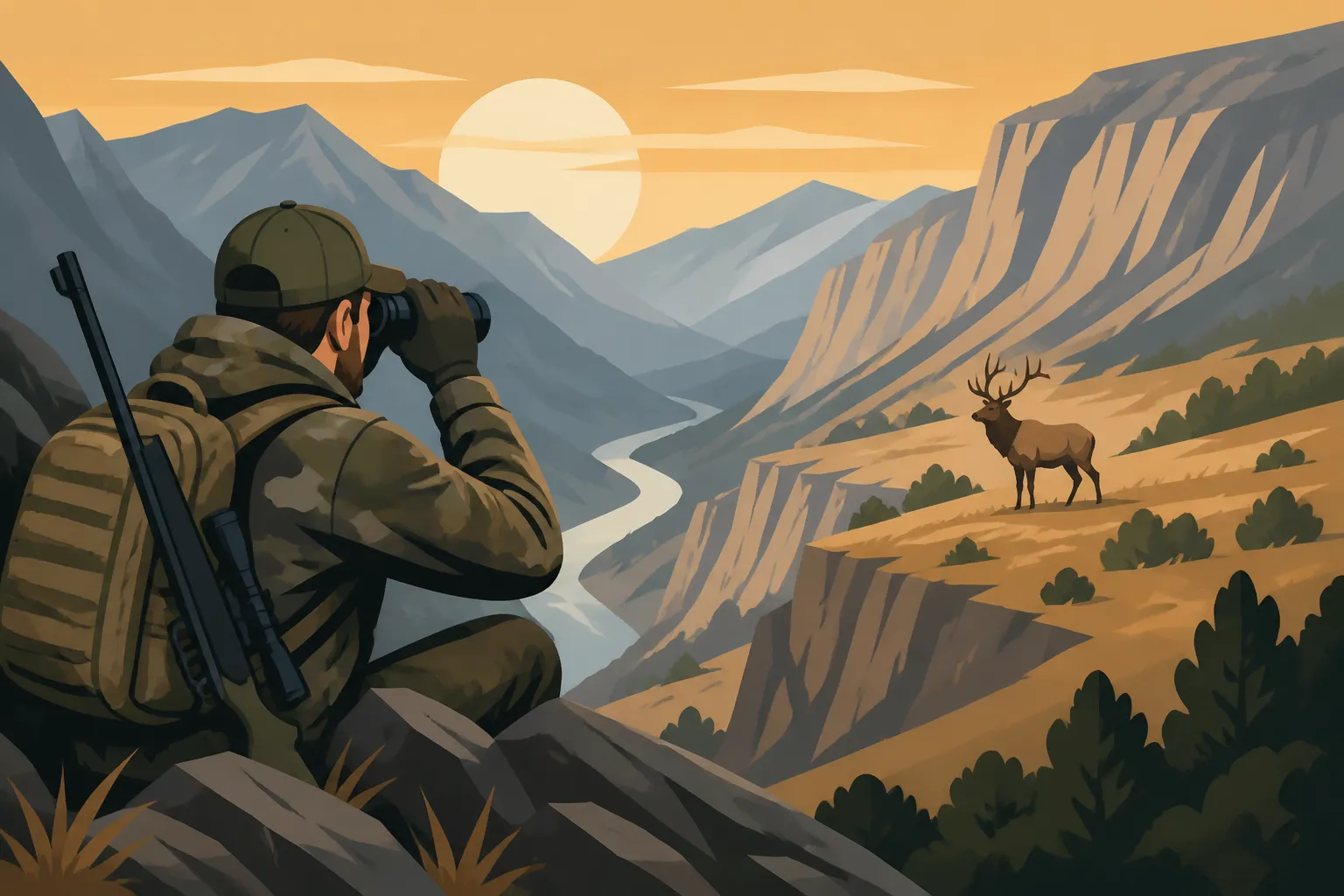
One of the most effective strategies for hunting the benches is extensive glassing. The open nature of many of these terraces, interspersed with timber and draws, makes them ideal for spotting game from a distance. Find a high vantage point across a canyon or on an opposing slope where you can overlook multiple benches. Early morning and late evening are prime times, as animals are often on the move or feeding in more open areas. Use good quality binoculars or a spotting scope and systematically grid search the terrain. Pay close attention to subtle movements, changes in colour, or the distinct outline of an animal against the background. Don't just scan the obvious spots; animals often appear in unexpected places, tucked away on a small rise or under the shade of a lone tree. Mapping tools like onX Hunt are invaluable here, allowing you to identify potential bedding areas, feeding zones, and escape routes from your glassing perch, helping you plan your approach. Once you've spotted an animal, take your time to assess its size, sex, and trajectory before making a move. Glassing an Interior Hillside for Mule Deer describes this process in detail, and much of that advice applies perfectly to the canyon benches.
Spot-and-Stalk and Still-Hunting
Once you've located game, the real challenge begins: getting into a shooting position on the steep, often crumbly terrain of the benches. Spot-and-stalk is the go-to method for mule deer and bears on these benches. This involves planning a careful approach, using terrain features, timber, and wind direction to mask your movement and scent. The Fraser Canyon is notorious for unpredictable winds that can swirl up and down the draws, so constantly checking wind direction is crucial. Move slowly, deliberately, and be prepared to stop and reassess often. Sound carries far in the canyon, so minimizing noise from your gear and footsteps is paramount.
If you haven't spotted anything from afar, or if the benches are heavily timbered and broken, still-hunting can be very effective. This involves moving through the habitat incredibly slowly, taking a few steps, then pausing for several minutes to scan for game. Focus on transitions – where timber meets open areas, along the edges of small clearings, or through natural funnels that animals might use. This method allows you to cover ground while being constantly aware of your surroundings and ready for a sudden encounter. The dense patches of Douglas fir or a Hunting a Recent Cutblock in Its Third Year on a bench can hold hidden animals. This isn't about covering miles; it's about covering every yard with purpose.
Utilizing Topography and Cover
The complex topography of the Fraser Canyon benches is both a challenge and an opportunity. Learn to use the terrain to your advantage. Draws, ridges, and small knolls can provide cover for your approach or natural travel corridors for game. Animals will often stick to these features to minimize exposure. When moving between benches, plan routes that stay in cover as much as possible, avoiding skylining yourself on ridges. Be mindful of game trails; they often lead to water sources, feeding areas, or bedding sites. The ground can be loose and rocky, making quiet movement difficult, so choosing your footsteps carefully is vital. While you might be focusing on the benches themselves, don't ignore the steep slopes immediately above and below them. Animals might move off a bench onto these slopes for cover or to access different forage.
Accessing and Navigating the Benches
Getting to, and successfully moving through, the Fraser Canyon benches requires careful planning, appropriate gear, and a realistic assessment of your physical capabilities. Many of these areas are remote and rugged, presenting significant logistical challenges.
Vehicle Access and Forest Service Roads
Access to the Fraser Canyon benches often involves a combination of paved highways, well-maintained gravel roads, and rough, deactivated forest service roads. The Trans-Canada Highway (Highway 1) runs right through the canyon, providing main arteries. However, to get onto the benches, you'll typically need to turn off onto a network of active and deactivated logging roads. Always research road conditions thoroughly before heading out. Active logging roads require extreme caution, adherence to radio call protocols, and awareness of heavy industrial traffic. Deactivated roads can be overgrown, washed out, or blocked by slides, often requiring a high-clearance 4×4 vehicle or even foot access beyond a gate. Tools like onX Hunt can often show you these networks, but recent changes or local knowledge are always king. Finding Open Forest Roads in British Columbia is a critical skill for any hunter heading into this kind of country. Be prepared for slow travel and potential delays.
Physical Demands and Foot Travel
Hunting the Fraser Canyon benches is not for those who shy away from a strenuous hike. The terrain is inherently steep, with constant elevation changes, and many prime benches require significant uphill climbs from valley bottoms or road systems. You'll often be gaining and losing hundreds of meters of elevation multiple times a day. A good pair of sturdy, broken-in hiking boots with excellent ankle support is non-negotiable. Boots for Steep British Columbia Country are essential. Layered clothing is also key, as temperatures can fluctuate wildly between the cool, shaded canyon bottoms and the warm, exposed benches, and even within a single day. The sun can be intense on these open slopes, so sunscreen, a wide-brimmed hat, and plenty of water are necessities. Packing out game from these benches can be exceptionally difficult, especially if you're alone. Consider if Packing Meat With a Frame Pack is appropriate for your hunt and plan your routes carefully, keeping the potential pack-out in mind.
Navigation and Emergency Preparedness
Navigation in the Fraser Canyon can be tricky. While many benches are distinct, dense timber, fog, or heavy precipitation can quickly obscure landmarks. Always carry reliable navigation tools, including a GPS device, a compass, and a detailed topographic map. Even with electronic aids, knowing how to use a physical map and compass as a backup is crucial, especially where cell service is non-existent. Inform someone of your hunting plans, including your route and expected return time. Carry a first-aid kit, emergency shelter, fire-starting supplies, and enough food and water for at least an extra day. A satellite communication device is highly recommended for remote areas where you won't have cell service. Emergency Planning in British Columbia's Backcountry is something every hunter should take seriously, especially in rugged terrain like the Fraser Canyon. Checking the weather forecast is paramount; sudden storms can make travel dangerous and even trap you in certain areas. Remember to check regulations and season dates thoroughly for your specific Management Unit (MU) using resources like GoHunt or the official provincial synopsis. British Columbia's Management Units and Regions are important to understand before you head out.
Disclaimer
This article is for general informational purposes only and does not constitute professional advice. Laws, prices and regulations vary by location and change over time. Consult a qualified professional for guidance on your specific situation.