Where British Columbia’s Mule Deer Live
For many hunters, the quest to find British Columbia's elusive mule deer often feels like searching for a needle in a vast, mountainous haystack. These magnificent animals are spread across millions of acres, and understanding their preferred habitats, seasonal movements, and regional concentrations is absolutely essential for a successful hunt. This guide aims to demystify the "where" of mule deer in BC, helping you narrow down your focus and increase your chances of spotting that trophy buck.
Understanding British Columbia's Mule Deer Landscape
British Columbia is a province of incredible diversity, and this holds true for its mule deer populations. Unlike their coastal black-tailed cousins, mule deer predominantly inhabit the vast interior regions, thriving in a mosaic of landscapes that range from arid grasslands to dense timber and high alpine basins. It's a challenging environment, but one that rewards those who take the time to truly understand it.
The Vast Reach of Interior Mule Deer
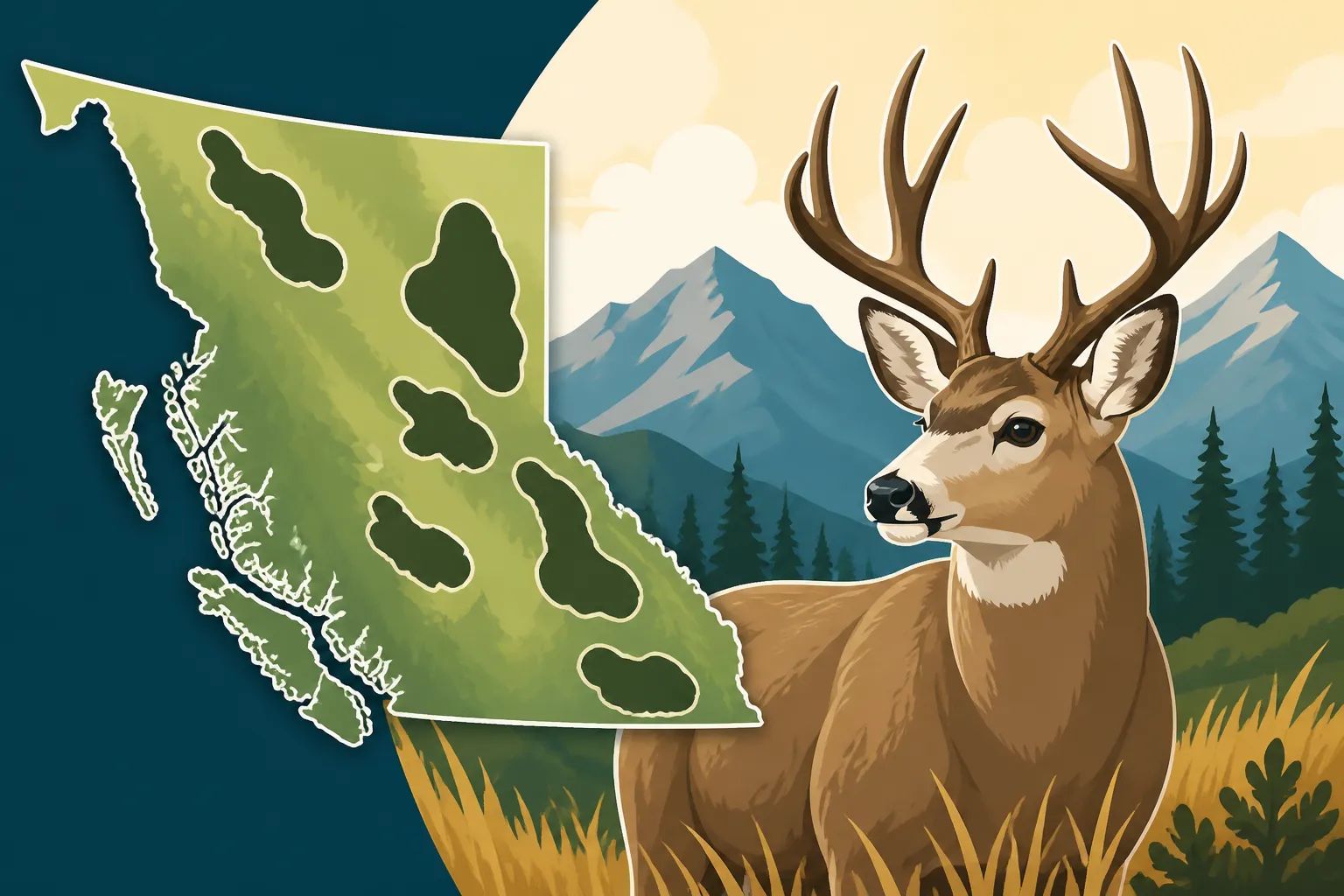
When we talk about mule deer in British Columbia, we're almost exclusively discussing the Interior Mule Deer subspecies. These animals are a cornerstone of the hunting heritage in areas east of the Coast Mountains, extending from the United States border right up into the Peace Region. They are creatures of varied terrains, equally at home picking their way through sagebrush flats as they are navigating the timbered slopes of the Cariboo or the rugged Kootenay mountains.
The sheer scale of their range means that "mule deer country" isn't a single, uniform type of habitat. Instead, it’s a patchwork, and a deer found in the dry, open hills near Kamloops might behave and utilize the land very differently from one living in the denser, higher-elevation forests near Prince George. This adaptability is part of what makes them such a fascinating game animal, but it also means hunters need to be versatile in their approach and deeply familiar with the specific characteristics of the area they choose to hunt. These deer are known for their distinctive bounding gait and large ears, which are constantly swiveling to pick up sounds, making them a formidable challenge for any hunter.
Key Habitat Characteristics for Mule Deer
Mule deer aren't just found anywhere; they have specific preferences that dictate their presence and density. Generally speaking, they seek out areas that offer a combination of good forage, ample cover for security and bedding, and access to water. This isn't much different from other deer species, but the type of forage and cover changes dramatically across BC's interior.
In the southern interior, such as the Okanagan or Thompson regions, mule deer are often associated with ponderosa pine and Douglas fir forests, interspersed with open grasslands and sagebrush benches. These areas provide nutritious browse, especially in the early morning and late evening, and the timber offers crucial thermal cover during hot days or cold snaps. As you move north or to higher elevations, the landscape shifts to more subalpine fir, lodgepole pine, and spruce forests, where mule deer will utilize clearcuts, natural openings, and avalanche chutes for feeding. They are remarkably adept at blending into their surroundings, even in seemingly open areas, making keen observation skills vital. You'll often find them along the edges where two habitat types meet, such as the transition from forest to an open cutblock, or where a riparian area meets drier uplands. Understanding What Mule Deer Eat in the Dry Interior can give you a significant advantage in identifying promising feeding grounds.
Regional Hotbeds: Where Mule Deer Thrive in the Interior
While mule deer are spread throughout much of British Columbia's interior, certain regions consistently stand out as prime hunting grounds due to higher populations, favourable habitats, or historical significance. These are the areas where hunters often focus their efforts, though each comes with its own set of challenges and unique characteristics.
The Okanagan and Thompson-Nicola Regions
The Okanagan and Thompson-Nicola regions, encompassing areas around Vernon, Kamloops, and Merritt, are iconic for mule deer hunting. These dryer, warmer regions are characterized by rolling hills, extensive grasslands, sagebrush benches, and open Ponderosa pine forests. This type of habitat is ideal for mule deer, providing abundant forage and good visibility for glassing. The deer in these areas tend to be highly mobile, moving between feeding grounds and bedding areas, often in relation to water sources and human activity.
Hunters often spend their time in these regions systematically glassing open hillsides at dawn and dusk. Areas like the Nicola Valley, with its mix of open range and scattered timber, can be particularly productive. The challenges here include the often-dense network of roads, which can mean more pressure in accessible areas, and the need to find those secluded pockets where mature bucks feel safe. Spot-and-stalk is a highly effective method here, especially in the more open country, requiring patience and a good understanding of topography. If you're looking for specific tactics, learning about Hunting a Grassland Draw in the Okanagan can be incredibly insightful, as can tips for Hunting a Sagebrush Flat for Mule Deer.
Cariboo and Chilcotin Plateaus
Moving further north, the Cariboo and Chilcotin Plateaus offer a different flavour of mule deer hunting. This vast expanse of central British Columbia is characterized by large, often remote, timbered tracts interspersed with lakes, rivers, and extensive cattle ranges. The mule deer here can be more scattered than in the Okanagan, but the sheer amount of wilderness means that finding unpressured animals is very much a possibility. The Cariboo is well-known for producing some truly impressive bucks, especially as you get into the more inaccessible areas.
Hunting the Cariboo and Chilcotin often involves navigating a complex network of logging roads, both active and deactivated. Success here frequently comes down to covering ground, finding fresh sign, and then working into those pockets of good habitat away from immediate road access. Clear-cuts, especially those a few years old that have regrown with palatable browse, can be excellent feeding areas. The deer in these regions will often use the heavier timber for cover during the day, emerging into openings or along forest edges to feed. The vastness also makes it a place where resources like GoHunt mapping tools become invaluable for identifying potential travel corridors, old logging blocks, and areas with limited human disturbance before you even leave home. This pre-trip research is critical for maximizing your time in such expansive territory.
Kootenay Valleys and Foothills
The Kootenay region, nestled in the southeastern corner of BC, presents yet another distinct mule deer environment. Characterized by rugged mountains, deep river valleys like the Rocky Mountain Trench, and a mix of coniferous forests and open slopes, the Kootenays are celebrated for their diverse wildlife, including healthy populations of mule deer. While often overshadowed by elk hunting in the region, the Kootenays offer excellent mule deer opportunities, particularly in the foothills and accessible mountain ranges.
Mule deer in the Kootenays will utilize a mix of habitats, from the valley bottoms to the steep, timbered mountain slopes. South-facing slopes, which get more sun exposure, are particularly important in colder months as they melt off sooner and provide early green-up. Hunting here often involves a good deal of vertical ascent, as deer will bed high on benches or in thick timber during the day. Access can vary, with some areas featuring extensive logging road networks and others requiring significant hiking or even horseback travel to reach prime hunting grounds. This region's unique geography means deer are often found at various elevations depending on the season, making a nuanced understanding of their habits crucial.
Seasonal Movements and Habitat Use
Mule deer are highly adaptive creatures, and their presence in any given area is often a direct reflection of the season. Understanding these seasonal movements is perhaps the most critical piece of the puzzle for successful hunting in British Columbia. What might be a prime spot in September could be barren in November, and vice-versa.
Summer Range: Alpine and Subalpine Basins
During the warmer months of late spring, summer, and early fall, many mule deer, particularly the mature bucks, will gravitate towards higher elevations. This means they'll often be found in the subalpine and alpine basins, above the main timberline. These areas provide several advantages: abundant lush forage like forbs and grasses that are unavailable at lower elevations, cooler temperatures to escape the summer heat, and fewer insects. The expansive, open nature of the alpine also offers excellent visibility, allowing deer to spot predators from a distance.
Hunters targeting these high-country bucks in the early seasons, especially during British Columbia's archery season openings, will often trek into these remote basins. It's challenging hunting, requiring significant physical exertion and careful navigation through rugged terrain. However, the reward can be substantial, as these areas often hold older, less pressured animals. Finding a Hunting a Subalpine Basin at First Light can be a truly magical and productive experience, provided you're prepared for the physical demands and unpredictable mountain weather.
Winter Range: Lower Elevations and South-Facing Slopes
As autumn progresses and the snow begins to fall, mule deer begin their annual migration from their high-elevation summer ranges down to their wintering grounds. This downward movement is driven by the need to find more accessible forage and escape deep snow, which makes travel difficult and feeding impossible. Winter ranges are typically found at lower elevations, often on south-facing slopes, which receive more sunlight and shed snow more quickly, exposing vital browse. These areas might include open grasslands, lower timbered benches, or river valleys.
Understanding these critical wintering areas is crucial for late-season rifle hunting. Deer will concentrate in these areas, making them potentially highly productive, but also more susceptible to hunting pressure. It's not uncommon to find significant numbers of deer packed into relatively small geographic pockets during harsh winters. However, hunters must exercise extreme caution and ethical judgment when deer are concentrated and vulnerable. Conservation principles dictate avoiding undue stress on wintering herds. Learning about Hunting the Fraser Canyon Slopes or similar lower-elevation, transitional zones can provide insights into these winter range dynamics.
The Rut: A Period of Increased Activity
The mule deer rut, typically peaking in mid-to-late November in British Columbia, is a period of intense activity and a prime time for hunters. During the rut, bucks become far less cautious as their focus shifts to breeding, making them more visible and active throughout the day. They will actively seek out does, often covering significant distances and exposing themselves in areas they might normally avoid.
During the rut, deer movements become less predictable in terms of specific habitat types and more driven by the presence of does. Hunters often find success by focusing on traditional doe bedding and feeding areas, knowing that bucks will inevitably pass through. The combination of early winter snow, which can make tracking easier, and the increased movement of bucks, creates a thrilling hunting opportunity. However, it's also a time when many hunters are in the woods, so finding quiet spots away from pressure can be key. The rut is also when antler restrictions, such as British Columbia's Four-Point Antler Restriction, become particularly relevant as hunters assess potential targets.
Influences on Mule Deer Distribution and Numbers
Mule deer populations and their distribution across British Columbia are not static; they are constantly influenced by a myriad of environmental factors, human activities, and natural cycles. Understanding these influences is essential for any hunter looking to consistently find deer and appreciate the broader ecological context of their pursuit.
The Impact of Wildfire and Logging
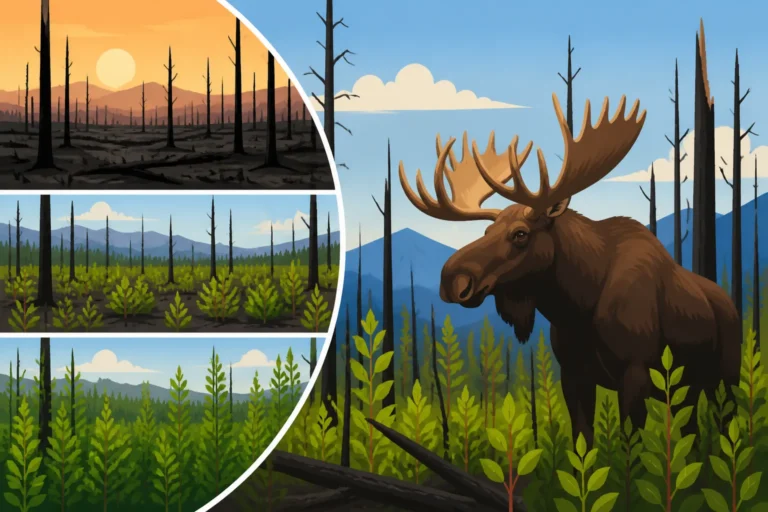
British Columbia experiences significant wildfire activity annually, and its landscape is also heavily shaped by logging. Both of these forces have profound, and often complex, impacts on mule deer habitat. Wildfires can initially be devastating, destroying vast tracts of forest and displacing animals. However, in the long term, fires can be incredibly beneficial. A burned area, after a few years, often sees an explosion of new growth – forbs, grasses, and shrubs – that provide highly nutritious forage for deer. These early seral stage habitats are deer magnets, especially on south-facing slopes.
Similarly, logging creates clearcuts that, while initially barren, quickly regenerate. Just like burns, these regenerating cutblocks provide abundant new growth and edge habitat that mule deer readily utilize. Deer will often browse on the tender new shoots and use the edges of standing timber for cover. A two to five-year-old cutblock can be an extremely productive area to hunt. Knowing how to hunt these transitional areas, like Hunting a Burned Slope Two Years On or a Hunting a Recent Cutblock in Its Third Year, is a valuable skill for any BC deer hunter. Conversely, very old, dense clearcuts or vast tracts of mature, closed-canopy forest offer less forage and typically hold fewer deer.
Predation and Environmental Factors
Mule deer populations are also heavily influenced by natural predators like wolves, cougars, and bears. While predation is a natural and healthy part of the ecosystem, intense predator pressure in certain areas, combined with other factors, can impact deer numbers and distribution. For instance, cougars are highly effective deer predators, and where their populations are high, deer might be more nocturnal or utilize thicker cover. Wolves can also have a significant impact, especially on wintering herds or in more open country.
Beyond predators, various environmental factors play a critical role. Severe winters with deep snow can lead to significant winter kill, particularly among fawns and older deer, impacting populations for years. Droughts can reduce forage quality and availability, pushing deer to seek out riparian zones or areas with more reliable water. Disease, though less common for mule deer in BC compared to some other regions, can also play a role. These ecological dynamics mean that deer populations can fluctuate, and what was a strong area one year might be less so the next. Keeping an eye on wildlife reports from the BC Ministry of Forests, Lands, Natural Resource Operations and Rural Development (FLNRORD) and local conservation groups can provide valuable insights into current conditions.
Scouting and Locating Mule Deer Habitat
The best mule deer hunters aren't just good shots; they're master scouts. Finding mule deer consistently in British Columbia's vast landscape requires a methodical approach, blending modern tools with traditional woodsmanship.
Utilizing Online Resources and Maps
In today's digital age, pre-season scouting is more accessible than ever. Before you even set foot in the woods, you can gain a tremendous amount of insight into potential mule deer habitat using online resources. Tools like Google Earth, Gaia GPS, and specialized hunting platforms such as GoHunt are indispensable. These platforms allow you to study topography, identify clearcuts of varying ages, locate south-facing slopes, and pinpoint potential travel corridors or pinch points. You can zoom in to see specific features like old skid trails, logging roads (active or deactivated), and water sources that might not be obvious on a standard paper map.
When using these tools, focus on identifying areas that meet the key habitat criteria for mule deer: a mix of open areas for feeding, dense cover for bedding, and proximity to water. Look for elevation changes, as deer often use these to escape pressure or find thermal cover. Pay close attention to the boundaries of different forest types, burns, and clearcuts. Learning how to effectively utilize these digital tools for Scouting a British Columbia Management Unit Online will save you countless hours of unproductive walking. Combine this with traditional paper maps for redundancy and a deeper understanding of the overall lay of the land, especially if you plan to be in areas without cell service. For those exploring new ground, familiarizing yourself with Using onX for British Columbia Crown Land or similar apps can be a game-changer for navigation and identifying property boundaries.
Boots on the Ground: Reading the Landscape
While digital tools are powerful, nothing replaces "boots on the ground" scouting. Actually being in the field allows you to confirm what you saw on the map, assess current conditions, and find fresh sign that indicates recent deer activity. Look for tracks, scat, rub lines on small trees (especially during the pre-rut and rut), and browse lines on bushes and saplings. Pay attention to bedding areas – often depressions in thick cover or on benches where deer can see downhill.
When scouting, focus on the transition zones: where timber meets open areas, where dry ridges meet moist creek bottoms, or where old growth meets new clearcuts. These "edge" habitats are frequently used by deer. Glassing at dawn and dusk from a high vantage point can reveal movement patterns and feeding areas. If you find a promising area, spend time observing it quietly. Mule deer are incredibly adept at disappearing into seemingly sparse cover, so patience and a good pair of binoculars are your best friends. Understanding how to interpret what you see, such as through techniques like Glassing an Interior Hillside for Mule Deer, will help you turn observations into actionable hunting plans. It's about connecting the dots between the habitat features and the deer's daily life.
| Region | Primary Habitat Types | Key Considerations for Hunting | Example Species Licences/Tags Needed |
|---|---|---|---|
| Okanagan/Thompson | Ponderosa Pine, Douglas Fir, grasslands, sagebrush benches, riparian zones | Dryer conditions, open visibility, road access, spot-and-stalk | Mule Deer, Black Bear |
| Cariboo/Chilcotin | Lodgepole Pine, Spruce, Fir, extensive clearcuts, rangeland, wetlands | Vast and remote, logging roads, finding fresh sign, potential for large bucks | Mule Deer, Moose, Black Bear |
| Kootenays | Rugged mountains, deep valleys, mixed coniferous forests, south-facing slopes, alpine basins | Vertical terrain, mixed habitat use, often combined with elk hunting, significant hiking | Mule Deer, Elk, Mountain Goat |
| Northern Interior | Mixed boreal forest, extensive burns, subalpine, muskeg, river drainages | Remote access, large areas of low pressure, early season alpine opportunities, challenging weather | Mule Deer, Moose, Bear |
Best Practices for Ethical Mule Deer Hunting
Hunting British Columbia's mule deer is a privilege that comes with significant responsibility. Adhering to ethical practices and understanding regulations ensures the health of the deer population and the future of hunting in the province.
Understanding Antler Restrictions and Regulations
British Columbia implements various antler restrictions to manage its deer populations, with the most common being the "four-point or better" rule for mule deer in many management units. This regulation means that a buck must have at least four points, excluding the brow tines, on one side of its antlers to be legally harvested. This rule is designed to protect younger bucks, allowing them to reach maturity and contribute to the gene pool. It's imperative that every hunter understands and correctly applies these rules in the field. Misidentifying antler points can lead to serious consequences.
Before heading out, always consult the most current British Columbia Hunting and Trapping Regulations Synopsis. Regulations can change between seasons and vary significantly from one Management Unit (MU) to another. The synopsis will detail open seasons, bag limits, antler restrictions, and any specific requirements for the MU you plan to hunt. Using resources like GoHunt to double-check MU boundaries and specific regulations for those zones is a smart step. Being familiar with regulations like British Columbia's Four-Point Antler Restriction ensures you are hunting legally and ethically. It's not just about compliance; it's about making informed decisions that support conservation.
Meat Care and Respecting the Harvest
Beyond the thrill of the chase, ethical hunting extends to the responsibility of meat care and respecting the animal you've harvested. In British Columbia's varied terrain and often warm early season temperatures, proper field dressing and cooling of your mule deer meat are paramount. Neglecting these steps can result in spoiled meat and wasted game, which is an unacceptable outcome for any hunter.
Upon harvesting a mule deer, immediate field dressing is crucial to begin the cooling process. If you're in a remote area, quartering the animal and getting the meat into game bags to allow for air circulation is often necessary. During warmer early seasons, consider having a plan for rapid cooling, whether that involves getting the meat to a cooler with ice as quickly as possible or hanging it overnight in a shaded, breezy spot if conditions allow. Always ensure you are familiar with the rules for transporting game meat and showing "evidence of sex" as required by BC regulations. Treating the animal with respect, from the moment of harvest through to processing, is a fundamental tenet of responsible hunting. For more specific advice on handling your harvest, consider looking into topics like Meat Care in British Columbia's Warm Early Seasons or Packing Meat With a Frame Pack.
Disclaimer
Please be aware that hunting regulations, seasons, and access can change. Always consult the most current British Columbia Hunting and Trapping Regulations Synopsis and local authorities before planning any hunting trip. This guide is for informational purposes only and should not be considered a substitute for official regulations. Ensure you have all required licenses and tags and understand ethical hunting practices.