British Columbia Grouse Season and Limits
Ah, the simple pleasure of a grouse hunt in British Columbia! It's one of those pursuits that can feel wonderfully straightforward, yet the moment you dive into the regulations, things can get surprisingly nuanced. Many of us just want to know when we can hit the bush, what we can take, and how to stay on the right side of the law without poring over every page of the synopsis. This guide aims to cut through that complexity, providing clear, practical information on British Columbia's grouse season dates and limits, so you can focus on enjoying your time outdoors.
Navigating British Columbia's Grouse Species
Before we dive into seasons and limits, it helps to know a little about the fantastic variety of grouse we have here in British Columbia. Understanding their habits and habitats will not only make you a more successful hunter but also deepen your appreciation for these resilient upland birds. It can be confusing trying to tell them apart on the fly, especially when you're just starting out or hunting a new area.
The Ubiquitous Ruffed Grouse: Forest Dweller
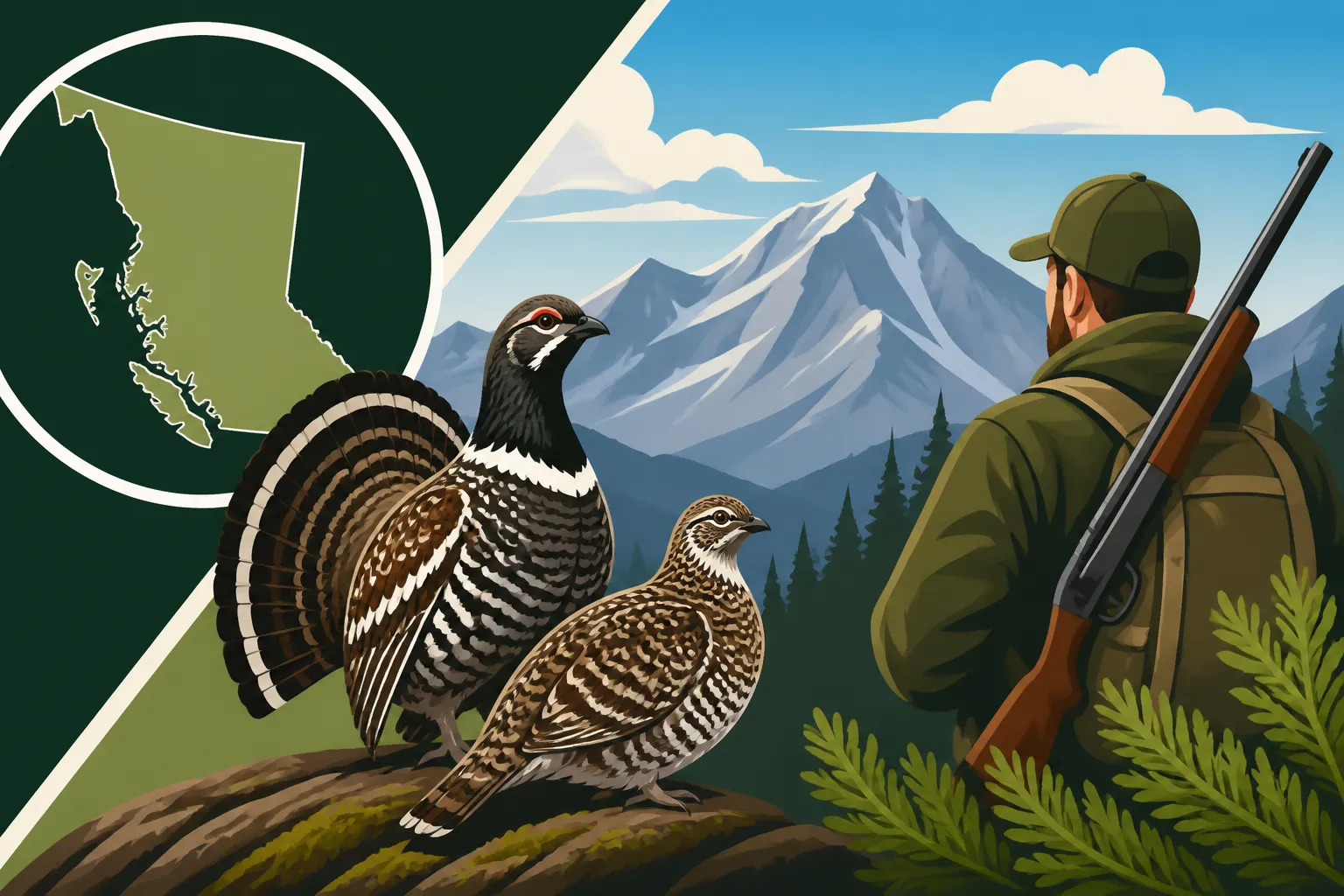
The ruffed grouse, often affectionately called "ruffies," are probably the most commonly encountered grouse across British Columbia. We've all heard that distinct drumming sound echoing through the woods, a territorial display by the male, usually from a log or stump. These birds thrive in mixed forests, particularly where there are thick stands of alder, young aspen, and willow interspersed with mature timber. They love areas with diverse cover, offering both food and protection from predators.
You'll find ruffed grouse almost everywhere in the province, from the coastal rainforest edges to the interior's dry pine forests and up into the northern reaches. They're particularly common along old logging roads, creek bottoms, and the edges of clearcuts where new growth provides abundant forage. If you're walking an old road or trail and hear a sudden, explosive flush from underfoot, chances are it's a ruffy.
Hunting ruffed grouse is a quintessential BC experience. They're known for their explosive flushes, often putting a tree between themselves and you in the blink of an eye, making them a challenging target. But the reward is a delicious meal, making them a favourite quarry for many upland hunters.
Elusive Spruce Grouse and Their Coniferous Domain
Spruce grouse are the quiet, often overlooked cousins of the ruffed grouse. They're typically found deep within dense coniferous forests, preferring areas with abundant spruce, lodgepole pine, and fir trees. Their plumage tends to be darker and more barred, providing excellent camouflage among the shadows and needles of their preferred habitat.
What really sets spruce grouse apart is their behaviour. They are famously tame, often earning them the nickname "fool hens" because they'll often stand their ground, seemingly oblivious to human presence, rather than flushing. This makes them relatively easy to approach, sometimes allowing for close observation. However, don't let their tameness fool you into thinking they're easy to hunt; finding them in their dense coniferous strongholds can be a real challenge. They're not going to flush loudly and reveal their position like a ruffy. Instead, they prefer to walk or fly silently deeper into the thick cover. Learning to differentiate them from other species can be tricky, but understanding their habitat is key. For more tips on identifying different species, you might want to read our guide on Telling a Blue Grouse From a Spruce Grouse.
You'll typically find them in the deep woods of the interior and northern BC, often in higher elevations during the summer months and moving slightly lower as the snow begins to fall. Hunting spruce grouse often requires a slower, more deliberate approach, with keen eyes scanning the forest floor and low branches.
The Majestic Blue Grouse: Dusky and Sooty Subspecies
The term "Blue Grouse" actually refers to two distinct species in British Columbia: the Dusky Grouse and the Sooty Grouse. While once considered a single species, they were separated in 2006. Sooty Grouse inhabit the coastal regions, including Vancouver Island and the mainland coast, while Dusky Grouse are found throughout the interior mountains. They are generally larger than ruffed or spruce grouse, with a more robust build and a beautiful, slate-blue-grey plumage.
Their habitat preferences also differ from the other grouse species. Sooty Grouse are found in coastal forests, often moving to higher elevations in the summer and descending to lower, often second-growth areas, as fall progresses. Dusky Grouse, on the other hand, are typically found in the dry interior, favouring ponderosa pine forests, fir stands, and open rocky slopes at higher elevations. A common strategy for these birds involves hunting them in subalpine and alpine country early in the season, then following their descent into lower timbered areas as snow pushes them down. They're known for their distinctive hooting calls in the spring and early summer.
Hunting these birds, especially the coastal Sooty Grouse, can be quite the workout as they often inhabit steep, rugged terrain. Early season hunts might involve scaling mountains to find them in the alpine, while later in the year, you might find them in more accessible timber. For specific advice on finding these birds, check out Where Blue Grouse Move in Fall or tips for Walking Up Blue Grouse on a Logging Road.
British Columbia's Grouse Season Dates and Bag Limits
This is where things can get a little tricky, but let's simplify it. British Columbia's hunting regulations are structured by Management Units (MUs) and Regions, and while grouse seasons are generally quite liberal, it's crucial to know the specifics for your intended hunting area. The good news is that for most of the province, the season for Ruffed, Spruce, and Dusky/Sooty Grouse is quite consistent.
General Open Seasons: When and Where
For most of British Columbia, the general open season for Ruffed Grouse, Spruce Grouse, and Dusky/Sooty Grouse opens on September 1st and runs through to December 31st. This is fantastic news for hunters, as it provides a long, ample window to pursue these birds, spanning from early fall's vibrant colours to the crisp, often snowy days of late autumn. However, it’s always best practice to double-check the exact dates for the specific Management Unit you plan to hunt. While the general dates are broad, minor variations or special conditions can exist, especially in areas with unique ecological considerations or high hunter pressure.
For example, whether you're planning a trip to the Cariboo (Region 5), the Kootenays (Region 4), or the Omineca (Region 6), you'll generally find these September 1st to December 31st dates apply. Even on the Coast (Region 1), the season dates are typically aligned. This consistency across much of the province simplifies planning considerably. However, always confirm using the official BC Hunting and Trapping Regulations Synopsis. For a broader overview of all upland game, you can refer to our guide on British Columbia Game Bird Seasons.
To help you get a general idea, here's a table outlining the typical season dates for the common grouse species in most regions:
| Grouse Species | Region | General Open Season | Daily Bag Limit | Possession Limit |
|---|---|---|---|---|
| Ruffed Grouse | Most Regions | September 1 – December 31 | 10 (combined) | 20 (combined) |
| Spruce Grouse | Most Regions | September 1 – December 31 | 10 (combined) | 20 (combined) |
| Dusky/Sooty (Blue) Grouse | Most Regions | September 1 – December 31 | 10 (combined) | 20 (combined) |
| Ptarmigan (Rock, Willow, White-tailed) | Specific Regions/MUs | Varies (often LEH or restricted) | Varies | Varies |
| Sharptail Grouse | Specific Regions/MUs | Varies (often LEH or closed) | Varies | Varies |
Note: Always consult the current BC Hunting and Trapping Regulations Synopsis for the most accurate and up-to-date information for your specific hunting area.
Daily and Possession Limits Simplified
The daily bag limit for Ruffed, Spruce, and Dusky/Sooty Grouse (combined) in most of British Columbia is 10 birds. This "combined" aspect is key – it means you can harvest a total of 10 grouse from any mix of these three species in a single day. So, if you shoot 5 ruffed grouse, 3 spruce grouse, and 2 blue grouse, you've hit your daily limit. You can't shoot 10 ruffed and then another 10 spruce; it's a cumulative total.
The possession limit, which refers to the total number of birds you can have in your possession at any given time (whether at your home, camp, or vehicle), is generally 20 birds (combined) for these species. This means you can accumulate up to two days' worth of limits before you need to consume or process your birds to stay within the legal limits. These generous limits reflect the healthy populations of these common grouse species across the province, giving hunters ample opportunity without overharvesting.
It's important to remember that these limits apply to the common grouse species. Other upland birds like Ptarmigan or Sharptail Grouse have different, often more restrictive, season dates and bag limits, and may even be subject to Limited Entry Hunting (LEH) draws or closures in certain areas. If you're targeting other species, make sure you know those specific rules. For example, Hunting Ptarmigan in British Columbia's Alpine will involve entirely different considerations.
Key Considerations for a Successful and Ethical Grouse Hunt
A successful grouse hunt isn't just about knowing the seasons and limits; it's also about understanding the regulations, practicing good ethics, and ensuring your safety and the safety of others. Overlooking these details can lead to fines, dangerous situations, or even loss of hunting privileges.
Navigating Regulations and Access
First and foremost, the British Columbia Hunting and Trapping Regulations Synopsis is your bible. Regulations can and do change, sometimes annually, and what was true last year might not be true this year. It's a dense document, I know, and it can feel overwhelming trying to decipher it all, but it's truly essential. Always make sure you're looking at the current version. Our guide Where to Read the Regulations Synopsis can help you find it. This synopsis is the definitive source for all legal requirements and overrides any general information you might find elsewhere.
Regarding access, British Columbia boasts vast tracts of Crown land, which is generally open to hunting. However, distinguishing between Crown land, private land, and various tenures like private forest land can be a challenge. Tools like GoHunt can be incredibly useful here. Using a detailed mapping application like GoHunt on your phone or computer can help you visualize land ownership boundaries in real-time, preventing accidental trespass. This is absolutely critical for avoiding issues, as British Columbia Trespass and Private Land Law is taken seriously. Many hunters find these apps indispensable for scouting a British Columbia Management Unit Online, allowing them to pinpoint legal access points and potential hunting spots before they even leave home.
Logging roads, while providing great access, can also be tricky. Some are active industrial roads, requiring radio communication and caution, while others might be deactivated or gated. Always be respectful of private landowners and follow any signage indicating "No Trespassing" or "Private Property." Remember, it's our responsibility to know where we're allowed to be.
Safety, Equipment, and Good Practice
Safety should always be your top priority. When hunting grouse, you'll typically be using a shotgun. Common gauges like 12-gauge or 20-gauge are popular, with shot sizes ranging from #6 to #7.5 being effective for these smaller birds. Always ensure your firearm is unloaded and cased when transporting it in a vehicle, and never shoot from a motorized vehicle or within the statutory no-shooting zones along roads. Knowing British Columbia Blaze Orange and Safety Rules is also crucial, especially during the general open season when many other hunters might be out for various species. Wearing blaze orange is not just a recommendation; in many scenarios, it's a legal requirement and always a smart choice for visibility.
Ethical hunting practices extend beyond legal compliance. This includes only taking clear, ethical shots, ensuring a quick and humane harvest, and always making every effort to retrieve downed birds. Wasting game meat is illegal and goes against the core principles of responsible hunting. If you hunt with a bird dog, that's fantastic! Dogs can significantly increase your retrieve rates and add another dimension to the experience. For tips on incorporating your canine companion, check out Using a Bird Dog in British Columbia Timber. Field dressing your birds promptly, especially in warmer early season conditions, helps preserve the meat quality.
Maximizing Your British Columbia Grouse Experience
Once you've got the regulations down and your gear sorted, let's talk about making the most of your time in the grouse woods. Timing and strategy can make a huge difference in your success and enjoyment.
Timing Your Hunt for Optimal Success
The long season for grouse in British Columbia offers varied experiences depending on when you choose to hunt:
- Early Season (September): This is often when birds are still in family groups, and cover is incredibly thick. It can be challenging to spot birds and get clear shots. However, the weather is usually pleasant, and the birds are often feeding heavily on berries, which can concentrate them in certain areas. Expect to walk a lot and work hard for your flushes. It's a great time for dogs to shine, helping you find birds hidden in dense vegetation.
- Mid-Season (October-November): As the leaves begin to fall and the weather cools, visibility in the woods improves dramatically. Birds may start to scatter from their family groups and become more wary. This can be an excellent time to hunt as the cooler temperatures are ideal for both hunters and dogs, and you can often cover ground more effectively without dense foliage impeding your view. Snow can start to appear at higher elevations, which can concentrate birds at lower altitudes.
- Late Season (December): Hunting grouse in December can be incredibly rewarding, especially if there's snow on the ground. Snow can make birds more visible and may concentrate them in specific areas with available food sources like conifer buds or residual berries. However, access can become a major challenge as logging roads may become impassable due to snow and ice. This late-season hunting often requires more rugged gear and careful planning, but the serene beauty of a snowy forest hunt is unforgettable.
Effective Hunting Strategies
When you're out there, having a few strategies up your sleeve can make all the difference. While "road hunting" (walking logging roads) is a popular and effective method for grouse, remember it's illegal to shoot from a vehicle. Get out and walk those old roads, especially where new growth is coming in. Focus on the edges of clearcuts, riparian zones along creeks, and areas with berry bushes or mixed timber.
Still-hunting through timber is another excellent strategy, particularly for spruce grouse or if you want to get off the beaten path. Move slowly, pause frequently, and use your eyes and ears to spot birds before they flush. Look for movement on the forest floor, in low branches, or even on old logs. These birds blend in remarkably well, so keen observation is key.
Utilizing modern scouting tools, like the mapping features on GoHunt, can give you a significant advantage. Before your hunt, you can use the satellite imagery to identify likely grouse habitat: old clearcuts, logging road networks, alder bottoms, and high-elevation berry patches. This pre-hunt scouting can save you valuable time in the field, directing you to prime areas that might otherwise go unnoticed. It’s like having an experienced guide in your pocket, showing you where the birds should be, even if you’re new to the area.
Disclaimer
The information provided in this article is for general guidance only and is not a substitute for the official British Columbia Hunting and Trapping Regulations Synopsis. Hunters are responsible for consulting the most current synopsis published by the provincial government to ensure full compliance with all regulations, seasons, and bag limits specific to their chosen hunting area. Regulations are subject to change without notice.