Hunting on a British Columbia Military Base
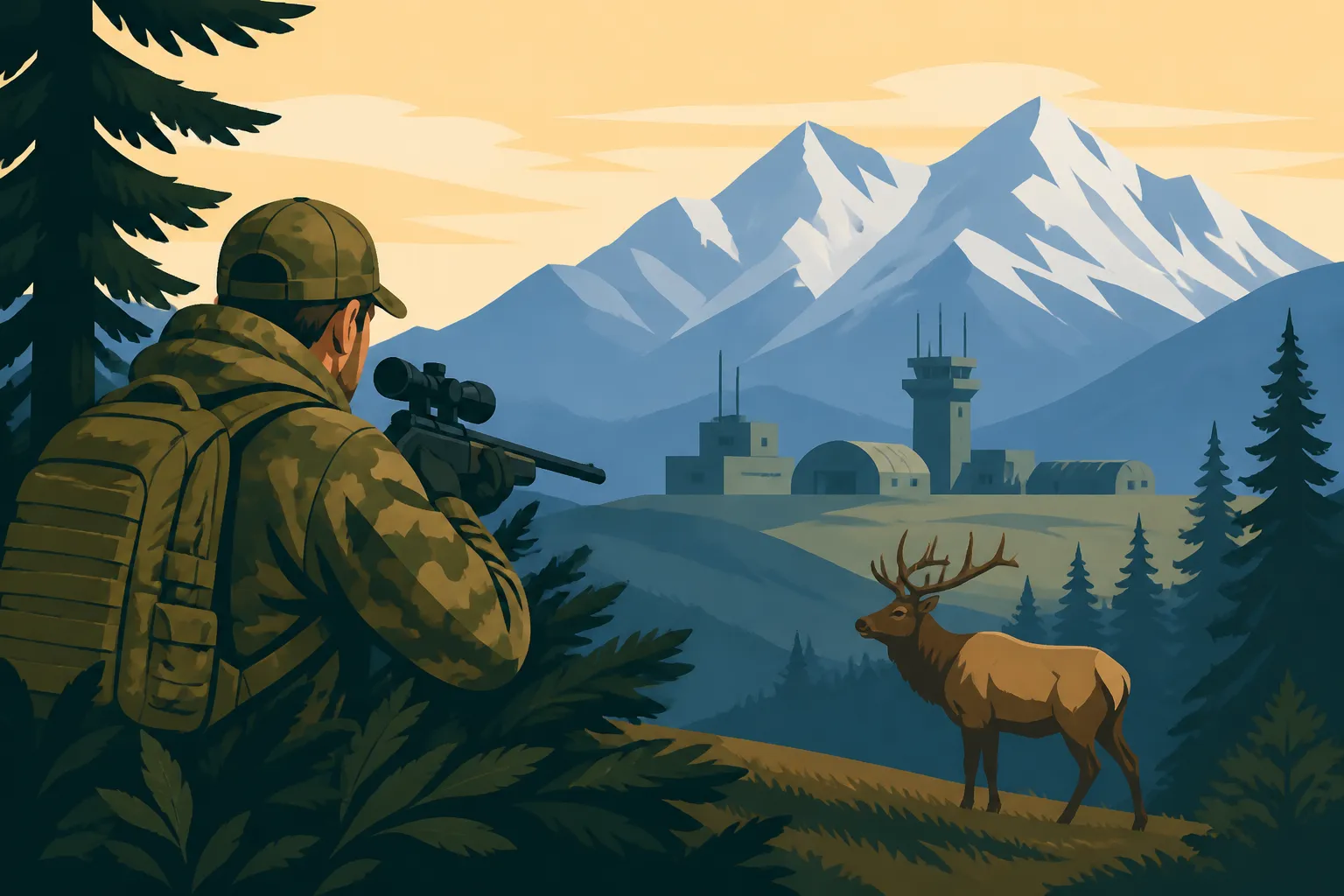
There's a natural curiosity many British Columbia hunters share about military bases. You see these large tracts of land on a map, often in otherwise wild areas, and can't help but wonder if they hold untapped hunting opportunities. However, the reality of hunting on a Canadian Forces Base (CFB) or other Department of National Defence (DND) land in British Columbia is far more complex and restrictive than most hunters realize, often leading to frustration and confusion. This guide aims to demystify those regulations and set realistic expectations for anyone considering such an endeavour.
The Complex Landscape of Military Base Hunting in British Columbia
When you look at a map of British Columbia, you'll spot areas designated for military use, like certain training areas near Chilliwack or even the expansive land associated with CFB Esquimalt on Vancouver Island. For many hunters, these vast, often undeveloped zones spark intrigue. It's easy to assume that because they're not explicitly designated as parks or private land, they might offer unique hunting experiences. But the truth is, DND lands operate under a completely different set of rules than your typical provincial Crown land, making public access for hunting exceedingly rare.
Federal Versus Provincial Jurisdictions
One of the biggest hurdles is understanding the difference between federal and provincial land. Most of what we consider "public land" for hunting in British Columbia falls under provincial jurisdiction, often referred to as Crown land. The provincial government sets the hunting seasons, bag limits, and licensing requirements that we're all familiar with. However, military bases and training areas are federal land, managed by the Department of National Defence. This means that provincial hunting regulations, while still potentially relevant for any hunting activities that might occur there, are secondary to DND's own policies, security protocols, and operational requirements. It's a bit like trying to apply fishing rules for a provincial lake to a private fish farm; the core activity is similar, but the governing body and access rules are entirely different. You can spend hours poring over maps or using tools like GoHunt to scout British Columbia's Crown Land Access, but these resources rarely provide insight into DND-specific access rules because the land isn't managed by the province.
Security and Operational Imperatives
The primary purpose of any military base is national defence, training, and security. This overarching mission dictates everything from daily operations to land use. Imagine trying to hunt in an area where live-fire exercises are conducted, where military vehicles are constantly moving, or where classified operations might be taking place. The risks, both to hunters and to military personnel, are simply too high for casual public access. Controlled access is paramount, and often, this means outright prohibition for non-military personnel seeking recreational entry. Even if a specific area isn't actively in use for a training exercise, the potential for unexploded ordnance, hidden hazards, or sudden operational changes makes unmanaged public hunting extremely problematic. This is a critical distinction from, say, a remote logging block where a hunter's biggest concern might be encountering a bear or getting lost.
Environmental Stewardship and Conservation
Beyond security, DND also has significant responsibilities regarding environmental stewardship on its lands. Many military bases contain unique ecosystems, wildlife habitats, or species at risk. For instance, the training area near CFB Suffield in Alberta, though not in BC, is a prime example of how DND lands can be vital for conservation due to limited human disturbance. While this might sound like a potential boon for wildlife and thus hunting, it also means that DND can implement very strict environmental regulations that further restrict or prohibit hunting to protect sensitive areas, flora, or fauna. They might have their own wildlife management plans that don't align with general provincial hunting seasons or bag limits, or they might simply deem hunting incompatible with their conservation goals for specific zones.
Understanding the Regulations: Why Military Land Isn't Your Typical Hunting Ground
The dream of discovering an untouched hunting paradise on a military base often collides with the dense reality of federal regulations, permits, and layers of bureaucracy. Unlike applying for a British Columbia Hunting Licences and Fees or understanding British Columbia's Management Units and Regions, gaining access to military lands requires navigating a completely separate system, one that's not designed with recreational hunting in mind.
The DND's General Stance on Public Access
Historically, and presently, the Department of National Defence maintains a very restrictive policy regarding public access to its lands. While some DND properties across Canada might have very limited, specific programs for recreational use (often heavily controlled and for activities like hiking or bird watching, rather than hunting), these are the rare exceptions, not the rule. For hunting, the default position is typically "no entry." This isn't out of malice, but out of necessity for safety, security, and operational efficiency. You won't find DND lands listed in the provincial Hunting Regulations Synopsis as open to general season hunting, nor will they appear on typical hunting apps as accessible public land.
Required Permits and Authorizations
If, by some slim chance, a particular DND property did allow hunting, the requirements would be exceptionally stringent. It would involve a specialized permit, separate from your regular provincial hunting license and tags. This permit would likely demand a rigorous application process, background checks, safety briefings, and a deep understanding of very specific, localized rules that might change at a moment's notice. You'd probably need to demonstrate familiarity with base protocols, emergency procedures, and likely be accompanied by DND personnel or an authorized escort. These aren't the kind of permits you pick up at a local sporting goods store. They would be highly exclusive, difficult to obtain, and likely reserved for very specific, tightly controlled circumstances, perhaps related to wildlife management programs initiated by the DND itself.
Severe Penalties for Unauthorized Entry
One of the most critical things for any hunter to understand is the grave consequences of unauthorized entry onto DND land. Trespassing on a military base is not merely a minor infraction like wandering onto private farmland. It is a serious federal offense that can carry severe penalties, including hefty fines, confiscation of firearms and equipment, and even imprisonment. Military police have full authority to enforce these laws, and they do so with a zero-tolerance policy, especially when it comes to individuals carrying firearms. The risks far outweigh any potential (and almost certainly non-existent) hunting reward. You could easily find yourself facing federal charges, which would have long-lasting negative impacts, far beyond a simple provincial hunting violation. Always double-check boundaries, and if you have any doubt, stay clear. Even general scouting tools or mapping apps like GoHunt, while excellent for public land, cannot guarantee accurate, up-to-date information on the dynamic and highly restricted nature of military properties.
Navigating Potential Access Points and Procedures
Despite the general restrictions, it’s understandable that hunters still wonder if there are any avenues for access, or if specific military bases in British Columbia might be different. The short answer is: don't count on it for recreational hunting. However, understanding the theoretical frameworks for how any such access might be granted is still valuable for setting realistic expectations.
Researching Specific British Columbia Military Bases
British Columbia hosts several significant DND sites, including CFB Esquimalt (Navy base near Victoria), CFB Chilliwack (now largely converted, but still has DND presence), and various training areas and depots scattered across the province. When it comes to hunting, the general rule of thumb is that active military installations, especially those with high security and frequent operations, will almost universally prohibit public hunting. For instance, the land around CFB Esquimalt is urban or heavily developed, making hunting completely out of the question for obvious reasons.
However, some DND lands, particularly remote training areas or lands primarily held for future expansion or buffer zones, might theoretically have different policies. This is where diligent, direct inquiry is absolutely crucial. You would need to contact the specific base's Public Affairs Office or Range Control directly. Do not rely on third-party information or assumptions. Be prepared for a polite but firm "no," or an extensive list of requirements that are practically impossible for a recreational hunter to meet. It's not about finding a loophole; it's about understanding if an official, sanctioned program exists. You'll likely discover that even if portions of these lands appear wild, they are still under strict control, and the idea of "hunting a British Columbia military base" is more fantasy than reality for the vast majority of hunters.
The Remote Possibility of DND-Managed Wildlife Programs
In extremely rare cases, DND may conduct its own wildlife management programs on portions of its land. These programs are typically driven by ecological necessity, such as controlling an overpopulation of a specific species that poses a risk to military operations (e.g., deer on an airfield) or managing an endangered species habitat. If such a program were to involve hunting, it would be highly controlled, likely through a lottery system or a select group of authorized participants, and would be explicitly managed by DND personnel, not open to general public application via provincial means. This isn't hunting for recreation; it's participating in a tightly regulated, DND-led conservation or control effort. It is not something you would discover by simply using a mapping program or researching British Columbia's Species Licences and Tags.
Contacting DND Directly for Information
If you are genuinely curious about specific DND land, the correct and only approach is to contact the base's official channels. Avoid attempting to "scout" the perimeters or making assumptions based on what you see from public roads. This could easily lead to misunderstandings with military police or security personnel.
Here’s a general approach:
- Identify the specific DND property: Pinpoint the exact base or training area you are interested in.
- Locate the Public Affairs or Base Commander's Office: Search online for the official contact information for the base.
- Make a polite, formal inquiry: Clearly state your question regarding hunting access. Be prepared to explain why you are asking and to accept their official response.
- Do not push or argue: If told access is not permitted, respect that decision.
This approach will not guarantee access, but it is the only respectful and lawful way to seek information. Any other method risks legal repercussions and contributes to negative perceptions of hunters.
The Practicalities and What to Expect When Seeking Information
Let's be pragmatic here. The likelihood of a typical British Columbia hunter gaining access to DND lands for recreational hunting is incredibly slim. Expecting to find an open season or an easily obtainable permit on a military base is simply not realistic given the overriding concerns for national security and public safety.
Managing Expectations for Access
The most practical expectation is that DND lands are closed to public hunting. Any deviation from this would be an exceptional, highly publicized, and tightly controlled program. Hunters should focus their efforts on the abundant and well-established hunting opportunities available on provincial Crown land throughout British Columbia. Understanding British Columbia Big Game Season Dates or British Columbia's Limited Entry Hunting Draws on public lands will yield far greater success and less frustration than chasing the elusive possibility of military base access. While advanced mapping and scouting tools like GoHunt are incredible for planning trips into the backcountry, their utility largely ends at the perimeter of federal military properties.
Alternative Hunting Strategies Near Military Lands
Sometimes, DND lands act as de facto wildlife sanctuaries, meaning animals living on these properties may venture onto adjacent Crown land. This presents a completely legal and ethical opportunity. If you've identified a military base in an area with good game populations, your best bet is to focus on the immediately surrounding provincial lands, adhering strictly to all provincial regulations and ensuring you know the exact boundary lines.
Consider the following strategies:
- Boundary Hunting: Hunt adjacent provincial Crown land, always being mindful of the DND property line. Use GPS and detailed maps to ensure you don't inadvertently cross into restricted federal territory.
- Game Trails: Observe if game trails lead from DND land onto accessible public land. Animals often move between these areas for food, water, or bedding.
- Scouting Nearby: Focus your Scouting a British Columbia Management Unit Online efforts on the general area around the military land. You might find excellent opportunities just outside the restricted zones.
Remember, the goal is to hunt legally and ethically on accessible land, not to trespass or create conflict.
Comparison: Crown Land vs. Military Base Access
To further illustrate the difference, let's look at a quick comparison:
| Feature | Provincial Crown Land (General Open Season) | Department of National Defence Land (Military Base) |
|---|---|---|
| Jurisdiction | Provincial Government | Federal Government (Department of National Defence) |
| Primary Purpose | Public use, resource extraction, recreation, conservation | National defence, military training, security |
| Hunting Access | Generally open with valid provincial license/tags (unless restricted) | Generally prohibited; highly restricted access if any |
| Permits Required | Provincial hunting license, species tags | DND-specific permits (if any program exists), highly specialized |
| Regulations | BC Hunting Regulations Synopsis, Wildlife Act | DND Orders and Instructions, Federal laws, provincial (if applicable) |
| Consequences of Trespass | Provincial fines, potential loss of hunting privileges | Federal fines, potential imprisonment, confiscation of firearms |
| Ease of Information | Readily available online, via government publications, apps (e.g., GoHunt) | Difficult to obtain, requires direct contact with DND, very limited public info |
| Safety Concerns | Wildlife, natural hazards, other users, Bear Safety While Hunting in British Columbia | Live fire, unexploded ordnance, military operations, security personnel |
Ultimately, while the idea of hunting a military base might spark the imagination, the practical realities and legal implications mean that British Columbia hunters are best served by focusing their passion and efforts on the vast and accessible provincial Crown lands that define our incredible province. Prioritize safety, legality, and respecting the purpose of these vital national defence sites. For detailed planning and understanding open seasons, remember that excellent tools exist for public lands. You can also dive into articles like Hunting British Columbia's Logging Road Network or Emergency Planning in British Columbia's Backcountry for more practical advice on accessible areas.
Disclaimer
This guide provides general information regarding hunting on British Columbia military bases and DND lands. Regulations are subject to change, and specific access policies may vary between individual military installations. Always verify current rules and obtain explicit authorization directly from the Department of National Defence before attempting to access any DND property. Unauthorized entry onto military land is a serious offense with severe penalties. This content is for informational purposes only and does not constitute legal advice or an invitation to trespass.