Hanging Meat at a Backcountry Camp
There’s nothing quite like the immense satisfaction of a successful hunt deep in the British Columbia backcountry, miles from the nearest road. But that satisfaction can quickly turn to anxiety if you don't have a rock-solid plan for keeping your hard-earned meat cool and safe from scavengers. The challenge of preserving wild game when you’re days away from a freezer is a common stressor for many hunters, especially during early season or warmer weather. This guide will walk you through everything you need to know about effectively hanging meat at a backcountry camp, ensuring your harvest makes it home in prime condition.
The Critical Importance of Proper Meat Care in the Backcountry
Bringing an animal down is only half the battle; the true test often begins immediately after. The British Columbia wilderness, with its varying temperatures and abundant wildlife, demands meticulous attention to meat care. Skimping on these crucial steps can mean the difference between a freezer full of delicious wild game and a heartbreaking loss.
Why Speed and Cleanliness Matter Most
The moment an animal is harvested, the clock starts ticking. Bacteria, naturally present on the animal's hide and in its gut, begin to multiply rapidly, especially in warm conditions. Your immediate priorities are to reduce the internal body temperature of the animal as quickly as possible and to ensure extreme cleanliness during field dressing and quartering.
Think of it like this: your wild game is a perishable grocery item from the second it hits the ground. The internal heat needs to dissipate. This means getting the hide off, removing all organs, and ideally, splitting the pelvis and sternum to allow air circulation. Any gut contents, hair, or dirt that comes into contact with the meat can introduce bacteria, accelerating spoilage. This is particularly true for larger animals like moose or elk, where massive muscle groups retain heat. Even in cooler weather, you'd be surprised how long internal heat can linger. Always carry a sharp, clean knife, game bags, and perhaps a small bottle of hand sanitizer. The goal is to work efficiently and minimize contamination. For those hunting in warmer periods, understanding Meat Care in British Columbia's Warm Early Seasons becomes paramount, as the risk of spoilage increases dramatically with every degree above freezing.
Dealing with Warm Weather and Unexpected Delays
British Columbia's hunting seasons can range from the crisp, cool mornings of late fall to the surprisingly warm days of early September, especially when you’re Hunting British Columbia's Alpine in Early September. Warm weather is the ultimate enemy of backcountry meat preservation. Temperatures above 5°C (41°F) significantly accelerate bacterial growth. If you're out during these periods, extra precautions are not just recommended, they're mandatory.
This might involve planning your hunt around cooler north-facing slopes, hunting in the early morning and late evening, and prioritizing the fastest possible field dressing and quartering. Sometimes, despite your best efforts, unforeseen circumstances can delay your pack-out. A sudden storm, an injury, or simply the sheer difficulty of Getting Meat Out of Steep British Columbia Country can mean your meat hangs longer than planned. In such scenarios, a robust hanging strategy is your only hope. This is where proper airflow, protection from sun, and vigilant monitoring become even more crucial. Remember, even a cool night can be followed by a warm, sunny day, so never assume the weather will cooperate.
Essential Gear for Hanging Game Meat
You can't just wish your meat cool and safe. Having the right tools for the job is non-negotiable for successful meat preservation in the backcountry. Investing in quality gear upfront saves you heartache and wasted effort later on.
Choosing the Right Game Bags
Game bags are not just glorified pillowcases; they are specialized tools designed to protect your meat while allowing it to breathe and cool. Don't fall for the trap of using plastic tarps or garbage bags, which will trap heat and moisture, quickly spoiling your meat.
- Breathable Synthetic Bags: These are the gold standard. Made from materials like synthetic blends (e.g., polyester or nylon mesh), they are lightweight, durable, reusable, and most importantly, breathable. They keep flies and insects off the meat while allowing air to circulate, facilitating the formation of a protective "crust" on the meat's surface. Brands like TAG Bags or breathable synthetic game bags you might find reviewed on GoHunt are excellent choices. They come in various sizes suitable for everything from a quarter of a mule deer to a full moose.
- Cotton Bags: While traditional and breathable, cotton bags are heavier when wet, harder to clean, and less durable than synthetic options. They can also absorb blood and become a breeding ground for bacteria if not cleaned meticulously.
- Muslin Bags: A finer weave than standard cotton, muslin offers good breathability and insect protection but shares many of cotton's drawbacks regarding weight and cleaning.
When choosing, consider the size of game you typically hunt. For deer, a set of four quarter bags is usually sufficient. For larger animals like elk or moose, you'll need larger bags, possibly even a specific 'boned-out' bag if you plan to debone in the field. Having an extra small bag for the tenderloins, heart, and liver is also a good idea. Always carry more bags than you think you need; you never know when you might need to re-bag a quarter due to contamination or damage.
| Game Bag Material | Pros | Cons | Ideal Use |
|---|---|---|---|
| Synthetic Mesh | Lightweight, durable, breathable, reusable | Can be more expensive initially | All game, especially large animals, warm weather |
| Cotton | Traditional, breathable, affordable | Heavy when wet, harder to clean, less durable | Cooler weather, smaller game |
| Muslin | Fine weave, good insect protection | Similar cons to cotton, less robust | Small game, specialty cuts |
Ropes, Hoists, and Protection from Predators
Once the meat is in the bags, the next challenge is getting it off the ground and securing it. This requires a robust system to protect against the ever-present threat of scavengers. British Columbia is home to black bears, grizzlies, wolves, and cougars – all of whom would happily claim your hard-earned meat.
- Ropes: Bring at least 50-100 feet of durable, thin rope (e.g., paracord or static climbing cord). This is essential for hoisting quarters into trees, securing them, and even helping with Packing Out of British Columbia's Steep Country.
- Hoist Systems: For heavier game like elk or moose, a small, lightweight pulley system can be a godsend. Brands like HME offer compact game hoists that dramatically reduce the effort needed to lift heavy quarters. If you plan to quarter a large animal like a moose, especially if you're alone or with limited help, a hoist is almost a necessity. Consider practicing with it at home first.
- Tarps/Ground Cloths: While not for covering the meat directly, a clean tarp laid on the ground during field dressing protects the meat from dirt and debris. You can also use a light-colored tarp or space blanket strategically placed above the hanging meat (not touching it) to provide shade from direct sunlight, reflecting heat away.
- Predator Protection: This is critical. The scent of fresh meat will attract predators. Your hanging system must be robust enough to withstand significant attempts by bears or wolves. This means hanging meat high enough (at least 10-12 feet off the ground and 4 feet from the tree trunk) and far enough from camp to deter immediate investigation but close enough for you to monitor. You should also consider Bear Safety While Hunting in British Columbia in general, and always have bear spray readily accessible, even in camp. For regions where grizzlies are prevalent, like those mentioned in Quartering a Moose in Grizzly Country, the stakes are even higher.
Step-by-Step Guide to Hanging Meat at Camp
Knowing the gear is one thing; putting it into practice in the field is another. Here's a systematic approach to ensure your meat is hung properly and safely.
Field Dressing and Quartering for Backcountry Transport
This is the very first step and sets the stage for everything that follows. The cleaner and more efficient you are here, the better your meat will be.
- Immediate Evisceration: As soon as the animal is down, get to work. Position the animal on a slope if possible to aid drainage. Open the body cavity from the sternum to the pelvis, being careful not to puncture the intestines. Remove all internal organs. This is paramount for cooling. For a detailed breakdown of this crucial initial step, consider resources like those found on GoHunt, which often provide excellent video tutorials.
- Cleanliness is Key: Throughout this process, avoid contaminating the meat with hair, dirt, or gut contents. If working on the ground, use a clean tarp or large game bag as a barrier.
- Skinning and Quartering: For most backcountry hunts, you'll want to skin the animal entirely. This allows for maximum air circulation and cooling. Once skinned, quarter the animal. For deer-sized game, this typically means separating at the natural joints (shoulders, hindquarters). For larger animals, you might further break down the quarters into smaller, manageable pieces (e.g., boning out sections) to facilitate packing. Remove as much fat as possible, as fat can spoil faster than lean meat and doesn't cool as quickly.
- Bagging the Meat: Immediately place each quarter or section into a breathable game bag. Ensure the bags are tied securely but allow for some airflow around the meat. Do not overstuff the bags.
Finding the Ideal Hanging Location
The spot where you hang your meat is just as important as the hanging itself. A poorly chosen location can negate all your careful field dressing.
- Shade, Always Shade: This is non-negotiable. Find an area that will remain in the shade for as much of the day as possible. North-facing slopes or dense stands of conifers are ideal. Direct sunlight will rapidly warm the meat, promoting bacterial growth.
- Good Airflow: Look for an open area within the treeline, away from thick underbrush, where breezes can circulate freely. A constant flow of air helps to cool the meat and form a protective dry crust. Avoid hanging meat in stagnant, humid depressions.
- Distance from Camp: While you want to keep an eye on your meat, it's also a strong attractant for predators. Hang your meat a reasonable distance downwind from your camp – say, 100-200 yards (90-180 meters). This creates a buffer zone. However, ensure it's still accessible for checking and moving if needed. This balance between proximity and safety is crucial, particularly if you're camping in bear country, where What to Do If You See a Grizzly is something you should know by heart.
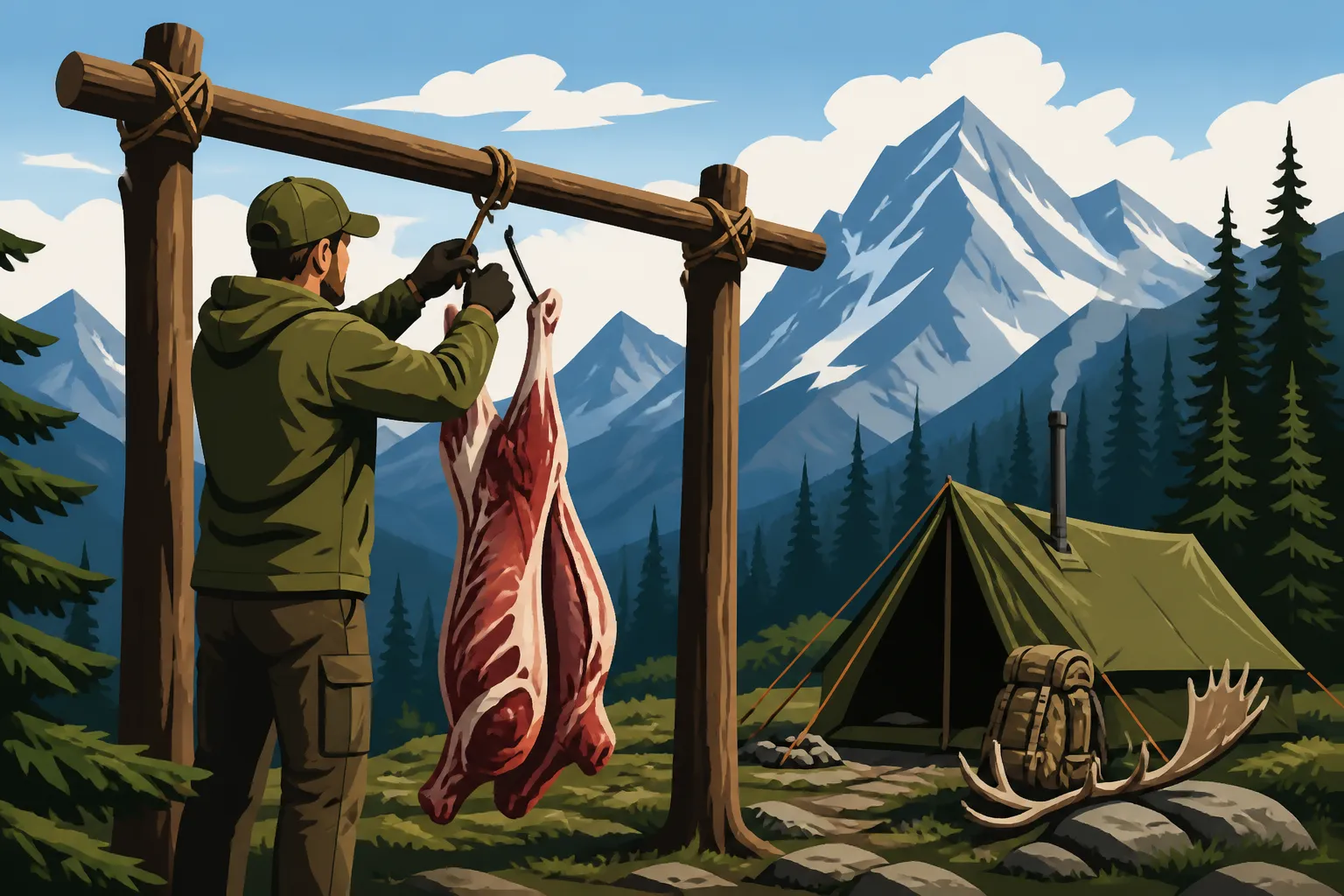
- Strong, Accessible Trees: Identify sturdy trees with branches strong enough to hold the weight of your meat, which can be considerable, especially if you're hanging multiple quarters from a large animal. The branch should be high enough to allow the meat to hang at least 10-12 feet off the ground, preventing most bears from reaching it, and far enough from the trunk (at least 4 feet) so they can't climb up and knock it down. For tips on setting up a remote base, Setting a Spike Camp Above Timberline offers valuable insights that can apply to hanging locations.
Rigging Your Hanging System Safely
Once you've found your spot, it's time to get the meat airborne. Safety and security are paramount here.
- Simple Rope System: For lighter quarters (e.g., deer), a single rope over a sturdy branch can suffice. Tie one end of the rope to your game bag, throw the other end over the branch, and pull. Secure the loose end to the tree trunk.
- Pulley System for Heavy Loads: For elk, moose, or multiple deer quarters, a pulley system is highly recommended.
- Attach the Pulley: Attach a lightweight pulley to the rope before throwing it over the branch. This reduces friction and makes hoisting much easier.
- Secure the Meat: Attach your game bag(s) to the free end of the rope. You might use a gambrel or a sturdy stick threaded through the tendon of the hindquarter to hang multiple pieces.
- Hoist and Secure: With the pulley, pull the meat up slowly and steadily. Once it's at the desired height (10-12 feet off the ground, 4+ feet from the trunk), secure the rope firmly to the base of the tree with a series of half-hitches or a trucker's hitch. Make sure there's no way for the rope to slip. Double-check all knots.
- Additional Protection:
- Tarps for Shade: As mentioned, a light-colored tarp suspended above the meat (not touching) can provide extra shade on sunny days. Ensure it's secured so it doesn't flap in the wind or touch the meat.
- Scent Control: While impossible to eliminate entirely, try to minimize meat scent around your camp. Store offal well away from camp and meat, or bury it deeply.
- Visual Deterrents: Some hunters use reflective tape or strips of Mylar tied near the meat, hoping the movement or sparkle will deter curious animals. This is a secondary measure, not a substitute for a solid hanging system.
Strategies for Long-Term Meat Preservation in Remote Camps
Sometimes, you're not just hanging meat overnight. Extended stays in remote British Columbia often mean your game needs to hang for several days before you can pack it out. This requires more advanced strategies.
Airflow, Shade, and Temperature Management
These three elements work in concert to create the ideal environment for your meat. The goal is to dry the surface of the meat, creating a protective layer, while keeping the core temperature as low as possible.
- Maximize Air Circulation: The more air that moves around your meat, the better it will cool and dry. If possible, choose a location where the prevailing wind can naturally pass through the hanging area. Periodically check if branches or other obstructions are hindering airflow. If you have multiple quarters, ensure they are not touching each other, allowing air to get to all surfaces.
- Constant Shade is Paramount: Re-evaluate your chosen spot as the sun moves throughout the day. What was shaded at noon might be in direct sun by 3 PM. If necessary, adjust your tarp setup or even move the meat to a different tree. The ambient air temperature can be deceiving; direct sunlight will cook your meat quickly.
- Monitoring Temperatures: If you have a small, lightweight thermometer, hang it near your meat to monitor the ambient temperature. Ideally, you want temperatures to be consistently below 5°C (41°F). If temperatures rise above this for extended periods, especially during the day, you'll need to consider alternatives like boning out and getting the meat packed out faster, or even finding a natural cold spot like a snow patch or stream bed if available (though direct water contact can promote spoilage). This level of vigilance is crucial when facing the challenges of Meat Care in British Columbia's Warm Early Seasons.
Deterring Bears and Other Wildlife
No matter how high you hang your meat, the smell will still be a beacon for wildlife. You need a multi-layered approach to deter these persistent scavengers.
- Distance and Height: As discussed, hanging your meat 10-12 feet high and 4 feet from the tree trunk is your primary defense. This prevents most ground-based animals from reaching it and makes it difficult for climbing animals.
- Scent Management: Minimize scent around your camp. Change out of your hunting clothes before going to sleep. Store all food, cooking gear, and toiletries in bear-resistant containers or hung from a separate tree away from your meat. If you're on a multi-day trip, even brushing your teeth and cooking away from your tent can reduce human-related attractants. Resources and products often recommended on platforms like GoHunt emphasize these practices.
- Physical Barriers: For very aggressive bears, some hunters resort to more extreme measures if legal and safe. This might include:
- Electric Fences: Lightweight, portable electric fences designed for bear deterrence are available. These require careful setup and power but can be highly effective. This is an advanced strategy and not always practical for every backcountry hunt.
- Nocturnal Monitoring: While not always feasible, in extremely high-risk areas, having a designated "bear watch" or motion-activated alarm can provide early warning.
- Constant Vigilance: Even with the best system, bears are incredibly persistent and intelligent. Regularly check your meat cache. Look for signs of disturbance, claw marks on trees, or tracks. If you see signs of a bear actively working on getting to your meat, you might need to re-evaluate your system or be prepared to relocate your meat entirely. Remember, your ultimate safety is more important than the meat. For more comprehensive information, consult guides on Emergency Planning in British Columbia's Backcountry.
Disclaimer
The information provided in this guide is for general informational purposes only and does not constitute professional advice. Hunting regulations, safety protocols, and environmental conditions can change. Always consult the most current British Columbia Hunting and Trapping Regulations Synopsis, local authorities, and experienced professionals before embarking on any hunting trip. Adhere to all provincial and federal laws. Safety in the backcountry is paramount, and every hunter is responsible for their own actions and preparations.