Hunting a Skeena River Bench
The idea of hunting a Skeena River bench can fill a hunter with both excitement and a healthy dose of trepidation. It sounds idyllic – vast, wild river country, teeming with game. But the reality is that these unique riverine ecosystems, while incredibly productive for wildlife, present some serious challenges. From navigating tricky access to understanding how game uses these specific elevated terraces, it’s not as simple as just showing up. This comprehensive guide is here to break down exactly what you need to know to successfully hunt a Skeena River bench, helping you turn those visions of a successful hunt into a tangible reality.
Understanding the Unique Habitat of Skeena River Benches
When we talk about "Skeena River benches," we're really describing a specific type of elevated landform found along the Skeena River and its tributaries, often created by historical glacial activity or ancient river channels. These aren't just flat stretches of land; they're dynamic habitats that demand a unique approach from hunters. The key to success here often lies in understanding the subtle nuances of these environments and how game animals adapt to them.
Topography and Vegetation
A Skeena River bench typically rises above the main floodplain or river's edge, often with a distinct, sometimes steep, bank leading up to it. Once on the bench, the terrain can vary dramatically. You might find relatively flat, open areas that are remnants of old gravel bars or river terraces, now colonized by grasses and shrubs. These open sections are often interspersed with dense patches of alder, willow, and various berry bushes – prime feeding grounds for many species. Further back from the immediate river edge, the benches often transition into mixed coniferous and deciduous forests, featuring cottonwoods, spruce, and hemlock. This mosaic of open, brushy, and timbered areas creates incredibly diverse cover and food sources.
The varying topography means that while some benches might offer relatively easy walking, others can be a labyrinth of old blowdowns, hidden gullies, and thick underbrush that makes travel extremely challenging. Understanding these micro-terrains is crucial for planning your approach and knowing where animals might be bedding down or feeding. The thick cover provides excellent security for game, but it also means hunters often need to get in close, making still-hunting or methodical spot-and-stalk approaches vital.
Water Influence and Seasonal Changes
The Skeena River itself is the lifeblood of these benches, influencing everything from vegetation growth to animal movement. During spring runoff or heavy rains, the river can swell, inundating lower areas and forcing game onto higher ground – including the benches. This can sometimes concentrate animals, but it also creates treacherous conditions for access. The benches often have their own smaller creeks, seeps, and even beaver ponds, which provide crucial water sources, especially during drier periods, and create additional habitat diversity.
Seasonal changes are paramount. In spring, the benches explode with new growth, attracting bears emerging from dens. Summer sees lush vegetation offering abundant forage. By fall, the berry crops are ripe, and migratory birds pass through, while big game animals like deer and moose are actively feeding to put on weight for winter. During the rut, these benches can become significant travel corridors and staging areas. For instance, in September, a buck might use the security of a dense bench edge before dropping down to a water source. Later in October, with falling leaves and colder temperatures, animals might move into the heavier timber on the benches for shelter. Paying attention to these cycles, and even using tools like GoHunt to study historical data on game movement in similar areas, can give you a real edge.
Prime Species to Target on Skeena River Benches
The Skeena River region is renowned for its diverse wildlife, and the benches along the river are hotspots for several key game species. Knowing what to expect and what signs to look for will dramatically increase your chances of a successful hunt.
Mule Deer
Mule deer are often found using the benches, particularly those with a good mix of open areas for feeding and dense cover for bedding. While the pure coastal black-tailed deer is more common closer to the Pacific, the Skeena's interior influence means you'll find healthy populations of mule deer, or a hybrid of the two in transitional zones. They thrive in the varied habitat the benches provide, moving between brushy feeding areas and the shelter of the timbered sections.
During the early season, you might find bucks still in velvet, frequenting the lusher parts of the benches. As the fall progresses and the rut approaches (typically late October to mid-November), these benches become critical travel corridors and breeding grounds. Look for rub lines on small trees and fresh scrapes, indicating a buck's presence. They'll often use the benches to move between wintering and summer ranges, or simply to stay out of the dense riparian zones immediately next to the river itself. Targeting them on a Skeena River bench can be incredibly rewarding, especially if you're prepared for Mule Deer Hunting in British Columbia.
Black Bear
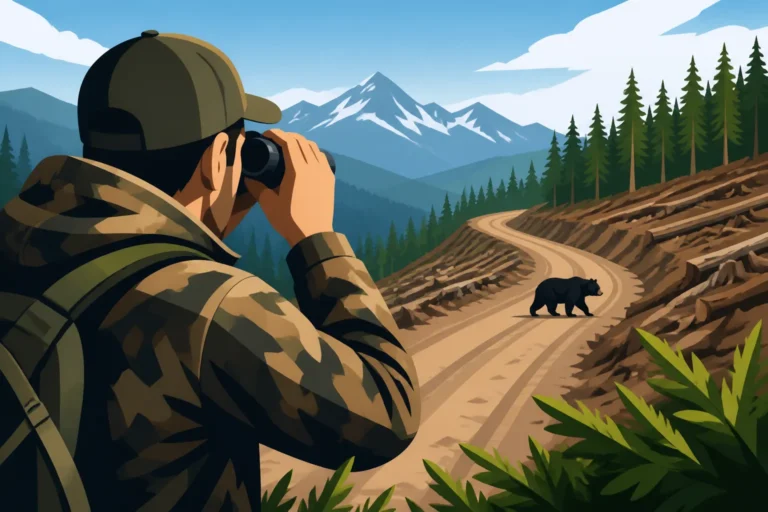
British Columbia is famous for its black bear populations, and the Skeena benches are absolutely prime bear country. Bears are drawn to the benches by the abundance of food sources. In spring, they emerge from their dens and seek out fresh green growth, often found in the more open, sun-exposed areas of the benches. As summer progresses, they key in on berry crops – huckleberries, salmonberries, and blueberries can be incredibly dense on these terraces.
Later in the fall, bears might be found scavenging along the river's edge for salmon carcasses, but they'll often retreat to the security and food sources of the benches. When hunting bears here, focus on areas with visible berry bushes, overturned rocks (indicating they've been searching for insects), and fresh scat. Remember that a spring bear hunt is distinct from a fall hunt, and their patterns will differ significantly. If you’re wondering What a Coastal Black Bear Weighs, remember the abundant food here means some very large bears. Always be bear aware; the region has grizzlies too, so carry bear spray and know Bear Safety While Hunting in British Columbia.
Moose
While moose are often associated with willow flats and boggy areas, they frequently utilize the Skeena River benches, especially where there's ample browse. The mixed forests and dense patches of willow and alder found on these elevated terraces provide excellent food and cover for moose. They'll use the benches as travel corridors, moving between different feeding grounds or seeking refuge from pressure.
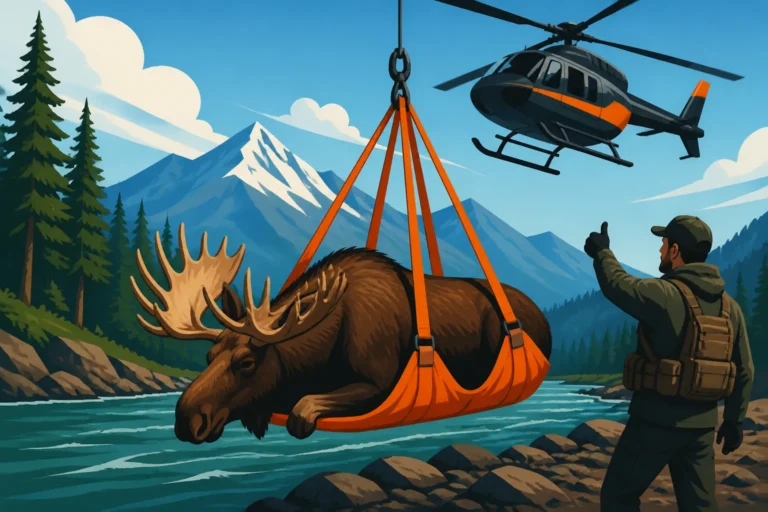
During the rut (late September into October), calling can be incredibly effective on the benches. A bull moose might be drawn in by a cow call echoing through the timbered sections or across a more open flat. Look for heavily browsed saplings, fresh tracks, and large beds in dense cover. Moose are powerful animals, and if you're successful, preparing for Getting a Moose Out on a British Columbia River will be a significant undertaking, often requiring teamwork and careful planning, especially if you're deep on a bench away from easy access.
| Species | Typical Habitat on Benches | Primary Food Sources (Seasonal) | Optimal Hunting Times | Key Sign to Look For |
|---|---|---|---|---|
| Mule Deer | Mixed forest, open clearings, dense brush, old growth edges | Grasses, forbs, shrubs, berries, young shoots | Early Fall (Bachelor groups), Rut (Late Oct-Nov) | Tracks, scat, rubs, scrapes, browse lines |
| Black Bear | Berry patches, riparian zones, recent cuts, avalanche paths | Berries, roots, grasses, salmon, insects, carrion | Spring (Emergence), Fall (Berry crops/Salmon) | Scat, tracks, overturned rocks, rubbed trees, claw marks |
| Moose | Willow and alder thickets, mixed forest, wetland edges, subalpine | Willows, alders, dogwood, aspen, aquatic vegetation | Early Fall (Calling), Rut (Late Sep-Oct) | Heavily browsed saplings, tracks, large beds, droppings |
Effective Hunting Strategies for River Benches
Hunting a Skeena River bench isn't a "one-size-fits-all" endeavor. The varied terrain, dense cover, and the presence of a major river all demand a flexible and well-thought-out strategy. From initial scouting to execution, every step needs careful consideration.
Scouting and Access
Before you even set foot on a bench, thorough scouting is paramount. This starts with maps – topographical maps, satellite imagery, and even tools like GoHunt can help you identify promising benches, potential access points, and areas of dense cover or open feeding grounds. Look for areas where the benches widen or where natural travel corridors might exist. Pay close attention to elevation changes and any features like old logging roads or trails that might offer easier access, even if they're deactivated.
Accessing these benches can be one of the biggest challenges. Some might be directly off a British Columbia's Forest Service Road Network, while others might require river access via jet boat or even a laborious hike through dense timber from a main road. Consider potential river crossings; the Skeena is a powerful river, and even its smaller tributaries can be swift and deep. If you're planning to use a boat, ensure you're familiar with Jet Boat Access on British Columbia Rivers and always prioritize safety. Remember to look for signs of previous human activity as well – old camps, flagging tape, or spent casings can indicate popular hunting spots, which might mean more pressure.
Glassing and Still-Hunting Techniques
Once you've gained access, effective hunting on a Skeena River bench often boils down to a combination of patient glassing and meticulous still-hunting.
-
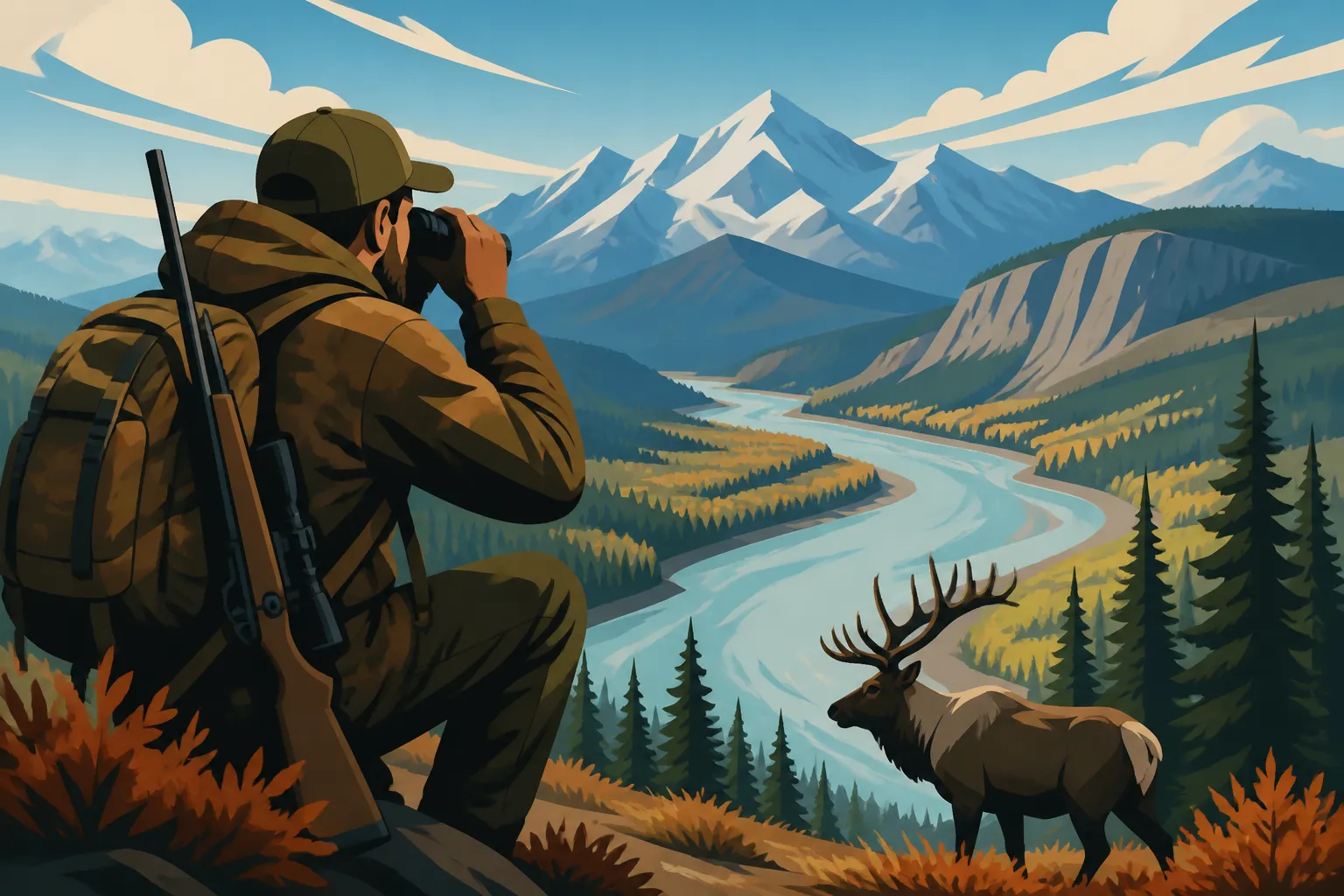
Glassing: Find elevated vantage points on the bench itself or across the river (if possible and safe) that allow you to overlook open patches, clearings, or the edges where dense timber meets brush. Use good quality binoculars (10×42 or 12×50 are excellent choices) and a spotting scope if you can pack one in. Spend long periods systematically searching for movement, antlers, or the tell-tale shape of an animal. Mule deer and bears, in particular, often blend seamlessly into the mottled light and shadows of the forest edge or brush. Early mornings and late evenings are prime glassing times when animals are most active.
-
Still-Hunting: This is a fantastic technique for navigating the dense cover often found on these benches. Move slowly, taking one or two steps, then pausing for several minutes to observe and listen. Use your binoculars to pick apart every shadow, every cluster of branches. Look for horizontal lines, shapes that don't quite fit, or the flick of an ear. Pay attention to the wind, always trying to keep it in your face or quartering. The objective is to see the animal before it sees you, giving you time to set up for a shot or plan your stalk. This is especially effective for Hunting an Old Growth Edge or dense second-growth where animals feel secure.
Calling and Stalking
-
Calling: For moose and bears, calling can be highly effective. Moose calls (cow calls, bull grunts, raking brush) can draw in curious bulls, especially during the rut. For bears, some hunters use distress calls or sow-in-heat calls, though these are more specialized tactics. The acoustics of the benches, with their varying terrain and timber, can sometimes make it challenging for sound to carry far or pinpoint origin, so experiment with call volume and location. Patience is key – a bull moose might take a long time to respond and approach.
-
Stalking: Once you've spotted an animal, the stalk begins. This is where your knowledge of the terrain and the animal's behavior comes into play. Use every bit of cover – depressions, large trees, dense brush – to conceal your approach. Move slowly and deliberately, minimizing noise. Pay attention to wind shifts, which can be unpredictable in river valleys. If the animal seems aware, freeze and wait until it relaxes or moves behind cover. The goal is to get within an ethical shooting distance without alerting the animal. Practicing these skills is vital, as the density of the Skeena benches often means close-quarters encounters. It's truly a test of your hunting prowess, particularly if you're trying Stalking a Bedded Buck in Open Timber on a wide bench.
Gear and Safety Considerations for the Skeena
Hunting British Columbia, especially in the Skeena region, requires careful preparation regarding your gear and an acute awareness of safety. The environment can be unforgiving, and being unprepared can quickly turn a memorable hunt into a dangerous ordeal.
Essential Gear for River Bench Hunting
Given the potential for challenging terrain and unpredictable weather, your gear selection is crucial.
- Layered Clothing: The Skeena region can experience dramatic temperature swings and persistent rain, even in the fall. A good layering system, including a waterproof and windproof outer shell, is non-negotiable. Think synthetics or merino wool, which retain warmth even when wet. For tips on dealing with persistent moisture, check out Hunting British Columbia's Coastal Rain.
- Sturdy, Waterproof Boots: You'll be crossing wet ground, potentially small creeks, and navigating rough terrain. Invest in high-quality, broken-in waterproof boots with good ankle support.
- Navigation Tools: A reliable GPS device (like a Garmin inReach or a handheld unit), paired with a compass and physical maps, is essential. Cell service is often non-existent. Familiarize yourself with how to use these tools before your trip. Using an app like GoHunt on a satellite messenger can be a game-changer for offline mapping and tracking.
- Optics: As mentioned, good binoculars are a must. A spotting scope can be invaluable for long-range glassing.
- Emergency Kit: This should include a first-aid kit, fire starter, emergency shelter, headlamp with extra batteries, water filter/purifier, and enough high-energy food for an extra day or two.
- Processing Kit: Knives, game bags, sharpening tools – you'll need to process your animal in the field.
- Rifle/Bow: Ensure your firearm or bow is sighted in and suitable for the game you're pursuing. Be aware of Legal Rifle Calibres for Big Game and Bow Draw Weight Rules in British Columbia.
Wildlife Encounters and River Safety
The Skeena is grizzly country. While black bears are more common, grizzlies are present, and encounters are a real possibility. Always carry bear spray (and know how to use it!), and a firearm for backup if you are comfortable and legally permitted. Make noise as you move through dense areas to avoid surprising a bear. Be extra vigilant in areas with fresh bear sign or near salmon streams. Understanding What to Do If You See a Grizzly is vital for your safety and theirs.
River safety is another critical component. The Skeena River can be swift, deep, and incredibly cold. If you're utilizing a boat for access, ensure everyone on board wears appropriate flotation devices, and the boat is well-maintained and suitable for river conditions. If you're crossing smaller streams, exercise extreme caution; even seemingly shallow water can have strong currents or slippery bottoms. Never attempt to cross a river you're unsure about. Consider the challenges of Getting a Moose Out on a British Columbia River if you harvest an animal on the far side.
Weather Preparedness and Communication
British Columbia weather is famously unpredictable, and the Skeena region is no exception. Rain can turn into snow, and temperatures can plummet without warning. Always check the forecast before you leave, but be prepared for anything. This means dressing in layers, having extra dry clothes in a waterproof bag, and ensuring your camp (if overnighting) is sheltered and warm.
Communication in remote areas is crucial. A satellite messenger or phone is highly recommended, allowing you to send emergency messages or check in with loved ones. Do not rely on cell service. Let someone know your hunting plan, including your intended route, expected return time, and contingency plans. In the event of an emergency, having a way to call for help is priceless. These remote hunts, while incredibly rewarding, demand a high level of self-reliance and preparedness for any situation that might arise.
Disclaimer
Hunting is an inherently dangerous activity. This guide provides general information and recommendations. All hunters are responsible for knowing and adhering to all current British Columbia hunting regulations, obtaining the necessary licenses and tags, and ensuring their own safety and the safety of others. Always hunt ethically, respect wildlife, and minimize your impact on the environment. Conditions in the field can change rapidly, and personal judgment and preparedness are paramount.