Reading Blacktail Sign in Wet Ground
There’s nothing quite like the experience of hunting British Columbia, especially when the skies open up and the ground turns to a damp, muddy canvas. Coastal blacktail, in particular, are creatures of the wet forest, thriving in conditions that often send less hardy hunters back to camp. But for every advantage the rain offers, like muffling your footsteps, it also presents a challenge: how do you read the subtle signs these elusive deer leave behind when everything is constantly getting washed away or softened? This guide aims to help you decipher the language of blacktail sign in the wet, allowing you to track and locate these magnificent animals even when the weather is at its most uncooperative.
Why Wet Ground is a Blacktail Hunter's Best Friend and Biggest Challenge
Hunting in British Columbia's coastal rainforests often means dealing with consistent moisture, from drizzling mists to torrential downpours. While some might see this as a deterrent, seasoned blacktail hunters often view it as an opportunity. The wet ground can be both a blessing and a curse, profoundly influencing how blacktail move and how hunters must adapt their strategies. Understanding this dynamic is key to success.
Understanding Blacktail Behavior in Rain and Moisture
Blacktail deer are incredibly resilient and have adapted over millennia to thrive in the damp, dense forests of the Pacific Coast. When rain moves in, their behavior often shifts. Rather than hunkering down in the open, they'll typically seek out the thickest cover available – stands of old-growth timber, dense conifer thickets, or deep draws that offer some respite from the wind and precipitation. This dense vegetation provides not only shelter but also helps to break up their silhouette, making them even harder to spot. They might move less frequently, but when they do, it's often with a purpose, perhaps traveling along established game trails that offer easier passage through the sodden underbrush. Their keen senses, particularly their sense of smell, are also affected by the moisture; the damp air can carry scents further and hold them longer, which can be both an advantage and a disadvantage to the hunter. While their own scent might be dispersed more effectively, so too can the hunter's.
The Elusive Nature of Coastal Blacktail
The coastal blacktail is often considered one of North America's most challenging deer to hunt, and the wet environment they inhabit only adds to their mystique. Unlike their mule deer cousins of the interior, blacktail rarely frequent wide-open areas. They are masters of the shadows, preferring to stick to the dense timber, brushy clearcuts, and the fringes of old-growth forests. This inherent elusiveness is amplified in wet conditions. The constant drip and rustle of rain on leaves can mask their movements, while the soft, damp ground can make their footsteps virtually silent. They are experts at using the terrain and vegetation to remain unseen, often simply melting away into the forest at the first hint of human presence. Hunters must embrace patience and sharpen their observational skills to pick up on the subtle clues these deer leave behind, especially when visibility is limited by fog or driving rain. For more insights into these challenging deer, you might find Black-Tailed Deer Hunting in British Columbia to be an invaluable resource.
Deciphering Fresh Tracks and Trails in Saturated Soil
When the forest floor is soaked, every step leaves a story. Reading these stories, especially the fresh ones, is paramount to understanding recent deer activity. It takes a keen eye and a bit of practice to differentiate between a track made hours ago and one made just minutes before.
Identifying Fresh Prints Versus Old Sign
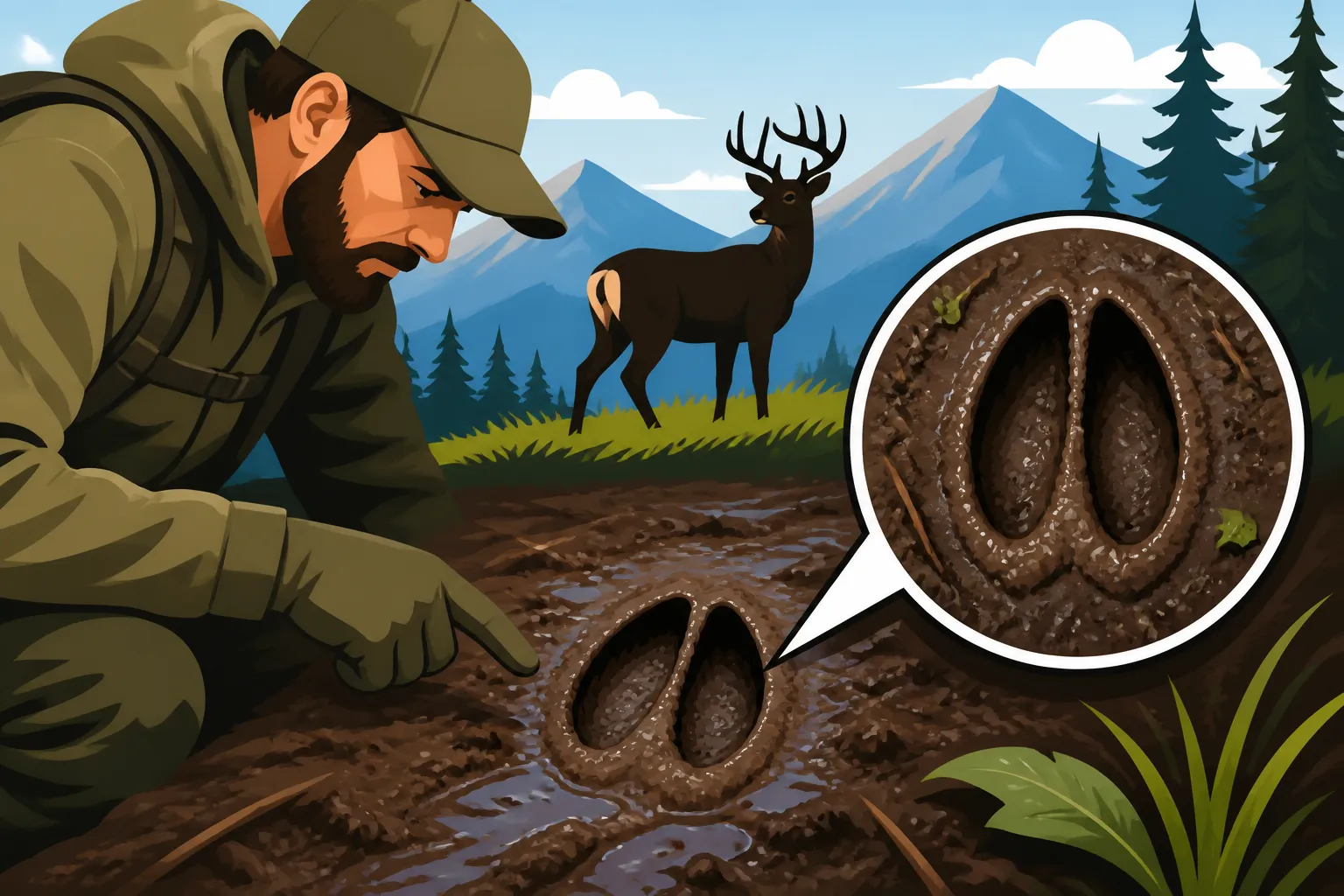
In wet, soft ground, the clarity and appearance of a track can tell you a lot about its age. A truly fresh blacktail track will have sharp, well-defined edges, almost as if it were just pressed into wet clay. The mud or soft earth within the track will often appear moist and dark, sometimes even glistening with residual water. If it’s been raining heavily, you might even see water seeping back into the impression, slowly filling it. As tracks age, the edges begin to soften and round, the mud dries out slightly, and any standing water will have either evaporated or been absorbed. You might also notice small bits of debris or fine silt starting to settle in older tracks, a sign that time and weather have begun to wear them down.
Track depth is another important indicator. A deeper track suggests a heavier deer, or one that was moving quickly or downhill. The splay of the hooves can also be revealing: a deer moving at a walk will have more tightly closed hooves, while one running will have them splayed wider. When encountering a series of tracks, always look for the freshest one, focusing on areas where tracks intersect or overlap. This attention to detail will help confirm recent activity. Using a tool like GoHunt can help you visualize the terrain and identify potential travel corridors where you're more likely to find such sign.
Here’s a quick comparison of what to look for:
| Feature | Fresh Track in Wet Ground | Older Track in Wet Ground |
|---|---|---|
| Edges | Sharp, crisp, distinct | Rounded, softened, less defined |
| Moisture | Moist, dark, sometimes shiny; water may seep back in | Drier (even if ground is wet), duller, no seepage |
| Mud/Soil | Displaced mud often still wet or glossy | Mud/soil may be slightly crusty or less vibrant |
| Debris | Minimal, sometimes fresh leaves or twigs kicked up | May contain small leaves, silt, or washed-in debris |
| Scent | Faint, earthy deer scent possible (especially in mud) | Scent largely washed away or dissipated |
| Surroundings | Undisturbed dew/water droplets unless recently stepped on | Dew/water droplets may have reformed or evaporated |
Interpreting Trail Patterns and Rubs
Blacktail, especially in wet weather, tend to stick to established trails and travel corridors. The reasoning is simple: it's easier to move through matted-down vegetation than to push through soggy, dense undergrowth. Look for these faint game trails, which might appear as slightly flattened paths through the forest floor, or areas where wet leaves and moss have been disturbed. Pay attention to how a blacktail might navigate around obstacles, leaving a clear path. Along these trails, keep an eye out for rubs and scrapes. When a buck rubs its antlers on a sapling, it removes the bark. In wet conditions, this freshly exposed wood will appear darker, almost bruised, and will often be shiny with rain or dew. Similarly, scrapes – areas where bucks paw away leaves and debris to expose bare earth, then urinate in them – will be dark, muddy depressions. The scent of a fresh scrape, even in the rain, can be quite strong. The presence of these signs indicates not just passing deer, but potentially resident bucks. You can learn more about how blacktail use their environment in "How Blacktail Use Second Growth".
The Significance of Droppings and Urination
While not the most glamorous sign, deer droppings and urination can provide crucial information about a blacktail's recent presence and even diet. In wet conditions, fresh droppings will appear moist, shiny, and will often be soft enough to be easily broken apart. The colour will be rich and dark. Older droppings, on the other hand, will be dull, dried out, and potentially covered in mold or fungal growth. The consistency and shape can also offer hints about their diet: firmer, more pelleted droppings suggest a browse-heavy diet, common in winter, while softer, amorphous piles indicate a diet rich in lush, green vegetation, typical of spring and summer.
Fresh urination on wet ground can create distinct dark patches on leaves or soil. These spots might have a subtle, musky odour. While the rain might dilute some of the visual evidence, a keen nose might still pick up the scent. Observing these signs in conjunction with tracks and trails gives you a more complete picture of deer movement and feeding patterns.
Leveraging Other Sensory Cues in Moist Environments
When visibility is low and tracks are hard to find, a hunter's other senses become paramount. The wet forest, though challenging, offers unique opportunities to detect blacktail through scent and sound. It's about tuning into the subtle language of the woods.
The Power of Scent in Wet Conditions
Moisture is an excellent carrier of scent. This means that while your scent might travel further, so too can the scent of the deer. A fresh blacktail track in mud might carry a faint, earthy deer scent. More significantly, the interdigital glands on a deer's hooves leave scent markers, and these can be more potent in damp conditions. Pay attention to any distinct, musky odour in the air, especially in areas of dense cover or along travel routes. The damp air helps hold these pheromones closer to the ground, where the deer themselves can detect them, and sometimes, so can you.
However, this also means constant vigilance regarding wind direction. Your scent will swirl and carry in unpredictable ways in the humid, dense coastal forests. Always try to hunt into or across the wind, even if it feels like it's constantly shifting. A good mapping tool can help you identify wind patterns in specific topographical features. Remember, a blacktail will trust its nose above all else, and a misplaced gust of wind can quickly ruin your hunt.
Visual Cues Beyond Tracks
While tracks are primary, they aren't the only visual evidence. In a wet forest, deer leave many other clues. Look for fresh browse marks on young saplings or bushes, where leaves or twigs have been recently nipped. In damp conditions, you might even see distinct water droplets clinging to the edges of the freshly browsed plant, or the exposed inner part of the plant might look brighter and fresher compared to the rain-soaked exterior. Disturbed moss, lichen, or even a displaced rock can indicate a deer has passed through.
Pay attention to wet fur marks on the underside of branches where a deer might have ducked under, or on the bark of trees where it might have brushed past. These marks will be a darker shade and obviously wet, indicating a very recent passage. When scanning dense cover, train your eyes to look for unnatural horizontal lines (a deer's back), distinct ear shapes, or the flick of a blacktail's tail against a backdrop of vertical tree trunks and brush. Often, you'll see just a small part of the animal. Practicing your glassing techniques, even in low light or fog, is crucial in these environments. If you're planning a trip, consider reading up on Hunting in British Columbia's Coastal Rain for more specific advice on visual cues.
Listening for Movement in the Rain
The rain can be a double-edged sword for auditory detection. On one hand, it can mask your own sounds, allowing for quieter movement. On the other, the constant patter can make it harder to hear a deer. However, if you tune your ears, subtle sounds can become amplified. The crunch of a wet leaf under a deer's hoof, the snap of a small branch, or the distinct rustle of an animal pushing through wet brush can all stand out against the background hum of the rain.
Still-hunting is particularly effective in these conditions. Move incredibly slowly, taking a few steps, then pausing for several minutes to listen intently and scan. The rain might be masking a blacktail's movements, but it's also masking yours. Let the rain help you. If the rain intensifies, deer might move even more cautiously, creating more distinct sounds. Conversely, a sudden lull in the rain might prompt deer to move, making any sound they make even more noticeable in the sudden quiet.
Practical Tips for Hunting British Columbia's Coastal Rain
Hunting blacktail in British Columbia's wet environments demands not only sharpened senses but also the right gear and strategic approach. Being prepared for the elements and understanding how to move through these unique landscapes will significantly increase your chances of success.
Gear and Preparedness for Wet Hunts
Staying dry and comfortable is paramount for any successful hunt in the British Columbia rain. Nothing saps morale or focus faster than being cold and wet. Invest in high-quality waterproof and breathable outerwear – a good rain jacket and pants are non-negotiable. Brands like Sitka Gear or Kuiu offer excellent options designed for rugged, wet conditions. Your boots are equally critical; they must be waterproof, comfortable for long treks, and provide excellent traction on slick, muddy, and moss-covered terrain. Consider knee-high rubber boots for wading through shallow streams or boggy areas common on Vancouver Island.
Beyond clothing, ensure your backpack has a rain cover or is itself waterproof. Protecting your optics, electronics, and extra layers is vital. A map and compass, or a reliable GPS device with pre-loaded maps, is also essential, as visibility can drop dramatically in fog or heavy rain. Using a robust mapping application like GoHunt, which allows you to download offline maps, can be a game-changer for navigating dense, featureless forest, and marking potential blacktail sign. Remember to pack extra dry socks, a warm hat, and enough high-energy snacks to keep you fueled. For more on getting prepared, check out Hunting British Columbia's Coastal Rain.
Strategy for Still-Hunting and Stalking
Still-hunting is arguably the most effective method for blacktail in wet conditions. The rain and damp ground naturally dampen sound, giving you an advantage. The key is extreme slowness and deliberate movement. Take a few steps, then pause for several minutes, scanning the dense cover ahead, behind, and to the sides. Use your binoculars frequently, even in heavy rain, to pick apart the shadows and look for tell-tale shapes or movements.
When you spot sign, don't rush. Confirm its freshness, then assume the deer is nearby and proceed with extreme caution. Stalking in wet ground means picking your footfalls carefully, placing your heel down first, then rolling to your toe, ensuring no twigs snap or leaves rustle loudly. Utilize the wind and terrain to your advantage, always trying to stay downwind and using ridges or thickets for cover. Blacktail are experts at using even the slightest undulation in the land to conceal themselves. A detailed topographic map, perhaps one you've studied on GoHunt, can help you identify these features.
Understanding Microclimates and Blacktail Bedding Areas
British Columbia's diverse landscapes create numerous microclimates, even within a single management unit. In wet weather, blacktail will actively seek out areas that offer the most protection from the elements. This often means bedding down on the leeward side of ridges, in thick stands of mature conifers where the canopy offers a natural umbrella, or in dense, south-facing brush where they might catch a bit of warmth if the sun peeks out.
These sheltered spots are where you should focus your efforts, especially during periods of heavy rain or cold. Learn to recognize the topography that offers relief from wind and precipitation. Look for slight depressions, dense thickets, or areas with a higher density of larger trees. While the general rule is to hunt into the wind, understanding these microclimates might mean adjusting your approach to account for localized wind swirls or thermal currents that develop in sheltered valleys or on specific slopes. Scouting these areas beforehand, perhaps using satellite imagery and topographical overlays on a platform like GoHunt, can provide significant advantages. For effective still-hunting tactics in similar environments, you might find tips in Still-Hunting Second Growth for Blacktail.
Disclaimer
Hunting is an inherently risky activity. This guide provides general information for educational purposes only. Always consult the official British Columbia Hunting Regulations Synopsis for the most current and accurate rules, regulations, and season dates. Prioritize safety, hunt ethically, and be prepared for all potential hazards in the backcountry.