Bugling Roosevelt Elk on the Coast
The distinct challenge of pursuing Roosevelt elk on British Columbia's rugged coast can be incredibly rewarding, but it often leaves hunters feeling overwhelmed by the sheer density of the rainforest and the unique behavior of these magnificent animals. This guide is designed to cut through the confusion, offering a deep dive into successful bugling strategies and tactics tailored specifically for the wet, wild, and incredibly challenging environment of British Columbia's coastal elk country.
Understanding Roosevelt Elk on the Coast
Roosevelt elk are a truly iconic species of British Columbia's coastal regions, offering a hunting experience unlike any other. They are creatures of the deep woods, thriving in environments that are often inhospitable to human comfort, making the pursuit both physically demanding and immensely satisfying.
Coastal vs. Rocky Mountain Elk Differences
When most people think of elk, they often picture the vast herds of Rocky Mountain elk bugling across open parklands or timbered slopes in the Interior. Roosevelt elk, however, are a different beast entirely. They are generally larger-bodied than their Rocky Mountain cousins, with a stockier build that helps them navigate the incredibly dense undergrowth and steep terrain of the coastal rainforest. Their antlers tend to be heavy and wide, but often don't have the extreme length seen in some Rocky Mountain bulls, a reflection of their habitat where long, sweeping antlers might be a hindrance in thick timber.
Their temperament also varies. Roosevelt elk on the coast often live in smaller, more dispersed groups due to the fragmented nature of their habitat. They are notoriously elusive, utilizing the thick cover to their advantage, which makes spotting and stalking them a true test of woodcraft. Unlike the more open-country Rocky Mountain elk that might migrate long distances, Roosevelt elk often stick to smaller, more defined home ranges within the coastal forests, making understanding local travel corridors and bedding areas crucial.
Roosevelt Elk Behavior and Rut Dynamics
Roosevelt elk behavior is heavily dictated by the coastal environment. They thrive in the mosaic of old-growth forests, second-growth clearcuts, and riparian zones. During the summer, they might disperse to feed on lush vegetation. As the seasons turn to fall, the rut begins, usually peaking from mid-September through early October. This is when the bulls become most vocal, their distinctive, deep bugles echoing through the mist and rain-soaked timber.
The rut brings a heightened level of aggression among bulls, and they will readily challenge perceived rivals. Cows become more receptive, and the dynamics of herd interaction offer the best opportunities for calling. Unlike some elk species where a single, dominant bull might control a large harem in open country, Roosevelt elk on the coast often have smaller harems or even satellite bulls actively competing in tighter quarters. This means a bugle might draw a lone bull looking for a fight, or a herd bull defending a few cows in a dense block of timber. Understanding these nuances is key to effective calling. For those looking to dive deeper into the specific dates, understanding the British Columbia elk season dates is a critical first step in planning your hunt.
Prime Coastal Roosevelt Elk Habitat
Successfully hunting Roosevelt elk on the coast begins with understanding where they live and how they use the landscape. The British Columbia coast is a vast, complex ecosystem, but certain features consistently draw these magnificent animals.
Old Growth and Second Growth Timber
The iconic old-growth forests, with their towering cedars and hemlocks, provide crucial thermal cover, protection from the elements, and security for Roosevelt elk. These dense stands, often with a thick understory of ferns and salmonberry, can make navigation challenging for hunters but offer elk ideal sanctuary. They will bed down in these areas, particularly on benches or subtle ridges that provide good vantage points or scent control. Hunting Roosevelt Elk in British Columbia Old Growth requires patience and an understanding of how elk move through such heavy cover.
Adjacent to old growth, second-growth timber, particularly regenerating clearcuts from 5 to 20 years old, offers prime feeding areas. The mosaic of new growth provides a smorgasbord of browse for elk. They'll often feed along the edges of these clearcuts, especially at dawn and dusk, before retreating into the deeper, older timber during the day. This transition zone, or the Hunting British Columbia's Old Growth Edge, is often a hot spot for activity and an excellent place to set up a calling ambush. Finding areas where these habitat types intersect, especially with decent glassing lanes or game trails, can be incredibly productive.
Estuaries and River Bottoms
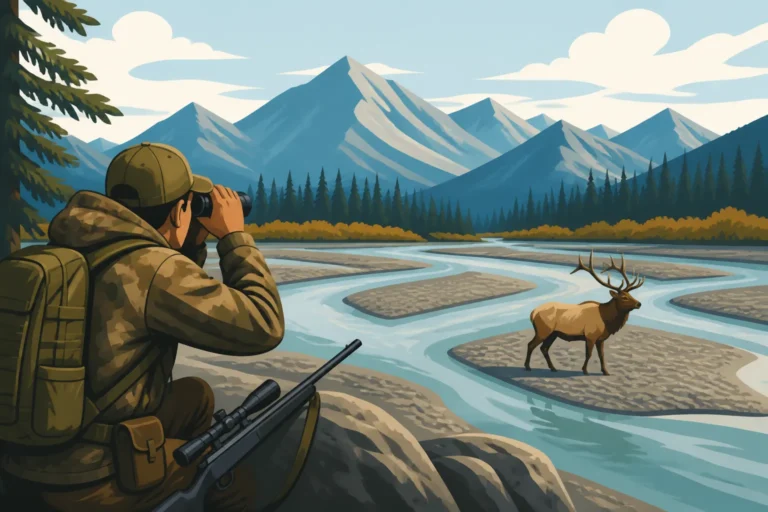
Coastal river bottoms and estuaries are absolute magnets for Roosevelt elk, particularly during specific times of the year. The rich alluvial soils along rivers produce abundant forage, and the proximity to water is always a draw. Elk will often travel along river corridors, using them as natural highways through the dense landscape. Estuaries, where fresh water meets saltwater, are rich in sedges and grasses that elk relish.
Hunting an estuary flat at low tide can reveal fresh tracks and feeding activity, indicating recent presence. These open areas can also be excellent for spotting elk from a distance, though the wind can be tricky. Understanding the tides and how they affect elk movement is vital. Elk might move onto the flats to feed as the tide recedes and then retreat to the timbered edges as it comes in. When planning your trip, consider focusing on areas with prominent river systems that flow into the ocean; these are natural travel corridors and feeding grounds. You might even find opportunities for Hunting a British Columbia River Estuary by boat, opening up otherwise inaccessible areas.
Steep Terrain and Elevation
British Columbia's coast is defined by its dramatic topography, and Roosevelt elk are perfectly adapted to it. They will readily utilize steep slopes, often finding benches and small pockets of flatter ground within the mountainsides for bedding and feeding. Don't let a steep ascent deter you; often, the elk are just over the next ridge, escaping hunting pressure or finding more secluded forage.
While not typically alpine hunters in the same way bighorn sheep or mountain goats are, coastal elk will move to higher elevations to escape pressure, find different forage, or enjoy cooler temperatures. However, they will always stay within reasonable proximity to thick cover. Knowing how to navigate Packing Out of British Columbia's Steep Country is essential, as success often means getting an animal out of incredibly challenging terrain. Always be prepared for vertical climbs and descents, and plan your routes carefully, especially if you're venturing into more remote valleys or seeking less-pressured animals. Digital mapping tools, like those available on GoHunt, can be invaluable for identifying potential benches, old logging roads, and escape routes within this challenging landscape.
Timing Your Coastal Elk Hunt
Timing is everything when it comes to bugling Roosevelt elk on the coast. The specific dates and conditions can dramatically influence elk behavior and your chances of success.
Early Season Archery Opportunities
British Columbia often offers early archery seasons for elk, typically starting in early to mid-September. This can be a fantastic time to pursue Roosevelt elk, as bulls are often still grouped up or just beginning to show signs of the rut, making them more receptive to calls. The weather can be milder, though coastal rain is always a possibility. During this period, bulls are starting to feel the urge to breed, and a well-placed bugle can elicit a challenge from a bull looking to assert dominance or gather his first cows.
The challenge during early archery is that not all bulls will be in full rut, and cows might not be as responsive to calls as they will be later. However, less hunting pressure and the element of surprise can make these hunts incredibly exciting. Hunters often focus on feeding areas near water sources or along the edges of clearcuts, trying to intercept elk as they move between bedding and feeding. You'll need to be stealthy, as the dense undergrowth means close encounters are likely.
Peak Rut Rifle Seasons
The prime time for bugling Roosevelt elk on the coast generally aligns with the peak of the rut, which often falls in late September through early October. Many rifle seasons open during this period, offering hunters the chance to use a firearm during the most vocal and active phase of the rut. This is when the bulls are most aggressive, bugling frequently, and actively seeking or defending cows. It's an electrifying time to be in the woods, as elk calls can be heard carrying through the rainforest, sometimes for miles.
During the peak rut, bulls are often preoccupied with breeding and challenging rivals, making them more vulnerable to aggressive calling tactics. You'll want to be ready to quickly set up for a shot, as bulls can come in fast and silently. Understanding Roosevelt Elk Draw Rules is important here, as many of the best coastal elk zones are managed through Limited Entry Hunting (LEH), and drawing a tag for these peak rut periods can take years of applying. Success during this period often hinges on being able to locate a herd bull and then effectively draw him out of the timber.
Late Season Strategies
After the peak rut has passed, usually by mid-October, Roosevelt elk behavior shifts. Bulls become less vocal and more focused on feeding to recover from the strenuous rut. They will often rejoin bachelor groups or become more solitary, seeking out security in the densest timber. While bugling can still be effective, it often needs to be more subtle and less aggressive, mimicking a lost cow or calf, rather than a challenging bull.
Late season hunts are typically more challenging for calling, but can be successful for hunters willing to put in the legwork for still-hunting or spot-and-stalk tactics. Elk will be focused on putting on weight before winter, so targeting persistent food sources or areas with less pressure becomes critical. The weather can also be a significant factor, with increasing rain and colder temperatures making conditions tougher for hunters. During this time, relying on knowledge of elk movement patterns and quiet navigation through the dense forest becomes paramount, often more so than calling alone.
Mastering the Bugle Call for Roosevelt Elk
Bugling Roosevelt elk on the coast is an art form, a symphony of sounds that, when executed correctly, can be incredibly effective. It's about more than just making noise; it's about communicating with these wild animals on their terms.
Types of Calls and Their Use
To effectively bugle Roosevelt elk, you'll need a range of calls. A good diaphragm call is essential for producing realistic bugles, chuckles, and cow/calf mews. External reed calls or grunt tubes can also be used to amplify your bugles and add depth, especially when trying to mimic a big, aggressive bull. For cow and calf sounds, a simple reed call or even a diaphragm call can produce the necessary distressed or social mews.
| Call Type | Best Use for Roosevelt Elk | Notes |
|---|---|---|
| Diaphragm Call | Bugles, chuckles, mews, lost calf/cow calls, glues | Versatile, hands-free, allows for realism. Takes practice to master. |
| Bugle Tube | Amplifying bugles, adding growl/roar, aggressive chuckles | Projects sound further, adds realism to bull calls. Often used with a diaphragm. |
| External Reed Call | Cow/calf mews, simple bugles | Easier for beginners, but limited in range of sounds compared to diaphragm. Good for close-in work. |
| Rattle Bag/Antlers | Mimicking fighting bulls | Use sparingly; best when bulls are already aggressive and closing the distance. Adds realism to a setup. |
When you're trying to Bugling to a Roosevelt Elk Bull, you'll often start with a challenge bugle – a strong, clear, sustained call that mimics a rival bull. If you get a response, you might follow up with aggressive chuckles, mimicking a bull ready to fight. Cow calls, particularly distressed mews or estrus bleats, can draw in curious bulls or even herd bulls looking to gather more cows. Lost calf calls can sometimes bring in wary cows, which in turn might bring a bull. The key is to listen, interpret, and respond in kind, adapting your calls to the elk's mood. GoHunt's resources sometimes feature articles or videos on advanced calling techniques that can be very helpful.
Reading Elk Responses to Calling
Interpreting an elk's response to your calls is crucial for success. A bull might bugle back immediately, indicating he's close and interested. If he cuts off your bugle, it's a sign of aggression – he's telling you to back off, or he's coming to challenge you. A weak or distant bugle might mean he's moving away, or he's a less dominant bull testing the waters. Silence after a bugle can be the most frustrating, but it doesn't always mean nothing is there. Often, a silent bull is the one on his way in, trying to sneak in without alerting you.
Listen for subtle sounds beyond the bugle: the snap of a twig, the rustle of leaves, or the soft grunt of a bull or cow moving through the brush. Sometimes a bull will "rake" a tree with his antlers to intimidate rivals, a sound that can be very convincing to another bull. Pay attention to how the elk's bugle changes – does it sound closer? More aggressive? More guttural? These subtle cues are your roadmap to understanding the interaction and deciding your next move, whether it's more aggressive calling, subtle cow calls, or simply getting ready for a shot.
Calling Scenarios and Etiquette
When calling Roosevelt elk in the dense coastal rainforest, safety and strategy go hand-in-hand. Always assume a bull is coming in quickly and quietly. Set up so that you have clear shooting lanes downwind, and ideally, have your hunting partner (if you have one) set up 50-75 yards ahead of you to draw the bull's attention away from your calling position. This helps prevent the bull from pinpointing your exact location and potentially circling downwind of you.
In challenging scenarios, such as Hunting British Columbia's Coastal Rain, your calls might be muffled, so proximity is even more important. Be aware of other hunters in the area; if you hear another hunter calling, it's generally good etiquette to move to a different area or try to communicate visually or verbally (if safe and ethical) to avoid interfering or creating a dangerous situation. Avoid over-calling, especially if a bull is already responding. Sometimes, less is more, and letting the bull come to you after an initial contact can be the most effective strategy. Think of your calls as a conversation, not a monologue; listen more than you call.
Essential Gear for Coastal Elk Hunting
Hunting Roosevelt elk on the British Columbia coast means preparing for an environment that is often wet, rugged, and unforgiving. Having the right gear isn't just about comfort; it's about safety and success.
Rain Gear and Layering
The most crucial piece of gear for coastal elk hunting is high-quality, truly waterproof rain gear. We're talking about sustained, soaking rain, not just a drizzle. Look for durable, breathable waterproof jackets and pants from reputable brands. Gore-Tex or similar advanced membranes are worth the investment. It’s also wise to carry waterproof gloves and a wide-brimmed hat to keep rain out of your face and off your neck. Staying dry is paramount for comfort, preventing hypothermia, and maintaining focus.
Layering is equally important. Start with a moisture-wicking base layer (merino wool or synthetic, never cotton). Add insulating layers like fleece or puffy jackets, and then your waterproof outer shell. As you hike through steep terrain, you'll generate heat, and being able to shed layers prevents sweating, which can lead to a chill later. When you stop to call or sit for an ambush, you'll want to quickly add layers back on. Pack extra dry socks – your feet will thank you.
Optics for Dense Cover
Unlike hunting in open country where long-range glassing is common, hunting Roosevelt elk in the coastal rainforest requires optics optimized for dense cover and close-to-mid-range observation. A good pair of 8x or 10x binoculars is essential for picking apart dark timber, identifying subtle movement, and confirming antlers in shadows. You won't often be glassing across valleys, but rather scrutinizing patches of brush, clearcut edges, or the dark recesses of old growth.
A rangefinder is also incredibly useful, not just for confirming shot distance but also for estimating distances in the notoriously deceptive dense timber. Sometimes, 100 yards can look like 50, or vice versa. While a spotting scope is generally overkill for this type of hunting, a compact pair of binos and a reliable rangefinder are indispensable tools for navigating and identifying game in the challenging coastal habitat. Many hunters use digital mapping systems like GoHunt on their phones, which often integrate rangefinding features and allow you to mark potential elk sign or sightings.
Packing Out and Meat Care
Successfully harvesting a Roosevelt elk is only half the battle; getting the animal out and properly caring for the meat in British Columbia's often warm and wet early seasons is a significant undertaking. A robust frame pack is non-negotiable. Look for one designed to carry heavy loads comfortably, as a quarter of a Roosevelt elk can weigh upwards of 100 pounds, and you'll likely be traversing steep, slippery terrain.
Bring plenty of breathable game bags (synthetic is often preferred over cotton in wet conditions) to protect the meat from flies and debris while allowing it to cool. Given the warm, humid conditions that can prevail, especially in September, proper ventilation is critical. Consider a collapsible meat saw or a sturdy knife for quartering. Knowing how to Meat Care in British Columbia's Warm Early Seasons effectively can prevent spoilage and ensure you get to enjoy your hard-earned harvest. Always have a plan for how you'll get the meat out, whether it's multiple trips, a team effort, or using specialized equipment like pack frames.
Tactics for Success in Coastal Terrain
Hunting Roosevelt elk on the British Columbia coast demands a unique set of tactics. The dense forest, challenging terrain, and unpredictable weather mean you can't rely on strategies meant for open country.
Spot-and-Stalk in Thick Timber
Spot-and-stalk hunting for Roosevelt elk in thick coastal timber is an exercise in patience and stealth. It's less about spotting from a distance and more about slowly, meticulously picking apart the landscape, looking for small clues. Focus on areas where visibility opens up slightly: logging road spurs, old skid trails, natural openings, or benches within the timber. Move slowly, taking one or two steps, then stopping to scan and listen. Use your binoculars to peer into every shadow and thicket.
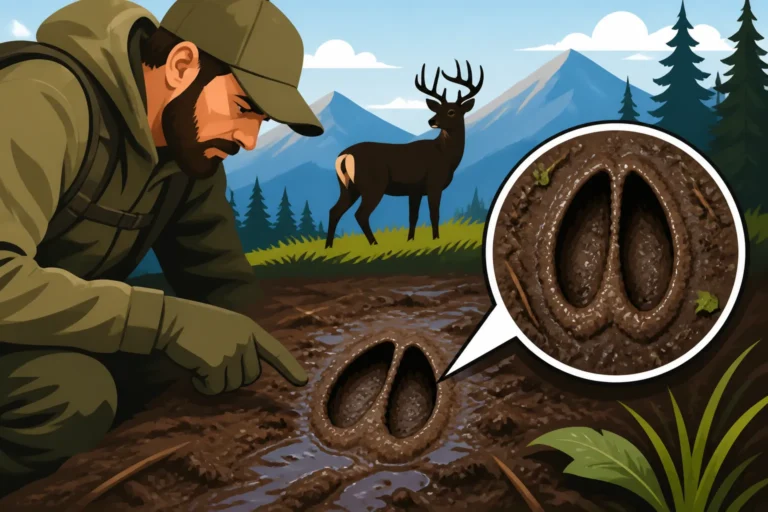
Look for fresh sign: tracks in soft earth, rubbed trees, fresh droppings, or beds. These tell you where elk have been recently. When you find sign, slow down even more. The advantage of the thick cover is that it can also hide you, but it also hides the elk. Pay close attention to wind direction, as Roosevelt elk have an incredible sense of smell. You need to approach them from downwind, or crosswind if absolutely necessary, moving silently and using the terrain and vegetation for cover. This method is incredibly effective for Still-Hunting Second Growth for Blacktail and can be adapted well for coastal elk, given their similar habitat preferences in dense areas.
Using Boats for Access
British Columbia's coast is a labyrinth of inlets, fjords, and river systems, making boat access an incredibly valuable tactic for reaching otherwise inaccessible Roosevelt elk country. Many prime elk areas are only reachable by boat, allowing hunters to bypass miles of rugged, roadless terrain. You can use anything from a sturdy aluminum boat or zodiac on larger inlets to a jet boat for navigating up coastal rivers.
Boats allow you to cover significant distances, scout shorelines for fresh tracks, and access remote beaches or river bars where elk may be feeding. You can set up spike camps in secluded coves or utilize the boat as a base camp, returning each day after hunting. However, be mindful of weather conditions; the coastal waters can turn treacherous quickly. Always check marine forecasts, carry appropriate safety gear, and have a reliable vessel. Hunting from a boat on the Coast also requires an understanding of specific regulations and safe firearm handling practices. This tactic opens up vast stretches of untouched wilderness that few other hunters can reach.
Hunting in British Columbia's Coastal Rain
If you're hunting Roosevelt elk on the coast, you will encounter rain. It’s not a matter of if, but when and how much. Instead of letting it deter you, learn to embrace it and use it to your advantage. Rain muffles sound, allowing you to move through the forest much more quietly than on dry ground. The sound of raindrops on leaves can cover the rustle of your clothing or the crunch of your boots, giving you a stealth advantage.
Elk behavior can also change in the rain. They might seek thicker cover for shelter, or become more active in feeding during a light rain. After a heavy downpour, they often move to open areas to dry off or feed on fresh, wet vegetation. Hunting in British Columbia's Coastal Rain demands excellent rain gear, a positive attitude, and an understanding that while it's uncomfortable for you, it can also create prime hunting conditions. Don't let a little (or a lot) of rain send you back to camp; often, that's when the best opportunities arise for a dedicated coastal elk hunter.
Disclaimer
Hunting is an inherently dangerous activity that carries risks including, but not limited to, injury, property damage, and death. The information provided in this guide is for informational purposes only and should not be considered a substitute for professional instruction, proper safety training, or adherence to all local, provincial, and federal hunting regulations. Always prioritize safety, understand and follow all relevant laws, and hunt ethically and responsibly. Ensure you possess all required licenses, tags, and permits before engaging in any hunting activity.