What a Semi-Guided Hunt Means Here
When you start looking into hunting opportunities in British Columbia, especially if you're coming from out of province or another country, you'll quickly run into a lot of jargon. One term that often causes a fair bit of head-scratching is "semi-guided hunt." It's not always clear what it actually means, and the expectations can differ wildly from one outfitter to another, leaving many hunters feeling confused and unsure if they're making the right choice for their hard-earned money and precious time off. This guide will cut through that confusion, clearly explaining what a semi-guided hunt in British Columbia typically entails, what you can realistically expect, and how to figure out if it's the right fit for your next adventure.
Deconstructing the "Semi-Guided" Terminology in British Columbia
The term "semi-guided" is one of those catch-all phrases that can mean a lot of things to different people, and nowhere is that more true than in the diverse hunting landscapes of British Columbia. It sits in a unique space, attempting to offer a middle ground between the full-service experience of a traditional guided hunt and the complete independence of a true do-it-yourself (DIY) trip. For many hunters, especially those with some experience but perhaps lacking the local knowledge or logistical capabilities for a completely unassisted hunt, it sounds like an ideal compromise. However, understanding what that compromise actually delivers is crucial.
The Spectrum of Support: What's the Difference?
To really grasp what "semi-guided" means, it helps to see it as part of a broader spectrum of hunting support services available here in British Columbia.
On one end, you have the fully guided hunt. This is the classic "all-inclusive" experience where the outfitter handles virtually everything. Your professional guide will be with you in the field every step of the way, from spotting game and planning stalks to field dressing, packing out, and often even preparing meals back at camp. You're paying for their expertise, their equipment, their local knowledge of the terrain and animal habits, and their physical assistance. For many non-resident hunters, or those seeking a highly specialized experience like a British Columbia Sheep and Goat Tags hunt in remote mountains, this level of service is essential. The guide provides the camp, the transportation in the field, makes the decisions, and takes on the lion's share of the physical work once an animal is down.
On the other end, there's the ungraded or "drop camp" hunt. This is the purest form of DIY. Here, an air charter service or an outfitter might drop you and your gear off at a pre-arranged location, typically a basic camp or just a designated spot, and pick you up at a later date. They provide transportation in and out, but that's about it. You are entirely responsible for all aspects of the hunt: finding game, navigating, setting up and running your camp, cooking, stalking, field dressing, and packing out your animal yourself. This requires a high level of self-sufficiency, wilderness survival skills, and a deep understanding of the local hunting regulations and terrain. While you might be delivered to an area known for good hunting, the success or failure rests squarely on your shoulders.
A semi-guided hunt aims to bridge this gap. It's designed for hunters who want more independence than a fully guided trip allows but still need some assistance with the complex logistics or local knowledge that British Columbia's vast wilderness demands. The exact services offered can vary significantly, which is where the confusion often arises. Generally, it means the outfitter provides some foundational support – perhaps transportation to a hunting area, a basic camp, or some initial scouting insights – but you, the hunter, are largely responsible for the day-to-day hunting activities. You'll likely be making your own stalks, calling your own game, and certainly handling the recovery and packing out of any animal you harvest. It's a partnership where the outfitter facilitates access and basic comfort, but the actual hunting is your show.
Why the Ambiguity? The Nuances of British Columbia's Regulations
Part of the reason for the ambiguity around "semi-guided" in British Columbia stems from the way our regulations are structured, especially concerning non-resident hunters. Under provincial law, non-resident hunters (those from outside BC) generally need to be accompanied by a licensed guide or a resident hunter holding a British Columbia Permit to Accompany Explained. This is a critical point that shapes what a semi-guided hunt can legally offer. A non-resident cannot simply be dropped off in a management unit and told to "go hunt" without some form of licensed accompaniment.
So, when an outfitter offers a "semi-guided" experience to a non-resident, it must still legally fall within these parameters. Often, this means the outfitter or a licensed assistant guide will provide some direct accompaniment, but it might be less intensive than a full guide service. For example, they might transport you to a general area, show you some promising spots, help set up a camp, and then leave you to hunt a specific area independently, while remaining in the general vicinity or checking in periodically. Or, they might provide a guide for certain parts of the hunt (e.g., transport and initial scouting), and then you hunt solo from a pre-set camp. The key is that the outfitter is still providing a "guiding service" within the legal definition, even if it's not a constant, hands-on experience. This contrasts sharply with some other jurisdictions where "semi-guided" might literally mean just a ride into the backcountry. Always clarify the exact legal requirements for your residency status when considering such a hunt.
The term's flexibility also allows outfitters to cater to a wider range of budgets and skill sets. A fully guided sheep hunt, for instance, can be an extremely expensive undertaking, encompassing weeks of high-altitude effort from specialized guides and equipment. A "semi-guided" sheep hunt might involve an outfitter flying you into a base camp, perhaps showing you some general areas where rams have been spotted in the past, but then leaving you and your hunting partner to backpack hunt independently from there, with the understanding they'll pick you up at a certain time or location. This significantly reduces the cost for the outfitter, and in turn, for the hunter, by leveraging the hunter's own skills and willingness to put in the work. It's a way for outfitters to offer a service that might not fit the traditional guided model but still meets a specific demand within the regulatory framework for Rules for Non-Residents Hunting British Columbia.
What You Can Actually Expect from a British Columbia Semi-Guided Hunt
Okay, so the term "semi-guided" is a bit of a chameleon, right? It changes its colours depending on the outfitter and even the species you're chasing. But when you boil it down, a semi-guided hunt in British Columbia should always provide a foundational level of support that you wouldn't get on a truly DIY trip, while still demanding significant input and skill from you, the hunter. Let's break down the typical division of labour.
Outfitter Responsibilities and Services
On a semi-guided hunt, the outfitter typically handles the major logistical headaches and ensures you have a basic operational base from which to hunt. Think of them as the orchestrators of your wilderness access and comfort, but not necessarily your personal in-field coach or tracker.
- Access and Transportation: This is often the cornerstone of a semi-guided trip. Many prime hunting areas in British Columbia are incredibly remote and challenging to access. An outfitter will often provide transportation to and from your hunting area. This could mean a boat ride up a coastal inlet for a Hunting Bears on a Coastal Estuary in May, a ride on ATVs or side-by-sides up rugged logging roads, or even a bush plane flight into a remote lake for a Hunting a British Columbia Lakeshore for Moose. They're getting you there and ensuring you can get out with your gear and hopefully your animal. Without this service, many of these areas would be completely inaccessible for independent hunters.
- Initial Scouting Information: While they won't typically hold your hand and point out every buck, a good semi-guided outfitter will provide valuable insights into the area. This might include recent game sightings, common travel corridors, areas to avoid, or general strategies that have worked in the past. They might show you a topo map with some "hot spots" marked, or explain how game typically moves in that specific terrain. This kind of local intelligence, gained from years of experience in the same management unit, is gold and can drastically increase your odds compared to going in completely blind. You can also do your own research beforehand using tools like BookYourHunt or GoHunt, which often list outfitters and provide some area information, but the real-time, on-the-ground info from your outfitter is invaluable.
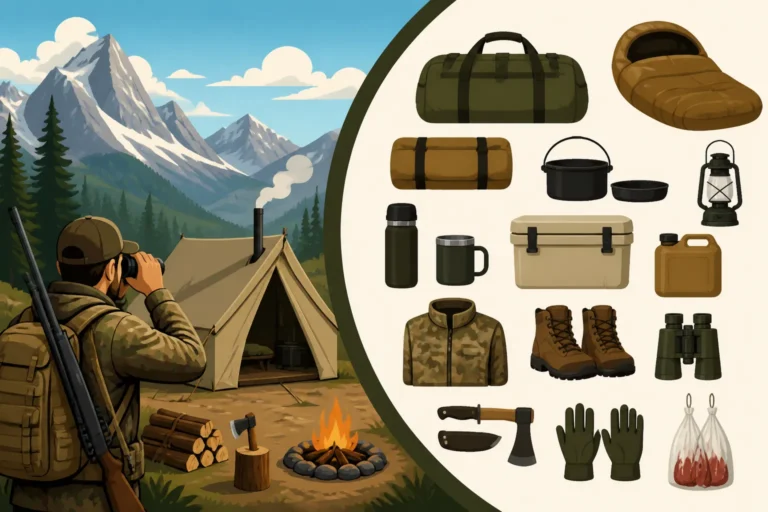
- Basic Camp Setup: Unless you're specifically opting for an extremely minimalist trip, a semi-guided hunt often includes a basic camp. This might be a wall tent camp with cots and a wood stove, a small cabin, or even a pre-pitched spike camp higher up the mountain. The outfitter usually sets this up, ensuring you have shelter, a cooking area, and perhaps some basic amenities. However, don't expect gourmet meals; cooking and general camp chores typically fall to you. They might also provide essential equipment like a cooler for meat, water jugs, or a rudimentary latrine. This saves you the considerable effort and expense of hauling in and setting up your own base camp.
- Logistical Support (Emergency/Recovery): While you're largely independent, the outfitter usually remains available for emergencies or assistance with game recovery if specified in your agreement. For instance, if you get a big moose down several miles from camp, they might come in with an ATV or horses to help with the Getting a Moose Out on a British Columbia River or Packing Out of British Columbia's Steep Country if it's part of the agreed-upon service. Always clarify these critical points upfront, as this level of support can make or break a difficult situation. They are usually your emergency contact and point of egress from the wilderness.
Hunter Responsibilities and Independence
This is where the "semi" in semi-guided really comes into play. You are not a client being led; you are an active participant, and a highly responsible one at that. Your success is largely dependent on your own skills, effort, and preparation.
- In-Field Hunting Strategy and Execution: This is your domain. You and your hunting partners are responsible for deciding where to hunt each day, how to approach a particular area, and what tactics to employ. Whether it's glassing a distant hillside for Glassing an Interior Hillside for Mule Deer, calling moose in the rut, or still-hunting an old growth draw for blacktail, the decisions and actions are yours. The outfitter provides the access and starting point, but you navigate, spot, stalk, and shoot.
- Navigation and Safety: While the outfitter gets you to the general area, you are expected to be proficient with maps, compass, and GPS for your daily excursions. You need to know how to navigate safely in British Columbia's diverse and often challenging terrain, understanding the risks of weather changes, wildlife encounters (especially with bears), and general backcountry safety. Having a satellite communication device like a Garmin inReach or a SPOT device is crucial, as cell service is often non-existent in remote areas. Emergency Planning in British Columbia's Backcountry is your responsibility.
- Animal Recovery and Field Care: This is arguably the biggest difference between fully guided and semi-guided. Once you've harvested an animal, the responsibility for field dressing, quartering, and packing it back to camp generally rests entirely with you and your hunting partners. This can be incredibly demanding work, especially with large game like moose or elk, and in steep or rugged terrain. You need to be prepared with the right gear – a quality frame pack, sharp knives, game bags – and the physical stamina to execute. The outfitter might provide a cooler, but getting the meat to it is your job. Remember to practice Meat Care in British Columbia's Warm Early Seasons to prevent spoilage.
- Camp Life and Self-Sufficiency: You're responsible for your own cooking, cleaning, and general camp maintenance. This means bringing your own food, cooking gear (unless specified otherwise), and personal necessities. You'll be managing your own schedule for hunting and camp chores. The outfitter might supply water, but often you'll be purifying your own from local sources. This is truly where the "self-reliant" aspect shines through, allowing you to tailor your camp experience to your preferences.
Here's a quick comparison of what different levels of guiding generally involve:
| Feature/Service | Fully Guided | Semi-Guided | Unguided / Drop Camp |
|---|---|---|---|
| In-field Guide Presence | Constant, 1:1 or 2:1 guide ratio | Intermittent or initial support; then independent | None (except transport in/out) |
| Hunting Decisions | Guide-led, based on their expertise | Hunter-led, based on their skill and outfitter info | Entirely hunter's responsibility |
| Transportation to Area | Provided by outfitter | Provided by outfitter | Provided by outfitter |
| Daily In-Field Transport | Provided (horse, ATV, boat, truck) | Limited or none; primarily hunter's effort | None |
| Camp Setup & Amenities | Full camp, cook, comfortable lodging | Basic camp/cabin, hunter cooks & maintains | Hunter brings/sets up own camp; minimal amenities |
| Meals | Provided & prepared | Hunter provides & prepares own food | Hunter provides & prepares own food |
| Scouting & Game Info | Extensive, real-time by guide | Initial area info, maps, recent sightings | Limited or none (rely on own scouting) |
| Game Recovery/Pack Out | Mostly handled by guide & staff | Primarily hunter's responsibility | Entirely hunter's responsibility |
| Cost | Highest | Moderate | Lowest (after transport costs) |
| Skills Required | Basic hunting skills, physical fitness | Strong hunting, navigation, backcountry skills | Expert hunting, survival, and logistics skills |
When you're researching potential outfitters, whether through an aggregator like BookYourHunt or directly, make sure to ask extremely specific questions about exactly what's included in their "semi-guided" package. Don't leave anything to assumption.
The Pros and Cons of a Semi-Guided Hunt in British Columbia
Deciding on a semi-guided hunt isn't just about understanding the services; it's about evaluating whether that model aligns with your personal hunting style, experience, and expectations. There are distinct advantages that draw many hunters to this option, but also significant demands and potential drawbacks that need to be seriously considered.
The Upsides: Control, Cost, and Challenge
For many experienced hunters, a semi-guided trip offers a sweet spot where they can still feel truly immersed in the hunt without having to manage every single logistical detail from thousands of miles away.
- Greater Independence and Control: This is perhaps the biggest draw. If you enjoy the strategic challenge of hunting, making your own calls, planning your own stalks, and working a piece of ground with your partners, a semi-guided hunt gives you that freedom. You set your own schedule each day, decide which ridge to climb, and where to focus your efforts. This sense of autonomy can be incredibly rewarding. It’s your hunt, your way, within the parameters of the law and the outfitter’s general area. This level of control means you can adapt to changing conditions or animal behaviour more quickly, without waiting for a guide's directive.
- Potentially Lower Cost: While still a significant investment, semi-guided hunts are generally more affordable than fully guided trips. Because the outfitter isn't providing a full-time, in-field guide for every day of your hunt, their operational costs are reduced, and these savings are often passed on to the hunter. This makes hunting some of British Columbia's more coveted species or accessing truly remote areas more feasible for a wider range of budgets. For instance, comparing the What a British Columbia Guided Moose Hunt Includes to a semi-guided option for moose will almost certainly show a noticeable difference in price, often allowing you to hunt a fantastic area for less.
- Enhanced Sense of Accomplishment and Challenge: There's an undeniable satisfaction that comes from planning, executing, and ultimately succeeding on a hunt where you've done the majority of the work. Taking an animal on a semi-guided hunt often feels more like a true "DIY" achievement, even with the outfitter's support. It pushes you to rely on your own skills in navigation, game calling, tracking, and physical endurance. The challenges inherent in a semi-guided hunt, from early morning starts to long days of hiking and the arduous task of Getting Meat Out of Steep British Columbia Country, all contribute to a deeper appreciation for the eventual harvest. This level of challenge is a core part of the experience for many seasoned hunters.
- Flexibility in Group Dynamics: A semi-guided hunt often works very well for small groups of experienced hunting buddies. You can strategize together, share responsibilities, and truly hunt as a team. This camaraderie adds another dimension to the experience that might be less prominent on a fully guided trip where a professional guide leads most of the decision-making. If you're looking to share an adventure with friends or family, this model allows for more active participation from everyone.
The Downsides: Workload, Responsibility, and Risk
While the independence is appealing, it comes with a considerable amount of extra work, responsibility, and inherent risk that hunters must be prepared for.
- Significant Physical and Mental Workload: This is not a vacation where everything is done for you. You are expected to put in long, hard days of hunting, often covering challenging terrain. Once an animal is down, the physical labour truly begins. Quartering a moose or elk, especially if it's in a remote, steep location, is an exhausting multi-hour task. Then comes the packing, which could involve multiple trips over rugged ground with heavy loads. If you're not in excellent physical condition, a semi-guided hunt can quickly become overwhelming and even dangerous.
- Increased Responsibility for Success and Safety: With greater independence comes greater responsibility. You and your group are ultimately accountable for your own safety in the backcountry. This means being proficient in navigation, first aid, bear safety, and knowing how to handle unexpected situations like severe weather or equipment failures. If you get lost, injured, or have an issue with your vehicle (if you're driving yourself), the primary responsibility for resolving these issues falls to you. You also bear more of the weight of success; if you don't find game, there's no guide to strategize with in the moment or blame for a lack of opportunity.
- Limited Local Knowledge and Adaptability: While the outfitter provides initial information, you won't have a seasoned local guide with you 24/7 to read fresh sign, interpret subtle changes in animal behaviour, or pivot strategies on the fly. This means your hunting skills and ability to adapt to conditions are paramount. What if the animals aren't where the outfitter said they would be? What if an unexpected snowstorm hits? You need the experience to make those adjustments independently. Relying solely on a few marked spots on a map from a brief conversation might not be enough.
- Potential for Miscommunication and Unmet Expectations: Because the "semi-guided" definition is so fluid, there's a higher risk of misunderstandings between the hunter and the outfitter. If you expect more hands-on assistance than the outfitter intends to provide, or if you're not fully prepared for the extent of the self-reliance required, the experience can quickly become frustrating. It's absolutely vital to have a crystal-clear, written agreement that details every service provided and every expectation of the hunter. Asking specific questions before booking, as we'll discuss next, is non-negotiable. Checking out reviews on platforms like BookYourHunt can also offer insights into other hunters' experiences with particular outfitters' semi-guided offerings.
Ultimately, a semi-guided hunt in British Columbia is a fantastic option for the right individual or group. It's for those who relish the challenge, possess solid backcountry skills, and want a more active, independent role in their hunting adventure, tempered with critical logistical support.
Is a Semi-Guided Hunt Right for Your British Columbia Adventure?
Choosing a semi-guided hunt in British Columbia is a significant decision that shouldn't be taken lightly. It's not a one-size-fits-all solution, and what works wonderfully for one hunter might be a recipe for frustration for another. The key is to honestly assess your own capabilities, clearly define your expectations, and thoroughly vet any potential outfitter.
Assessing Your Skills and Experience
Before you even start looking at outfitters, take a long, hard look in the mirror. A semi-guided hunt in British Columbia is challenging, even with logistical support.
- Hunting Proficiency: Are you a competent hunter who can independently identify game, understand their behaviour, track, call, and make ethical shots under pressure? Can you read terrain and anticipate animal movement? This is not the trip to learn basic hunting skills. Your ability to scout, glass, and stalk effectively will directly determine your success. Are you comfortable Hunting a Second-Growth Timber Block or Hunting an Avalanche Chute in September without a guide telling you exactly where to go?
- Navigation and Wilderness Skills: Can you navigate confidently with a map and compass, and are you proficient with a GPS device? British Columbia's wilderness is vast and unforgiving, and getting lost is a real danger. Do you know how to build a fire, set up a functional camp, purify water, and handle basic wilderness first aid? Are you familiar with Bear Safety While Hunting in British Columbia protocols and carrying appropriate deterrents like bear spray? These skills are not optional; they are essential for your safety and the success of the trip.
- Physical Fitness: This is perhaps the most overlooked aspect. British Columbia hunting often involves steep, rugged terrain, dense bush, and long days of hiking, sometimes at high altitudes. If you harvest an animal, especially a large one like an elk or moose, you and your partners will be responsible for quartering it and packing out hundreds of pounds of meat, hide, and antlers. This demands exceptional physical conditioning. If you're not prepared for this level of exertion, a semi-guided hunt will be miserable and potentially dangerous. Start training well in advance, focusing on strength, endurance, and carrying a heavy pack.
- Mental Toughness and Problem-Solving: Things will go wrong. Weather will change, equipment might fail, animals might be elusive. Are you and your group resilient, positive, and capable of solving problems independently when faced with adversity? Can you maintain morale when conditions are tough or success isn't immediate? A semi-guided hunt tests not just your hunting skills, but your character.
Budgeting and Logistics
While often more affordable than fully guided trips, a semi-guided hunt still requires careful financial and logistical planning. Don't assume "cheaper" means "less to think about."
- Detailed Cost Breakdown: Get a precise, itemized list of what the semi-guided package includes and, perhaps more importantly, what it doesn't. Factor in all potential extra costs: your British Columbia Hunting Licences and Fees, species tags, travel to British Columbia, any required gear upgrades, food for the duration of the trip, potential additional transportation costs (e.g., if you need a taxi from the airport to a pickup point), meat processing, and taxidermy. Don't forget gratuities if an assistant guide or cook provides exceptional service, even if only part-time. Compare these costs carefully with what a fully guided hunt might cost, and consider the value you place on your own time and effort.
- Outfitter Vetting: This is crucial. Don't just pick the cheapest option. Research potential outfitters thoroughly. Look for reviews on platforms like BookYourHunt or forums. Ask for references from past semi-guided clients and actually call them. Inquire about the outfitter's experience in that specific area and with the species you're targeting. Ask about their safety protocols and emergency communication plans. Confirm their licensing and insurance. You can also leverage resources like GoHunt to research potential hunting areas and outfitters, cross-referencing information to ensure you're making an informed decision.
- Clarifying Expectations: Have a detailed conversation with the outfitter about exactly what "semi-guided" means for their operation and your specific hunt.
- What are the legal requirements for accompaniment for non-residents? How will this be met?
- What kind of camp will be provided? What amenities does it include (stove, cots, water, fuel, lighting)?
- What, if any, equipment is supplied (e.g., satellite phone, specific cooking gear, cooler, meat bags)?
- What level of initial information or scouting assistance can you expect? Will they show you maps, discuss recent game activity, or point out specific areas?
- What is the plan for game recovery? Will they assist if you get an animal down in a particularly difficult spot, or is it 100% your responsibility?
- What are their communication protocols in the field? How will you contact them if there's an emergency?
- What happens if the weather turns bad or other unforeseen circumstances arise? What are the cancellation or rescheduling policies?
- Gear and Provisions: Plan your gear meticulously. You'll need to bring everything for your personal hunting success and comfort, including appropriate clothing for Hunting in British Columbia's Coastal Rain or Hunting Above Timberline in Cold Weather, quality optics, a reliable rifle or bow, navigation tools, first-aid kit, food, and cooking supplies. Make a checklist and ensure you have backups for critical items. Consider What to Bring on a British Columbia Guided Hunt and then subtract what the outfitter explicitly provides.
A semi-guided hunt in British Columbia can be an incredibly rewarding experience, offering the perfect blend of adventure, challenge, and logistical support. But it truly is for hunters who are well-prepared, experienced, and eager to earn their success through their own grit and skill. Do your homework, ask the tough questions, and prepare physically and mentally, and you'll be well on your way to an unforgettable British Columbia hunting adventure.
Disclaimer
This article is for general informational purposes only and does not constitute professional advice. Laws, prices and regulations vary by location and change over time. Consult a qualified professional for guidance on your specific situation.