British Columbia Hunting Access Near Prince George
Finding good hunting access around a major hub like Prince George can feel like trying to find a needle in a haystack, especially when you're staring at vast tracts of timber and a maze of logging roads on a map. Many hunters get overwhelmed, wondering where to even begin in such a huge and diverse landscape. This guide will help you understand the unique hunting access challenges and opportunities near Prince George, providing practical strategies and insights to help you navigate this incredible part of British Columbia.
Understanding the Prince George Hunting Landscape
The area surrounding Prince George, often considered the heart of British Columbia's interior, presents a unique blend of hunting opportunities and access complexities. It's a vast region, characterized by extensive forests, winding river systems, and a historical legacy of resource extraction that has shaped the land and its accessibility for hunters.
The Geographic Reality: Forests, Rivers, and Roads
Imagine an endless carpet of boreal and sub-boreal forest stretching in every direction, interrupted by the mighty Fraser and Nechako Rivers, along with countless smaller waterways, lakes, and rolling hills. This isn't the steep, craggy alpine of the Coast Range or the open grasslands of the Okanagan, but rather a more subdued, yet incredibly productive, landscape. The sheer scale of it can be daunting; you can drive for hours on a forest service road and still feel like you're barely scratching the surface. This vastness is both a blessing and a curse. It means there's a tremendous amount of public land to explore, but it also means finding specific, promising spots requires a lot of legwork, patience, and often, a bit of luck. Game animals here, like moose, mule deer, and black bears, utilize different habitats across this mosaic, from dense timber to marshy river bottoms and regenerating cutblocks. Understanding this varied terrain is the first step in unlocking its hunting potential.
Many hunters experience the frustration of driving seemingly endless stretches of road, only to find the "perfect spot" blocked by private land, a gate, or simply devoid of sign. The landscape around Prince George demands a different approach than what many might be used to in more manicured or easily navigable regions. It's a land of hidden gems, but you have to be willing to put in the effort to find them. The river systems themselves often create natural barriers or corridors, influencing both animal movement and hunter access. Learning to read these geographical cues, and understanding how they impact game, is paramount to success here.
Management Units MUs and Their Significance
British Columbia is carved up into a grid of Management Units, or MUs, and understanding these boundaries is non-negotiable for any hunter. Around Prince George, you'll primarily be dealing with MUs within Region 6, which covers the Omineca region. Each MU has its own specific regulations, season dates, and bag limits for various species. For example, a moose season might be open in one MU, but closed in an adjacent one, or have different antler restrictions. Failing to pay close attention to these lines can lead to a violation, even if you’re just a few hundred yards off. It’s not just about knowing where to hunt, but how you can legally hunt there.
These MUs also help define the character of the hunting experience. Some MUs might have more active logging, leading to a denser network of forest roads but also more industrial traffic. Others might be more remote, requiring longer drives and deeper pushes into the backcountry. When planning a hunt, checking the regulations for the specific MU you intend to enter is the absolute first step after deciding on your target species. Don't rely on general knowledge; always consult the official synopsis. This foundational knowledge is key to making the most of British Columbia's Management Units and Regions and ensuring your hunt is both productive and legal.
Navigating Crown Land and Forest Service Roads
The vast majority of hunting access around Prince George, and indeed across much of British Columbia, hinges on understanding and utilizing the extensive network of Forest Service Roads (FSRs) that crisscross Crown Land. This is where the real work of finding a hunting spot begins.
The Ubiquity of Forest Service Roads FSRs
Forest Service Roads are the lifeblood of access into British Columbia's backcountry. Around Prince George, these roads spiderweb through the landscape, built primarily for logging, mining, and other resource industries. For the hunter, they are often the only way to get deep into potential hunting grounds. However, not all FSRs are created equal. You'll encounter everything from well-maintained, wide gravel mainlines that any truck can handle, to rough, overgrown two-tracks that require a high-clearance 4×4, and even completely deactivated lines that are barely recognizable as roads. Active FSRs can be busy with heavy machinery, especially during weekdays, so always drive with caution, use radio calls if equipped, and be prepared to encounter large trucks.
The constant evolution of these roads, with new ones being built and old ones deactivated or overgrown, means that maps can quickly become outdated. This makes scouting and staying current on road conditions vital. Many hunters around Prince George learn to identify areas with a good mix of road access, allowing for both vehicle exploration and foot access into promising zones. Knowing the difference between an active industrial road and a seldom-used spur can save you time and prevent potentially dangerous encounters. For a deeper dive into the overall system, check out British Columbia's Forest Service Road Network.
Deactivated Roads and Hiking Opportunities
While active FSRs get you deep into the country, it's often the deactivated roads that lead to the best hunting. Deactivated roads are intentionally made impassable to standard vehicles, usually by digging cross ditches, removing culverts, or placing large barriers like huge boulders or earth mounds. The frustration of seeing a "road closed" sign just when you thought you were getting somewhere is a universal hunter's lament. But here's the secret: these closures don't mean the hunting is over; it means the vehicle hunting is over.
For the hunter willing to lace up their boots, deactivated roads become fantastic foot-access trails. They offer a clear path, often less steep than bushwhacking, and quickly take you away from the road-hunting pressure that plagues easily accessible areas. Around Prince George, many prime areas for moose, deer, and bear are found a kilometer or two beyond these gates or cross-ditches. You’ll be surprised how few hunters are willing to make that walk. These forgotten routes can lead you to quiet clearcuts, secluded willow bottoms, or mature timber stands that see minimal human disturbance. Embracing these foot-access opportunities is a key strategy for success in areas with high hunting pressure. Learn more about navigating these paths in Deactivated Roads on British Columbia Crown Land.
Vehicle Restrictions and Respecting the Land
British Columbia has clear rules regarding vehicle use on Crown Land, and adherence to these is crucial. While FSRs are generally open for vehicular travel, there are often specific restrictions on where you can drive off these designated roads. Creating new trails, driving through wet meadows, or disturbing sensitive ecosystems is not only illegal but also incredibly irresponsible. The land around Prince George is a shared resource, and preserving its integrity for future generations of hunters and wildlife is a collective responsibility.
It's tempting, when you see a game trail leading off into the bush, to try and push your truck through for "just a little bit further." Resist that urge. Stick to established roads and trails. If you encounter a sign indicating a closure or restriction, respect it. The intention is often to protect wildlife habitat, prevent erosion, or ensure public safety due to industrial activity. Remember, you are a guest on the land. Being a responsible hunter means leaving no trace and ensuring your actions don't negatively impact the environment or the access privileges of others.
Utilizing Technology for Better Access
In today's hunting world, relying solely on paper maps or outdated knowledge is a recipe for frustration. Technology has become an indispensable tool, especially when tackling vast and complex hunting grounds like those around Prince George. Modern mapping applications and digital resources can save you countless hours of scouting and vastly improve your chances of finding quality hunting spots.
Mapping Tools for Crown Land and FSRs
The days of squinting at a fading paper map trying to guess land ownership are largely over, thankfully. Digital mapping tools have revolutionized how we find and access hunting land. These apps allow you to overlay various layers, showing everything from Crown Land boundaries to private parcels, logging roads, topographical features, and even recent satellite imagery. For hunters near Prince George, this is an absolute game-changer. You can quickly identify vast tracts of accessible public land, differentiate them from private holdings, and trace the labyrinthine network of FSRs, both active and deactivated, right from your phone or computer.
Among the best tools available, onX Hunt stands out as a top contender. It provides incredibly detailed mapping for British Columbia, clearly delineating property lines, showing different types of land ownership, and highlighting roads and trails. This means you can virtually scout an area before you ever leave home, identifying potential access points and avoiding frustrating dead ends due to private land. Another excellent resource for planning hunts, particularly for those looking at draw odds and general species info, is GoHunt. While not primarily a mapping app for land ownership, its data layers and analytical tools can complement your mapping efforts by providing context for what species might be in a given area. Being able to cross-reference these sources is incredibly powerful for planning an effective hunt. Having accurate information about Using onX for British Columbia Crown Land can completely transform your approach to finding huntable areas.
Interpreting Satellite Imagery and Topo Maps
Beyond simply showing roads and property lines, modern mapping applications offer invaluable satellite imagery and topographical maps. Learning to interpret these features is like having an aerial view of your hunting area before you even step foot on the ground. Satellite imagery, especially recent high-resolution photos, can reveal a wealth of information: identifying clearcuts of various ages, locating old burns that attract certain game, spotting water sources like ponds or seepages, and even highlighting natural funnels or pinch points that animals might use. A clearcut from five years ago, for instance, will look very different from one cut last year, and each offers unique hunting opportunities for deer and bear.
Topographical maps, on the other hand, show elevation changes, contours, and terrain features. Around Prince George, where much of the land is rolling rather than abruptly mountainous, these maps help you understand drainages, benches, and subtle ridges. You can use them to plan approaches, identify escape routes for game, and find those sneaky pockets of cover that might hold a mature buck or bull. Combining satellite views with topo lines allows you to understand the "why" behind animal movement – why they might travel a certain ridge or congregate in a specific valley bottom. This level of digital scouting not only saves gas but also helps you develop a strategic plan before ever heading into the bush, making your time in the field far more efficient and productive. This is an essential step in Scouting a British Columbia Management Unit Online.
Understanding Specific Hunting Hotspots and Challenges
Prince George's diverse landscape means different game species thrive in different habitats, and knowing where to focus your efforts for each animal is crucial. The region offers fantastic opportunities, but also some unique challenges to navigate.
Moose Country: Willow Flats and Beetle Kill
If you're hunting moose around Prince George, you're in prime territory. These magnificent animals often frequent areas with abundant browse, particularly willow flats along rivers and creeks, as well as regenerating areas of beetle-killed timber. The extensive pine beetle epidemic of years past left vast areas of dead and dying timber. While devastating at the time, these areas are now often regenerating with dense stands of willow, aspen, and other deciduous growth that moose absolutely feast on. Hunting these beetle-killed areas requires a different strategy; visibility can be very limited, and the deadfall can make travel incredibly difficult and noisy. However, the reward can be immense, as moose often prefer these thick, browse-rich environments.
The challenge here lies in the sheer density of the cover. Spotting a moose in thick willow or regenerating pine can be incredibly difficult. Many hunters focus on the edges of these areas, or use call-and-wait tactics, particularly during the rut. Identifying prime willow flats on satellite imagery, especially where they intersect with old clearcuts or river systems, is a great starting point. Be prepared for wet ground in these areas, and factor in significantly slower travel times on foot. Getting a moose out of one of these tangled, remote spots is a monumental task, so always have a plan before you pull the trigger. For more detailed information, consider Moose Hunting British Columbia's Interior. And to truly understand the long-term impact on their habitat, read What Wildfire Did to Moose Habitat.
Deer and Bear: Logging Blocks and River Bottoms
For mule deer, whitetail, and black bears, the landscape around Prince George offers abundant habitat, especially within the mosaic of logging blocks and along the numerous river bottoms. Deer thrive in areas where mature timber meets younger regenerating forest, finding cover in the older growth and food in the newer cuts. Black bears, too, are highly adaptable and will utilize everything from berry-rich slopes in fall to fresh green-ups in spring along roadsides and cutblock edges. The challenge for deer hunting often comes down to pressure; bucks can become incredibly elusive once the rifle seasons open.
Hunters often find success by focusing on older clearcuts (3-10 years post-logging) where browse is abundant but still offers some cover. Stalking a cutblock edge at first and last light, or still-hunting through second-growth timber, can be highly effective. River bottoms, with their mix of deciduous trees, willows, and often denser cover, also act as natural corridors and feeding areas for both deer and bear. Understanding how to Hunting a Recent Cutblock in Its Third Year can provide invaluable insights. Look for benches of timber overlooking these river systems, as animals will often bed there. Hunting an Interior Douglas Fir Bench is a great strategy to employ for these situations. Being patient and observing feeding patterns and travel routes is often more productive than simply driving roads.
High-Pressure Zones vs. Remote Wilderness
Like any area with good hunting opportunities, the regions immediately accessible from Prince George by well-maintained FSRs will experience higher hunting pressure, especially on opening weekend and during peak seasons. You'll see more trucks, more ATVs, and more footprints. This doesn't mean these areas are devoid of game, but it does mean animals become warier and often shift to more remote or thicker cover. The frustration of arriving at a promising spot only to find fresh tracks from another hunter is a common experience.
To mitigate this, a key strategy is to be willing to go further, both by vehicle and especially on foot. Drive those rougher, less-maintained FSRs. Park your truck and hike in a few kilometers on a deactivated road. Even a short walk off the beaten path can get you into unpressured territory where game is more likely to be found. The rewards for putting in this extra effort are often significant, yielding not only better hunting but also a more peaceful and immersive backcountry experience. Balancing the desire for convenience with the pursuit of quality hunting is a constant challenge, but those who push past the easy access points often find themselves in truly rewarding situations.
Practical Considerations for Hunting Near Prince George
Hunting in the vast and sometimes rugged terrain around Prince George isn't just about knowing where the animals are; it's also about practical preparedness. The backcountry here can be unforgiving, and a little foresight can prevent a minor inconvenience from becoming a major problem.
Road Conditions and Vehicle Preparedness
Accessing many prime hunting spots around Prince George means traversing Forest Service Roads that can range from smooth gravel to deeply rutted, rocky, or muddy tracks. A reliable 4×4 vehicle with good clearance is highly recommended, if not essential, for getting into many of the best areas. Be prepared for all conditions: carry a full-size spare tire, a jack, a tire repair kit, and tools for basic repairs. Flats are common, especially on sharp gravel and rocky sections. Mud can become a significant issue, particularly during wet weather or in low-lying areas. A shovel, tow strap, and even a winch can be invaluable if you find yourself stuck far from help.
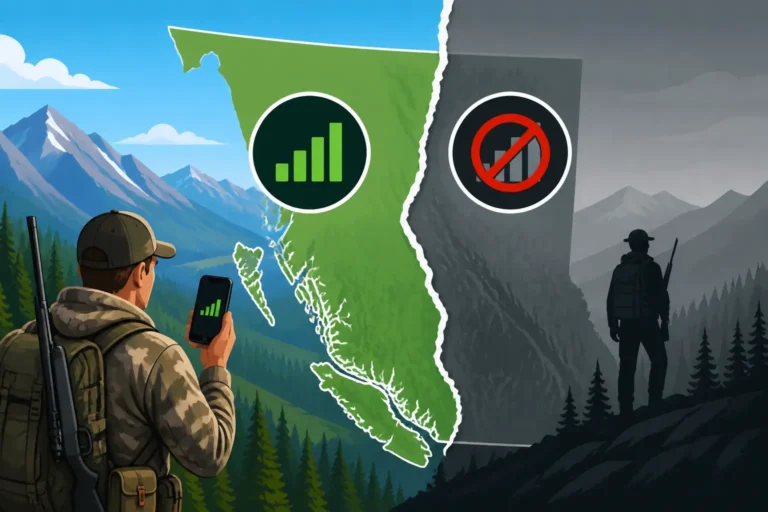
Beyond your vehicle's capability, it’s crucial to be aware of active logging operations. Many FSRs are active industrial routes, and you might encounter large logging trucks that have the right-of-way. Always drive defensively, use headlights, and if you have a radio, know the local frequency to call out your movements. Checking for Finding Open Forest Roads in British Columbia before you leave is a smart move, as roads can close for various reasons, including wildfire, washouts, or intensive logging. Assume cell service will be nonexistent once you leave the main highways, so don't rely on your phone for navigation or emergencies.
Bear Safety and Backcountry Preparedness
British Columbia is bear country, and the Prince George region is home to a healthy population of both black bears and grizzlies. While grizzlies are not hunted, encounters are possible, especially in areas with good food sources like berry patches or salmon streams. Bear safety is paramount. Always carry bear spray, know how to use it, and have it readily accessible. Make noise while walking in dense cover to avoid surprising an animal, especially when you're moving through thick brush or near water sources where your approach might be masked. When field dressing an animal, be extra vigilant, and always keep a clean camp.
Beyond bears, general backcountry preparedness is crucial. Tell someone your detailed travel plans and estimated return time. Carry a satellite communication device (like an inReach or Spot device) for emergency contact, as cell service is unreliable or non-existent in remote areas. Pack extra food, water, warm clothing, and a first-aid kit. Weather can change rapidly in the BC interior, so be ready for rain, cold, and even early snow, especially as you get further into fall. Being prepared for the unexpected isn't just good advice; it's essential for a safe and successful hunt. Reviewing Bear Safety While Hunting in British Columbia should be a mandatory part of your pre-hunt routine.
Respecting Private Land and Indigenous Territories
While British Columbia boasts vast tracts of Crown Land, there are also numerous private land parcels, particularly closer to communities and along valley bottoms. It is your responsibility as a hunter to know where these boundaries lie and to obtain permission before entering private property. This is where tools like onX Hunt become indispensable, as they clearly display property lines and ownership information, helping you avoid accidental trespass. Failing to respect private property can lead to fines, loss of hunting privileges, and damage the reputation of all hunters.
Furthermore, British Columbia is the traditional territory of many Indigenous peoples, and respecting these territories and any associated rights is crucial. While hunting rights for Indigenous peoples differ from those of general residents, understanding the general landscape of Indigenous land and concerns is important for respectful outdoor recreation. Always err on the side of caution; if there's any doubt about access or land status, verify before you proceed. Ignorance is not an excuse. Familiarizing yourself with British Columbia Trespass and Private Land Law is essential for any hunter.
Table: British Columbia Hunting Access Methods
| Access Method | Description | Pros | Cons | Ideal For |
|---|---|---|---|---|
| Active FSRs | Well-maintained gravel roads for industrial traffic. | Easy vehicle access, covers large distances quickly. | High pressure, industrial traffic, potential for road closures. | Initial scouting, accessing starting points for hikes. |
| Deactivated FSRs | Roads intentionally blocked or made impassable for vehicles (e.g., cross ditches, gates). | Low pressure beyond the barrier, clear hiking path. | Requires foot travel (often with heavy gear), can be overgrown. | Deep backcountry access, escaping vehicle pressure. |
| Hiking/Bushwhacking | Traversing undeveloped wilderness on foot, off any defined trail or road. | Access to truly remote, unpressured areas. | Extremely physically demanding, slow, difficult navigation, high bear risk. | Targeting specific remote pockets, true wilderness experience. |
| River/Lake Access | Using boats (jet boats, canoes, kayaks) to navigate waterways and access shoreline. | Unique access to areas away from road systems. | Requires watercraft, weather dependent, limited to water features. | Moose in river bottoms, accessing remote lake areas. |
Disclaimer
This article is for general informational purposes only and does not constitute professional advice. Laws, prices and regulations vary by location and change over time. Consult a qualified professional for guidance on your specific situation.