Marten and Fisher in British Columbia Forests
Many of us who venture into British Columbia's vast and wild forests are often focused on the bigger game – the majestic moose, the elusive deer, or the powerful bears. But beneath the canopy, a world of smaller, incredibly resilient furbearers thrives, often unseen and unheard. This guide will pull back the curtain on two of these fascinating forest dwellers: the marten and the fisher, exploring their lives, their role in our rich ecosystems, and how they navigate the challenges of our dynamic landscapes.
The Elusive Marten: A Forest Phantom
Imagine a creature darting through the undergrowth, a flash of russet brown, quick and silent as a shadow. That's often the extent of most people's encounters with the American marten in British Columbia. These animals are true denizens of the deep woods, intimately tied to the old-growth and mature forest habitats that define much of our province. While not a primary target for most general big game hunters, understanding these agile hunters helps paint a fuller picture of the complex web of life in our forests.
Identifying Marten: Size, Appearance, and Habits
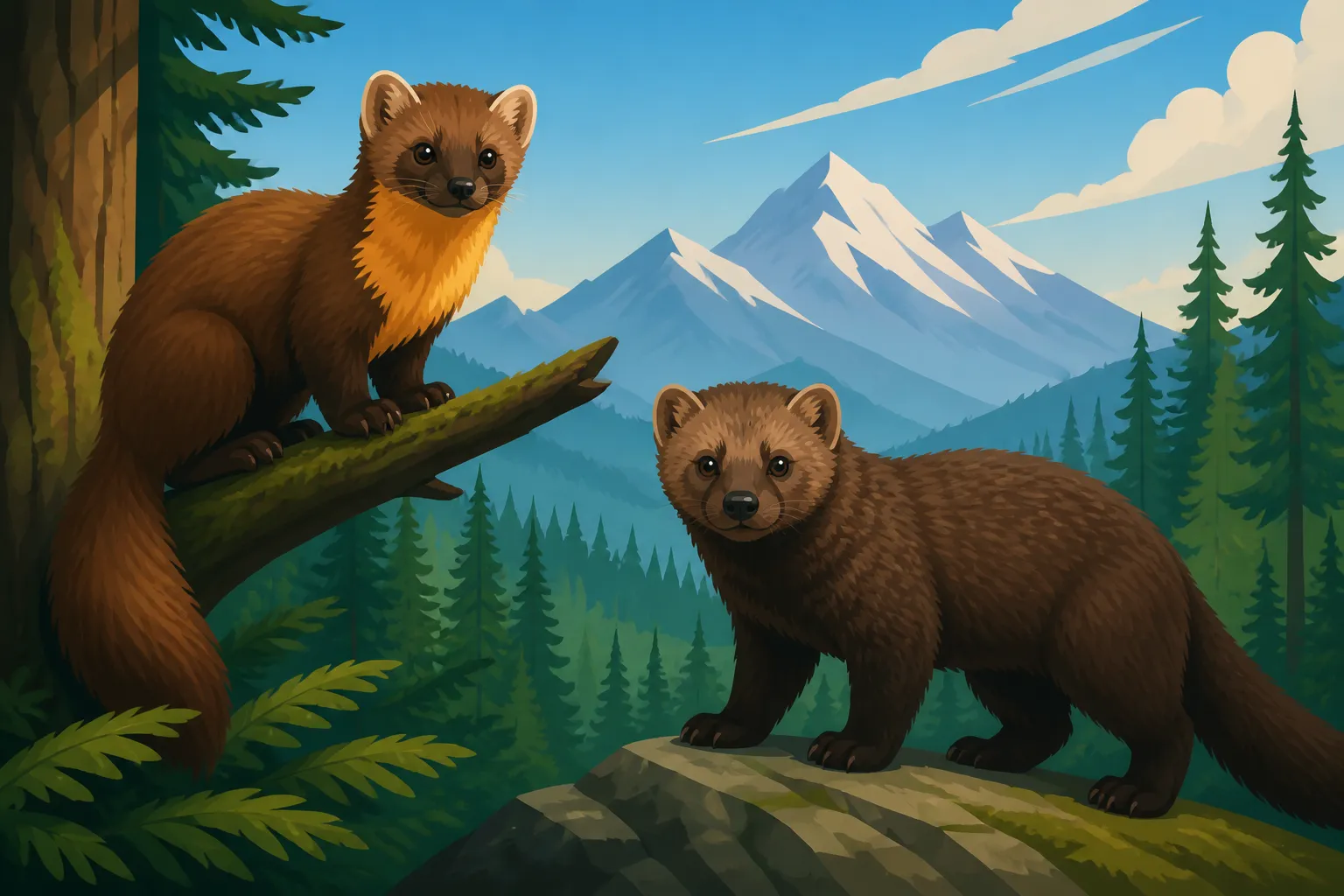
The American marten (sometimes called a pine marten, though American marten is the more accurate regional name) is a relatively small member of the weasel family, Mustelidae. Think of a long, slender body, much like a ferret, but with a bushier tail and significantly more robust build. Adults typically weigh between one and three pounds, with males generally being larger than females. Their fur is a beautiful rich brown, often lighter on the belly and darker on the legs and tail. One of their most distinctive features is a creamy to orange-coloured throat patch that can vary in shape and intensity, almost like a natural bib. Their ears are relatively large and rounded, giving them excellent hearing, which is crucial for locating prey in dense forest.
Marten are incredibly agile and primarily arboreal, meaning they spend a significant portion of their lives in trees. They can climb with astonishing speed and grace, often chasing squirrels or birds through the branches. However, they are equally adept on the ground, navigating fallen logs, dense brush, and snow with ease. They are largely solitary animals, especially outside of the breeding season, maintaining large territories marked by scent. Despite their small size, they are fierce predators, constantly on the move, searching for their next meal. Their active nature and speed make them incredibly difficult to spot, even for experienced woodsmen, often appearing and disappearing in the blink of an eye.
Marten Habitat and Diet in BC Forests
Marten have a strong preference for mature and old-growth coniferous forests, though they will use mixed forests as well. They need complex forest structures, which means plenty of downed logs, tree cavities, and dense canopy cover. These features provide vital protection from predators like owls, eagles, and larger carnivores, as well as crucial denning and resting sites. The deep snows of British Columbia's winters actually provide an advantage for marten; they can tunnel through the subnivean layer (the space between the ground and the snowpack) to hunt small mammals, insulating them from extreme cold and hiding them from aerial predators.
Their diet is quite varied, adapting to what's available in their specific environment. Small mammals like voles, mice, and especially red squirrels form the bulk of their diet. If you've ever watched a red squirrel scamper through the forest, chattering incessantly, you can imagine the challenge a marten faces. Yet, their agility allows them to outmaneuver even the quickest squirrel. They also opportunistically prey on birds, eggs, insects, and even berries and fruits during the warmer months. In areas where they coexist with Lynx and Snowshoe Hare Cycles, marten might also target young hares, though they are generally too small to take down an adult. Forest management practices, particularly extensive clear-cutting, can significantly impact marten populations by reducing the complex cover and food sources they depend on.
Marten Distribution Across British Columbia
Marten are fairly widespread across British Columbia, inhabiting most forested regions of the province. You're most likely to find them in the dense, mature forests of the interior, such as the Cariboo, Omineca, and Kootenay regions, but they are also present in coastal forests, albeit often in lower densities. Their range extends from the southern reaches of the province right up to the Yukon border in the north.
However, their populations aren't uniformly dense. Areas with extensive human development, significant logging, or frequent wildfires can see localized declines. While they are resilient, they are also sensitive indicators of forest health. A robust marten population often points to a healthy, mature forest ecosystem. Researchers, sometimes using remote cameras or tracking data collected by trappers, keep an eye on their numbers to better understand forest changes. For hunters looking to deepen their understanding of local ecosystems, learning about these creatures can add another layer of appreciation for the wild spaces they explore, perhaps even through resources like those offered by GoHunt in broader North American contexts, helping to map out various species ranges.
Fisher: The Ghost of the Deep Woods
If the marten is a forest phantom, the fisher is its larger, more formidable cousin—a ghost of the deep, dark woods. These powerful furbearers are even more elusive than marten, known for their incredible strength, tenacity, and a reputation as one of the few predators capable of consistently preying on porcupines. Encountering a fisher in the wild is a rare and truly special event for any outdoor enthusiast.
Fisher Characteristics: Strong, Stealthy, and Fierce
Fishers (whose name likely comes from "fiche," a European polecat, rather than their supposed fish-eating habits) are the largest members of the weasel family in British Columbia, apart from the wolverine. They are stocky, muscular animals, with males weighing significantly more than females, often ranging from eight to sixteen pounds, though some large males can exceed twenty. Their fur is a dark, rich brown to black, sometimes with a grizzled appearance on the head and shoulders, giving them a formidable look. Like the marten, they often have a creamy patch on their chest and belly, but it's typically less defined and can be quite variable. They possess short, powerful legs, broad paws with retractable claws, and a long, bushy tail that aids in balance, especially when climbing.
Despite their size, fishers are remarkably agile climbers and are at home both on the ground and in the trees. They are known for their fierce demeanor when cornered or defending young, and their strength allows them to tackle prey much larger than themselves. Fishers are predominantly solitary, nocturnal or crepuscular hunters, meaning they are most active at dawn and dusk. Their stealth and elusive nature contribute to their "ghost of the woods" reputation, making sightings uncommon. Unlike some other mustelids, they are not particularly vocal, further adding to their mysterious presence.
Preferred Fisher Habitat and Prey in BC
Fishers, much like marten, are highly dependent on extensive tracts of mature coniferous and mixed-wood forests. They require dense canopy cover for protection and denning, as well as abundant coarse woody debris on the forest floor, such as large fallen trees and stumps, which provide shelter, resting sites, and hunting grounds for their prey. They tend to avoid open areas and clearcuts, preferring the deep, undisturbed sections of the forest. Riparian zones, areas along rivers and streams, are also important to them, offering a diverse array of prey.
The fisher's diet is diverse and includes a wide range of small to medium-sized mammals and birds. Snowshoe hares, red squirrels, and voles are common prey items. However, what truly sets fishers apart is their specialized predation on porcupines. They are one of the few predators that can successfully hunt porcupines by repeatedly attacking the porcupine's face, eventually flipping it over to access its unprotected underside. This unique skill, combined with their ability to hunt other elusive forest creatures, makes them apex predators in their niche. They also consume carrion, insects, and berries, demonstrating their opportunistic feeding habits. Healthy populations of fishers are often a sign of robust forest ecosystems with a good diversity of prey. If you're out Scouting a British Columbia Management Unit for deer or elk, noticing signs of fisher activity could indicate a truly wild and untamed area.
Fisher Presence and Recovery Efforts in British Columbia
Historically, fishers were found across much of British Columbia's interior and southern regions. However, due to habitat loss from extensive logging, alteration of forest structures, and historical over-trapping, their populations experienced significant declines in many areas. Today, while they are still present in good numbers in some northern and remote parts of the province, they are considered a species of concern in other regions, particularly in the southern interior.
Conservation efforts are underway in some parts of British Columbia to help fisher populations recover. These efforts often involve translocations, where individuals from healthy populations are moved to areas where fishers have been extirpated or are struggling. Habitat restoration, focusing on maintaining and restoring the complex forest structures they need, is also crucial. Understanding their habitat requirements is vital for sustainable forest management. Groups like GoHunt often advocate for responsible wildlife management, which indirectly benefits species like fishers by supporting healthy ecosystems, although their primary focus might be on big game. The presence of these fascinating carnivores is an indicator of a thriving, intact forest system, and their recovery is a testament to the importance of biodiversity.
Understanding Their Role in the Ecosystem
Marten and fisher, though often overlooked, play incredibly vital roles in the intricate web of life that makes up British Columbia's forests. They aren't just pretty faces (or swift, furry blurs); they are active participants in maintaining balance, influencing everything from rodent populations to forest health.
Predator-Prey Dynamics and Forest Health
As mesopredators – mid-level predators – both marten and fisher exert significant control over populations of smaller mammals like squirrels, voles, and mice. Think about it: without these efficient hunters, rodent numbers could explode, leading to increased pressure on young trees and plant communities, potentially impacting forest regeneration and health. A healthy population of marten helps keep red squirrel numbers in check, for instance, which in turn can influence seed dispersal and tree growth patterns.
For fishers, their unique ability to hunt porcupines fills a specific ecological niche. Porcupines, while often seen as benign herbivores, can cause significant damage to trees by girdling them (eating the bark all the way around the trunk), especially in young stands. By preying on porcupines, fishers help prevent localized tree damage and maintain forest vigor. These predator-prey relationships are a fundamental aspect of forest ecology, showcasing how every species, no matter how small or hidden, contributes to the overall resilience of the ecosystem. It's a prime example of the interconnectedness you observe when spending time Hunting British Columbia's Logging Road Network or deep in the backcountry.
Coexistence with Other Forest Dwellers
Marten and fisher share their forested habitats with a vast array of other wildlife, from other furbearers like Wolverine in British Columbia's Mountains to various deer species and bears. While they are predators themselves, they also fall prey to larger carnivores such as cougars, wolves, and even large raptors like great horned owls and golden eagles, particularly the smaller marten. This position in the food web means they are constantly navigating a complex environment of hunters and the hunted.
Their presence can also indirectly influence the behaviour of other animals. For example, a healthy population of fishers might deter porcupines from over-browsing certain areas, which could then make those areas more attractive for deer browsing. While direct interactions between marten/fisher and large ungulates are rare, the health of these smaller carnivores reflects the health of the entire forest system that supports all game species. Understanding these subtle interdependencies is key to appreciating the full picture of British Columbia's Predators and Furbearers.
Conservation Status and Management
The conservation status of marten and fisher varies across British Columbia, reflecting different regional pressures and historical impacts. Marten are generally considered more secure, largely due to their broader distribution and adaptability, though specific populations can still be vulnerable to habitat fragmentation. Fishers, as mentioned, are of greater conservation concern in many parts of the province, particularly in the south.
Management strategies for these species often involve a combination of trapping regulations, habitat protection, and research. Sustainable trapping quotas are set to ensure populations remain healthy, and trappers play a crucial role in monitoring these furbearers. Habitat management focuses on maintaining and restoring the complex forest structures they require, including protecting old-growth patches and ensuring connectivity between suitable habitats. Programs focused on British Columbia Trapping Licences and British Columbia Trapping Season Dates are directly tied to these management efforts, aiming for long-term sustainability. For anyone interested in the broader picture of wildlife management in BC, these smaller furbearers offer a fascinating case study in balancing human activities with ecological needs.
Observing Marten and Fisher in the Wild
For most of us, seeing a marten or a fisher in the wild is a matter of luck, a fleeting glimpse that leaves a lasting impression. Their secretive nature and preference for dense cover make them challenging subjects for wildlife viewing. However, with patience, a keen eye, and an understanding of their habits, increasing your chances of an encounter or at least finding their sign is entirely possible.
Best Times and Places for Sighting Opportunities
Because both marten and fisher are most active during crepuscular hours (dawn and dusk) and often at night, these are generally the best times to be in the woods if you hope for a sighting. In winter, when their dark coats stand out against the snow, they can be a bit easier to spot, especially if they're moving across an open area like a logging road or a frozen stream.
Look for areas with mature or old-growth coniferous and mixed forests, particularly those with plenty of downed logs, snags, and thick undergrowth. Riparian zones, where water meets forest, are often hotspots of wildlife activity and can offer better chances. While Hunting British Columbia's October Rifle Opener for deer, keep an eye on those dense timber sections or even old cutblock edges – you never know what might be moving through. Their territories can be quite large, so covering ground quietly and patiently is key. They are typically shy of human presence, so remaining still and observing from a distance is your best bet.
Reading Sign: Tracks, Scats, and Den Sites
Even if you don't see a marten or fisher, you can often find evidence of their presence. Snow is your best friend for tracking. Both species leave distinct tracks. Marten tracks are small, typically around 1.5 to 2 inches long, and often show four toes with claw marks, resembling miniature cat tracks but more elongated. They have a characteristic bounding gait, where their hind feet land in or near the tracks of their front feet, creating a paired print pattern. Fisher tracks are larger, often 2.5 to 3.5 inches long, and more robust. They also exhibit a bounding gait, but their prints are more powerful, and you might see five toes in the track, especially in soft snow.
Scats (animal droppings) can also reveal their presence. Marten scats are small, thin, and often twisted, containing fur, bones, and sometimes berry seeds. Fisher scats are larger, typically thicker, and can also contain fur, bone fragments, and plant material. Both species utilize tree cavities, hollow logs, rock crevices, or dense brush piles for dens and resting sites. Finding such a location, especially if there's fresh sign around it, indicates active use. For those keen on exploring wildlife patterns, tools like GoHunt's mapping features, while often focused on larger game, can help identify areas with suitable habitat types where these furbearers might reside, aiding your scouting efforts.
Ethical Wildlife Viewing and Respecting Their Space
If you are fortunate enough to spot a marten or fisher, remember to maintain a respectful distance. These are wild animals, and startling them can be stressful for them, potentially disrupting their hunting or denning activities. Never attempt to approach, feed, or interact with them. Observe them quietly, perhaps with binoculars, and appreciate the rare glimpse into their hidden lives.
Understanding and respecting the natural behaviour of these animals is crucial. They are important components of British Columbia's rich biodiversity. By being mindful in the backcountry, whether you're hunting, hiking, or just enjoying nature, you contribute to the ongoing health of these forest inhabitants. Learning about species like the marten and fisher deepens our connection to the wild places we cherish and reinforces the importance of responsible stewardship for all creatures, big and small, that call British Columbia home.
| Characteristic | Marten | Fisher |
|---|---|---|
| Size | Small (1-3 lbs) | Medium-large (8-16 lbs, up to 20+) |
| Appearance | Rich brown fur, creamy/orange throat patch, relatively larger ears, bushy tail | Dark brown/black fur, less defined chest patch, stockier build, powerful legs |
| Habitat | Mature/old-growth coniferous and mixed forests, subnivean layer in winter | Mature coniferous/mixed forests, dense canopy, coarse woody debris, avoids open areas |
| Diet | Voles, mice, red squirrels, birds, eggs, berries, insects | Snowshoe hares, red squirrels, voles, porcupines, birds, carrion, berries |
| Activity | Primarily diurnal (daytime), but can be crepuscular | Primarily nocturnal/crepuscular (dawn/dusk) |
| Arboreal? | Highly arboreal, agile tree climber | Strong climber, spends significant time in trees and on ground |
| Sounds | Generally quiet, occasional chattering or hissing | Rarely vocal, deep growl or hiss when threatened |
| Distribution | Widespread across BC's forested regions | More localized, southern interior populations are of concern |
Disclaimer
This article is for general informational purposes only and does not constitute professional advice. Laws, prices and regulations vary by location and change over time. Consult a qualified professional for guidance on your specific situation.