Rocky Mountain Elk Numbers in the Kootenays
For many hunters eyeing the majestic Rocky Mountain elk, the Kootenay region of British Columbia holds a special allure. However, understanding the current population trends and where to focus your efforts can feel like trying to solve a complex puzzle, leaving many frustrated with outdated information or vague statistics. This guide will delve deep into the dynamics of Rocky Mountain elk numbers specifically in the Kootenays, exploring the factors that influence them, how these magnificent animals are managed, and what this means for those hoping to pursue them in this rugged and beautiful part of the province.
Rocky Mountain Elk: A Kootenay Icon
The Kootenay region, nestled against the Rocky Mountains, is practically synonymous with Rocky Mountain elk. These robust animals are not just another game species here; they are an integral part of the ecosystem and a celebrated part of the hunting heritage. Their presence shapes the landscape, influences other wildlife, and provides incredible opportunities for observation and ethical hunting. When you think of a strong bull bugling across a September morning, chances are you're picturing a Kootenay scene.
The Kootenay Landscape and Elk Habitat
The Kootenays offer a diverse mosaic of habitats that elk thrive in, from high alpine meadows and subalpine forests to dense timber stands and rich valley bottomlands. The region's distinct geography, characterized by long, north-south running valleys like the Rocky Mountain Trench, with steep mountain ranges on either side, provides critical winter range in lower elevations and expansive summer feeding grounds higher up. This varied terrain is what allows for such a robust population of elk, providing everything they need from feed to cover and escape terrain. When you're Hunting Elk in British Columbia's Kootenay Valleys, you're seeing first-hand the incredible adaptations these animals have made to a truly wild landscape.
These animals are masters of utilizing different elevations and vegetation types throughout the year. In spring, they follow the green-up, grazing on lush new growth in avalanche chutes and meadows. As summer progresses, they move into higher, cooler elevations, seeking out succulent forbs and grasses. Come fall, the rut electrifies the valleys, and as winter approaches, they descend to lower elevations where snow depths are less severe and forage is still accessible. This seasonal movement is a crucial aspect of their survival and one that dictates hunting strategies. Understanding What British Columbia Elk Eat Through Winter can often lead you to their preferred low-elevation haunts.
Historical Presence and Resurgence
Historically, Rocky Mountain elk were abundant across much of their current range in British Columbia. However, like many big game species, their numbers saw significant declines in the late 19th and early 20th centuries due to unregulated hunting, habitat loss, and competition with domestic livestock. It wasn't until concerted conservation efforts, including regulated hunting seasons, habitat protection, and reintroduction programs in some areas, that elk populations began to rebound. The Kootenays were a stronghold that helped facilitate this recovery, maintaining healthy core populations that could expand when conditions improved.
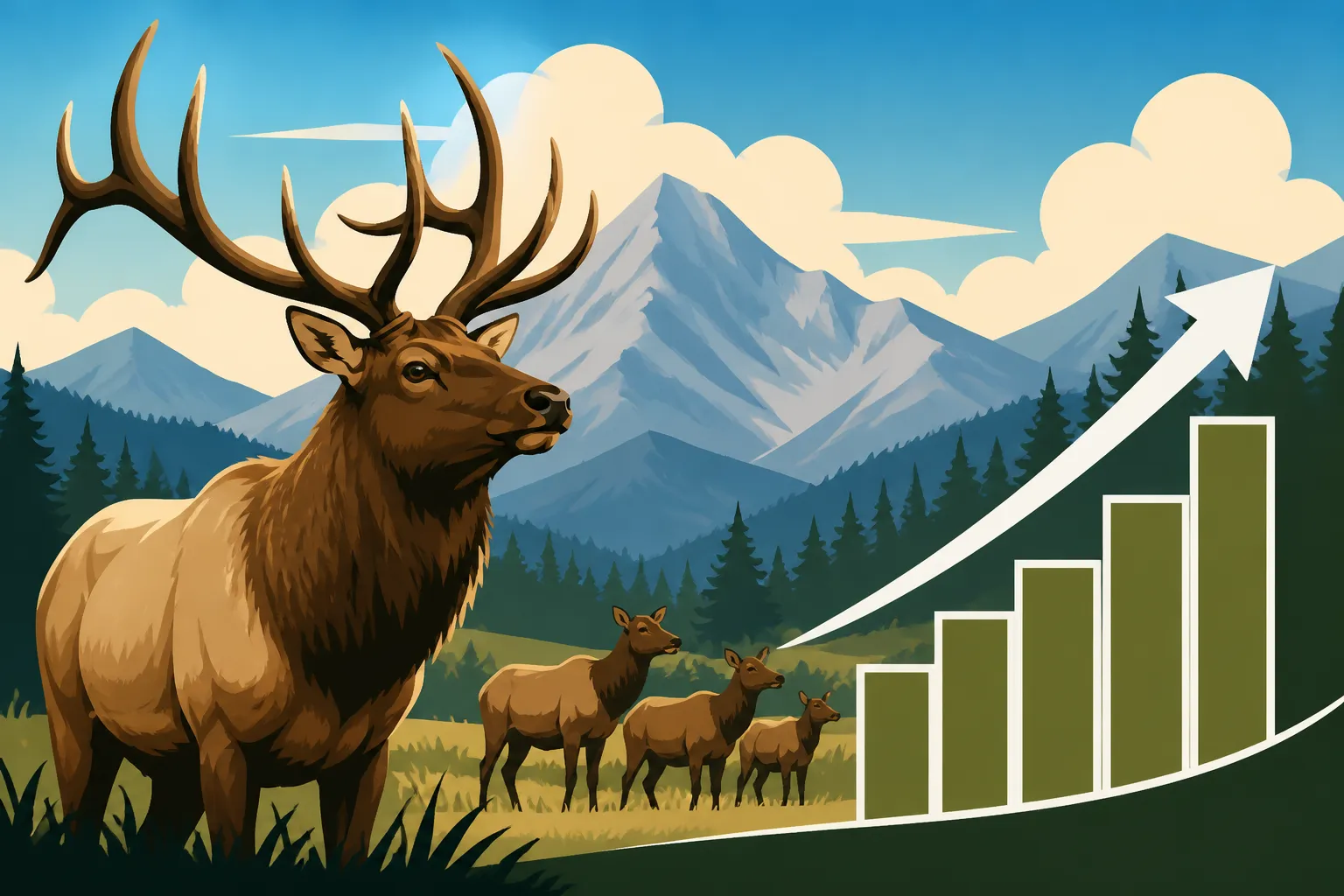
Today, the Kootenay region boasts some of the strongest and most stable Rocky Mountain elk herds in the province. Their resurgence is a testament to effective wildlife management and the resilience of the species, demonstrating how conservation, including hunting, can lead to thriving wildlife populations. The continued health of these herds is vital, not just for hunters, but for the ecological balance of the entire region. The success story of elk in the Kootenays is a prime example of why species-specific management, often supported by hunter dollars, is so critical.
Factors Influencing Elk Numbers in the Kootenays
Elk populations are dynamic, constantly shifting in response to a complex interplay of environmental, biological, and human-induced factors. Understanding these influences is key to appreciating why numbers might fluctuate in specific management units or across entire regions. It's never a simple equation, and the Kootenays, with their diverse terrain and varied human activity, present a microcosm of these challenges.
Habitat Quality and Availability
Perhaps the most fundamental factor affecting elk numbers is the quality and availability of their habitat. Elk are large herbivores that require vast amounts of forage, good cover for bedding and security, and access to water. In the Kootenays, habitat quality can vary significantly. Old-growth forests provide thermal cover and limited forage, while younger seral stages from logging or wildfires can offer abundant browse and grass for several years. The balance between these habitat types is critical.
For instance, widespread wildfires, while devastating in the short term, can eventually create excellent new foraging grounds as vegetation regenerates, offering a boom for elk populations in the medium term. However, extensive and repeated burns can degrade winter range, making it harder for elk to survive harsh conditions. Conversely, urban and industrial expansion can fragment critical habitats, creating barriers to movement and reducing overall carrying capacity. Consider how What Wildfire Has Done to British Columbia Game can create both challenges and opportunities for elk populations over time. The encroachment of human infrastructure like roads and subdivisions also reduces the contiguous natural areas elk need to thrive, particularly affecting crucial wintering grounds in valley bottoms.
Predator Dynamics
Predation is a natural and healthy component of any wild ecosystem, and elk in the Kootenays face a suite of predators, primarily wolves, cougars, and bears. The balance between predator and prey populations is a delicate one. When predator numbers are high, especially in areas where elk are already stressed by habitat limitations or harsh winters, their populations can decline. Conversely, healthy elk populations can support robust predator populations.
Wolves, in particular, are highly effective elk predators, often hunting in packs. Their presence can significantly impact elk calf survival and, in some cases, adult mortality. Wolves in British Columbia are a natural part of the ecosystem, and their impact on elk populations is closely monitored by wildlife biologists. Similarly, cougars are stealthy ambush predators that take a toll on elk, especially calves and sub-adults, in certain areas. Black bears and grizzlies will also prey on elk calves during spring. Understanding these predator-prey relationships is vital for managing elk populations sustainably and ensures that hunting seasons are set to account for natural mortality factors.
Human Impact and Development
Beyond direct habitat loss, human activities exert various pressures on elk populations. Recreational use, such as hiking, mountain biking, and off-road vehicle use, can disturb elk, especially on winter range when they are most vulnerable and need to conserve energy. Road networks, while providing access for hunters, also increase disturbance and can expose elk to higher hunting pressure if not managed carefully. Poaching, though illegal, also accounts for some elk mortality, particularly in easily accessible areas.
Furthermore, agricultural practices, while sometimes providing attractive forage in the form of crops, can also lead to human-wildlife conflicts, with elk damaging crops and fences. This can result in special permits to remove problem animals or, in some cases, localized population control measures. Balancing human land use with elk conservation requires ongoing dialogue and adaptive management strategies to minimize negative impacts and ensure coexistence.
Disease and Environmental Stressors
Like all wildlife, elk are susceptible to diseases and parasites, which can impact population health and numbers. Diseases such as hoof disease, though not always fatal, can weaken animals, making them more vulnerable to predation, malnutrition, and harsh weather. It's important for hunters to be aware of What Hoof Disease Does to Elk and report any unusual observations to wildlife officials. While British Columbia has not detected Chronic Wasting Disease (CWD) in its cervid populations to date, it remains a significant concern in North America, and surveillance efforts are ongoing.
Beyond disease, environmental stressors like prolonged drought or unusually severe winters can also take a heavy toll. Drought conditions reduce forage quality and quantity, affecting calf survival and overall herd health. Extremely cold temperatures combined with deep, crusted snow can make it difficult for elk to access food, leading to increased winter mortality, especially among younger and older animals. These natural stressors highlight the importance of managing for resilient populations that can withstand such challenges.
Estimating and Monitoring Elk Populations
Understanding the actual number of elk in the vast, rugged landscape of the Kootenays is no small feat. Wildlife managers rely on a combination of scientific survey methods and hunter-reported data to estimate populations and track trends. This information is crucial for setting sustainable hunting quotas and making informed conservation decisions.
Survey Methods and Challenges
Counting elk in dense timber and mountainous terrain is incredibly challenging. Biologists typically employ aerial surveys, often using helicopters, to visually count elk in specific management units. These surveys are usually conducted during winter when snow cover makes elk more visible and they are concentrated on winter ranges. However, these methods are expensive, weather-dependent, and rely on sightability corrections because not all animals will be seen. Other methods include pellet group counts, remote camera surveys, and capture-mark-recapture studies, which provide data points that help refine population estimates.
The scale of the Kootenays means that these surveys cannot cover every square kilometre. Instead, sampling methods are used, and estimates are extrapolated, always carrying a degree of uncertainty. This is why long-term trend data, rather than single-year counts, is often more valuable. It helps wildlife managers understand if populations are increasing, decreasing, or stable over time, giving them a better picture of herd health.
Understanding Official Population Estimates
Official population estimates for Rocky Mountain elk in the Kootenays are published by the provincial government, often in the annual Hunting and Trapping Regulations Synopsis or in specific wildlife management reports. These numbers are derived from the aforementioned survey data, adjusted with various statistical models. While precise figures are rarely given for every single management unit, general estimates for regions or larger herd units are common.
These official numbers are what inform decisions about harvest objectives and tag allocations for residents and non-residents alike. When you're planning your hunt, resources like the British Columbia government's wildlife data portals, or even tools provided by third-party platforms such as GoHunt, can offer insights into these broader trends and specific British Columbia's Management Units and Regions. It's always a good idea to cross-reference multiple sources, keeping in mind that these are estimates, not exact counts. Pay attention to harvest statistics and success rates, as these can also be indicators of population health and density in a given area. Many hunters use platforms like GoHunt to filter for areas with historically strong numbers, combining official data with anecdotal reports.
Hunting and Elk Management
Hunting is not just a recreational pursuit in British Columbia; it's a critical tool for wildlife management, especially for robust species like Rocky Mountain elk. The revenue generated from licence and tag sales directly funds conservation programs, and hunters provide valuable data that informs management decisions.
The Role of Hunting in Population Control
In areas with healthy elk populations, hunting plays an essential role in maintaining herd health and balancing numbers with available habitat. Without regulated hunting, elk populations can, in some cases, grow to a point where they overgraze their habitat, leading to widespread malnutrition, increased disease susceptibility, and environmental degradation that impacts other species. Regulated hunting helps to mimic natural predation pressures, remove older or weaker animals, and distribute pressure across the landscape.
Hunting regulations in the Kootenays are carefully designed to achieve specific management objectives. These often include "any bull" seasons in some areas, spike-fork antler restrictions in others, and increasingly, Limited Entry Hunting (LEH) draws for cows or specific antlered bulls to fine-tune harvest levels. For non-residents, understanding the Rules for Non-Residents Hunting British Columbia is paramount, often requiring a guide or a permit to accompany a resident. These regulations are adjusted regularly based on population data, habitat conditions, and hunter success rates, ensuring that the harvest remains sustainable.
Conservation Efforts and Future Outlook
The future of Rocky Mountain elk in the Kootenays looks promising, thanks to ongoing conservation efforts. These efforts include habitat enhancement projects, such as prescribed burns and planting forage species, which aim to improve the quality and carrying capacity of elk range. Protecting critical wintering grounds from development is another high priority. The Habitat Conservation Trust Foundation (HCTF), largely funded by hunters, anglers, and trappers through surcharges on their licenses, invests millions of dollars annually into projects that directly benefit wildlife and habitat, including those supporting elk.
Hunters also contribute vital information through compulsory reporting rules. When you fill your tag, you're required to report your harvest, providing critical data on sex, location, and date. This information, along with compulsory inspection requirements for certain species, helps biologists monitor populations and disease. Understanding British Columbia's British Columbia's Compulsory Reporting Rules isn't just about compliance; it's about being an active participant in wildlife conservation. By combining scientific research, thoughtful regulation, and the dedicated efforts of conservation groups and hunters, British Columbia aims to ensure that healthy, huntable populations of Rocky Mountain elk will continue to thrive in the Kootenays for generations to come.
Ultimately, the Kootenays continue to be a premier destination for elk hunters, and ongoing management aims to keep it that way. Whether you're planning a trip to the Hunting the Elk Valley for Bulls or exploring the vast opportunities of the Hunting the Rocky Mountain Trench, understanding the underlying population dynamics will only enhance your experience.
Factors Affecting Kootenay Elk Populations
| Factor | Impact on Elk Numbers | Management Response |
|---|---|---|
| Habitat Quality | Direct correlation with forage and cover availability. | Habitat enhancement (prescribed burns, planting), protection of critical winter range. |
| Predation | Influences calf recruitment and adult mortality. | Monitoring predator populations, setting hunting quotas to balance with predation. |
| Human Activity | Disturbance, habitat fragmentation, vehicle access. | Seasonal access restrictions, public education, land-use planning to minimize impact. |
| Disease/Stress | Can cause localized declines, reduce herd health. | Disease surveillance, research, habitat improvement to boost herd resilience. |
| Weather Events | Severe winters/droughts increase mortality/reduce forage. | Habitat management to provide resilient forage sources, monitoring winter severity and adjusting future quotas. |
| Hunting Pressure | Direct removal of animals. | Regulated seasons, LEH draws, antler restrictions, management unit-specific quotas to ensure sustainable harvest. |
Disclaimer
This article is for general informational purposes only and does not constitute professional advice. Laws, prices and regulations vary by location and change over time. Consult a qualified professional for guidance on your specific situation.