Where Kermode Bears Live
Planning a hunt or backcountry expedition along British Columbia’s rugged Pacific coast can quickly become confusing when navigating complex regional boundaries, protected species sanctuaries, and unique game regulations. Understanding where Kermode bears live is essential for any outdoorsperson operating in coastal rainforests, both to respect strict wildlife conservation laws and to properly identify black bear color phases in the field. This guide breaks down the geographical range, habitat requirements, legal protections, and practical identification tips for BC’s famous white-phased black bear.
The Core Range of the Kermode Bear in British Columbia
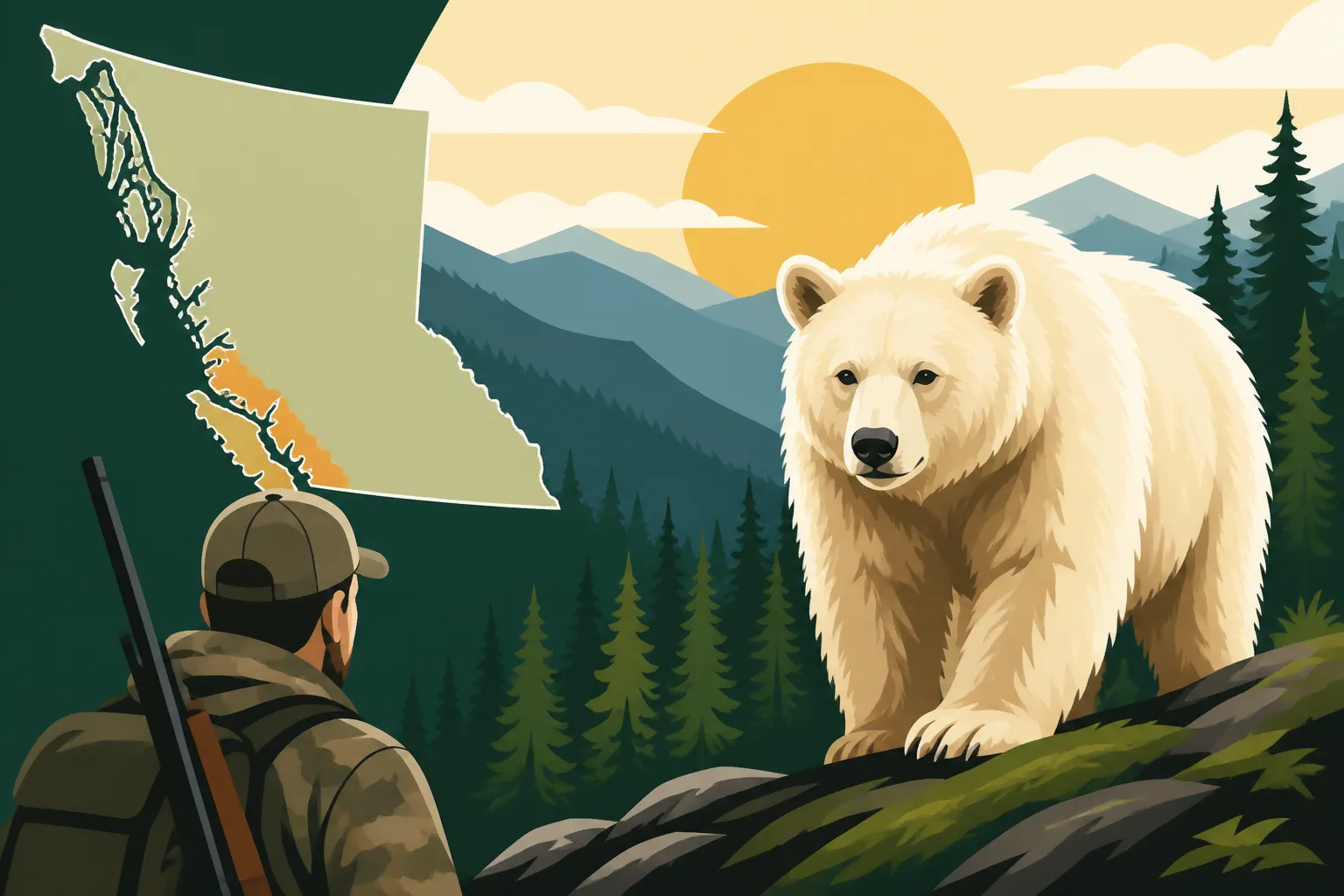
The Kermode bear—often referred to as the Spirit Bear—is not a distinct species or polar bear hybrid, but a rare color phase of the American black bear (Ursus americanus kermodei). While black bears with white coats can technically appear in low frequencies elsewhere in North America, the genetic concentration of this unique trait is localized almost entirely within the temperate rainforests of Central Coast British Columbia.
If you are traveling through or hunting in these coastal management units, knowing where these animals roam helps you stay compliant with regional hunting bans and ensures you don’t inadvertently harvest a protected animal while pursuing British Columbia’s Coastal Black Bears.
The Central and North Coast Islands
The absolute epicenter of the Kermode bear population lies within the isolated island networks and fjordlands of the Central Coast, stretching roughly from the North Coast communities near Prince Rupert down through the heart of the Great Bear Rainforest. Two islands in particular—Princess Royal Island and Gribbell Island—hold the highest frequency of white-coated individuals anywhere on Earth. On Gribbell Island, studies indicate that up to one in every ten black bears carries the striking white coat, while on Princess Royal Island, the frequency sits closer to ten to fifteen percent.
Outside of these island strongholds, the range extends inland along major river corridors. You will find Kermode bears along the lower reaches of the Skeena River valley, extending past Terrace toward Kitimat and up into the Nass River drainage. The geography here is defined by dense coastal forests, massive ancient cedar and hemlock stands, steep valley walls, and intricate marine channels. Navigating these areas requires careful planning; leveraging digital mapping platforms like GoHunt helps hunters and backcountry travelers visualize regional management unit boundaries, land tenures, and topographically challenging river bottoms before ever setting foot on a boat.
Habitat Characteristics and Salmon Watersheds
Kermode bears depend entirely on the lush, highly productive coastal rainforest ecosystem. Their presence is intimately tied to pristine salmon watersheds where ocean-derived nutrients fuel the entire food chain. During the spring and early summer months, these bears feed heavily on sedges, skunk cabbage, and tender green vegetation along tidal flats and estuaries.
As late summer turns into fall, the bears transition into old-growth forest canopies bordering spawning streams. The dense old-growth timber provides essential security cover, bed sites, and massive denning trees—often inside hollowed-out western red cedars or Sitka spruces. Because the Kermode bear relies so heavily on intact rainforest ecosystems, timber harvest patterns and road development drastically alter how these bears move across the landscape. Understanding these habitat dynamics is vital whether you are studying game patterns or researching What Bears Eat on a Coastal Estuary.
Biological Genetics and Legal Protection Status
To truly appreciate why Kermode bears occupy such a specific niche in British Columbia, it helps to understand the underlying genetics. The white coat is the result of a recessive mutation in the MC1R gene—the same gene responsible for red hair in humans. For a bear to display the snowy white or cream-colored coat, it must inherit a copy of this mutated gene from both its mother and its father. Bears carrying only one copy of the gene appear completely black, yet they carry the genetic blueprint to pass the white trait to future generations.
This genetic reality creates a unique situation for conservationists and wildlife managers across the province. Because a coal-black sow can give birth to a white cub—or a white sow can nurse a black cub—protecting the white phenotype requires broad, ecosystem-level conservation strategies rather than simply managing individual animals.
The Recessive Gene Mechanism and White-Coat Advantage
For years, biologists wondered why a white coat would persist in a dark, wet rainforest where camouflage seems like a distinct advantage. Evolutionary research revealed a surprising answer: fishing efficiency. During daylight hours, salmon spawning in clear coastal streams are far less alarmed by a white object above the surface than a dark one. The white coat breaks up the bear’s outline against the bright sky, allowing white-phased Kermode bears to catch salmon during the day with a higher success rate than their black-coated siblings.
This evolutionary edge has allowed the gene to remain strong in localized coastal populations. When glassing coastal river mouths or creek bends, hunters looking for conventional black bears often marvel at how visible a Kermode bear is against green bank sedges, even while remaining relatively invisible to the fish below the waterline.
Hunting Regulations and Protected Status in BC
In British Columbia, the Kermode bear enjoys absolute legal protection. Under the provincial wildlife regulations, it is completely illegal to hunt, shoot, or harvest any white-phased black bear anywhere in the province. The law explicitly protects all white-coated individuals regardless of the specific management unit you are hunting in.
Furthermore, vast swathes of the Spirit Bear’s core home range have been designated as protected areas, ecological reserves, and conservancies where hunting boundaries are strictly enforced. The Spirit Bear Conservancy on Princess Royal Island, for example, protects critical habitat from industrial development and resource extraction. When planning a trip into these remote zones, utilizing mapping tools like GoHunt enables hunters to double-check protected conservancy boundaries, ensuring you stay well clear of restricted zones while hunting adjacent open general units.
If you want to dive deeper into the history and rationale behind these game management decisions, take time to read about The Kermode Bear and Why It Is Protected as well as Why the Spirit Bear Cannot Be Hunted.
Scouting and Identifying Bears in Coastal Ecosystems
When you are out in the coastal woods pursuing Black Bears Across British Columbia, encountering a Kermode bear is a breathtaking experience. However, field identification isn’t always as simple as looking for a pristine, polar-bear-white coat. In the muddy, salmon-rich environments of coastal BC, white bears can easily stain their fur brown, yellow, or grey, leading to potential confusion during low-light glassing sessions.
Proper scouting requires patience, high-quality optics, and a deep understanding of black bear morphology so you can quickly differentiate between legal black bears, protected Kermode bears, and non-target species like grizzlies.
Differentiating Kermode Bears from Other Color Phases
Black bears across British Columbia display a wide spectrum of coat colors. While coastal populations are overwhelmingly dark black, interior regions frequently produce cinnamon, chocolate, blonde, and reddish brown variations. Understanding Colour Phases in British Columbia Black Bears is an essential skill for any big game hunter.
When observing a light-colored bear on a coastal estuary, pay close attention to the following details:
- Paws and Muzzle: Kermode bears possess pale, cream-colored or pure white fur across their entire torso and limbs, but their skin remains dark, and their nose leather is typically black or dark slate gray. Their claws are light brown or straw-colored.
- Staining: A white bear that has been digging in tidal mud or rubbing against pitch-laden conifers may appear dirty cream or yellowish-tan. Never shoot a light-colored bear assuming it is merely a blonde interior color phase if you are within the North or Central Coast regions.
- Facial Profile: Like all black bears, Kermode bears have a straight facial profile from forehead to nose tip, lacking the pronounced facial dish and prominent shoulder hump characteristic of grizzly bears.
Before taking any shot in coastal management units, take extra time to confirm the animal’s color, physical structure, and surroundings. Using solid field optics and practicing techniques for Judging a Boar From a Sow With Cubs will help ensure a clean, ethical, and legal harvest.
Navigating Access and Mapping Coastal Range
Accessing the remote fjordlands where Kermode bears live is an adventure in itself. There are very few roads connecting these coastal communities; primary access relies on ocean vessels, floatplanes, or localized forest service road networks branching off from deep-water ports like Kitimat or Bella Coola.
When planning an expedition near these marine ecosystems, hunters must deal with extreme tides, torrential rain, and dense brush. Digital scouting tools are invaluable here. By overlaying satellite imagery with boundary maps on GoHunt, you can identify open tide flats, river estuaries, and recent timber harvest blocks that offer good visibility for glassing. Knowing where road access ends and ocean-only transport begins saves thousands of dollars in logistics and prevents accidental trespass on First Nations reserve lands or private industrial sites.
If your hunting strategy involves coastal boat operations or shoreline glassing, consider reviewing strategies for Glassing for Bears on a Coastal Estuary and Hunting Bears on a Coastal Estuary in May to maximize your safety and efficiency in wet environment conditions.
Kermode Bear Regional Distribution and Regulations Summary
The table below breaks down the key geographic regions where Kermode bears are found in British Columbia, detailing their relative population concentration, legal protection status, and primary access considerations for outdoorspeople.
| Region / Location | Kermode Gene Frequency | Legal & Protection Status | Primary Access Method | Key Scouting Considerations |
|---|---|---|---|---|
| Gribbell Island | Very High (~10-30%) | Fully Protected / Conservancy Rules Apply | Marine vessel or charter boat | Strict conservancy boundaries; high concentration along salmon streams. |
| Princess Royal Island | High (~10-15%) | Fully Protected / Spirit Bear Conservancy | Ocean boat / floatplane access | Rugged shorelines; extensive protected park land; zero road access. |
| Skeena River Valley (Terrace to Kitimat) | Moderate (~2-5%) | Protected Specimen / Open Hunting for Standard Black Bears | Highway 16 / Forest Service Roads | Mix of private, Crown, and park land; check mapping layers carefully. |
| Nass River Basin | Low to Moderate (~1-3%) | Protected Specimen / Open Hunting for Standard Black Bears | Forest Service Roads / Remote river access | Dense timber bottoms; brushy river bars; co-exists with heavy grizzly numbers. |
| Outer Central Coast Fjords (Bella Bella to Douglas Channel) | Low (~1-5%) | Protected Specimen / Mixed Conservancy Zones | Ocean vessel / jet boat | Extreme weather; tidal access only; remote shoreline glassing. |
Operating near these unique wildlife zones requires constant awareness of your surroundings and strict adherence to game laws. If you are venturing deep into the coastal rainforest, you are venturing into a truly wild ecosystem shared by black bears, Kermode bears, and grizzlies alike. Always carry bear spray, keep a clean camp, and consult current provincial hunting synopses to ensure your unit boundaries and tags are fully valid before heading into the bush.
To expand your overall knowledge of hunting in this rich geographical region, explore our detailed guides on Hunting British Columbia’s Great Bear Rainforest and mastering backcountry logistics across British Columbia’s diverse landscapes.
Disclaimer
This article is for general informational purposes only and does not constitute professional advice. Laws, prices and regulations vary by location and change over time. Consult a qualified professional for guidance on your specific situation.