Tipping the Cook and Wranglers
One of the most common anxieties for hunters embarking on a guided trip, particularly in a wild place like British Columbia, isn't just whether they'll tag out, but how to properly show appreciation for the incredible crew who makes the entire adventure possible. From the amazing meals that fuel long days to the wranglers who navigate tricky terrain with precious cargo, knowing how to appropriately tip the cook and wranglers can feel like navigating a hidden trail, but this guide is here to help you understand the unspoken rules of gratitude in camp.
Why Tipping Your Camp Support Staff Is So Important
When you book a guided hunt in British Columbia, it's easy to focus on your main guide, who's with you in the field every day, helping you stalk that magnificent moose or glass for sheep on a distant ridge. But behind every successful guide is a team of dedicated individuals working tirelessly to ensure your comfort, safety, and overall experience. These are the unsung heroes of camp life: the cook, the wranglers, and sometimes general camp hands. Tipping them isn't just a nice gesture; it's a vital part of their livelihood and a deeply ingrained aspect of hunting camp culture.
Understanding the Team Effort Behind Your Hunt
Think about what goes into a typical British Columbia hunting camp, especially those remote ones where you're many hours from the nearest road. Someone has to coordinate all the food, ensuring there's enough variety and quality to keep everyone energized. Someone else has to manage the horses, packing gear in and out, ensuring their health, and often guiding them through challenging landscapes. This isn't just a job; it's a lifestyle, often involving long hours, physically demanding work, and significant time away from their own families.
Your guide might be the face of your hunting success, but the cook and wranglers are the backbone of the entire operation. They ensure you start your day with a hearty breakfast, come back to a warm, clean camp, and have your gear moved efficiently to the next spike camp. Without them, your guide couldn't focus solely on finding game, nor could you enjoy the hunt with peace of mind. Their contributions are fundamental to making your hunting trip seamless and enjoyable, allowing you to concentrate on the pursuit of game, whether you're Hunting British Columbia's Alpine in September or patiently waiting in a Hunting a Kootenay Creek Draw.
How Tips Directly Impact Their Livelihood
For many working in the outfitting industry, particularly the cooks and wranglers, tips are a significant and expected part of their compensation. While they receive a wage, it's often supplemented substantially by gratuities from grateful clients. Unlike your main guide, who might have a more direct role in the hunt's success, the support staff's efforts are more about the consistent quality of daily life in camp. Their hard work directly contributes to the overall positive experience, which in turn reflects well on the entire outfitter and increases the likelihood of repeat business.
Imagine someone spending weeks, or even months, in a remote camp, cooking three meals a day, baking fresh bread, cleaning dishes, and managing the propane or wood stove. Or the wrangler who spends countless hours caring for horses, shoeing them, exercising them, and carefully packing out your hard-won moose quarters from a remote location. These are not easy tasks, and the tips you provide are a tangible way of acknowledging the immense value of their labour and dedication. It's an investment in the human capital that makes British Columbia's world-class guided hunts possible. If you're looking into an outfitter, platforms like BookYourHunt often highlight what's included and what's customary for gratuities, which can give you a clearer picture upfront.
Identifying Who to Tip Beyond Your Primary Guide
It's common for hunters to understand the need to tip their primary guide, but the camp staff can sometimes be overlooked. Knowing who typically receives a gratuity ensures everyone who contributed to your experience is recognized fairly. In British Columbia, especially in larger or more logistically complex camps, this often includes cooks, wranglers, and general camp helpers.
The Unsung Hero: Your Camp Cook
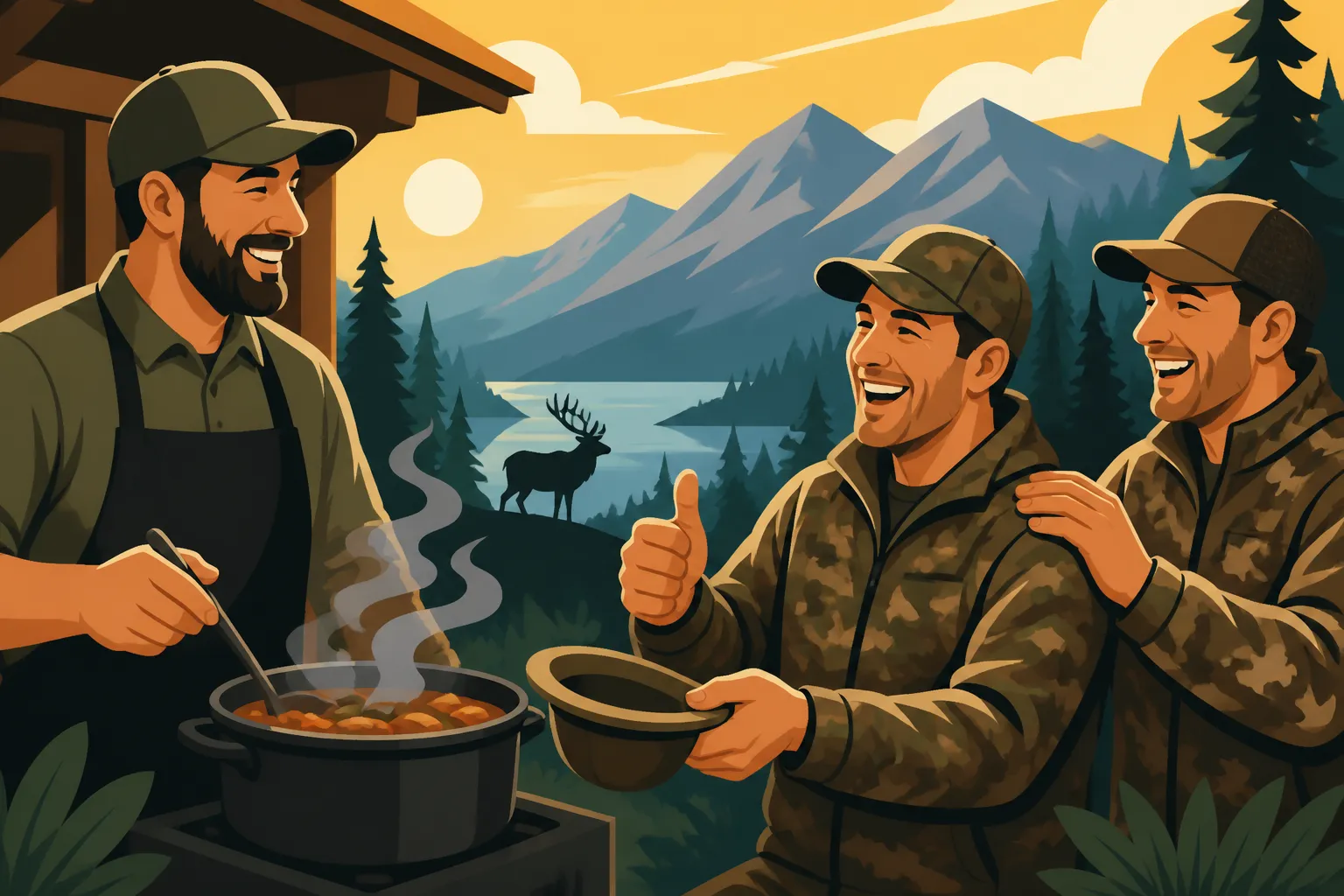
The camp cook is arguably one of the most critical, yet often least visible, members of a British Columbia hunting crew. They are the ones who rise before dawn to get coffee brewing and breakfast on the table, often staying up late to clean up after dinner and prepare for the next day. A good cook can turn a good hunt into a great experience, providing comfort and sustenance in often challenging conditions. They handle everything from meal planning to food storage, often in remote locations with limited resources, whether you're in a cozy wall tent camp or a rustic lodge.
Consider a hunt deep in British Columbia's interior where you've been Hunting Moose in British Columbia's Interior. Coming back to a hot, delicious meal after a long, cold day of tracking through thick timber or calling in the rut is more than just food; it's morale-boosting. The cook might be baking fresh pies, preparing a full roast dinner, or simply ensuring there's always a warm drink available. Their efforts directly contribute to your energy levels and overall enjoyment. A generous tip for the cook acknowledges the immense effort and skill it takes to keep everyone well-fed and happy in the backcountry, especially when you consider What an Outfitter Provides in a Backcountry Camp in terms of amenities.
The Backbone of Backcountry Logistics: Wranglers and Horse Packers
For many British Columbia hunts, particularly those for mountain sheep, goats, or interior moose, horses are indispensable. They are the workhorses that get you and your gear deep into the wilderness, often far beyond where any vehicle can go. The wranglers are the dedicated professionals who care for these animals, pack all the equipment, set up and take down camp, and are ultimately responsible for safely packing out your trophy and meat. This is incredibly demanding work, requiring expert horsemanship, strength, and an intimate knowledge of the terrain.
Imagine a situation where you've successfully harvested an elk deep in the mountains, perhaps during an Elk Hunting in British Columbia trip. Getting that animal quartered and safely back to a main camp or vehicle access point is a monumental task. The wranglers will carefully load heavy, often awkward, meat packs onto their horses and lead them down steep, rocky trails that would be impossible for a human to manage alone. Their skill prevents damaged meat and ensures a safe journey for all. Tipping your wranglers acknowledges their expertise, their tireless care for the horses, and their critical role in ensuring your harvest gets out of the mountains. This is especially true for any Horseback Hunting British Columbia's Backcountry trips, where their role is absolutely central.
Other Support Staff and Camp Hands
Depending on the size and style of the outfitter, there might be other individuals who contribute to your camp experience. This could include a camp helper who assists the cook, cleans tents, chops firewood, or helps with general chores. In some boat-based coastal hunts, there might be a deckhand or someone specifically responsible for handling the boat while the main guide is spotting or stalking on shore. While these roles vary, the principle remains the same: if someone consistently provides a service that enhances your hunt, a tip is appropriate.
When you're trying to figure out who's who, don't hesitate to ask your outfitter or lead guide at the beginning of your trip. A good outfitter will be transparent about their crew and customary tipping practices. Organizations like the Guide Outfitters Association of British Columbia often emphasize the value of all camp personnel. It’s better to be proactive than to leave someone feeling unappreciated. Remember, every individual in camp plays a part in the complex ballet that is a successful guided hunt, from managing the fire to providing fresh water.
How Much to Tip: Guidelines and Considerations
The question of "how much" is often the trickiest part of the tipping etiquette. While there aren't strict rules, there are industry standards and thoughtful considerations that can guide your decision. The goal is to provide a gratuity that reflects your satisfaction with the service and acknowledges the hard work of the support staff.
General Percentage-Based Guidelines
A common starting point for tipping in the North American guided hunting industry is to consider a percentage of the total hunt cost. While this is most often applied to the main guide, a smaller percentage or a flat daily rate is typically reserved for the support staff. Keep in mind that these are just guidelines, and individual circumstances can influence your final decision.
For support staff like cooks and wranglers, a general range to consider might be around 1-5% of the total hunt cost, divided among the support staff, or a daily rate per staff member. This often translates to a specific dollar amount per day, which can make calculation simpler. For example, if a cook and one wrangler are present for a 7-day hunt, you might budget a certain amount for each of them per day.
Many hunters find it helpful to look at it as a separate budget item. If you're curious about the overall financial picture, you might want to review What a British Columbia Guided Hunt Costs and factor in gratuities as part of your total investment. Remember, these are highly skilled individuals who ensure your safety and comfort, and their compensation should reflect that.
Performance-Based Adjustments
While general guidelines provide a starting point, your personal experience and satisfaction should absolutely influence the final amount.
Did the cook go above and beyond, catering to dietary restrictions, baking fresh treats, or preparing a special meal that truly hit the spot? Did the wranglers show exceptional care for the horses, navigate treacherous terrain flawlessly, or help you with tasks beyond their direct duties?
Consider increasing your tip if:
- Exceptional Service: The staff consistently exceeded your expectations, displaying professionalism, a positive attitude, and a genuine desire to enhance your experience.
- Special Circumstances: They handled unexpected challenges (like difficult weather, a particularly tough pack out, or a challenging animal recovery) with grace and effectiveness.
- Personal Connection: You felt a genuine camaraderie and appreciation for their presence and efforts in camp.
Conversely, if there were issues with service quality—though this is rare with reputable outfitters—you might adjust your tip downwards. However, if service was truly subpar, it's often more effective to address specific concerns directly with the outfitter after the hunt, rather than solely using the tip to express dissatisfaction. Tipping is primarily about rewarding good service.
Splitting the Pot Versus Individual Tips
Some outfitters might have a system where all tips are pooled and then distributed among the staff, while others prefer individual tips. It's perfectly acceptable to ask the outfitter about their preferred method. If it's a smaller camp with only a cook and a wrangler, individual tips are often appreciated, allowing you to directly acknowledge each person's contribution.
However, in larger operations with multiple guides and support staff, a "tip pool" system ensures that everyone, including those behind the scenes, gets a fair share. If you hand a lump sum to the head guide for distribution, make it clear who the tip is for (e.g., "This is for the cook and wranglers"). A great outfitter will always ensure fair distribution.
Here's a quick reference table for general tipping guidelines:
| Role | General Guideline (per hunter, per day) | Considerations |
|---|---|---|
| Camp Cook | Varies, often around $50-$100+ | Quality of meals, variety, special requests, cleanliness, overall camp vibe. |
| Wrangler/Packer | Varies, often around $50-$100+ | Horsemanship, care of animals, safety, efficiency of packing, terrain challenges. |
| General Camp Hand | Varies, often around $25-$50+ | Help with chores, fire, water, overall assistance in maintaining camp. |
Note: These are illustrative ranges. Actual amounts can vary based on hunt cost, duration, and individual performance. Always confirm with your outfitter if unsure.
The Mechanics of Tipping in a British Columbia Camp
Once you've decided how much you want to tip, the next step is the practical execution. How and when you present the gratuity can make a difference in how it's received. Being prepared and thoughtful goes a long way in showing genuine appreciation.
Cash is King: The Preferred Method
In almost all cases, cash is the overwhelmingly preferred method for tipping in British Columbia hunting camps. Credit card transactions or personal checks can be difficult to process or cash for individuals in remote areas, or they might be subject to fees or delays. Having Canadian cash in small denominations makes it easy for staff to receive and use their tips immediately.
Before you head out on your trip, make sure you budget for and acquire the necessary cash. It's a good idea to keep it in a secure, discreet place until the end of the hunt. If you're coming from outside Canada, remember to exchange currency beforehand. While some outfitters might accept US dollars, having Canadian currency shows consideration and ease for the recipients. This is another item to consider when you're preparing What to Bring on a British Columbia Guided Hunt.
Timing Your Tip: The End of the Hunt
The most appropriate time to present your tips is typically at the very end of your hunt, just before you depart from the main camp. This allows the entire team to have demonstrated their full range of services and for you to have experienced the complete trip.
A good practice is to gather the tips for the support staff, put them into individual envelopes if you prefer, and discreetly hand them to each person or, if the outfitter prefers a pool, hand it to the head guide for distribution, clearly stating who it's for. Avoid making a grand public spectacle of the tipping, but also don't be so secretive that it feels awkward. A simple "Thank you for everything, I really appreciate your hard work" is usually sufficient with the presentation of the tip. This is part of the general Etiquette in a Guided Camp that helps maintain a positive atmosphere.
What If Service Was Subpar? Addressing Concerns Thoughtfully
While the vast majority of guided hunts in British Columbia are run by professional and dedicated individuals, occasionally a client might feel that certain aspects of the service were not up to par. If this is the case, it's a delicate situation. As mentioned earlier, tipping is primarily about rewarding good service.
If you genuinely feel that the cook or wranglers did not perform their duties adequately, or if there were significant issues that negatively impacted your experience, you have a few options.
- Reduce, but don't eliminate, the tip: A reduced tip signals dissatisfaction without completely denying their effort. However, this method can be subtle and might not convey specific feedback.
- Provide direct feedback to the outfitter: This is often the most effective approach. After the hunt, speak privately with the outfitter about your specific concerns. Reputable outfitters, many of whom are listed on platforms like GoHunt, value client feedback and use it to improve their operations and address any issues with their staff. This allows for constructive criticism that can lead to actual change, rather than just a silent reduction in gratuity. Be specific, fair, and objective in your feedback.
- Consider the "why": Sometimes, issues might be due to unforeseen circumstances (e.g., equipment failure, extreme weather) rather than a lack of effort. Try to distinguish between things within the staff's control and those that were not.
Ultimately, remember that these individuals work incredibly hard, often in challenging conditions. Even if some aspects weren't perfect, a complete absence of a tip can be a significant blow to their morale and income. Thoughtful communication with the outfitter, combined with an appropriate gratuity based on overall effort, is usually the best path forward. Understanding Questions to Ask Before Booking can also help set expectations for service and avoid misunderstandings later.
Final Thoughts on Showing Gratitude
Tipping the cook and wranglers in a British Columbia hunting camp is more than just an exchange of money; it's a reflection of respect for the hard work, dedication, and expertise that goes into making your wilderness adventure possible. It's a way to acknowledge the countless hours spent planning meals, caring for horses, and maintaining a comfortable camp, often far from the comforts of home.
These individuals are integral to the success and enjoyment of your hunt, whether you're chasing British Columbia's Record Stone's Sheep or enjoying a late-season Hunting British Columbia's October Rifle Opener. By being prepared with cash, understanding the general guidelines, and letting your personal experience guide your decision, you can ensure that these vital members of the team feel appreciated for their invaluable contributions. A happy camp staff contributes to a happy camp, and that, my friends, makes for a truly memorable British Columbia hunting experience. After all, the friendships and camaraderie forged in these remote camps are often as valuable as the game you harvest.
Disclaimer
This article is for general informational purposes only and does not constitute professional advice. Laws, prices and regulations vary by location and change over time. Consult a qualified professional for guidance on your specific situation.