Declaring a Firearm at the Canadian Border
Coming to British Columbia for a hunting adventure is incredibly exciting, but for many non-resident hunters, the thought of crossing the Canadian border with firearms can feel like navigating a minefield. The bureaucratic hurdles, the fear of making a mistake, and the sheer unknown of dealing with customs officials can frankly be quite intimidating. This guide is here to demystify the process of declaring your firearm at the Canadian border, ensuring you have all the information you need for a smooth, stress-free entry so you can focus on the hunt ahead, not the paperwork behind you.
Why Declaring Your Firearm Is Non-Negotiable
Let's be upfront: trying to sneak a firearm into Canada, even by accident, is a surefire way to ruin your hunting trip before it even begins. This isn't just about a slap on the wrist; it's about serious legal repercussions that can affect your ability to travel internationally for years to come. The Canadian border is a sovereign boundary, and they take their firearm laws incredibly seriously, far more so than some might expect. It's not about whether you intend harm, but whether you comply with their strict regulations.
The Legal Framework for Non-Residents
Canada operates under the Firearms Act and the Customs Act, which together govern the importation, possession, and transport of firearms. For non-residents, this means a very specific process must be followed. You can't just show up with your rifle and expect a wave-through. The core principle is that all firearms, regardless of their classification in your home country, must be declared to a Canada Border Services Agency (CBSA) officer upon entry. This declaration isn't just a courtesy; it's a legal requirement that enables you to temporarily import your hunting rifle or shotgun. It's worth noting that while British Columbia has its own hunting regulations, the rules for bringing firearms into the country are federal. Getting this part right is foundational to everything else you plan for your hunt, including understanding the Rules for Non-Residents Hunting British Columbia.
The Canadian government classifies firearms into three categories: non-restricted, restricted, and prohibited. For most non-resident hunters heading to British Columbia, you'll be dealing with non-restricted firearms – typically your standard hunting rifles and shotguns. Restricted firearms (like most handguns and certain semi-automatic rifles) and prohibited firearms (like automatic weapons or short-barrelled handguns) generally cannot be brought into Canada by non-residents, with very few exceptions that do not apply to hunting. Trying to bring one of these across is a definite no-go and will result in significant trouble.
Penalties for Non-Compliance
The consequences of failing to declare a firearm, or of declaring it improperly, are severe. We're talking about more than just having your rifle confiscated. You could face criminal charges, significant fines, forfeiture of your vehicle, and even imprisonment. Imagine travelling all that way, excited for your hunt, only to be turned back at the border, potentially arrested, and barred from entering Canada ever again. It's a nightmare scenario that is entirely avoidable with proper preparation.
CBSA officers are highly trained to identify undeclared firearms, and their systems are robust. There's no "I forgot" loophole when it comes to firearms. Even if you're just passing through and didn't intend to hunt, the rules apply. This is why thorough preparation, including familiarizing yourself with the Bringing Firearms Into British Columbia process, is absolutely essential. Don't risk your freedom, your hunting gear, or your future travel plans by trying to cut corners or hoping no one notices.
The Non-Resident Firearm Declaration Form (RCMP 5589)
This is the cornerstone of legally bringing your hunting firearm into Canada. The Non-Resident Firearm Declaration (form RCMP 5589) is what you'll present to a CBSA officer, and it acts as a temporary licence and registration certificate for your non-restricted firearm. Think of it as your firearm's passport for its stay in Canada. It's a simple form, but it needs to be filled out accurately and completely.
Filling Out the Form
You can download the RCMP 5589 form online from the Royal Canadian Mounted Police (RCMP) website. Crucially, do not sign the form until you are in front of a CBSA officer at the border. They need to witness your signature. Filling it out beforehand saves a lot of time and stress at the port of entry. Here's a breakdown of what you'll need to provide:
- Personal Information: Your full name, address, date of birth, and contact details. Make sure this matches your passport or other identification exactly.
- Firearm Details: This is where you list each firearm you are bringing. You'll need the make, model, type (e.g., rifle, shotgun), action (e.g., bolt-action, pump-action), calibre or gauge, and serial number. Double-check these details against your actual firearm. A mismatch can cause delays or issues.
- Purpose of Importation: For hunters, this will clearly be "Hunting." You'll also need to indicate the expected duration of your stay in Canada, up to 60 days. The declaration is valid for 60 days and can be renewed if necessary.
- Safety Training/Licence Information: You might be asked about your hunter education or safety courses from your home jurisdiction. While a Canadian Possession and Acquisition Licence (PAL) isn't generally required for non-residents bringing their own firearms under a declaration, demonstrating your familiarity with firearm safety is important.
Always carry a few copies of the blank form with you, just in case you make an error or need to fill out an additional one. It’s far better to be over-prepared than under. Many hunters who frequent the northern routes, perhaps scouting new zones or even heading to areas for Moose Hunting British Columbia's Interior, swear by having an extra form or two tucked into their glove box.
Required Supporting Documentation
Beyond the RCMP 5589 form, you'll need a few other documents ready to go. Think of this as your complete travel portfolio for your firearms.
- Valid Passport: This is your primary identification for entering Canada.
- Valid Photo ID: This could be your driver's licence.
- Proof of Hunter Education/Safety Course: While not always explicitly demanded, having your hunter safety card or equivalent certificate can be very helpful. It demonstrates competence and responsibility.
- Hunting Licences and Tags (if applicable): If you've already purchased your British Columbia Hunting Licences and Fees or specific British Columbia's Species Licences and Tags, bring proof. This solidifies your stated purpose for bringing the firearms. Some outfitters, like those you might find on BookYourHunt, will even help guide you through these initial steps.
- Letter of Invitation (if hunting with an outfitter or resident): If you are hunting with a licensed outfitter, they should provide you with a letter confirming your booking and the purpose of your visit. If you are hunting with a resident under a British Columbia's Permit to Accompany, that permit will be critical. This document helps confirm your hunting plans and can smooth the process considerably.
Keep all these documents organized and easily accessible, perhaps in a binder or a dedicated folder in your glove compartment. You don't want to be fumbling through bags at the border.
The Border Crossing Process Itself
The moment of truth: arriving at the Canadian border. This is where your preparation pays off. The key is to be honest, polite, and patient. Border officers have a tough job, and a respectful attitude goes a long way.
What to Expect at the Port of Entry
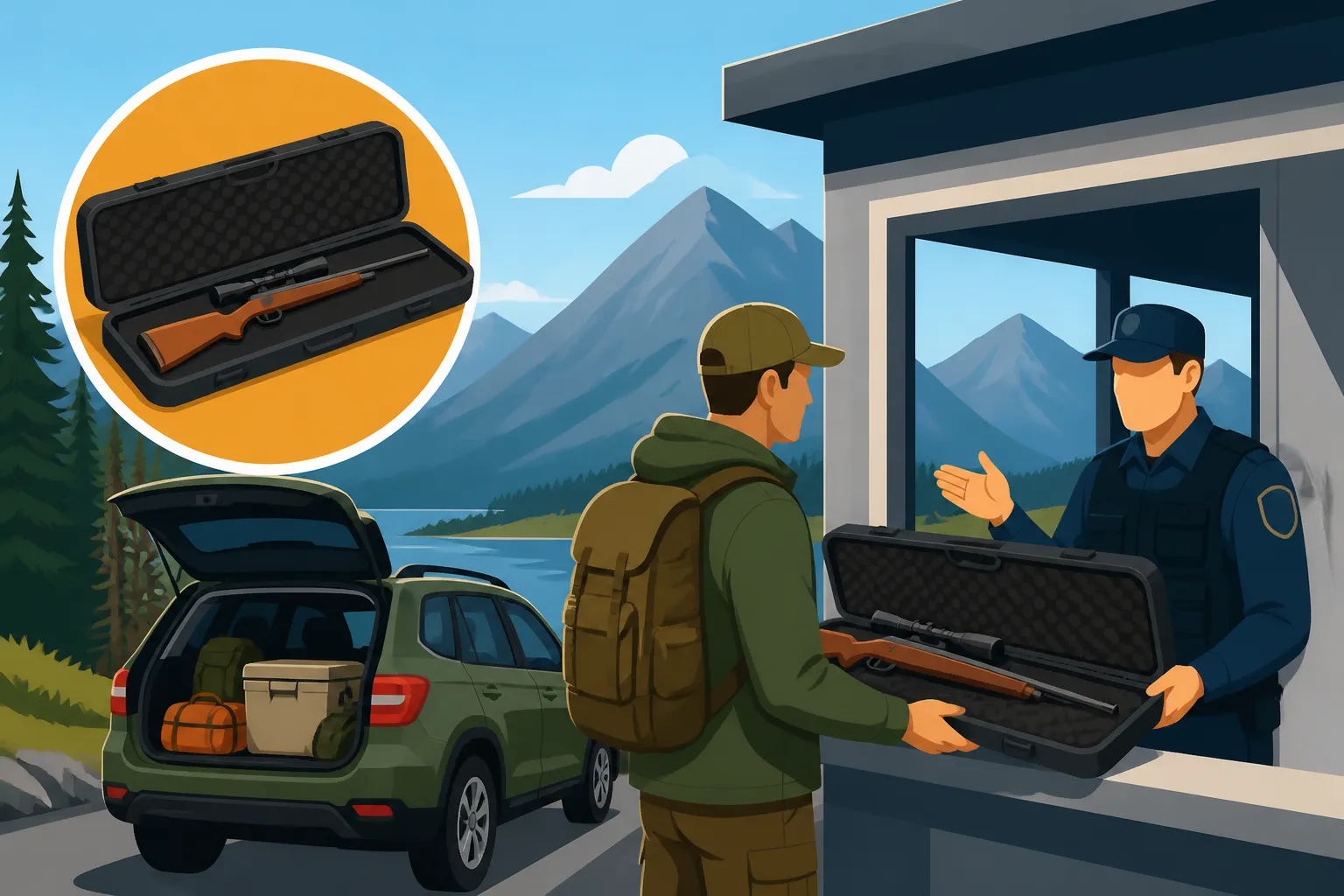
As you approach the border booth, be prepared to declare everything. When the CBSA officer asks the purpose of your visit, state clearly and confidently that you are a non-resident hunter and you are declaring firearms. Do not wait for them to ask specifically about firearms. Proactively state it. They will appreciate your honesty and directness.
You'll be directed to a secondary inspection area where a more detailed process will take place. This is standard procedure, so don't be alarmed. Here's generally what happens:
- Interview: The officer will ask you questions about your trip, your firearms, and your hunting plans. Be honest and consistent with the information on your forms. They might ask about your destination, how long you're staying, and even which species you plan to hunt, perhaps even inquiring about specific British Columbia Big Game Season Dates.
- Form Verification: You'll present your filled-out RCMP 5589 form (unsigned) along with your passport and other supporting documents. The officer will review the details and confirm them against your identification and potentially your firearms themselves.
- Physical Inspection (sometimes): The officer may ask to inspect your firearms. They will instruct you on how to safely present them. Always follow their instructions precisely. Do not touch your firearms unless specifically told to do so. They'll check serial numbers against your form.
- Payment: There is a fee for processing the Non-Resident Firearm Declaration. This fee is typically a flat rate, regardless of the number of firearms listed on a single declaration. Once the fee is paid and the form is approved, the officer will sign and stamp your copy, effectively activating your temporary licence. Keep this document with your firearms at all times while in Canada. Losing it could lead to issues later.
The process might take anywhere from 15 minutes to an hour, depending on the volume of traffic, the thoroughness of the officer, and any questions they might have. Remember, patience is a virtue here. A smooth process begins and ends with clear communication and full compliance. For those planning complex hunts, using resources like GoHunt or other booking platforms might even have a checklist that includes these border requirements.
Safely Transporting Your Firearms to the Border
Even before you get to the border, you need to ensure your firearms are transported legally and safely within your vehicle. Canadian law requires non-restricted firearms to be unloaded and securely cased or locked. This isn't just a suggestion; it's a rule.
- Unloaded: Ensure there is absolutely no ammunition in the chamber, magazine, or attached to the firearm itself.
- Securely Cased: Firearms must be stored in a sturdy, non-transparent case or container. A soft gun case is generally acceptable as long as it fully encloses the firearm. For maximum security and compliance, hard cases with locks are recommended. Many hunters will even lock their hard cases to a tie-down point in the back of their truck or SUV to prevent movement and enhance security.
- Ammunition: Ammunition must be stored separately from the firearms, preferably in a locked container in a different part of the vehicle. For instance, your rifle could be in a locked case in the truck bed, and your ammunition could be in a locked toolbox in the cab.
Following these transportation rules prevents any unnecessary scrutiny from law enforcement or border officials, especially if you get pulled over en route to the border.
Special Considerations and Common Questions
The world of firearms and border crossings can have a few nuances that trip up even well-prepared hunters. Let's touch on some of these.
Restricted and Prohibited Firearms
As mentioned earlier, most restricted and all prohibited firearms are generally not allowed for non-residents. This includes most handguns, any firearm capable of firing automatically (even if modified), and certain rifles like AR-15 variants. Trying to bring these across will lead to severe legal trouble. If you're unsure about a specific firearm's classification, err on the side of caution and consult the RCMP's website or the Canadian Border Services Agency before your trip. It’s never worth the risk. Your focus should be on your non-restricted hunting implements.
Ammunition Rules
Beyond the requirement to store ammunition separately, there are also quantity limits. Non-residents can generally import up to 200 rounds of ammunition for hunting purposes without a special permit. This is typically more than enough for a standard hunting trip. Any amount exceeding this limit might require additional permits or may be denied entry. Remember, this is per person, so if you're hunting with a partner, you each have your own allowance. Ensure the ammunition matches the calibre of your declared firearms.
Archery Equipment
While our primary focus is firearms, many hunters also use archery equipment. Good news here: bows and crossbows are generally not classified as firearms under Canadian law, meaning you typically do not need to declare them on the RCMP 5589 form or go through the same rigorous declaration process as firearms. You still need to transport them safely and securely, as you would any hunting equipment, but the border crossing process for them is much simpler. However, some provinces have specific regulations for transporting crossbows. Always check the provincial hunting regulations for British Columbia (the "Synopsis") for any specific rules regarding crossbows, such as whether they need to be cased during transport in a vehicle. Bowhunting British Columbia's September Seasons is a great reference for those planning an archery-focused trip.
Here's a quick summary table to help keep things clear:
| Item | Requirement for Non-Resident Hunters | Notes |
|---|---|---|
| RCMP 5589 Form | Mandatory for all firearms. Fill out in advance, do not sign until at the border. | Acts as temporary licence and registration. Valid for 60 days. |
| Passport | Mandatory | Primary identification for entry. |
| Photo ID (e.g., Driver's Licence) | Recommended | Secondary identification. |
| Hunter Education Proof | Recommended | Shows competence, helps expedite questioning. |
| BC Hunting Licences/Tags | Recommended (if purchased) | Confirms purpose of visit. See British Columbia Hunting Licences and Fees. |
| Outfitter Letter / Permit to Accompany | Mandatory if using a guide or hunting with a resident | Confirms your hunting arrangements. Crucial for non-resident alien hunters. |
| Firearms | Non-restricted only | Must be unloaded, securely cased, and declared. |
| Ammunition | Up to 200 rounds per person (for hunting) | Must be stored separately from firearms, preferably locked. |
| Restricted/Prohibited Firearms | NOT ALLOWED | Do not attempt to bring these into Canada. |
| Archery Equipment | No special declaration needed (generally) | Transport safely. Check provincial rules for crossbows. |
By taking the time to understand these requirements and carefully prepare your documentation, you're setting yourself up for a fantastic and legal hunting experience in British Columbia. Don't let the paperwork deter you; consider it the first successful step in your adventure.
Disclaimer
This article is for general informational purposes only and does not constitute professional advice. Laws, prices and regulations vary by location and change over time. Consult a qualified professional for guidance on your specific situation.