Renting a Rifle From a British Columbia Outfitter
One of the biggest headaches for hunters planning an adventure to British Columbia, especially if you're coming from another country, is the sheer logistics of bringing your personal hunting rifle. Between airline regulations, customs paperwork, and the general anxiety of traveling with a valuable firearm, it's enough to make you question the whole trip. Thankfully, many British Columbia outfitters offer a practical solution: using one of their rifles. This guide will walk you through everything you need to know about navigating this convenient option, ensuring your focus stays on the hunt, not the paperwork.
The Stress of Traveling with Your Own Firearm to British Columbia
Let's be honest, bringing your favourite hunting rifle with you across international borders, or even just across provinces, can be an absolute pain. It's not just about getting it to the airport; it's a whole cascade of potential issues that can turn the excitement of a pending hunt into a nail-biting ordeal. Many hunters dream of making a trip to British Columbia for species like moose or mountain goat, and then they start looking into the travel requirements and their enthusiasm takes a hit.
Airline Hurdles and Luggage Woes
First off, flying with a firearm means dealing with airlines, and let me tell you, their rules can be a moving target. You have to ensure your rifle is properly cased in a hard-sided, locked container, often with specific lock requirements. Then there's the ammunition, which usually has to be in its original manufacturer's box or a secure container, separated from the firearm, and often limited by weight. Imagine trying to keep track of all those little details when you're already stressed about making your connection. What if your bag gets delayed, or worse, lost? That perfectly sighted-in rifle, the one you've spent countless hours practicing with, is suddenly out of your hands and potentially thousands of miles away from you. The thought alone is enough to send shivers down a hunter's spine. It adds a whole layer of complexity to your journey, and honestly, who needs that extra stress when you're supposed to be relaxing and preparing for an epic hunt?
Border Crossing Complexities and Paperwork Anxiety
Then there's the international border crossing into Canada. For non-residents, you're required to complete a Non-Resident Firearm Declaration form (RCMP 5589/CAFC 909) and pay a fee at the border. This form is essentially a temporary permit to bring your firearm into the country. While it's relatively straightforward if done correctly, any mistake, any missing signature, or any misunderstanding of the rules can lead to significant delays, confiscation of your firearm, or even being turned around at the border. I've heard stories from friends who've had their trips almost derailed just by a minor hiccup in this process. And if you're planning on hunting any CITES-listed species, like sheep or certain furbearers, the paperwork multiplies. You'll need an export permit from your home country and an import permit from Canada, which can take months to secure. It’s a lot to manage, and it takes precious time and mental energy away from what you should be focused on: the hunt itself. For more details on this, you might want to read up on Bringing Firearms Into British Columbia or The Non-Resident Firearm Declaration.
The Practicalities of Using an Outfitter's Rifle
This is where the idea of using an outfitter's rifle really shines. It's about shedding all those worries and streamlining your journey. Imagine arriving in British Columbia, meeting your guide, and having a reliable, ready-to-hunt rifle waiting for you. No airline headaches, no border anxieties, just a straightforward transition into your hunting adventure.
Understanding the "Rental" Arrangement
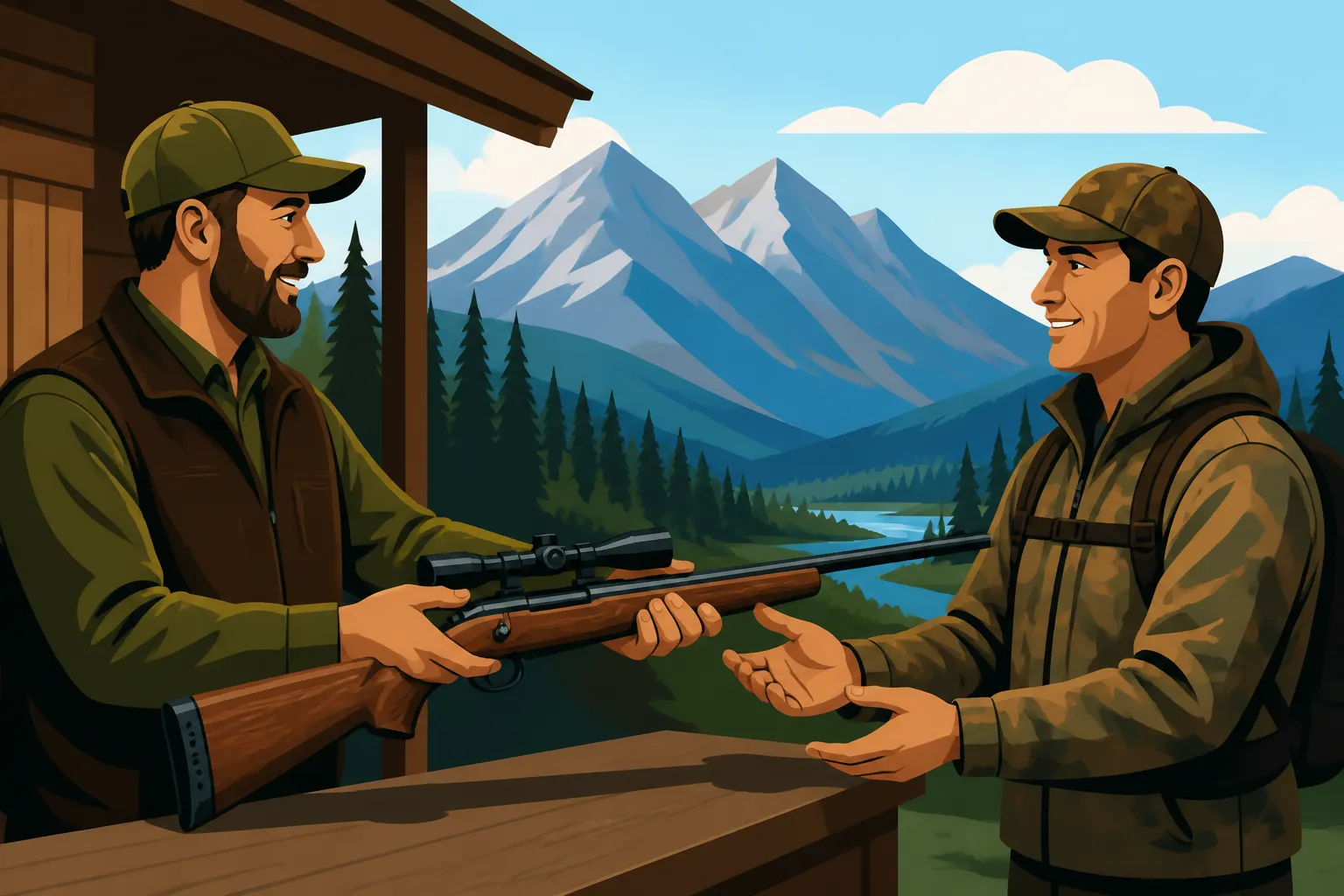
Now, let's be clear about what "renting a rifle" from a British Columbia outfitter truly means, especially for non-residents. It's not like renting a car where you take sole possession and drive off. In Canada, specific rules apply when non-residents are using firearms for hunting. Generally, a non-resident hunter operating under a licensed guide (which is mandatory for non-residents hunting big game in BC) will be using a firearm that the guide legally possesses. The guide maintains responsibility and supervision over that firearm throughout the hunt. You, as the client, will be using it under their direct oversight. This arrangement is perfectly legal and common practice. It simplifies matters immensely because you don't have to declare a firearm at the border or worry about bringing your own. The outfitter, as a licensed professional, ensures all firearms used in their territory comply with Canadian regulations. This is a critical distinction, as it means you're not personally importing or "owning" the firearm, you're simply using one provided by a licensed professional as part of your guided experience. It removes a massive layer of administrative burden and legal complexity for international hunters.
Choosing the Right Caliber and Optics for Your Hunt
When you decide to use an outfitter's rifle, you're essentially trusting their judgment and experience. Most reputable British Columbia outfitters will have a selection of common, reliable calibers suitable for the game you're pursuing in their region. For example, if you're going after moose or elk in the interior, you can expect options like a .30-06 Springfield, .300 Winchester Magnum, or a 7mm Remington Magnum. These are proven cartridges that offer enough punch for large animals while being manageable for most shooters. For deer, a .270 Winchester or .308 Winchester might be available.
It's not just about the caliber, though. The optics mounted on these rifles are equally important. Outfitters typically equip their rifles with quality, reliable scopes that are zeroed and ready to go. They understand the conditions in British Columbia, whether it's the vast distances of the northern plateaus or the dense timber of the coast, and they choose optics accordingly. You can expect scopes with good light-gathering capabilities and appropriate magnification ranges for typical hunting scenarios in their British Columbia Guide Outfitter Territories Explained. While you might not get to use your personal custom rifle, you'll be using a well-maintained, proven setup designed for the task at hand. This means you can focus on the shot, not on worrying if your scope is fogged or your rifle is going to jam.
What to Expect for Cost and Logistics
The cost of using an outfitter's rifle will vary, but it’s generally a daily or weekly fee added to your overall hunt package. This fee usually covers the use of the rifle itself and might include a certain amount of ammunition. It's important to clarify these details upfront with your outfitter. There might also be a contingency for excessive ammunition use or a damage deposit, similar to what you'd expect with any rented equipment. While it's an additional expense, consider it an investment in peace of mind and hassle-free travel.
The logistical benefits are huge. No more wrestling with oversized gun cases at the airport, no more sweating through customs declarations, and no more worrying about your firearm being delayed or lost. You just show up, ready to hunt. Your outfitter will handle bringing the rifle to camp, ensure it's sighted in, and provide the necessary ammunition. It truly simplifies the travel aspect, allowing you to focus on What to Bring on a British Columbia Guided Hunt in terms of clothing and personal gear, rather than firearm specifics.
| Feature | Bringing Your Own Rifle (Non-Resident) | Using Outfitter's Rifle |
|---|---|---|
| Travel Hassle | High (airline regulations, special baggage, potential delays) | Low (no airline firearm restrictions, standard luggage) |
| Border Paperwork | Required (Non-Resident Firearm Declaration, potential CITES) | Minimal to None (guide handles firearm possession) |
| Cost | Airline fees for firearm case, declaration fee, ammunition cost, potential gunsmithing | Rental fee (daily/weekly), ammunition cost, potential damage deposit |
| Familiarity | High (your own rifle, known feel, trigger, and recoil) | Variable (will need to familiarize yourself with a new rifle) |
| Reliability/Maintenance | Dependent on your own maintenance, potential for damage in transit | High (outfitter ensures well-maintained, sighted-in, ready-to-hunt rifle) |
| Caliber/Optics Choice | Your choice | Outfitter's selection (usually suitable for local game) |
| Risk of Loss/Damage | Moderate (during travel) | Low (handled by outfitter) |
| Overall Stress | High | Low |
Preparing to Shoot an Outfitter's Firearm
Even if you're a seasoned shooter, picking up a rifle you're not intimately familiar with requires some thoughtful preparation. It’s not just about pulling the trigger; it's about confidence, ethical hunting, and ensuring a clean kill.
Pre-Trip Communication is Key
Before you even leave home, open a clear line of communication with your outfitter. This is crucial. Tell them about your hunting experience, your preferred calibers, and any specific physical considerations. Are you most comfortable with a specific action type, or a particular recoil level? Are you left-handed? Don't assume anything. Ask them directly what rifles they have available for your particular hunt. For example, if you're hunting black bear, you might discuss a different caliber than if you're hunting sheep. Platforms like BookYourHunt or GoHunt are excellent resources for finding outfitters and asking these kinds of detailed questions during your booking process. You need to know what to expect and ensure they can meet your needs. Be upfront about your experience level with different firearms. If you've never shot a .300 Win Mag and prefer something a little lighter, communicate that. They might have options. It also helps to understand Questions to Ask Before Booking a guided hunt, so you cover all your bases regarding equipment.
Zeroing and Practice at Camp
This is perhaps the most critical step. Upon arrival at camp, you absolutely must take the time to shoot the outfitter's rifle. Do not skip this! A good outfitter will always provide an opportunity for you to sight in the rifle and get comfortable with it. This usually involves shooting at a range near camp, confirming the zero at various distances, and practicing from common hunting positions (prone, kneeling, off sticks).
Think about it: every rifle has a unique feel, trigger pull, and recoil impulse. You need to understand how this specific rifle behaves. You need to know where it's hitting at 100, 200, or even 300 yards. This isn't just about accuracy; it's about confidence. When that moment of truth arrives, you want to be completely comfortable with the firearm in your hands. This practice session isn't a formality; it's an essential part of ethical hunting. You owe it to yourself and the animal to be as proficient as possible with the tool you'll be using. Your guide will be there to assist, offer tips, and ensure the rifle is perfectly dialed in.
Handling and Safety Protocols
Your guide will provide specific instructions on how to handle their firearm safely and effectively throughout the hunt. Pay close attention to these rules. This includes carrying procedures, loading and unloading protocols, and general firearm safety around camp and in the field. Even if you're an experienced hunter, different jurisdictions and outfitters might have slightly different procedures. For example, British Columbia Blaze Orange and Safety Rules might dictate specific clothing, and firearm handling might differ based on terrain or presence of other hunters. Always err on the side of caution and follow your guide's lead. Remember, the guide is responsible for the firearm's legal possession, and they will want to ensure its safe use at all times. This commitment to safety is paramount in the rugged and unpredictable environments of British Columbia.
Alternatives and Considerations
While renting an outfitter's rifle offers immense convenience, it's not the only option, and it might not be for everyone. It's worth considering the alternatives, especially if you have very specific preferences or hunting styles.
Bringing Your Own Firearm: Is It Worth the Hassle?
For some hunters, the connection to their personal rifle is simply too strong to forgo. They've spent years perfecting their load development, memorizing their rifle's drop charts, and they know precisely how it feels in their hands. For these individuals, going through the process of bringing their own firearm is worth the hassle. As discussed earlier, this involves careful planning with airline regulations, meticulously completing the Non-Resident Firearm Declaration, and potentially dealing with CITES permits if you're hunting an internationally protected species like a Stone's sheep. While challenging, it's absolutely doable if you start early, pay attention to every detail, and aren't afraid of a little extra paperwork. You'll need to research the specific airline policies well in advance, understand Canadian firearm classifications, and make sure your travel insurance covers firearms. For more information, you could look into Rules for Non-Residents Hunting British Columbia and British Columbia's Species Licences and Tags. The upside is that you'll be hunting with a firearm you know inside and out, which can be a significant confidence booster in the field.
Considerations for Bowhunters or Muzzleloader Hunters
This discussion primarily revolves around centerfire rifles because they represent the most common firearm type for big game hunting in British Columbia and the most common source of travel headaches. However, if you're a bowhunter or prefer traditional muzzleloaders, your considerations will be different.
Bowhunting equipment generally faces fewer restrictions when traveling internationally compared to firearms. You'll still need to ensure your bow case meets airline dimensions and weight limits, but the border crossing process is usually much simpler, as bows are not classified as firearms. You won't need a Non-Resident Firearm Declaration for a bow.
Muzzleloaders, depending on their specific design and ignition system, might fall under different categories. Some modern muzzleloaders might be treated similarly to regular firearms, while traditional black powder types might have specific rules for the powder and primers. Always check with the Canadian Border Services Agency (CBSA) directly and your outfitter if you plan to bring a muzzleloader. The general advice here about open communication with your outfitter remains absolutely paramount, regardless of your chosen weapon, to ensure you understand all the requirements for your specific gear.
Choosing to rent a rifle from your British Columbia outfitter can dramatically simplify your pre-trip planning and travel logistics, allowing you to arrive relaxed and ready to fully immerse yourself in the hunting experience. While it requires familiarizing yourself with a new rifle, the convenience and peace of mind it offers are often well worth it. Always remember to communicate openly with your outfitter, practice thoroughly at camp, and prioritize safety above all else. This approach will set you up for a successful and memorable British Columbia hunting adventure, whether you're chasing mule deer in the Okanagan or moose in the Omineca.
Disclaimer
This article is for general informational purposes only and does not constitute professional advice. Laws, prices and regulations vary by location and change over time. Consult a qualified professional for guidance on your specific situation.