Hunting Around Vanderhoof and Fort St. James
Hunting around Vanderhoof and Fort St. James can feel like stepping into an enormous, untamed playground, yet many hunters get overwhelmed by the sheer scale of the landscape and the intricate web of forest service roads. If you've ever felt lost trying to pinpoint prime hunting spots or unsure about access rules in this vast interior region, this guide is for you. We'll delve into the unique challenges and incredible opportunities that await you, helping you unlock the potential of hunting this diverse part of British Columbia.
The Diverse Landscape and Prime Game Species of the Nechako Region
The area around Vanderhoof and Fort St. James sits squarely within British Columbia's central interior plateau, a transition zone where the dry interior gives way to more northern boreal forest. This creates a remarkably varied habitat that supports a wide array of big game species, making it a fantastic destination for hunters willing to put in the effort. Understanding the specific characteristics of this landscape and the animals that call it home is the first step toward a successful hunt.
Characterizing the Terrain and Vegetation
Imagine rolling hills covered in dense lodgepole pine and spruce forests, interspersed with expansive wetlands, beaver ponds, and willow flats. That's a pretty accurate picture of much of the Nechako region. There are also significant agricultural pockets, especially closer to the towns, where crops meet forest edges, creating excellent transition zones for deer and elk. Further afield, particularly north and west of Fort St. James, the terrain can become more mountainous and rugged, with higher elevations offering different types of habitat. You'll find a mix of older growth, regenerating cutblocks from past logging operations, and even some areas impacted by pine beetle kill, which drastically changes the forest structure and visibility. This mosaic of habitat types is key to understanding where different animals might be found at various times of the year.
The presence of numerous lakes and river systems, like the Nechako River itself and Stuart Lake, adds another layer to the landscape, creating riparian zones that are magnets for wildlife. These areas often provide critical forage and water sources, especially during drier periods. The sheer amount of undeveloped Crown land in this region is astounding, offering endless possibilities for adventurous hunters. However, this also means covering a lot of ground, often on challenging roads or on foot, to find those productive pockets. It's a land of plenty, but it doesn't give up its secrets easily.
Key Big Game Species and Their Habitat Preferences
This part of British Columbia is perhaps most renowned for its moose population. You'll find these giants thriving in the willow-choked swamps, along the edges of clearcuts where new growth provides browse, and near beaver ponds that dot the landscape. Moose Hunting British Columbia's Interior often involves focusing on these specific habitat types. Mule deer are also present, preferring the more open, often drier timber and browse-rich areas on south-facing slopes, especially during the fall. You might find them transitioning between dense timber for cover and more open clearings for feeding.
Black bears are ubiquitous, found throughout the diverse forests. In spring, they often emerge to feed on green-up along roadsides and avalanche chutes, while in the fall, they'll be drawn to berry patches and areas with abundant mast crops. Black Bear Hunting British Columbia's Spring can be a fantastic experience here. While not as numerous as in other regions, you can also find elk, particularly Rocky Mountain elk, often inhabiting the interface between open grasslands and dense timber, or in larger river valleys with good forage. Knowing what each species prefers and matching that to the terrain you're scouting is fundamental. For example, a vast, flat pine forest might not be your best bet for moose, but a dense willow bottom bordering a recent cutblock could be pure gold.
Navigating Access, Roads, and Regulations in the Central Interior
One of the biggest hurdles for any hunter new to British Columbia, or even a seasoned veteran venturing into unfamiliar territory, is figuring out access. The region around Vanderhoof and Fort St. James is crisscrossed by an extensive network of forest service roads (FSRs), but understanding which are open, which are deactivated, and how to use them safely is paramount. Beyond access, staying on the right side of the law means a good grasp of the local regulations and management units.
Understanding the Forest Service Road Network
The FSR network is your lifeline to remote hunting grounds here. These roads range from well-maintained gravel highways, sometimes actively used by logging trucks (which demand extreme caution and radio communication), to overgrown two-tracks that require a high-clearance 4×4, or even deactivated roads that are only accessible by foot, ATV, or horseback beyond a gate. Finding Open Forest Roads in British Columbia can be a serious undertaking. Many of the most promising hunting areas are found off these secondary and tertiary roads, requiring you to drive deeper into the bush.
It’s crucial to research road conditions before you go. The BC government sometimes provides updates, but often, local knowledge or recent satellite imagery (which tools like onX Hunt provide) is your best bet. Deactivated roads, marked by large ditches, culvert removals, or berms, present an excellent opportunity for those willing to walk. These areas often receive less hunting pressure because vehicles can't get in, creating havens for game. Always be prepared for mud, washouts, and downed trees, especially after heavy rain or snowmelt. Having a robust recovery kit, spare tire, and a means of communication like a satellite messenger is not optional when venturing far off the main drag.
Deciphering Management Units and Regulations
British Columbia is divided into a system of numbered Management Units (MUs) and larger Regions, each with its own specific regulations, season dates, and bag limits. The area around Vanderhoof and Fort St. James falls primarily within Region 6 (Skeena) and Region 7 (Omineca), with boundaries often defined by major geographical features. It’s absolutely essential to consult the current British Columbia Hunting and Trapping Synopsis, paying close attention to the specific MU you intend to hunt. British Columbia's Management Units and Regions are complex, and what's legal in one MU might be restricted in an adjacent one.
For example, moose seasons can vary wildly by MU, with some being General Open Seasons (GOS) for antlered bulls, while others are restricted to Limited Entry Hunting (LEH) draws. British Columbia Hunting Licences and Fees are standard across the province, but the rules for when and where you can hunt specific species are location-dependent. Before you even pack your bags, spend significant time studying the maps and regulations for your chosen area. Digital tools like onX Hunt can overlay MU boundaries directly onto maps, making it much easier to stay compliant in the field, especially when you're traversing large areas that might straddle multiple units. This homework phase is as important as any time spent in the bush.
Land Ownership and Private Property Considerations
While the vast majority of land in this region is Crown land, there are significant pockets of private property, especially agricultural fields and ranchlands closer to communities. Hunting on private land without permission is strictly prohibited and can lead to severe penalties. Identifying these parcels is critical. Again, mapping apps like onX Hunt are invaluable here, as they typically display private land boundaries and often even landowner information, allowing you to seek permission if you wish to hunt those areas.
Respecting private property boundaries and avoiding accidental trespass not only keeps you out of legal trouble but also maintains a positive relationship between hunters and landowners. If you plan to hunt an area bordering agricultural fields, be extra vigilant. Even if you're on Crown land, retrieving game that has fallen on private property might require permission. Always err on the side of caution. Similarly, many private forest lands in BC operate under their own access rules, sometimes requiring permits or having seasonal closures. While less common in the deep interior than on the coast, it's always something to be aware of.
Strategic Approaches and Essential Preparation for Successful Hunting
Hunting in the Vanderhoof and Fort St. James region, like anywhere in British Columbia, requires thoughtful strategy and thorough preparation. This isn't a place where you just show up and expect animals to jump out at you. From scouting techniques to gear choices, every detail contributes to a successful and safe experience in this wild country.
Scouting and Planning Your Hunt
Effective scouting is the bedrock of any successful hunt, and it starts long before you ever set foot in the woods. Begin by poring over topographical maps and satellite imagery. Look for changes in elevation, natural travel corridors like creek bottoms or old logging road beds, clearcut edges, and areas with dense cover adjacent to feeding grounds. Tools like onX Hunt are excellent for this, allowing you to mark waypoints, measure distances, and visualize the terrain. Pay close attention to recent cutblocks; a three-to-five-year-old cut can be a mecca for moose and deer due to regenerating browse.
Beyond digital scouting, if possible, consider a pre-season trip. Even if it's just a couple of days, getting boots on the ground to confirm road access, check water levels in swamps, and look for fresh sign can be invaluable. Look for tracks, scat, rub lines, and browsing activity. During the season, use glassing techniques from vantage points to cover as much ground as possible. Glassing a willow flat for moose in the early morning or late evening can be incredibly productive. For Hunting Moose Off a British Columbia Forest Road, focus on finding fresh tracks crossing the road or scanning the edges of cutblocks visible from the road. The more you understand the lay of the land and animal patterns, the higher your chances of success.
Effective Hunting Tactics for the Region
Given the diverse habitat, a variety of tactics can be effective. For moose, calling in the rut can be incredibly exciting and effective. Whether it's cow calls, bull grunts, or even raking brush, mimicking moose sounds can draw a curious bull right into your lap. Still-hunting through dense timber, moving slowly and deliberately, is also a productive method for moose and deer, especially in areas with fresh snow to quiet your footsteps.
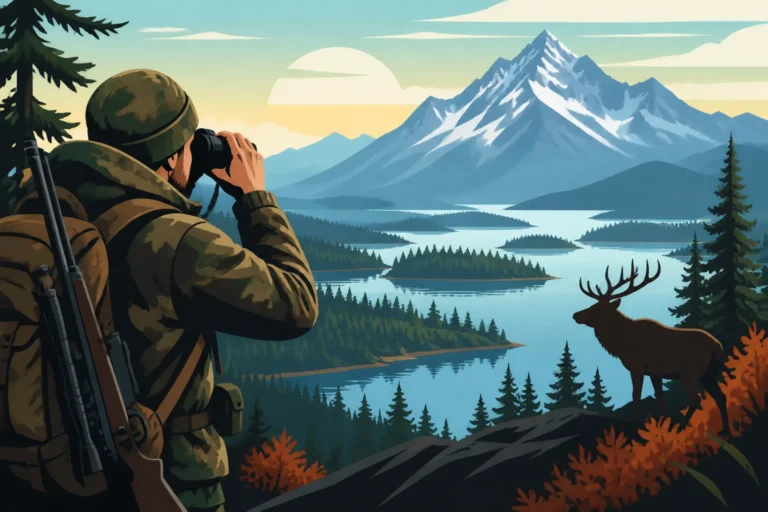
When targeting deer, especially mule deer, spot-and-stalk is a classic method. Find a good vantage point, use your binoculars or spotting scope to pick apart distant hillsides or clearcuts, and once you locate an animal, plan your approach to get within shooting range. This is where precise mapping from resources like GoHunt's detailed public land information, combined with the real-time tracking of onX Hunt, helps you keep track of your movements and potential shot angles in relation to terrain features. For black bears, baiting is legal in some areas and can be effective, but many hunters prefer glassing logging roads for spring bears feeding on new growth or focusing on berry patches in the fall. Patience and a willingness to adapt your strategy to the specific conditions and species are key.
Essential Gear and Safety Considerations
The interior of British Columbia can throw a lot at you: hot, dry days in early season, heavy rain, and sudden snowfalls later on. Pack layers of clothing suitable for varied weather. Sturdy, waterproof boots are non-negotiable, as you'll likely be walking through wet areas or across rugged terrain. A reliable GPS device or a smartphone with a robust offline mapping app like onX Hunt is critical for navigation, especially off-road. You'll likely lose cell service quickly once you leave town, so don't rely on it.
Beyond standard hunting gear, consider a satellite communication device (like a Garmin inReach or Zoleo) for emergency communication, especially if you're venturing deep into the bush. Bear Safety While Hunting in British Columbia is always a concern; carry bear spray and know how to use it. When dealing with harvested animals, proper meat care is paramount, especially in warmer early seasons. Pack out all garbage, leave no trace, and understand the regulations for transporting game. Quartering a Moose in Grizzly Country requires efficiency and vigilance. Be physically prepared, as covering ground in this terrain can be demanding, and Packing Out of British Columbia's Steep Country can test even the fittest hunters. Being prepared for anything will ensure your hunt is both successful and safe.
| Species | Primary Habitat | Common Hunting Methods | Best Season Considerations |
|---|---|---|---|
| Moose | Willow flats, cutblock edges, beaver ponds | Calling (rut), still-hunting, glassing clearcuts | Mid-Sept to Oct (rut), Late Oct |
| Mule Deer | Open timber, clearcut edges, south slopes | Spot-and-stalk, still-hunting, glassing fields | Late Sept to Early Nov |
| Black Bear | Mixed forests, logging roads, berry patches | Glassing roads (spring), still-hunting, baiting (where legal), tracking | Spring (May-June), Fall (Sept-Oct) |
| Elk | River valleys, forest/grassland interfaces | Calling (rut), spot-and-stalk, still-hunting | Late Sept to Mid-Oct (rut) |
Disclaimer
This article is for general informational purposes only and does not constitute professional advice. Laws, prices and regulations vary by location and change over time. Consult a qualified professional for guidance on your specific situation.