Hunting a Muskeg Flat in Northern British Columbia
Hunting a muskeg flat in Northern British Columbia can feel like stepping into an entirely different world, a damp, spongy labyrinth that tests your patience and your gear in ways few other landscapes do. Many hunters, myself included, have stood at the edge of one of these vast, marshy expanses, wondering if it's truly worth the effort to venture in. But for those who are willing to embrace the challenge, muskegs hold incredible potential, offering unique opportunities for species like moose and bears that thrive in these secluded, nutrient-rich environments. This guide will help you understand, navigate, and successfully hunt these notoriously difficult yet rewarding areas.
Understanding the Muskeg Flat Ecosystem
Before you even consider stepping foot into a muskeg, it's crucial to understand what these unique ecosystems are and why they're such magnets for certain game animals in Northern British Columbia. They're not just swamps or bogs; they're a complex, often ancient, landscape that demands respect and a specific approach.
What Exactly is a Muskeg?
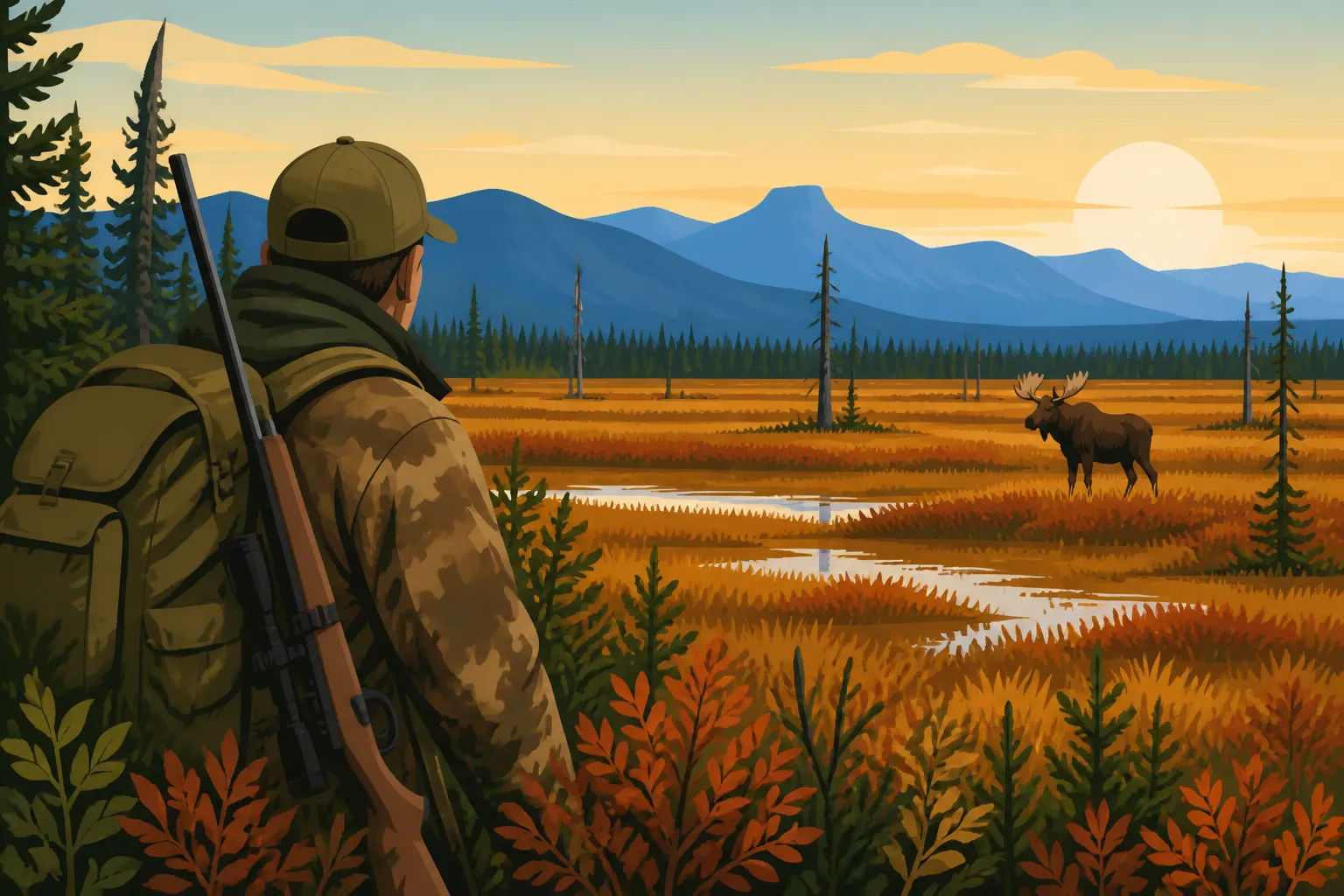
Imagine a vast, open expanse, often relatively flat, dominated by a thick, floating mat of sphagnum moss, stunted black spruce, tamarack, and various shrubs like Labrador tea. Underneath this spongy carpet lies a deep layer of peat, formed over thousands of years from decaying plant matter, which holds a tremendous amount of water. This water is often highly acidic and nutrient-poor, making it a harsh environment for many plants and trees, which is why you see those characteristic stunted growth forms. The ground beneath you isn't solid earth but rather a saturated, unstable mass that can shift and give way. It's a place where the line between land and water is often blurred, and a seemingly solid patch can quickly turn into a knee-deep sinkhole. These aren't your typical forest floors; they are waterlogged, oxygen-deprived environments where decomposition is incredibly slow, building up those deep peat layers.
Why Muskegs Attract Game
Despite their challenging nature, muskegs are incredibly valuable habitat for specific species, especially in the vast northern reaches of British Columbia. The open nature of many muskegs provides good visibility compared to dense timber, allowing animals to spot predators from a distance. More importantly, the edges of muskegs, where they transition into drier ground, offer a rich diversity of food sources. Moose, in particular, are drawn to the willows, sedges, and aquatic vegetation that thrive in and around these wet areas. Black bears will frequent the edges, especially in late summer and fall, seeking out berries that flourish in the open, sunny conditions found in some muskegs. These areas also offer relative sanctuary from human pressure, as most hunters prefer to stick to drier ground or established trails. For an animal looking for undisturbed feed and security, a vast muskeg can be the perfect refuge. It's not uncommon to find signs of heavy game use along the fringes or even within the more stable sections of these wet flats, particularly during the early morning and late evening hours when animals are most active.
Common Game Species in Northern BC Muskegs
When you venture into the muskegs of Northern British Columbia, you're primarily targeting specific big game animals that have adapted to this unique environment.
- Moose: Without a doubt, moose are the kings of the muskeg. Their long legs are perfectly suited for navigating the deep mud and water, and they absolutely thrive on the willows, aquatic plants, and other browse found here. During the rut, calling a bull out of a muskeg can be an incredibly effective strategy. You'll often find them bedded down in the more treed islands within the muskeg or feeding along its fringes, especially where there's a good mix of water and willow browse. The thick cover on some of these islands provides excellent bedding cover while still being close to vital food sources. If you're looking for a big bull in Northern BC, ignoring the muskegs would be a mistake. To learn more about where these impressive animals reside, check out Moose in British Columbia's Interior and North.
- Black Bears: While not as intrinsically tied to muskegs as moose, black bears are frequent visitors, especially during certain times of the year. The open areas within and around muskegs can be prime locations for berry bushes, particularly blueberries and cranberries, which are a critical food source for bears building up fat reserves in the fall. They will also patrol the treed edges, seeking out carrion or other food opportunities. A large, undisturbed muskeg can be a fantastic place to find a mature boar, particularly in the spring when bears are emerging and looking for early green growth. Black Bears Across British Columbia details their widespread presence.
- Other Species: While less common directly within the deepest parts of a muskeg, you might occasionally encounter other species along the drier edges or in transitional zones. Deer (both mule and whitetail, depending on the specific region of Northern BC) may use the fringes, especially if there's good browse and cover adjacent to the wet areas. Small game birds, like various grouse species, might also be found in the stunted timber islands within larger muskegs, but generally, the focus for big game hunters here is moose and bear.
Scouting and Planning Your Muskeg Hunt
Successfully hunting a muskeg flat isn't just about showing up; it requires diligent planning and meticulous scouting, both from your desk and in the field. This type of terrain doesn't forgive a lack of preparation.
Using Topographic Maps and Satellite Imagery
Before you ever leave home, your hunting area should be thoroughly scrutinized using modern mapping tools. Traditional topographic maps are great for understanding elevation changes (even subtle ones in a flat muskeg) and identifying water features, but satellite imagery is where you'll really gain an edge. I personally rely heavily on platforms like onX Hunt for this. You can zoom in and identify patterns that indicate muskegs, such as lighter green, sparser vegetation, and numerous small ponds or drainage channels. Look for those "islands" of denser timber within the muskeg, as these often serve as bedding areas or travel corridors. Identifying the drier edges where the muskeg transitions into more conventional forest is key, as these are often high-traffic zones. You can mark potential access points, likely game trails, and areas with denser vegetation that might hold game. Scouting a British Columbia Management Unit Online can give you more general tips on leveraging digital tools for scouting. It’s also worth cross-referencing with older satellite images if available, sometimes they reveal subtle changes in water levels or vegetation over time that can be insightful.
Seasonal Considerations for Muskeg Hunting
The time of year dramatically impacts how you'll approach a muskeg hunt.
- Early Season (September): This can be a challenging but rewarding time. While water levels might be lower after a dry summer, the ground is still likely to be very soft and wet. Insects, especially mosquitoes and black flies, will be abundant and relentless, making comfortable hunting a challenge. However, this is when moose are often very active, and the early archery seasons can offer fantastic opportunities if you're prepared for the conditions. Bears are also actively feeding on berries. The key here is being prepared for the heat, the bugs, and the heavy, wet going.
- Rut (Late September to Mid-October): This is prime time for moose in muskegs. Bulls are on the move, calling, and seeking cows. The cooler temperatures reduce insect pressure and make physical exertion more manageable. Water levels can be higher with fall rains, but the urgency of the rut often means moose are less concerned with staying on dry ground. This is when calling strategies within or on the edges of a muskeg can be incredibly effective. Understanding Calling Moose in the Rut is critical during this period.
- Late Season (Late October to November): As temperatures drop and potentially freeze, muskegs can become easier to traverse. A hard freeze can turn a treacherous bog into relatively solid ground, allowing access to areas that were previously impassable. However, snow cover can make tracking difficult, and animals may start to move towards winter range, potentially reducing activity in the muskeg itself. Bears will be denning, so this season is almost exclusively for moose. Always be aware of fluctuating temperatures; a partial freeze can be more dangerous than open water, as a thin crust of ice can conceal deep, unfrozen mud and water.
Accessing Remote Muskegs
Northern British Columbia is vast, and many muskegs are found far from main roads. Getting to them often requires ingenuity and a robust plan.
- ATV or UTV: For many, this is the primary mode of transportation. Roads leading to muskegs are often old logging tracks or resource roads that become increasingly rough and overgrown. An ATV or UTV can cover ground quickly and carry gear. However, remember that vehicle use is often restricted once you're on Crown land off designated roads, and you certainly can't drive into the spongy heart of a muskeg. You'll likely need to park and proceed on foot. Always check the current regulations for vehicle restrictions in your chosen Management Unit.
- Jet Boat: If a muskeg is accessible via a river system, a jet boat can be an invaluable tool. It allows you to cover significant distances on water, bypass rough terrain, and access remote areas that would be impossible on foot or by vehicle. You can often drop off in a river bend and hike into a muskeg flat. Jet Boat Access on British Columbia Rivers offers more details on this adventurous approach.
- Bush Plane/Helicopter: For the truly remote muskegs, a bush plane or helicopter might be the only option. This is typically part of a guided hunt or a major expedition, offering access to untouched areas where animal densities can be very high. This comes with significant logistical planning and cost.
- On Foot: Ultimately, to effectively hunt a muskeg, you'll be on foot. Even with vehicle access, the real hunting starts when you park and walk. This means being prepared for long, arduous treks through challenging terrain. The vastness of British Columbia's Northern Rockies often means that getting to these areas requires significant effort, no matter the mode of transport.
Hunting Strategies for Muskeg Terrain
Once you've done your homework and made it to the edge of the muskeg, it's time to adapt your hunting strategies to this unique environment. What works in dry timber won't necessarily work here.
Navigating the Challenging Landscape
Muskegs are notoriously difficult to move through. The ground is soft, uneven, and often deceptively deep.
- Slow and Steady: Forget fast walking. You'll need to move slowly, deliberately, and carefully. Each step needs to be tested. Use your trekking poles or a sturdy stick to probe the ground ahead. This isn't just for safety (avoiding a deep fall), but also for minimizing noise and conserving energy. The spongy ground absorbs sound well, which can be an advantage, but also means you need to be extra vigilant about your footing.
- Follow Game Trails: Animals, particularly moose, create discernible trails through muskegs, especially along the firmer edges or through islands of timber. These trails are often slightly drier and more stable than the surrounding terrain. While they might be wet, they are generally safer and more efficient to travel. Be aware that these trails are often used by multiple species, so keep an eye out for fresh sign.
- Utilize Islands of Timber: Within larger muskegs, you'll often find small "islands" of denser black spruce or tamarack. These offer higher, drier ground and crucial cover. They are excellent spots for glassing, setting up for a call, or even finding bedding animals. Moving between these islands, if feasible, can be a good strategy.
- Watch for Water: Open water is common in muskegs, from small puddles to larger ponds. Always assume water is deeper than it looks. If you need to cross, probe first, and consider if it's truly necessary. Sometimes, a long detour around a pond is safer and more efficient than a direct, risky crossing. Hunting a British Columbia Lakeshore for Moose provides context on how moose utilize different watery habitats.
Stalking and Still-Hunting Techniques
Muskegs present a unique opportunity for stealth, but also significant challenges.
- Silent Footing: The soft, damp ground of a muskeg can actually be incredibly quiet underfoot, especially compared to dry, crunchy leaves or brittle branches. Use this to your advantage. Take slow, deliberate steps, placing your feet softly. However, also be aware of the "squishing" sound your boots make; it can carry surprisingly far in the still air of a muskeg.
- Wind is Key: As with any hunting, playing the wind is paramount. In open muskegs, the wind can swirl unpredictably, so always be mindful of thermals and shifting breezes. If you're still-hunting, keep the wind in your face or quartering.
- Visual Scouting: The stunted vegetation and open areas of many muskegs lend themselves well to visual hunting. Rather than constantly moving, try moving short distances, then stopping to scan thoroughly. Use your binoculars to pick apart the details of the landscape, looking for the tell-tale shape of an antler, the dark hide of a bear, or the movement of an ear.
- Calling: For moose, calling is incredibly effective in muskegs. The sound carries well across the open flats, and the natural echo can make your calls sound even more realistic. Set up on a slightly elevated island of timber or a firm edge, and use cow calls, grunts, or even antler-rattling to draw in a bull. Be prepared for a bull to approach from any direction, and often silently. Calling Moose in the Rut or Raking Brush for a Bull Moose can be excellent resources for refining your calling approach.
Glassing Openings and Edges
Glassing is an indispensable tactic for muskeg hunting. The open nature of these environments means you can often spot animals from a distance, allowing you to plan a careful approach.
- Find High Ground: Even slight elevation changes can make a huge difference. Look for any knolls, ridges, or elevated timber islands that offer a commanding view of the surrounding muskeg. Spend significant time glassing these areas.
- Sunrise and Sunset: These are prime times. Animals will often move out of dense cover to feed in the open areas of the muskeg during the cooler, lower-light hours. Focus your efforts during these periods.
- Focus on Edges and Transitions: Pay particular attention to where the muskeg meets denser timber, or where different types of vegetation transition. These "edge habitats" are where animals often concentrate, feeding in the open but having quick access to cover. Tools like GoHunt can sometimes provide insights into habitat types and patterns that might help you identify these crucial transition zones even before you set foot on the ground.
- Patience is a Virtue: Glassing requires patience. Don't just sweep your binoculars quickly. Instead, systematically grid off sections of the muskeg and scrutinize every detail. Look for parts of an animal, not the whole thing – an ear, a patch of hide, the curve of an antler. The light can play tricks on your eyes, so take your time.
Essential Gear for a Northern BC Muskeg Hunt
Hunting muskegs demands specific gear to ensure your comfort, safety, and success. Cutting corners on gear in this environment will lead to a miserable, potentially dangerous, experience.
Footwear and Waterproofing
This is arguably the most critical gear consideration for muskeg hunting. Your feet will get wet if your footwear isn't up to the task.
- High-Quality Rubber Boots: Forget your lightweight hiking boots unless you enjoy trench foot. You need serious, knee-high or even hip-wader style rubber boots. Look for models with aggressive, self-cleaning treads to handle the mud and slick vegetation. Neoprene-lined boots offer warmth, which is crucial in the cooler northern climate. Brands like Lacrosse or Muck Boots are popular for a reason; they provide the necessary waterproof barrier and decent traction. Boots for Steep British Columbia Country may cover general boot advice, but for muskegs, rubber is king.
- Gaiters: Even with tall rubber boots, gaiters can help prevent debris from falling in and add an extra layer of protection against scrapes from brush.
- Waterproof Pants: Pairing your rubber boots with good quality waterproof pants or bibs is essential. Even if you don't step in water over your boots, the constant wet vegetation and splashing will soak through anything less. Gore-Tex or similar membrane fabrics are your friend here.
- Layering and Wicking Fabrics: While the exterior needs to be waterproof, your inner layers should focus on wicking moisture away from your skin. Synthetic or merino wool base layers and socks are critical. Bring multiple pairs of socks; changing into dry socks can prevent blisters and keep your feet much warmer.
Navigation and Safety Equipment
The vastness and often featureless nature of muskegs can make navigation tricky, and remote Northern BC demands serious safety precautions.
- GPS Device/Satellite Communicator: A reliable GPS device (like a dedicated handheld unit or a smartphone with mapping apps like onX Hunt loaded with offline maps) is non-negotiable. Pin your vehicle, your camp, and any landmarks. Even more important for Northern BC is a satellite communicator (e.g., InReach or Zoleo). Cell service is non-existent in most of these areas. This device allows you to send and receive text messages, share your location, and, crucially, activate an SOS in an emergency. Satellite Communication on a Remote Hunt is an essential read for anyone venturing into the BC backcountry.
- Compass and Topographic Maps: Always carry a physical compass and paper maps as a backup. Batteries die, electronics fail. Knowing how to use them can literally save your life.
- Bear Spray and Bear Safety Plan: Northern British Columbia is bear country, including grizzlies in many areas. Carry bear spray and know how to use it. Have a plan for food storage and camp hygiene to minimize attractants. Bear Safety While Hunting in British Columbia provides comprehensive advice.
- First Aid Kit: A well-stocked first aid kit is essential, tailored for backcountry use and potential injuries like sprains, cuts, and insect bites.
- Emergency Shelter/Fire Starting Kit: Carry an emergency tarp or bivy sack, fire starter, and headlamp with extra batteries. Weather can change quickly, and being prepared for an unexpected night out is crucial.
Packing Out Your Game
If you're successful in a muskeg, the real work begins: getting your animal out. This is often the most challenging part of the hunt.
- Frame Pack: A sturdy external frame pack is invaluable. You'll be packing meat in awkward, slippery conditions, and a good pack helps distribute the weight and keeps the load stable. Look for models with excellent hip belts and comfortable shoulder straps.
- Game Bags: Breathable game bags are essential for keeping meat clean and allowing it to cool, which is critical, especially in the early season.
- Sharp Knives and Bone Saw: Quartering an animal in a muskeg requires efficiency. Have multiple sharp knives and a compact bone saw.
- Rope/Hoist: A strong length of rope can be useful for moving quarters, hanging meat (if you find a suitable tree island), or even for self-extraction if you get stuck in a particularly deep bog.
- Game Cart (Limited Use): While a game cart might seem appealing, its usefulness in a soft, boggy muskeg is severely limited. They tend to sink and get stuck. However, if you've harvested an animal on the very firm edge of a muskeg with a clear path back to a vehicle, it might be an option. For the most part, plan on packing it out on your back. Getting Meat Out of Steep British Columbia Country provides general advice on extraction, but the principles of breaking down the animal and careful packing apply equally here.
| Gear Category | Essential Items for Muskeg Hunting | Why It's Crucial |
|---|---|---|
| Footwear | Knee-high rubber boots (neoprene-lined for warmth), waterproof gaiters, multiple pairs of wool/synthetic socks | Keeps feet dry and warm in constantly wet, boggy conditions; prevents blisters and hypothermia. |
| Outerwear | Full waterproof rain gear (jacket and pants/bibs), tough and briar-resistant | Protects against constant moisture from wet vegetation and unexpected downpours; offers durability in dense brush. |
| Navigation & Safety | GPS device with offline maps (e.g., onX Hunt), satellite communicator (InReach, Zoleo), physical map and compass, headlamp, fire starter, emergency shelter, robust first aid kit, bear spray | Prevents getting lost in featureless terrain, ensures communication in remote areas, allows for emergency signaling. |
| Hunting Tools | Rifle/bow, binoculars (10x preferred), spotting scope (optional), rattling antlers/call for moose, trekking poles, rangefinder | Aids in spotting game in open areas, effective communication with moose, helps stabilize footing in unstable terrain. |
| Game Retrieval | External frame pack, strong game bags, sharp knives, bone saw, sturdy rope | Essential for quartering and packing out heavy game over difficult, wet terrain, keeping meat clean and cool. |
| Personal Comfort | Layered clothing (wool/synthetic), insect repellent (strong DEET recommended), durable gloves, water filter/purifier, high-energy snacks | Manages body temperature, fends off relentless insects, ensures hydration and sustained energy for demanding physical effort. |
Hunting a muskeg flat is not for the faint of heart, but it offers a profound connection to the raw, untamed wilderness of Northern British Columbia. It’s a place that demands respect, preparation, and a willingness to embrace discomfort, but the rewards—a hard-earned moose, a cunning black bear, and the deep satisfaction of success in a truly challenging environment—are absolutely worth the effort.
Disclaimer
This article is for general informational purposes only and does not constitute professional advice. Laws, prices and regulations vary by location and change over time. Consult a qualified professional for guidance on your specific situation.