Filing a Complaint About a British Columbia Guide
It’s a truly disheartening experience when a highly anticipated British Columbia hunting trip doesn't live up to expectations, or worse, takes a turn for the problematic due to issues with your guide. You've invested time, money, and emotional energy, and when things go sideways, it can feel overwhelming and frustrating to know where to even begin addressing the problem. This guide is here to walk you through the proper channels and steps for filing a complaint about a British Columbia hunting guide, ensuring you understand your options and how to best advocate for yourself.
Understanding the Grounds for a Complaint
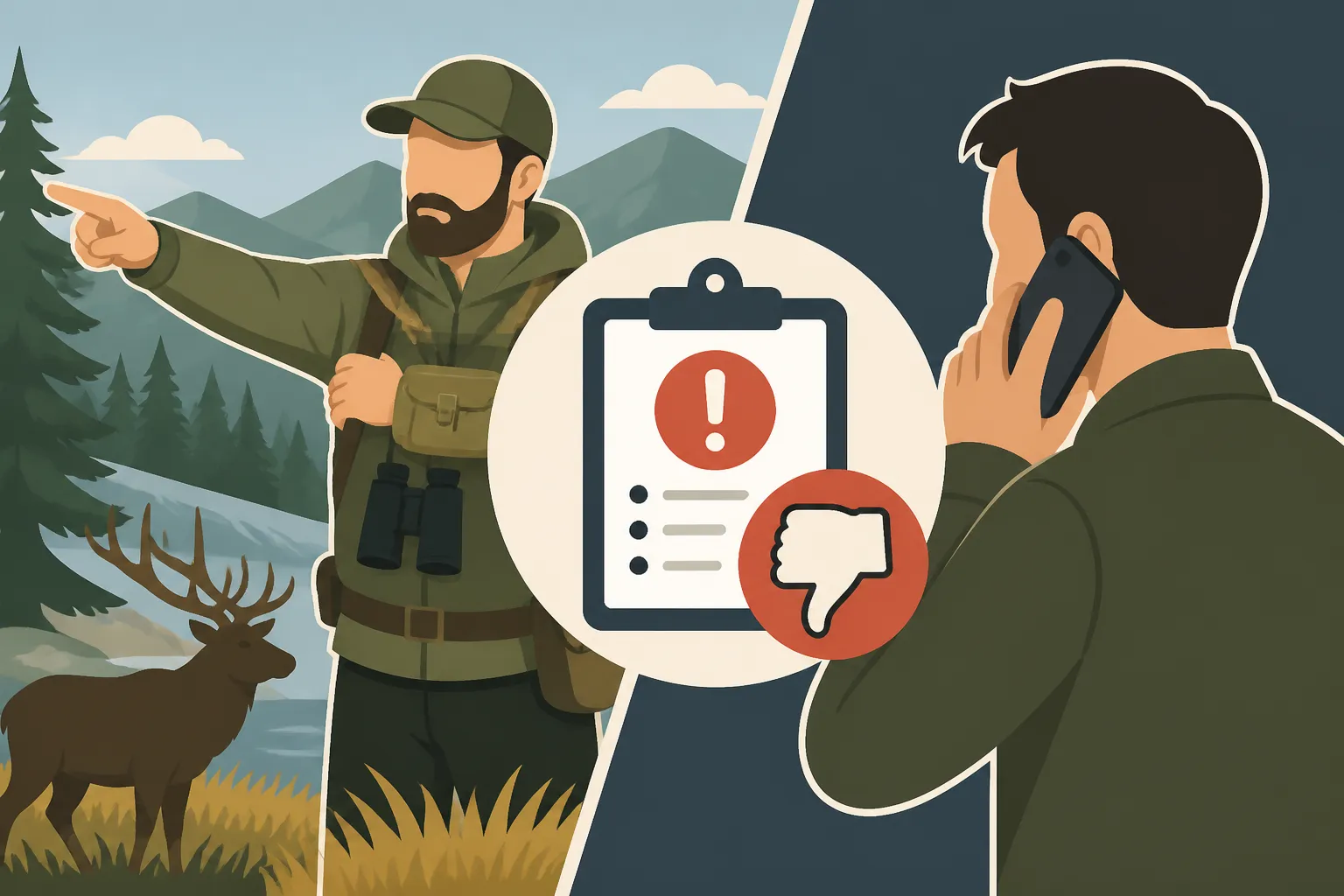
Before you even think about putting pen to paper or making a phone call, it’s really important to clarify what constitutes a legitimate complaint versus what might simply be a tough hunt or a series of unfortunate events. Hunting is inherently unpredictable, and sometimes, despite everyone’s best efforts, the animals just don't cooperate, or the weather turns sour. That's part of the game. However, there are clear lines that, when crossed, warrant an official complaint.
Distinguishing a Bad Hunt from a Bad Guide
Let's be honest, we've all had those hunts where everything seemed to go wrong. The rut was quiet, the bears were denned up, or a freak snowstorm blew in and shut everything down. These are frustrating, absolutely, but they aren't typically grounds for a complaint against your guide. A guide can't control the weather or make the animals appear on demand. What they can control, however, is their conduct, their adherence to regulations, and the safety and ethical standards of the hunt.
Think about it this way: was the guide negligent in their duties? Did they act illegally? Were promises made in writing or explicit verbal agreements broken without reasonable explanation? Did they put your safety at risk? These are the kinds of questions that point towards a legitimate complaint. For instance, if you booked a specific hunt for a certain species during a legal season, and the guide intentionally took you to an area where that season was closed, or if they pressured you to engage in illegal activities, that’s a clear issue. Similarly, if your agreement stipulated certain accommodations or services that were demonstrably not provided (e.g., advertised as a fly-in camp but you were driven in, without prior notification or compensation), that’s a breach. When you're looking at various options, some hunters might explore platforms like BookYourHunt for packages, but it’s crucial to understand what’s guaranteed versus what’s aspirational in any agreement.
Common Issues Warranting an Official Complaint
There's a spectrum of issues that could lead you to file a complaint. Understanding these categories can help you articulate your concerns more clearly.
- Breach of Contract or Misrepresentation: This is a big one. Did the outfitter or guide fail to deliver on what was explicitly promised in your written contract or agreement? Perhaps the duration of the hunt was cut short without cause, the promised amenities (e.g., specific type of camp, transportation methods like horseback hunting) were not provided, or the advertised success rates were grossly misleading, not just unlucky. This isn't about the animals cooperating, but about the services and conditions explicitly agreed upon.
- Unsafe Practices or Negligence: This should always be taken extremely seriously. If your guide engaged in unsafe firearm handling, operated a vehicle or boat recklessly, neglected basic safety protocols (like Bear Safety While Hunting in British Columbia), or failed to have adequate emergency plans in place, that's a major concern. Any situation where your personal safety or the safety of others was compromised due to the guide's actions or inactions falls into this category.
- Illegal or Unethical Conduct: This includes a wide range of serious offenses. Was the guide hunting outside of legal hours, in a closed area, or encouraging you to take an animal that was clearly not legal (e.g., an undersized bull moose during an antler restriction hunt)? Did they tamper with evidence, or engage in practices that violate British Columbia's hunting regulations, such as baiting where it’s prohibited? This also extends to unethical behaviour like wasting game meat or not adhering to proper Meat Care in British Columbia's Warm Early Seasons.
- Lack of Licensing or Proper Documentation: It's rare, but sometimes you might encounter someone operating without the proper provincial licences or permits, or without the necessary The Permit to Accompany Explained for non-resident hunters. Always verify credentials upfront, perhaps by checking with the Guide Outfitters Association of British Columbia (GOABC) or the provincial government's licensing bodies.
Navigating the British Columbia Complaint Process
Once you’ve determined that your issue warrants a formal complaint, knowing who to talk to and how to approach them is key. There are typically two main avenues for complaints, depending on the nature and severity of the issue.
The Guide Outfitters Association of British Columbia (GOABC)
The GOABC is the professional association representing guide outfitters in British Columbia. They have a vested interest in maintaining the integrity and reputation of the guiding industry within the province. If your complaint is primarily about professional conduct, ethical breaches, or contractual disputes with an outfitter who is a GOABC member, this is often a good first stop.
They have a formal process for handling complaints against their members, which typically involves mediation or arbitration to try and resolve the issue. Their goal is often to find a resolution that satisfies both parties, uphold ethical standards, and, if necessary, take disciplinary action against a member who has acted improperly. You'll want to review their specific complaint procedures on their website. It's often beneficial to have tried to communicate with the guide or outfitter directly first, though in some severe cases, this might not be advisable.
The British Columbia Ministry of Forests, Lands, Natural Resource Operations and Rural Development (FLNRORD)
This is the provincial government body responsible for wildlife management, hunting regulations, and the licensing and oversight of guide outfitters in British Columbia. If your complaint involves potential violations of provincial hunting laws, safety regulations, or if the guide was operating without proper licensing, FLNRORD is the appropriate authority. They are the regulatory body, and their focus is on enforcing the law and ensuring compliance.
Complaints to FLNRORD often lead to investigations by Conservation Officers. These investigations can result in warnings, fines, suspension, or even revocation of a guide's licence. For serious offenses, criminal charges could be pursued. This is the route you’d take if you suspect illegal activity or serious negligence, especially if the GOABC's scope of influence doesn't cover the full extent of the transgression.
Initial Steps and Contact Points
Regardless of whether you start with GOABC or FLNRORD, your initial steps are similar:
- Direct Communication (Optional but Recommended): For less severe issues, sometimes a direct, calm conversation or written communication with the guide or outfitter can resolve the problem. Lay out your concerns clearly and objectively, referencing your contract where applicable. Give them a chance to respond and rectify the situation. This often helps to avoid escalating things unnecessarily. However, if the issue involves safety, illegality, or you feel unsafe communicating, skip this step.
- Gather Contact Information: Make sure you have the full name of the guide and the outfitting company, their licence numbers (if you have them), and any relevant contact details.
- Identify the Best Authority: Based on the nature of your complaint, decide whether to approach GOABC (for professional conduct, contractual issues with members) or FLNRORD (for legal/safety violations, licensing issues). You might even inform both, especially if it's a serious matter with a GOABC member.
Gathering Your Evidence and Documenting Everything
This is perhaps the most critical part of filing any complaint. Without solid, objective evidence, your complaint becomes a "he said, she said" situation, which is incredibly difficult to investigate and resolve. Think like a detective; every detail matters.
What Kind of Evidence is Useful?
Anything that supports your account of events can be valuable. The more concrete and verifiable, the better.
- Written Contracts and Agreements: Your signed contract with the outfitter is paramount. It outlines the terms of your hunt, what was included, and what was expected. If the guide deviated from this, your contract is your strongest piece of evidence. This also includes any emails, texts, or other written communications where specific promises or arrangements were made. Some hunters might use platforms like GoHunt for research, but always ensure you have a physical or digital copy of the actual outfitter contract.
- Dates, Times, and Locations: Keep a detailed log of events. When did the incident happen? What was the exact date and time? Where specifically did it occur (e.g., GPS coordinates, specific logging road name, management unit)? Precision here is vital for investigators. If you recall specific details like Hunting a British Columbia Cutblock Edge or Hunting an Avalanche Chute in September where issues arose, note them down.
- Photographs and Videos: Visual evidence is incredibly powerful. Did you take photos of unsafe conditions, illegal activities, or discrepancies from the advertised camp? Even photos of a specific location or conditions that contradict a guide's claims can be useful. For example, if you were promised an alpine camp but ended up in a valley bottom, photos of the actual camp could be evidence.
- Witness Statements: If other hunters or individuals were present and witnessed the events, get their contact information and ask if they would be willing to provide a statement. An independent third-party account can significantly strengthen your case.
- Financial Records: Keep copies of all payments, invoices, and receipts related to your hunt. This demonstrates your financial commitment and the services you paid for. If you’re seeking a refund or compensation, these records are essential.
- Communications: Any emails, text messages, or recorded phone calls (ensure you adhere to local laws regarding recording conversations) with the guide or outfitter before, during, or after the hunt can be crucial. These show what was discussed, promised, and how issues were addressed (or not addressed).
Documenting Your Account
It's not enough to just have evidence; you need to present a clear, chronological narrative.
- Write a Detailed Chronological Account: As soon as possible after the incident, write down everything you remember, from the moment you booked the trip to the present. Include dates, times, names of individuals involved, and a factual description of what happened. Avoid emotional language and stick to the facts.
- Organize Your Evidence: Create a file (digital or physical) where all your evidence is organized and easily accessible. Label photos with dates and descriptions. Link communications to specific events in your written account.
- Be Prepared for Questions: Investigators will likely have many questions. The more prepared you are with organized information, the smoother the process will be.
What to Expect After Filing a Complaint
Once you've submitted your meticulously documented complaint, the process moves into the investigation and potential resolution phase. This isn't always a quick process, so patience is key.
The Investigation Process
Both the GOABC and FLNRORD will have their own procedures for investigating complaints.
- Initial Review: Your complaint will first be reviewed to ensure it falls within the scope of their authority and contains enough information to proceed.
- Contact with All Parties: The investigating body will likely contact both you and the guide/outfitter to get their side of the story. They will ask for their documentation and a response to your allegations. This is why being thorough in your initial submission is so important. They might reach out to witnesses you’ve identified.
- Evidence Gathering: Conservation Officers, in the case of FLNRORD, may conduct interviews, visit the location where the incident occurred, or gather additional evidence related to regulations and licensing.
- Timeline: Investigations can take weeks or even months, especially if they are complex or involve multiple parties or extensive evidence. It’s crucial to understand that there isn’t an instant fix.
Potential Outcomes and Resolutions
The outcome of your complaint can vary widely depending on the nature of the issue, the strength of your evidence, and the findings of the investigation.
- No Action Taken: If there isn't sufficient evidence to support your claims, or if the investigation finds no wrongdoing, the complaint may be closed without any action against the guide. This can be frustrating, but it highlights the importance of irrefutable evidence.
- Mediation or Arbitration (GOABC): For GOABC complaints, especially those involving contractual disputes or professional conduct, mediation or arbitration might be used to help both parties reach an agreement. This could involve a partial refund, a re-booking at a reduced rate, or other forms of compensation. Sometimes, a guide might be required to take additional training or adhere to new operational guidelines. It’s always good to understand British Columbia Outfitters Who Guarantee Nothing and set realistic expectations for outcomes.
- Disciplinary Action (GOABC and FLNRORD):
- GOABC: For members found in violation of their code of conduct, disciplinary actions could range from a warning, temporary suspension from the association, or even expulsion.
- FLNRORD: If the guide violated provincial laws or regulations, actions could include fines, suspension of their guiding licence, or permanent revocation. In severe cases involving criminal activity, charges could be laid, and the guide could face legal penalties.
- Improved Practices: Even if no formal disciplinary action is taken, the complaint process itself can sometimes lead to guides and outfitters reviewing and improving their practices. They might adjust their contracts, enhance safety protocols, or refine how they communicate with clients to prevent similar issues in the future.
- Civil Action: In some cases, particularly where significant financial damages have occurred and no satisfactory resolution is reached through GOABC or FLNRORD, you might consider pursuing civil legal action. This is generally a last resort and often involves considerable time and expense. Understanding your initial contract and any liability waivers you signed (e.g., Signing an Outfitter Liability Waiver) is crucial here.
It's a tough pill to swallow when a dream hunt sours because of a guide's actions, but by understanding the complaint process in British Columbia, gathering strong evidence, and knowing which authorities to contact, you can ensure your concerns are heard and, hopefully, lead to a just resolution. Your efforts not only protect you but help uphold the integrity of the entire British Columbia hunting industry.
Disclaimer
This article is for general informational purposes only and does not constitute professional advice. Laws, prices and regulations vary by location and change over time. Consult a qualified professional for guidance on your specific situation.