British Columbia’s Caribou Herds and Their Status
It’s a tough reality to face, but for many hunters and wildlife enthusiasts in British Columbia, the future of our caribou herds is a topic filled with both concern and confusion. These magnificent animals, so emblematic of our wild northern landscapes, have been struggling, leading to widespread season closures and deeply felt discussions about conservation. This guide will walk you through the current status of British Columbia’s caribou, the challenges they face, the efforts being made to protect them, and what this all means for those of us who cherish our wild spaces.
Understanding British Columbia's Caribou Species and Their Ranges
British Columbia is home to several distinct ecotypes of woodland caribou, each with unique habitat preferences and challenges. These aren't just "caribou"; they represent generations adapted to very specific, often remote, corners of our vast province. Knowing the differences helps us understand the complexities of their decline and the tailored conservation efforts.
Mountain Caribou and Their High-Elevation Homes
The Mountain Caribou are arguably the most iconic and certainly the most imperiled of British Columbia's caribou populations. These majestic animals are found in the deep snow zones of the province's central and southern interior mountains, primarily relying on arboreal lichens – lichens that grow on trees – as a critical winter food source. This unique adaptation means they spend their winters high up in old-growth forests, where deep snow often keeps predators at bay, and the food source is accessible. Think of the Columbia and Selkirk Mountains, regions known for their incredible snowfall and dense, ancient forests. Their dependence on these specific, mature forest ecosystems makes them incredibly vulnerable to habitat disturbance. A clearcut in their winter range isn't just removing trees; it's removing their grocery store for generations. The survival of these herds is tightly linked to the health of those ancient forests, and their specialized diet often limits their ability to adapt to changes in their environment.
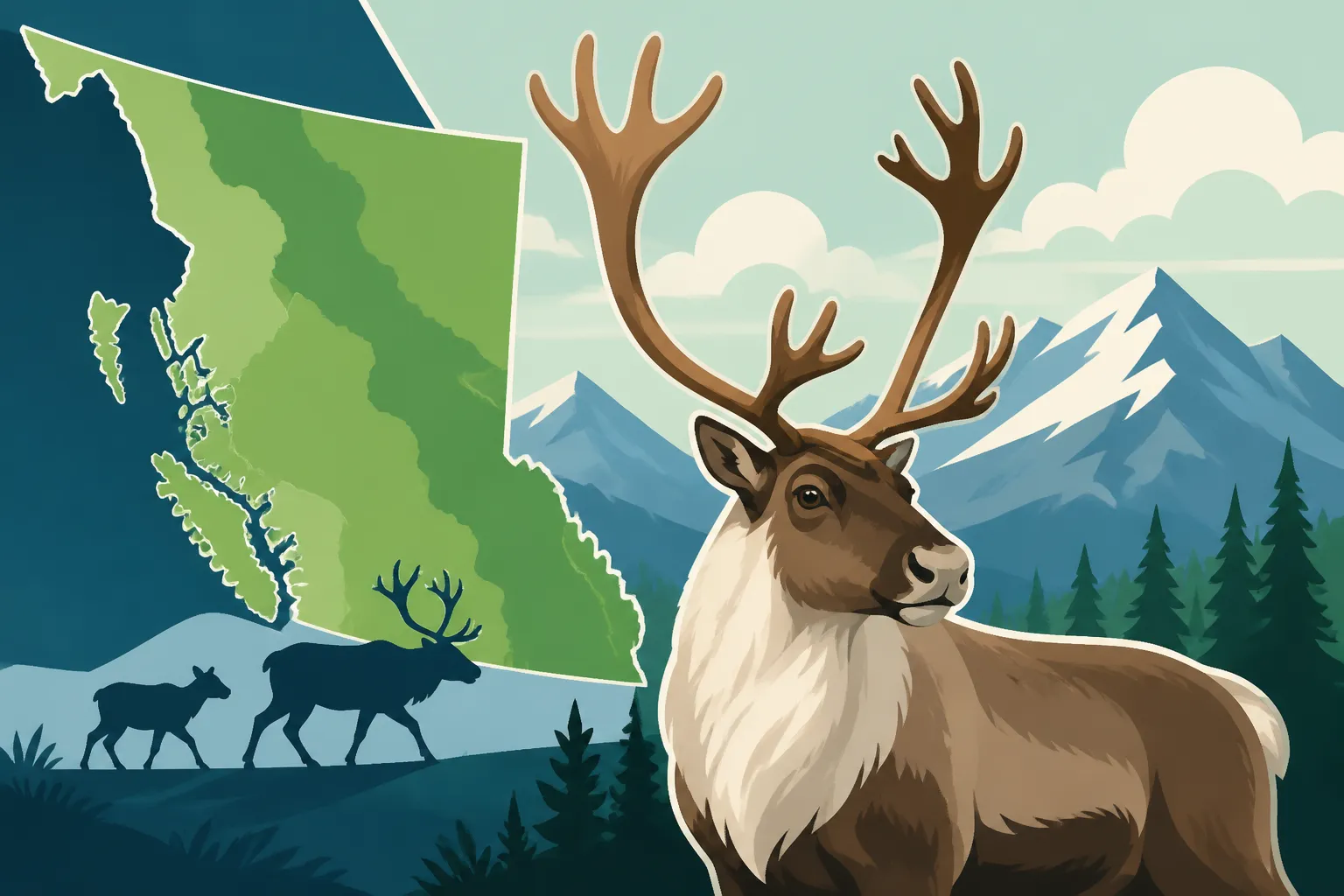
Historically, mountain caribou herds ranged much further south and west, but their populations have been steadily shrinking for decades. Today, what remains are often fragmented groups, isolated from one another, which makes genetic exchange difficult and recovery a monumental task. The challenges they face are often exacerbated by the very features that define their habitat: deep snow makes travel difficult, and old-growth forests are prime targets for logging. Understanding where they live and why they live there is the first step in appreciating the fragility of their existence. When you look at a map, you'll see how fragmented their range has become.
Boreal Caribou and Their Northern Wetland Sanctuaries
Moving north and east, we find the Boreal Caribou, typically inhabiting the flat, swampy, often peat-rich boreal forests of northeastern British Columbia. These caribou are creatures of the muskeg and lowlands, preferring older conifer stands within expansive wetland complexes. Their survival strategy leans heavily on spatial separation from predators; they seek out large, undisturbed areas that predators find difficult or less rewarding to hunt in. They are often found in areas that feel truly remote, far from human settlement and infrastructure, utilizing vast tracts of continuous forest and bog. The Peace Region and its surrounding areas are primary strongholds for this ecotype, though even here, their numbers are far from robust.
Unlike their mountain cousins, Boreal Caribou don't typically rely on arboreal lichens for winter forage. Instead, they browse on ground lichens, sedges, and shrubs, moving through their expansive ranges to find what they need. Their habitat is equally susceptible to disturbance, but in a different way. Linear features like seismic lines, pipelines, and forest roads cut through their preferred solitude, providing easy access routes for predators like wolves, and increasing the overall disturbance footprint. While their habitat might seem less dramatic than high alpine, its vastness and integrity are just as crucial. You can use tools like GoHunt to examine specific management units and see how these linear disturbances crisscross areas that were once pure wilderness.
Northern Caribou and Their Diverse, Expansive Territories
The Northern Caribou ecotype covers the largest geographical area in British Columbia, stretching across the central and northern interior mountains and plateaus. These caribou exhibit a fascinating migratory behaviour, often moving between high alpine summer ranges and lower elevation wintering grounds. Their diet is varied, including lichens, sedges, and willow, adapting to what's available across their vast territories. This ecotype encompasses a broader range of habitats compared to the other two, from alpine tundra to sub-boreal forests.
While often more numerous than Mountain or Boreal Caribou, Northern Caribou still face significant threats, particularly from habitat alteration and increased predator access. Their migratory patterns make them vulnerable at different points in their annual cycle. For instance, a disruption to a critical migratory corridor can have devastating effects on an entire herd, even if other parts of their range remain intact. These herds are crucial for understanding the overall health of British Columbia's northern ecosystems, and their status often provides an early warning sign for broader environmental changes. Understanding the nuances of British Columbia's Management Units and Regions is crucial when trying to grasp the immense territories these northern herds call home, as they often cross multiple units.
The Complex Threats Facing Caribou Herds Today
The decline of caribou populations in British Columbia isn't a simple story with a single villain. It's a complex web of interconnected factors, each amplifying the other, pushing these animals further towards the brink. From the very ground they walk on to the climate they depend on, challenges come from every direction.
Habitat Loss and Fragmentation: The Root of the Problem
Perhaps the most significant and pervasive threat to all caribou ecotypes in British Columbia is the ongoing loss and fragmentation of their critical habitat. This isn't just about clearcuts; it’s about the cumulative impact of human activity on the landscape. Logging operations, mining projects, oil and gas exploration, hydroelectric developments, and the expansion of roads and seismic lines all carve up the wilderness. For mountain caribou, this means the irreplaceable old-growth forests they depend on for winter lichen are diminishing, leaving them with fewer places to find food and escape deep snow. When you remove old growth, you're not just taking away trees; you're taking away generations of lichen growth that cannot be replaced in a human lifetime.
For Boreal Caribou, linear features like seismic lines and forest roads are particularly devastating. While seemingly small on their own, these corridors provide superhighways for predators, allowing wolves to penetrate deep into previously inaccessible caribou habitat, increasing encounter rates exponentially. What was once a natural barrier becomes an easy travel route. Even wildfires, while a natural part of the ecosystem, can exacerbate these problems, especially in areas already under stress. If you've ever seen What Wildfire Has Done to British Columbia Game, you know the dramatic changes it brings to an ecosystem, some of which are not beneficial for caribou. This habitat disruption forces caribou into smaller, less optimal areas, concentrating them and making them more vulnerable to other threats.
Predation Pressures: An Unbalanced Equation
Increased predation, primarily by wolves, is another critical factor in caribou decline, often directly linked to habitat changes. Caribou have evolved a strategy of "spatial separation" – they thrive by avoiding predators in large, secure areas. When habitat becomes fragmented by roads and clearcuts, deer and moose often move into these disturbed areas, drawn by the new forage growth. This, in turn, draws predators like wolves into what was once caribou sanctuary. Suddenly, caribou, who are not designed to outrun or outfight persistent wolf packs, find themselves encountering predators far more frequently.
It's a tricky balance: managing predator populations without addressing the underlying habitat issues is like putting a band-aid on a gaping wound. Wolves are an integral part of the ecosystem, but in areas where caribou are already stressed and their habitat is compromised, even natural predation can push fragile herds over the edge. Wildlife managers are faced with incredibly difficult decisions about predator control in specific caribou recovery areas, trying to buy time for habitat to recover. Understanding How Predators Shape Moose Numbers offers insight into these complex dynamics, showing how predator-prey relationships are constantly shifting.
Climate Change and Disease: Emerging Challenges
While habitat loss and predation are immediate, tangible threats, climate change presents a more insidious, long-term challenge to caribou populations. Changes in snowpack levels, warmer winters, and altered precipitation patterns can directly impact caribou access to food sources, particularly arboreal lichens for mountain caribou, which can become encased in ice. Warmer temperatures can also affect vegetation growth cycles, potentially reducing the quality or availability of forage in summer. Fluctuations in weather can also increase the frequency and intensity of wildfires, further destroying critical habitat.
Beyond direct environmental impacts, a changing climate can also influence the prevalence of parasites and diseases. While caribou historically have been resilient, a stressed population with diminished habitat and increased exposure to other ungulates (which can carry diseases like brainworm) might be more vulnerable. The full extent of these impacts is still being studied, but it adds another layer of complexity to an already daunting conservation challenge. It reminds us that the health of an ecosystem is interconnected, and a shift in one area can ripple through the entire food web.
Conservation Efforts and Management Strategies in British Columbia
Given the dire situation of many caribou herds, British Columbia has implemented a range of conservation efforts and management strategies. These initiatives often involve difficult choices and require collaboration across government, industry, First Nations, and local communities. It's a testament to how seriously this issue is being taken, even if solutions are often hard-won and slow to show results.
Recovery Programs and Direct Interventions
One of the most intensive and often controversial strategies is direct intervention through recovery programs. These can include maternal penning, where pregnant cows are captured and kept in predator-fenced enclosures until their calves are born and strong enough to be released. This gives calves a critical head start, protecting them during their most vulnerable stage. While expensive and labour-intensive, it has shown promise in boosting calf survival in some highly endangered herds. Another direct intervention is translocation, where caribou from healthier herds (if any can be found) are moved to augment struggling populations or re-establish herds in historical ranges.
These programs are not without their critics, who argue they treat symptoms rather than the root causes of decline. However, proponents see them as essential "stop-gap" measures, buying time for habitat restoration efforts to take hold. They are often part of a broader strategy, acknowledging that a multi-pronged approach is necessary. You can delve deeper into these efforts by looking at information on British Columbia's Caribou Recovery Effort. These are often high-stakes operations where every individual animal counts.
Habitat Restoration and Protection Initiatives
Recognizing that habitat is the foundation of caribou survival, significant efforts are focused on restoring and protecting critical caribou habitat. This includes deactivating old logging roads and seismic lines, a process that involves removing culverts, re-contouring terrain, and replanting native vegetation. The goal is to reduce predator access into caribou ranges and allow the forest to reclaim these disturbed areas. In areas where old-growth forests are crucial, such as for mountain caribou, there are also initiatives to protect remaining stands and manage surrounding areas to promote their growth.
Collaborative agreements are often forged between government, industry, and First Nations to set aside critical habitat areas, restrict industrial activity, or modify practices to minimize impact. This might involve adjusted logging schedules, different silviculture practices, or limitations on road building. The challenge, of course, is balancing these conservation needs with economic and social pressures. It’s a constant negotiation, but one that is absolutely vital for long-term caribou survival. Some of these areas may fall under British Columbia Wildlife Management Area Rules, providing another layer of protection.
Research, Monitoring, and Adaptive Management
Underpinning all conservation efforts is ongoing research and monitoring. Scientists use a variety of methods, including GPS collaring, aerial surveys, and ground tracking, to understand caribou movements, population dynamics, habitat use, and predator-prey interactions. This data is crucial for informing management decisions and evaluating the effectiveness of different strategies. It helps answer critical questions like: Which caribou herds are in trouble? What specific threats are most impactful in different regions?
The concept of "adaptive management" is key here. It means that conservation strategies are not static; they are continually evaluated and adjusted based on new scientific information and monitoring results. This requires flexibility and a willingness to change course if a particular approach isn't working as intended. For hunters and wildlife observers, contributing to citizen science by reporting sightings can also play a small but important role in filling data gaps. Resources like GoHunt can provide detailed maps and data layers that help hunters understand caribou range and historical movement patterns, proving invaluable for informed participation and respecting sensitive areas.
The Impact on Hunting Opportunities and Future Prospects
The severe decline of caribou herds in British Columbia has had direct and profound consequences for hunting opportunities, particularly for residents who have long cherished the chance to pursue these magnificent animals. It’s a loss felt deeply by many, but one that is undeniably necessary for conservation.
Season Closures and Restrictions: A Necessary Reality
For many years now, hunting seasons for caribou in British Columbia have been significantly curtailed or completely closed across much of the province. This is a direct response to plummeting population numbers and the critical need to remove any additional pressure on struggling herds. What were once cherished general open seasons in many areas are now either entirely closed or strictly managed under Limited Entry Hunting (LEH) with extremely low odds, effectively making them unavailable to most hunters. For many of the most at-risk populations, like many Mountain Caribou herds, hunting has been entirely suspended.
This has been a tough pill for many hunters to swallow, especially those who remember a time when caribou hunting was more common. However, the conservation community and most hunters recognize that these closures are a critical, if painful, step in preventing further decline. The focus has shifted entirely to recovery, with the hope that one day, sustained hunting might again be possible. Looking at British Columbia Big Game Season Dates will quickly show you just how restricted caribou hunting has become compared to other species.
Limited Entry Hunting Zones: Glimmers of Hope (for a select few)
While widespread general open seasons are a thing of the past for caribou, a few specific management units, primarily in the far north of the province where Northern Caribou herds are still relatively robust, may occasionally offer extremely limited Limited Entry Hunting (LEH) opportunities. These are typically for specific types of caribou, often bulls, and the draw odds are incredibly low, sometimes in the thousands-to-one range. This means that even applying offers only the slimmest chance of drawing a tag.
These LEH opportunities are carefully designed to have minimal impact on the overall population, targeting only a tiny fraction of animals, often in areas where populations can still sustain a very restricted harvest. They are not about maximizing opportunity, but about managing very specific, resilient populations. For the vast majority of British Columbia, however, caribou are off-limits for hunting. Hunters hoping to participate in any future caribou LEH must meticulously study the regulations and understand the historical success rates and population trends, often using resources like GoHunt to analyze draw odds and past harvest data.
The Future of Caribou Hunting in British Columbia
What does the future hold for caribou hunting in British Columbia? It’s a question without an easy answer. The primary goal for wildlife managers and conservationists is the recovery of the herds, and until populations show consistent, significant signs of sustained growth and stability, it's unlikely that widespread hunting opportunities will return. The trajectory of Which Caribou Herds Are in Trouble suggests a long road ahead.
If recovery efforts are successful over many decades, it's possible that extremely conservative and scientifically managed hunting could be reintroduced in some areas. However, any future hunting would likely be highly restricted, probably exclusively through LEH, and contingent on strict population monitoring. For now, the focus remains firmly on protecting and rebuilding these incredible animals. Hunters, like all citizens, have a vital role to play in supporting these conservation efforts, understanding that sometimes, the best hunting strategy is to put the rifle away and advocate for the species.
How Hunters Can Contribute to Caribou Recovery
Even with hunting opportunities largely suspended, hunters and outdoor enthusiasts have a crucial role to play in supporting caribou recovery in British Columbia. Our passion for wildlife and wild places makes us natural advocates and partners in conservation.
Advocacy and Education
One of the most impactful ways hunters can contribute is through advocacy and education. This means staying informed about the issues facing caribou, understanding the science behind the conservation efforts, and speaking up in support of habitat protection and recovery programs. Join local rod and gun clubs or provincial wildlife organizations that actively work on conservation initiatives. Attend public meetings, write letters to elected officials, and engage in respectful dialogue with those who may not understand the complexities of caribou conservation.
Educating others about the value of caribou and the reasons behind hunting closures can help foster broader public support for conservation. It’s about being a voice for the wildlife we care so deeply about, even when it means making personal sacrifices in terms of hunting opportunities. Many of us started hunting because we love being outdoors and seeing these animals, and that love can translate into powerful action.
Financial Support for Conservation Initiatives
Conservation efforts, especially intensive ones like maternal penning, habitat restoration, and ongoing research, are incredibly expensive. Hunters can provide vital financial support through various channels. Donating to reputable wildlife conservation organizations that specifically target caribou recovery is a direct way to help. Many organizations, both local and national, are on the front lines, doing the hands-on work of habitat restoration, monitoring, and advocacy.
Beyond direct donations, purchasing conservation stamps or contributing to funds specifically earmarked for wildlife habitat can also funnel resources to these critical projects. While we may not be buying caribou tags, our collective financial contributions can make a significant difference in providing the resources needed for long-term recovery.
Ethical Conduct and Reporting Sightings
Even without open hunting seasons, ethical conduct in the backcountry is always paramount. This means understanding and respecting seasonal closures, avoiding sensitive caribou habitat, and minimizing disturbance if you happen to encounter caribou during other outdoor pursuits like hiking or backcountry skiing. Remember, these animals are highly sensitive to stress. Before heading out, consider scouting your areas carefully, and use detailed maps, perhaps through platforms like GoHunt, to identify any known caribou ranges or sensitive areas you should avoid entirely.
Furthermore, if you are fortunate enough to spot caribou, especially in areas where they are rare or uncollared, reporting your sightings to wildlife biologists or conservation groups can be incredibly valuable. Providing details like location, number of animals, and any observed behaviour can contribute to crucial monitoring data, helping researchers track herd movements and population health. Every bit of information helps paint a clearer picture of their status. If you're exploring any given British Columbia Management Unit, keep your eyes peeled and your camera ready, but always respect their space.
Table of British Columbia Caribou Ecotypes and Status
To help consolidate the information, here's a brief overview of the caribou ecotypes found in British Columbia and their general conservation status. This isn't an exhaustive list of every single herd, but it gives you a good snapshot of the overall picture.
| Ecotype | Primary Habitat | Key Winter Forage | General Status in BC (Approx.) | Primary Threats | Hunting Opportunities |
|---|---|---|---|---|---|
| Mountain Caribou | High-elevation old-growth forests, deep snow | Arboreal lichens | Critically Endangered | Habitat loss (logging), predation | Mostly Closed |
| Boreal Caribou | Flat boreal forests, wetlands, muskeg | Ground lichens, sedges | Threatened | Habitat fragmentation (linear features), predation | Mostly Closed |
| Northern Caribou | Diverse, migratory (alpine to sub-boreal) | Lichens, sedges, willow | Endangered/Threatened | Habitat disturbance, predation, climate change | Extremely Limited LEH* |
*Note: "Extremely Limited LEH" means very few tags, in specific Northern BC management units, with very low draw odds. Most of the province is closed to caribou hunting.
Disclaimer
This article is for general informational purposes only and does not constitute professional advice. Laws, prices and regulations vary by location and change over time. Consult a qualified professional for guidance on your specific situation.