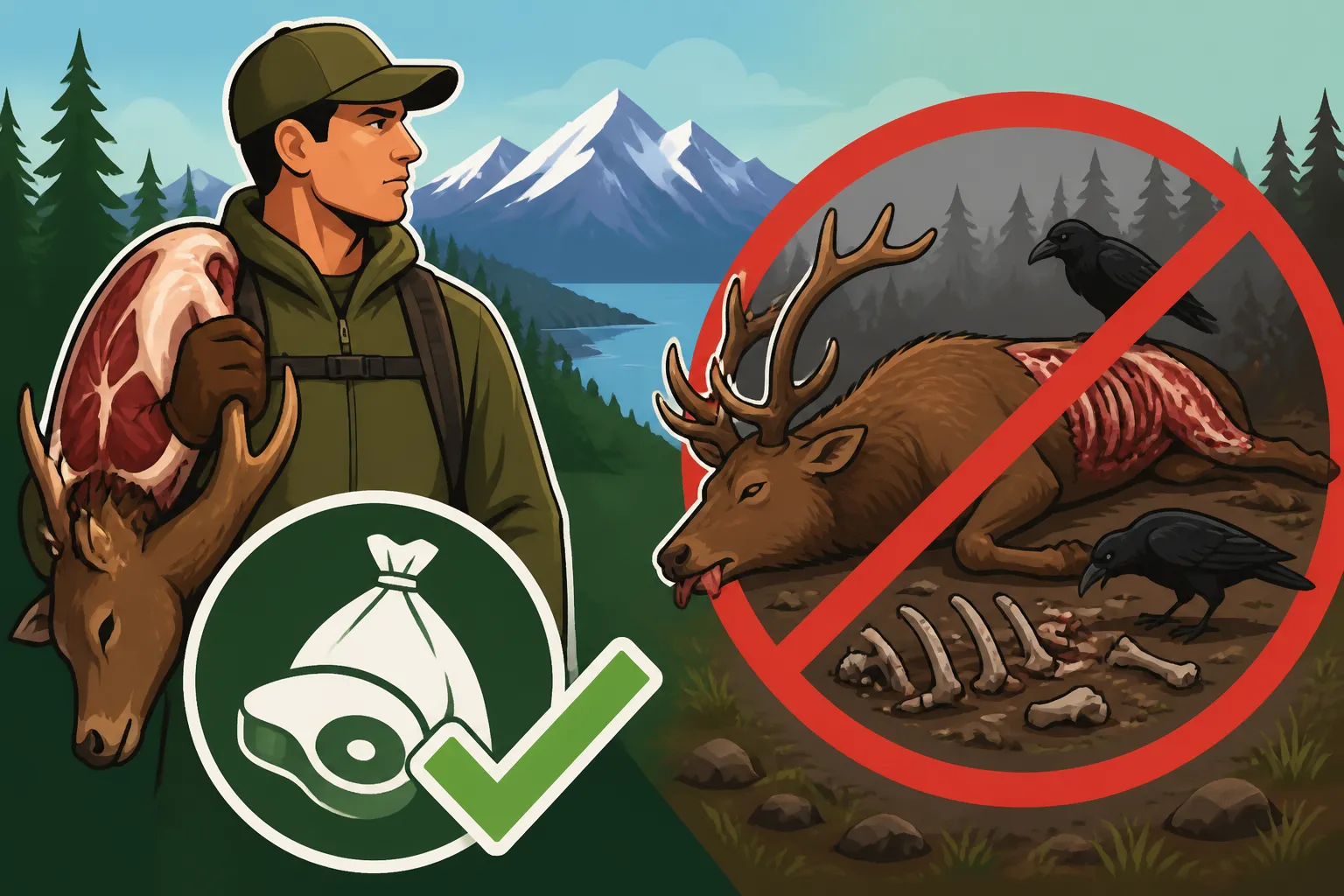
Rules on Wasting Game Meat
One of the toughest realities for any hunter in British Columbia is the immense effort required to recover an animal, especially when the weather turns nasty or the terrain is unforgiving. It's a grueling test of will and logistics, and it brings with it a very real concern: the rules surrounding wasting game meat. Nobody wants to be on the wrong side of the law, but more importantly, no ethical hunter wants to disrespect the animal they’ve harvested by failing to utilize it. This comprehensive guide aims to demystify British Columbia's regulations on wasting game meat, helping you understand your responsibilities and navigate challenging recovery situations with confidence and integrity.
The Legal Mandate Against Wasting Game Meat in British Columbia
British Columbia’s hunting regulations are clear about the expectation that hunters will make every reasonable effort to recover and utilize the edible portions of game animals. This isn't just about good ethics; it's a fundamental legal requirement. The underlying principle is simple: if you take an animal's life, you are responsible for making the most of it.
Understanding the Wildlife Act Provisions
The legal framework governing hunting in British Columbia, primarily the Wildlife Act and its associated regulations, explicitly addresses the wasting of game meat. While the exact wording might vary slightly depending on the specific species or situation, the intent is consistent: wanton waste is prohibited. This isn't just a suggestion; it's a serious offence. For instance, Schedule C of the Hunting and Trapping Regulation Outline of the British Columbia Hunting and Trapping Synopsis often details what constitutes "edible portions" for various species. Failing to remove all or most of these edible portions from the field after a harvest can lead to significant penalties, including fines and potential suspension of hunting privileges. It's a rule that underscores the deep respect we, as hunters, owe to the wildlife resource and the public trust placed in us.
Imagine you've successfully harvested a large bull moose deep in the Cariboo country. You might be exhausted, miles from the nearest road, and facing a looming storm. The temptation to just take the "best" cuts and leave the rest might cross your mind, but this is precisely where the law steps in. It demands that you consider the entire animal, not just the easily accessible or most palatable parts. This legal expectation forces us to plan meticulously, ensuring we have the means and the stamina to get all the required meat out, regardless of the circumstances that arise after the shot.
Defining "Edible Portions"
When the regulations talk about "edible portions," they're referring to more than just the prime cuts like backstraps and tenderloins. Generally, for big game animals like deer, elk, and moose, the law requires the salvage of all four quarters, the backstraps, tenderloins, neck meat, and often the rib meat. For bears, while the regulations focus on the hide and skull for compulsory inspection, the meat is absolutely considered edible and must be salvaged.
Let's break down what this often means in practice:
- Quarters: This includes the muscle tissue from both front and hind legs. You can bone them out or pack them out bone-in, but the expectation is that these substantial portions of meat are recovered.
- Backstraps and Tenderloins: These are universally recognized as premium cuts and are explicitly included in salvage requirements. They are typically easy to remove once the animal is field-dressed.
- Neck and Rib Meat: These can be more labor-intensive to remove, but they are absolutely edible and, depending on the species and size, can represent a significant amount of meat. For a large moose, the neck alone can yield a considerable quantity of ground meat or stew cuts.
- Organ Meat: The heart and liver are often considered edible and, while not always explicitly mandated in the same way as muscle tissue, are highly valued by many hunters and are part of the ethical utilization of the animal.
It’s important to note that specific regulations can sometimes outline exceptions or different requirements for certain species or in particular management units. This is where a resource like the annual British Columbia Hunting and Trapping Synopsis becomes your bible. Before every hunt, always consult the most current synopsis to ensure you're fully aware of the precise salvage requirements for the species and area you're hunting. Understanding these definitions before you pull the trigger is paramount.
Practical Interpretations and Common Scenarios in the Field
Knowing the letter of the law is one thing, but applying it in the unpredictable environment of British Columbia’s backcountry is another. Hunters often face scenarios that test their resolve and their ability to adhere to meat salvage rules. The law expects "reasonable effort," and understanding what that means in practical terms is crucial.
When Weather and Terrain Challenge Recovery
British Columbia is notorious for its rugged landscapes and rapidly changing weather. You might harvest a deer on a steep, rocky slope, or a moose in a marshy bog a long way from any trail. What happens when a sudden downpour hits, or the temperature soars to +30°C in early September, making meat spoilage a real threat? These are the moments when hunters truly earn their meat.
- Extreme Heat: If you harvest an animal on a warm day, rapid cooling becomes critical. This often means breaking the animal down quickly, getting the hide off, and perhaps even bagging the meat and submerging it in a cold creek if available. Leaving an animal whole in direct sunlight for hours, even if you intend to come back, would likely be considered neglecting reasonable efforts. The guide on Keeping Meat Cool in an Early Season offers invaluable advice here, as does the more general one on Meat Care in British Columbia's Warm Early Seasons. You need a plan to prevent spoilage from the moment the animal hits the ground.
- Challenging Terrain: A deer at the bottom of a steep ravine or an elk deep in an old-growth forest presents a massive packing challenge. The expectation is that you will make multiple trips, utilize game bags, and perhaps even quarter the animal in place to facilitate removal. Leaving quarters behind because the climb is too tough, without exhausting all reasonable options, could be seen as waste. This is where preparation comes in, from fitness to specialized gear like a good frame pack. Our article on Packing Meat With a Frame Pack goes into detail about how to manage these tough extractions.
- Inclement Weather: Heavy rain or snow can complicate field dressing and packing, but it doesn't absolve you of responsibility. In fact, wet weather can make the meat harder to keep clean, increasing the urgency for proper processing. Read up on Field Dressing in British Columbia's Wet Weather to prepare for these conditions. The key is adaptation and persistent effort.
The Importance of Immediate Field Care
Proper field care isn't just good practice; it's a critical component of preventing waste. The clock starts ticking the moment an animal is down. Prompt field dressing, skinning, and cooling are fundamental steps to ensure the meat remains edible.
For instance, if you shoot a bear, the initial focus might be on the hide and skull for a trophy. However, the meat is equally important. Failure to properly cool and transport bear meat can lead to spoilage very quickly, especially in warmer conditions. You need to know how to not only recover the hide but also care for the meat. The process of Skinning and Caring for a Bear Hide often goes hand-in-hand with meat salvage, requiring careful separation and cooling.
A common oversight is underestimating the time and effort involved. Many hunters, especially those new to backcountry hunting, might not realize how quickly meat can spoil without proper care. This is why having a system for field dressing, game bags, and an understanding of cooling techniques is non-negotiable. Before you even head out, consider scouting your desired hunting areas thoroughly. Tools like GoHunt can be immensely helpful here, providing satellite imagery and topographical maps that can help you anticipate recovery challenges and plan your approach, from potential shot locations to extraction routes, ensuring you're not caught off guard by unexpected terrain after a successful shot.
Salvaging Non-Edible Parts for Trophy
While the primary focus of waste regulations is edible meat, hunters often want to recover the hide, skull, or antlers as a trophy. These are distinct from the edible meat but still require proper care and salvage if desired.
- Hides and Skulls: For species like bears, deer, or moose, the hide and skull are often recovered for taxidermy or European mounts. While regulations might not explicitly mandate their salvage in the same way as meat, it's considered good practice to utilize as much of the animal as possible. If you decide to keep a hide, proper care like salting or freezing is essential to prevent spoilage. This is particularly true for larger animals.
- Antlers/Horns: For horned or antlered game, the head and antlers are highly prized. While the meat is the legal priority, recovering the antlers is a common goal. Ensure that in your zeal to get the antlers, you don't compromise the meat recovery process. Sometimes, it means detaching the antlers and skull from the rest of the head to make packing the meat quarters easier.
It's a balance. The law's emphasis is on the edible portions, but the ethical hunter strives to utilize as much of the animal as possible. Don't let the pursuit of a trophy compromise your legal obligation to salvage the meat. Think of it as a holistic responsibility.
Strategies to Prevent Waste in the Field
The best way to comply with British Columbia’s anti-waste regulations is to have a solid plan and the right approach before you ever take a shot. Prevention is always easier than dealing with a difficult situation after the fact.
Planning for Success and Recovery
Successful recovery starts long before you even see an animal. It's about preparedness and foresight.
- Pre-Hunt Scouting and Intel: Before you head into a management unit, familiarize yourself with the terrain. Will you be hunting in areas with steep draws, dense timber, or boggy flats? Knowing this helps you anticipate recovery challenges. Using scouting tools like GoHunt can provide detailed topographical maps and land ownership information, allowing you to mentally (and physically) trace potential recovery routes. Understanding the lay of the land can prevent you from taking a risky shot that puts an animal in an unrecoverable position. Our guide on Scouting a British Columbia Management Unit Online elaborates on how to leverage digital tools for this crucial planning phase.
- Gear Preparedness: Do you have enough game bags? A sharp knife and a sharpening stone? Rope? A lightweight saw? A sturdy frame pack? These aren't optional extras; they are essential tools for efficient meat salvage. Don't forget a first aid kit and emergency communication devices like a satellite messenger, especially if you're alone or deep in the backcountry. Satellite Communication on a Remote Hunt and Emergency Planning in British Columbia's Backcountry are must-reads for any hunter venturing into remote areas.
- Hunting Partners: Having an extra set of hands can make a monumental difference, especially for large animals like moose or elk. A partner can help with field dressing, cooling, and packing out heavy loads. Discussing recovery plans with your partners beforehand ensures everyone knows their role and the expectations.
Proper Field Dressing and Meat Handling
Once the animal is down, your actions in the first few hours are critical for meat quality and legal compliance.
- Immediate Field Dressing: Gutting the animal promptly helps it cool down rapidly, slowing bacterial growth. Get the entrails out as quickly and cleanly as possible. For detailed steps, refer to our article on Field Dressing in British Columbia's Wet Weather, which covers techniques adaptable to all conditions.
- Skinning and Quartering: If conditions are warm, or you have a long pack out, skinning the animal in the field is a game-changer for cooling. Quartering allows you to manage heavy loads and get meat into game bags for better ventilation and protection. For large animals like moose, you might need to completely bone out the quarters to lighten the load for the trek out.
- Cooling: Once quartered and bagged, get the meat into the shade and off the ground. Air circulation is vital. If there's a cold stream nearby, placing bagged meat in the water can help cool it down, but be mindful of cleanliness and securing it from predators. At camp, proper hanging is crucial. Our guide on Hanging Meat at a Backcountry Camp provides practical tips for ensuring your meat stays cool and clean.
- Transport: When packing out, protect the meat from dirt, insects, and excessive heat. Game bags are a hunter's best friend. For truly remote harvests, you might even consider methods like Getting a Moose Out on a British Columbia River if applicable to your area.
Knowing When to Call for Help or Quarter in Place
Sometimes, even with the best planning, a situation arises that pushes the limits of what one or two hunters can reasonably accomplish.
- Assessing the Situation: After a harvest, take a moment to assess the animal's size, your distance from a vehicle or camp, the terrain, and the weather forecast. Be honest with yourself about what you can realistically achieve. If you've just taken a massive bull elk on a steep slope a long way from the truck, you might not be packing it out whole in one trip.
- Quartering in Place: For larger game, quartering the animal in place and making multiple trips is often the most practical and responsible approach. This ensures you're salvaging all required meat without overexerting yourself or rushing to the point of leaving meat behind.
- Seeking Assistance: Don't be too proud to call for help if you need it. If you have friends nearby, a phone signal, or even a satellite messenger, reaching out for an extra hand or two can make all the difference in ensuring complete meat recovery. This is where Satellite Communication on a Remote Hunt becomes a critical piece of gear, allowing you to reach out when cell service is non-existent.
Meat Salvage Best Practices: A Quick Guide
| Action | Purpose | Key Considerations |
|---|---|---|
| Field Dress Immediately | Rapid cooling, stops bacterial growth | Sharp knife, clean cuts, protect from dirt. |
| Skin Promptly | Further cooling, inspect for damage/parasites | Especially critical in warm weather. |
| Quarter/Bone Out | Manageable loads, faster cooling, prevents spoilage | Use clean game bags, separate quarters, neck, backstraps, tenderloins. |
| Protect & Cool Meat | Maintain quality, prevent waste | Hang in shade, off ground, ensure airflow, use cool water if available, use game bags. |
| Plan Transport | Efficient and safe removal | Utilize frame packs, multiple trips, consider specialized transport if needed (e.g., boat). |
| Report Harvest | Legal requirement | Adhere to British Columbia's Compulsory Reporting Rules and know What Information a Harvest Report Needs. |
Consequences and Ethical Considerations
While the immediate concern for many hunters is avoiding legal penalties, the true weight of the anti-waste rules extends far beyond fines. It touches on the core ethics of hunting and our responsibility to the wildlife resource and the public.
Penalties for Non-Compliance
British Columbia takes game waste seriously. The penalties for wanton waste can be significant and serve as a strong deterrent. If a conservation officer determines that you have not made a reasonable effort to salvage edible portions, you could face:
- Substantial Fines: These can range from hundreds to thousands of dollars, depending on the severity of the offense and the species involved.
- Loss of Hunting Privileges: A conviction for game waste can result in a suspension of your hunting licence for a period of time, effectively taking you out of the field. Repeat offenders or egregious cases can face even longer suspensions or permanent bans.
- Seizure of Equipment: In some cases, firearms, vehicles, or other hunting equipment used in the commission of the offence may be seized.
- Damage to Reputation: Beyond the legal ramifications, a conviction for game waste can severely damage a hunter's reputation within the hunting community and reflect poorly on hunters in general. Nobody wants to be associated with such an irresponsible act.
These consequences are not merely abstract; they are very real and highlight the importance of understanding and adhering to the regulations. Detailed information on various infractions and their outcomes can often be found in sections discussing Penalties for a Hunting Violation in the provincial synopsis or related legal documents. Staying informed through resources like the British Columbia's Two-Year Regulations Synopsis is crucial.
The Ethical Imperative
Beyond the legal strictures, there is a profound ethical dimension to preventing game waste. As hunters, we hold a privilege and a responsibility. When we choose to take an animal's life, we enter into a contract with nature and with society. This contract dictates that we do so respectfully, efficiently, and with the utmost intention of utilizing the animal's flesh as sustenance.
- Respect for the Animal: Every animal harvested is a life taken. To leave its meat to rot in the field, when it could have provided nourishment, is a profound act of disrespect to the animal itself. It negates the very purpose of a responsible hunt, which is often rooted in the provision of food.
- Stewardship of the Resource: Hunters are often the most ardent conservationists, advocating for healthy wildlife populations and habitats. Wasting game meat undermines this image and can erode public trust in hunting. It provides ammunition for anti-hunting sentiments and makes it harder for our community to advocate for our traditions and conservation efforts.
- Personal Integrity: For many, hunting is a deeply personal endeavor that builds character and connection to the natural world. Successfully tracking, stalking, harvesting, and then diligently packing out every edible portion of an animal is a testament to perseverance, skill, and respect. It's a fundamental part of the journey and the satisfaction derived from the hunt.
In essence, British Columbia's rules on wasting game meat are more than just bureaucratic hurdles; they are a legal embodiment of ethical hunting principles. They remind us that the responsibility doesn't end when the animal falls. It continues through every step of recovery, processing, and utilization, affirming our role as respectful stewards of the wild.
Disclaimer
The information provided in this article is for general informational purposes only and does not constitute legal advice. Hunting regulations in British Columbia can change, and interpretations may vary. It is the responsibility of every hunter to consult the most current British Columbia Hunting and Trapping Synopsis, the Wildlife Act, and its regulations, or to contact the BC Conservation Officer Service directly for the definitive and most up-to-date legal requirements before hunting. Compliance with all provincial and federal laws is mandatory.