Rules on Shooting Near a Road
It's incredibly frustrating when you're out hunting in British Columbia, you've done your homework, and then you're faced with what feels like a grey area when it comes to shooting near roads. The lines can seem blurry, and nobody wants to inadvertently break a rule or, worse, endanger someone. This guide will meticulously break down the often-confusing regulations surrounding shooting near roads in BC, ensuring you can hunt confidently and legally.
Understanding British Columbia's Road Hunting Regulations
British Columbia offers an incredible wealth of hunting opportunities, but with that comes a responsibility to understand and abide by a detailed set of regulations, especially when it comes to infrastructure like roads. The rules aren't just about legality; they're fundamentally about safety for all users of the backcountry and maintaining a positive image for hunters. Getting a handle on these nuances is crucial before you even step foot out your door.
The Basics: When is a Road a Road?
One of the biggest sources of confusion for hunters is understanding what, exactly, the province considers a "road" when it comes to hunting regulations. It's not always as simple as a paved highway versus a dirt track. In British Columbia, the definition is broad and encompasses various types of thoroughfares. Generally, any public road, highway, or maintained forest service road (FSR) falls under these rules. This includes the main arteries, secondary roads, and even many of the gravel FSRs that crisscross our beautiful landscapes. The key is whether it's an established route for vehicle traffic, regardless of how often it's used or its surface condition.
It’s easy to think a less-travelled dirt road might be exempt, but that's a dangerous assumption. Even roads that appear to be barely used can still be legally classified as roads under the Wildlife Act and its regulations. This also extends to many private roads, especially those on managed forest lands, where public access might be permitted even if the road itself is privately owned. Understanding Finding Open Forest Roads in British Columbia is part of this puzzle, as these roads grant access but also impose restrictions. The onus is on the hunter to know the status of the road they are near.
Minimum Distance Requirements and Safety Zones
British Columbia's hunting regulations are quite clear on the minimum distances you must maintain when discharging a firearm or bow near certain areas. This isn't arbitrary; it's designed to protect public safety and prevent accidents. For most general hunting, you cannot discharge a firearm or bow across a public road or a Forest Service Road. Furthermore, you cannot discharge a firearm or bow from a motor vehicle or on the portion of a highway that has been constructed for the passage of motor vehicles. This last point is often where new hunters get caught up – thinking that simply stepping off the pavement is enough.
Beyond roads, there are specific distances to maintain from dwellings, schools, and other occupied buildings. The Wildlife Act generally prohibits discharging a firearm within 150 metres of any building or structure that is occupied by people, or any school, playground, or place where people regularly gather. This 150-meter safety zone is non-negotiable and applies whether you're hunting deer near a rural home or tracking a bear that's wandered too close to a remote cabin. Always assume there could be people present, even if you don't immediately see them. It's not just about what's legal, but about what's safe and responsible.
Vehicle Use and Hunting
The rules regarding vehicle use in hunting are a frequent topic of discussion and, unfortunately, common areas of violation. It’s absolutely critical to understand that you cannot discharge a firearm or bow from a motor vehicle, aircraft, or boat that is propelled by a motor, whether the motor is running or not. This means no shooting out the window of your truck, even if it's turned off and parked. Similarly, you cannot use a vehicle to chase, harass, or intentionally disturb wildlife for the purpose of hunting. This rule is in place to prevent unethical practices and to give game a fair chance.
Furthermore, you can't use a vehicle to pursue game with the intent to harvest it. For instance, if you spot a deer while driving a Forest Service Road, you cannot drive ahead of it to cut it off or position yourself for a shot. The correct procedure is to stop your vehicle, get out, unload your firearm, and then walk away from the road to begin your stalk, maintaining all required distances from the road itself. This isn't just a technicality; it’s a cornerstone of fair chase hunting. For a deeper dive into this, check out British Columbia Rules on Hunting From a Vehicle.
Navigating Different Road Types and Their Implications
British Columbia's vast landscape features a complex network of roads, from bustling highways to barely-there tracks. Each type comes with its own set of rules and considerations for hunters. Knowing the difference and understanding the regulations associated with each is paramount for a safe and legal hunt.
Public Roads and Highways
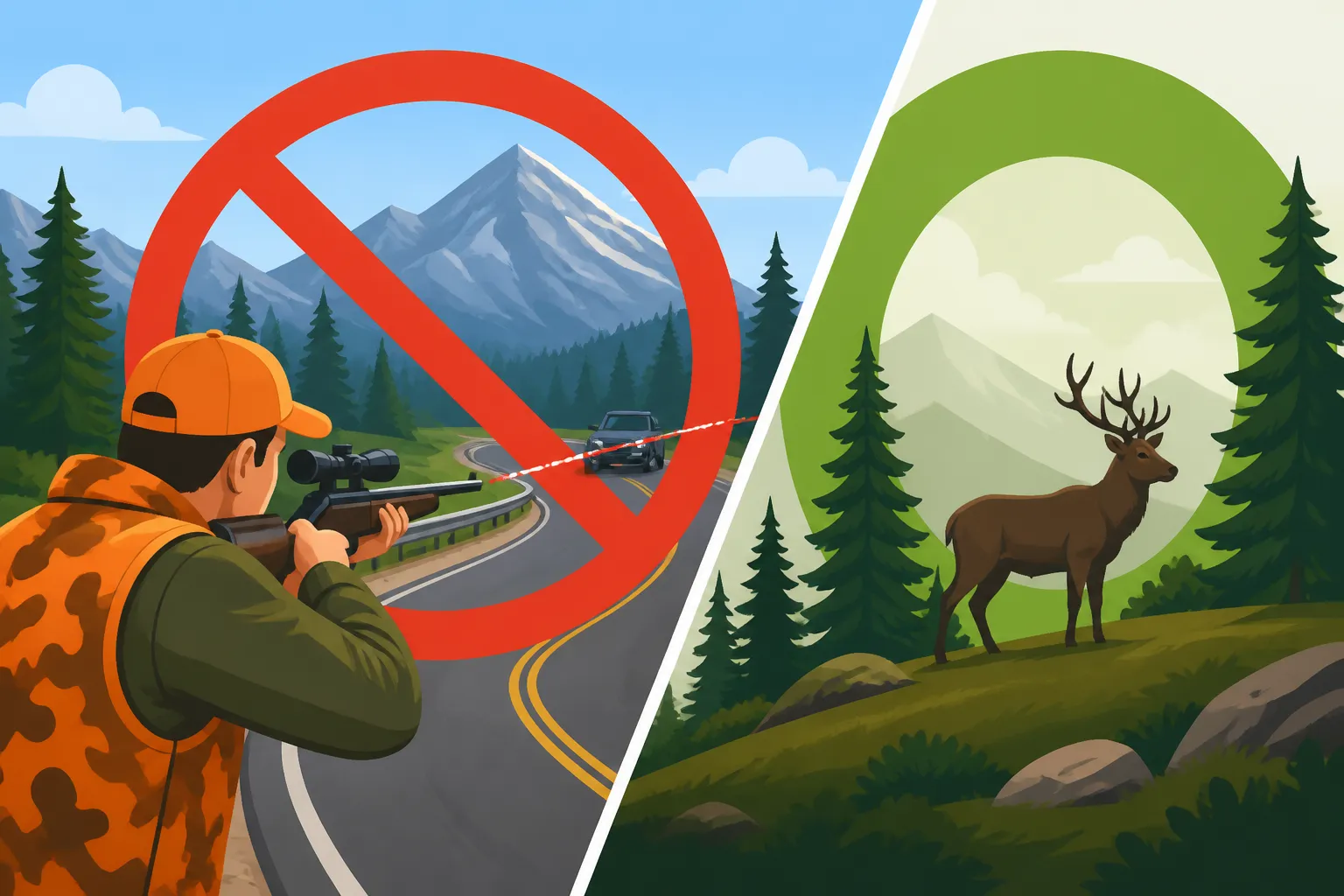
When we talk about public roads and highways, we're generally referring to paved or well-maintained gravel roads that are part of the provincial transportation network, often identified by route numbers. On these types of roads, the rules are very strict. You are absolutely prohibited from discharging a firearm or bow from or across any portion of a public road or highway that is constructed or regularly used for the passage of vehicles. This means no shooting from the shoulder, across the road at an animal on the other side, or even into the ditch right next to the paved surface if that ditch is part of the highway right-of-way.
The intent here is obvious: safety. Public roads are used by a wide array of people – other drivers, cyclists, pedestrians, and even just those pulling over to enjoy the scenery. A stray bullet or arrow can travel a considerable distance, and the risk of injury or property damage is simply too high. This also means that if you spot game from a highway, you must safely pull over, unload your firearm, get out of your vehicle, and move a sufficient distance away from the road before even considering a shot. Always keep public perception in mind; seeing a hunter with a firearm near a busy road can cause alarm, even if you're technically within legal limits further back from the actual road.
Forest Service Roads and Deactivated Roads
Forest Service Roads (FSRs) are the lifeblood of many hunting adventures in British Columbia, providing access to vast tracts of Crown land. However, they are also a major source of confusion regarding shooting rules. For the most part, FSRs are treated similarly to other public roads under the Wildlife Act. This means you cannot discharge a firearm or bow from or across an active FSR. Even if it's a remote, rough gravel road and you haven't seen another vehicle all day, the regulation still applies. These roads are still considered pathways for motor vehicles, and you never know when another hunter, logger, or recreational user might appear. For a comprehensive look at navigating these, consider reading Hunting British Columbia's Logging Road Network.
Deactivated roads, on the other hand, can be a grey area. A deactivated road is typically one that has been deliberately closed or rendered impassable to conventional vehicle traffic, often by large ditches, berms, or the removal of bridges. While the intent is to prevent vehicle access, the Wildlife Act still considers the "constructed portion" of a highway or road. If a deactivated road still clearly has a constructed bed, even if overgrown, it might still fall under the "no shooting across" rule. However, once you are truly off the deactivated roadbed itself and a sufficient distance away, you are generally in the clear. Many hunters use Driving a Deactivated Logging Road to access further into the backcountry, but the rules once there still apply. It's crucial to exercise extreme caution and common sense here. If there's any doubt, err on the side of safety and move further into the timber.
Private Land Access and Roads
British Columbia also has a significant amount of private land, including large tracts owned by forestry companies or private ranches. Roads on private land introduce another layer of complexity. Even if a road is privately owned, if it's used by the public or has an implied invitation for public access, the general "no shooting from or across a road" rule might still apply. However, the primary concern on private land is trespass. You absolutely need permission from the landowner to hunt on private property, and this includes any roads or trails that cross their land. Without explicit permission, even walking on their private road can be considered trespass.
Companies like Mosaic Forest Management on Vancouver Island, for example, manage vast tracts of private timber land with extensive road networks. They often have specific rules about access, permits, and, of course, no hunting or shooting from their active logging roads. It's vital to research land ownership using resources like iMapBC or private land apps like GoHunt before your hunt. This allows you to plan your access points and ensure you have the necessary permissions if you intend to hunt areas accessible only via private roads. Understanding British Columbia Trespass and Private Land Law is fundamental here, as violating these rules can lead to significant penalties.
Practical Considerations and Ethical Hunting Practices
Beyond the black-and-white regulations, there's a world of practical considerations and ethical choices that hunters make, especially when operating near roads. These choices not only reflect on individual hunters but shape public perception of our entire hunting community.
Enhancing Safety and Public Perception
Safety is, and always should be, the paramount concern for any hunter. When you're near a road, whether it's a bustling highway or a quiet FSR, the potential for an unforeseen encounter with non-hunters increases dramatically. Even if you're legally a certain distance from the road, a ricochet or an errant shot can have devastating consequences. Always be aware of your backdrop, know what's beyond your target, and never take a shot if there's any doubt about safety. This means being extra vigilant in areas where visibility might be limited by dense brush, rolling terrain, or tight corners on a road.
Public perception is another massive piece of the puzzle. Non-hunters often have little understanding of hunting regulations or the nuances of safe firearm handling. Seeing a hunter close to a road, even if technically legal, can be alarming to them. This can lead to negative media, increased anti-hunting sentiment, and ultimately, more restrictive regulations. To maintain a positive image, always act with discretion and respect. If you need to retrieve an animal near a road, do so as quickly and discreetly as possible. Field dress away from clear view if possible, and ensure your firearm is unloaded and cased when transporting it in or out of your vehicle. Showing respect for the public's comfort goes a long way in safeguarding our hunting heritage. It's also wise to review British Columbia Blaze Orange and Safety Rules to ensure you're as visible as possible in the field.
Scouting and Planning to Avoid Road Conflicts
Effective pre-hunt scouting and planning are your best tools for avoiding conflicts with road hunting regulations. Before you even leave home, spend time with detailed maps, both paper and digital. Resources like government-issued Management Unit (MU) maps, combined with digital mapping tools like Gaia GPS or the mapping features within platforms like GoHunt, are invaluable. These tools allow you to identify all roads, active and deactivated, within your chosen hunting area. By doing this, you can plan your routes and potential hunting zones to ensure you are well away from any "no shooting" areas. Scouting a British Columbia Management Unit Online covers many of these methods.
When planning, identify access points that allow you to quickly get off any main FSRs and into the timber or further backcountry on foot. Look for clearings, draws, or ridges that run parallel to roads, allowing you to move into them while maintaining the necessary distance. Consider the terrain – a deep gully might provide ample safety distance from a road much quicker than flat, open terrain. Having a clear understanding of the road network allows you to focus on the actual hunt, rather than constantly worrying if you're too close to a road. Even using a British Columbia MU map can help you visualize the road network in relation to potential hunting grounds.
What to Do When Game is Near a Road
It's a common scenario: you're driving an FSR, and there it is – a beautiful buck or a bull moose, standing just off the shoulder of the road. Your heart starts pounding, but this is precisely the moment when calm, deliberate action is required. Your first step, as always, is to safely pull over and stop your vehicle. Ensure your firearm is unloaded and secured before you even consider getting out. You absolutely cannot shoot from the vehicle.
Once out of the vehicle, you must move a legal distance away from the road before you can even think about taking a shot. This typically means getting off the constructed portion of the road and moving deep enough into the bush that you are well beyond any no-shooting zones. The animal may move, and that's part of the challenge. Remember the concept of fair chase; the animal deserves a chance. If it disappears into the timber, you may need to embark on a stalk, always being mindful of your safety, your background, and any other regulations. If it's a very busy road, or the animal is too close to dwellings or other infrastructure, you simply have to let it walk. Ethical hunting means making the right choice, even when it's tough.
Consequences of Non-Compliance and Reporting Violations
Ignoring or misunderstanding British Columbia's hunting regulations, especially those related to shooting near roads, can lead to serious legal consequences. It's not just about fines; it can impact your ability to hunt for years to come. Moreover, it's every ethical hunter's responsibility to help uphold the law and report those who deliberately flout it.
Penalties for Road Hunting Infractions
The penalties for violating British Columbia's Wildlife Act, particularly regarding road hunting, can be substantial. Discharging a firearm from or across a public road or FSR, or from a vehicle, can result in significant fines. These fines can range from hundreds to thousands of dollars, depending on the severity and nature of the offense. Beyond monetary penalties, an offender may also face imprisonment, forfeiture of seized hunting equipment (including firearms and vehicles), and, critically, a prohibition from hunting for a specified period. This hunting prohibition can last for several years, effectively ending your hunting season and potentially future ones.
Repeat offenses or acts deemed particularly egregious, such as poaching or endangering public safety, carry even harsher penalties. The courts and conservation officers take these violations very seriously, as they undermine conservation efforts, public trust, and the safety of everyone in the backcountry. It's not worth the risk, financially or ethically. Ignorance of the law is rarely an acceptable defence. For a broader understanding of the legal repercussions, you can look at Penalties for a Hunting Violation.
Reporting Concerns: The RAPP Line
As responsible hunters, we all have a role to play in protecting wildlife and ensuring that hunting is conducted ethically and legally. If you witness someone violating hunting regulations, including illegal road hunting, it's important to report it. British Columbia operates the Report All Poachers and Polluters (RAPP) line, a confidential reporting service for all wildlife, fisheries, and environmental violations. You can contact the RAPP line toll-free at 1-877-952-RAPP (7277) or *RAPP (*7277) on Telus mobility networks.
When reporting, try to gather as much detail as possible without putting yourself at risk. Key information includes:
- Location: Specific details like road names, FSR numbers, GPS coordinates, or recognizable landmarks.
- Time and Date: When did you observe the incident?
- Description of Suspects: Number of people, clothing, physical descriptions.
- Vehicle Details: Make, model, colour, license plate number, distinguishing features.
- Nature of the Violation: What exactly did you see them do?
- Evidence: Photos or videos if safe to obtain, though your safety is paramount.
Reporting through the RAPP line helps conservation officers investigate and enforce the regulations, ensuring that irresponsible actions don't tarnish the reputation of the entire hunting community. By actively participating in this system, you contribute to the sustainable future of British Columbia hunting. You can find more details about this critical resource at The Report All Poachers and Polluters Line.
Here's a quick overview of key distance regulations:
| Activity / Restriction | Minimum Distance Required | Notes |
|---|---|---|
| Discharging Firearm/Bow FROM a Motor Vehicle | Not Permitted (0 meters) | Absolutely no shooting from inside or on top of any motorized vehicle, aircraft, or boat (even if motor is off). |
| Discharging Firearm/Bow ACROSS a Road | Not Permitted (0 meters) | Cannot shoot across any constructed portion of a public road or Forest Service Road. |
| Shooting near Dwellings/Occupied Buildings | 150 meters (approx. 164 yards) | Cannot discharge a firearm or bow within 150m of any building or structure occupied by people, or any school, playground, or place of public gathering, without explicit permission from the owner/occupant. |
| Using a Vehicle to Pursue/Harass Game | Not Permitted | Vehicles cannot be used to chase, harass, or intentionally disturb wildlife for the purpose of hunting or to position for a shot. |
| Hunting on Private Land (roads included) | Requires Landowner Permission | While not a distance rule, remember to always obtain explicit permission from the landowner to access or hunt on private property, including any roads on that property. Violation is trespass. |
Note: This table provides a summary and is not exhaustive. Always refer to the current British Columbia Hunting and Trapping Regulations Synopsis for the most up-to-date and complete legal information.
Disclaimer
The information provided in this article is for general guidance and informational purposes only, and does not constitute legal advice. Hunting regulations in British Columbia can be complex and are subject to change. It is the individual hunter's responsibility to consult the most current British Columbia Hunting and Trapping Regulations Synopsis published by the provincial government, as well as any relevant federal regulations, before engaging in any hunting activities. Always ensure you are fully aware of and comply with all applicable laws and regulations.