Hunting a Recent Cutblock in Its Third Year
It can feel like a maze out there, trying to figure out where the game animals are making their home in British Columbia's constantly changing forest landscapes. Logging operations create new opportunities and challenges for hunters every year, and knowing how deer, moose, and bear adapt to these altered environments is key to success. This guide will walk you through the nuances of hunting a recent cutblock in its third year, helping you understand why these areas are often incredibly productive, how to approach them, and what to expect.
Understanding the Lifecycle of a Cutblock
When an area is logged, it undergoes a dramatic transformation. For a hunter, understanding this ecological succession is crucial, as it dictates what wildlife will use the area and when. A cutblock isn't just a cleared space; it's a dynamic habitat that changes significantly over time.
The Initial Impact and Regeneration
Immediately after logging, a cutblock can look like a war zone. Stumps, slash piles, and disturbed soil dominate the landscape. For the first year or two, many larger game animals tend to avoid these freshly cut areas. The lack of cover, the heavy scent of machinery, and the sheer disruption can make them feel exposed and vulnerable. You might find tracks from animals passing through, especially along the undisturbed edges, but they're rarely bedding or feeding extensively right in the middle. The ground is often too disturbed, and the preferred forage hasn't had a chance to really get going. However, this period is critical for the future productivity of the block. The open canopy allows sunlight to hit the forest floor, triggering a rapid growth of early successional plants that were previously suppressed by shade.
The "Third Year Sweet Spot"
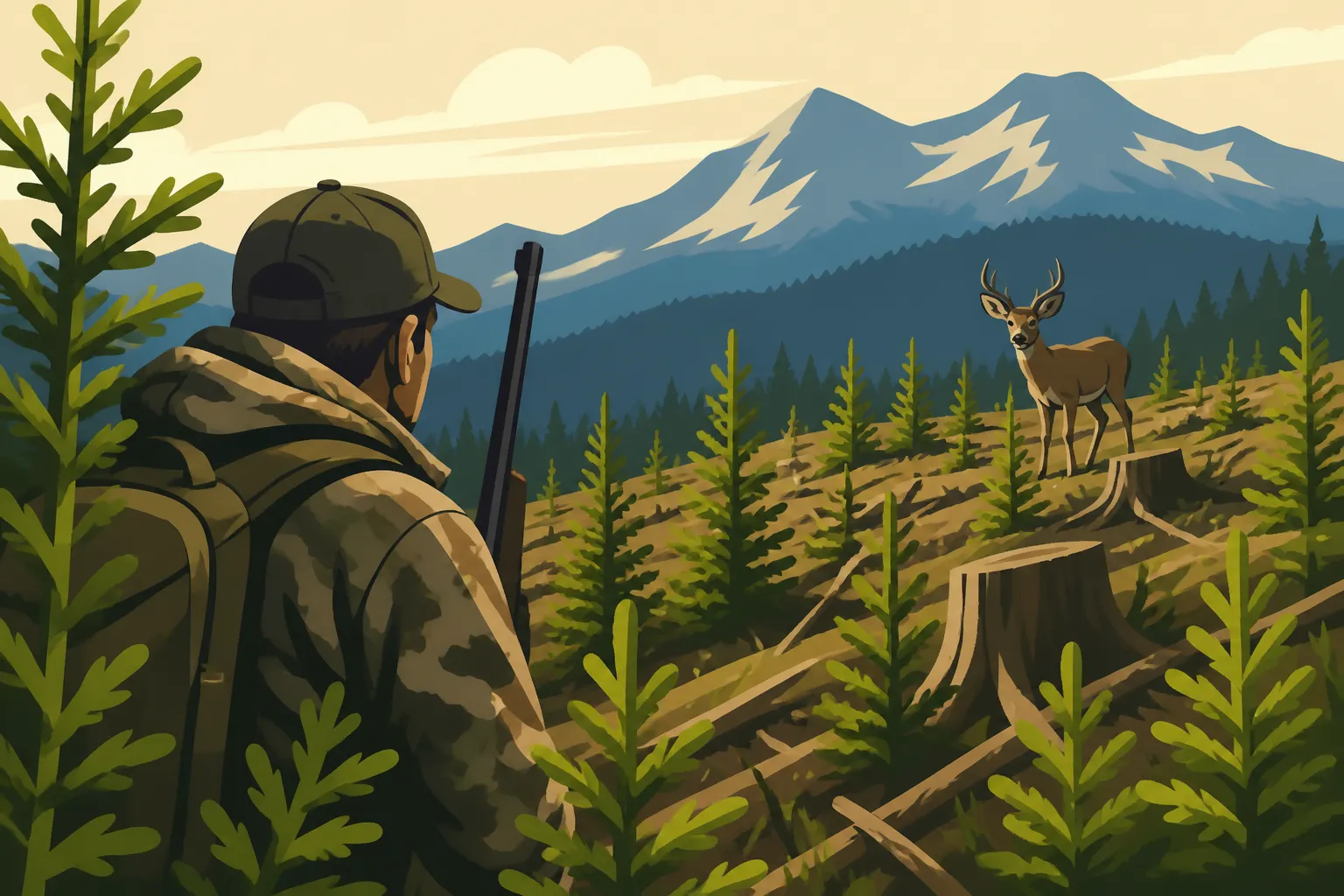
This is where the magic happens for hunters. By the third year, a cutblock has usually shed its raw, freshly disturbed appearance and transformed into a lush, vibrant buffet for many game species. The initial burst of pioneering plants like fireweed, willow, and various grasses has matured, offering a high volume of nutritious browse. Young deciduous trees like aspen and birch will also be rapidly sprouting. This vegetation provides both food and increasingly better cover for deer and elk, making it a prime location.
Think of it: the woody debris and slash piles from the initial logging, while a pain to walk through, start to break down and, crucially, offer excellent bedding and escape cover for deer, especially with the growing browse interspersed throughout. It’s a perfect storm of food and security. For species like black bears, these cutblocks, particularly those with berry-producing shrubs taking hold, become feeding grounds. You'll also notice small conifers, planted or naturally regenerating, starting to grow, but they're still low enough to allow sunlight to reach the browse plants. This balance of abundant forage and developing cover makes the third year a true sweet spot for hunters willing to put in the work.
Scouting and Strategy for Third-Year Cutblocks
Finding and effectively hunting these productive third-year cutblocks requires specific scouting techniques and adaptable hunting strategies. You can't just blindly walk in and expect success; preparation is key.
Identifying Productive Third-Year Cutblocks
The first step is often done from home, long before you even set foot in the woods. Modern mapping tools are incredibly powerful for this. Services like GoHunt, or even Google Earth combined with British Columbia government mapping resources, allow you to view satellite imagery and overlay logging history. Look for areas that show recent clearcuts. It takes a bit of practice to visually estimate the age of a cutblock from satellite imagery – look for areas that have lost their deep green canopy but haven't yet turned into dense, regenerating saplings. The third year will often show a distinct, lighter green "fuzz" or texture where new growth is really taking off.
Once you’ve identified potential areas on a map, the real work begins. Head out for some pre-season scouting. When you're physically in the field, confirm the age by looking at the stumps (they'll be weathered but still distinct), the size of the regenerating plants, and the presence of any planted seedlings. You're looking for browse that's waist-high or higher, but not so dense that it's impenetrable. The edges where the cutblock meets older timber are particularly important. These transition zones often act as travel corridors and staging areas for animals moving between feed and security. Pay attention to areas with standing timber left within the block or small fingers of untouched forest extending into it; these offer prime bedding spots within the feeding area. This initial reconnaissance is critical, and a good resource for understanding how to start this process can be found in Scouting a British Columbia Management Unit Online.
Reading Sign and Animal Movement
Once you've found a promising third-year cutblock, it’s time to become a detective. Animals leave abundant clues if you know how to read them. Fresh tracks in soft dirt or mud, especially near water sources or along old skid trails, are obvious indicators of recent activity. However, don't just look for tracks; analyze their direction and purpose. Are they feeding tracks, meandering through browse, or travel tracks, heading from one patch of cover to another?
Scat is another vital piece of the puzzle. The freshness and abundance of droppings tell you not only what species is present but also how recently they've been there and how many. Look at the type of browse that's been nipped or rubbed. Are the tips of willow branches browsed? Are there rubs on small conifers from bucks? These signs indicate preferred feeding areas. Additionally, look for distinct trails. Animals, especially deer and elk, will create clear paths through dense vegetation as they move between bedding and feeding areas. These trails often run parallel to the cutblock edges, or connect pockets of cover within the block itself. If the ground is wet, you'll be particularly successful at Reading Blacktail Sign in Wet Ground, which can be applied to other species as well.
Hunting Approaches: Still-Hunting versus Spot-and-Stalk
Hunting third-year cutblocks often involves a blend of tactics. The dense cover and varied terrain mean you need to be adaptable.
Still-Hunting: This is a fantastic method for these environments. The idea is to move incredibly slowly, pausing frequently (often for minutes at a time) to scan the cover. You're not looking for an entire animal, but rather a horizontal line, an ear, an antler tip, or a patch of hide that doesn't quite blend in. Focus on walking into the wind, or crosswind, to prevent your scent from spooking game. Navigate around major slash piles where possible, but don't be afraid to creep through slightly denser areas where animals might be bedded. The key is patience. Take one step, pause, scan, listen, then take another step. This method is particularly effective when Still-Hunting Second Growth for Blacktail, a technique that translates well to many cutblock scenarios.
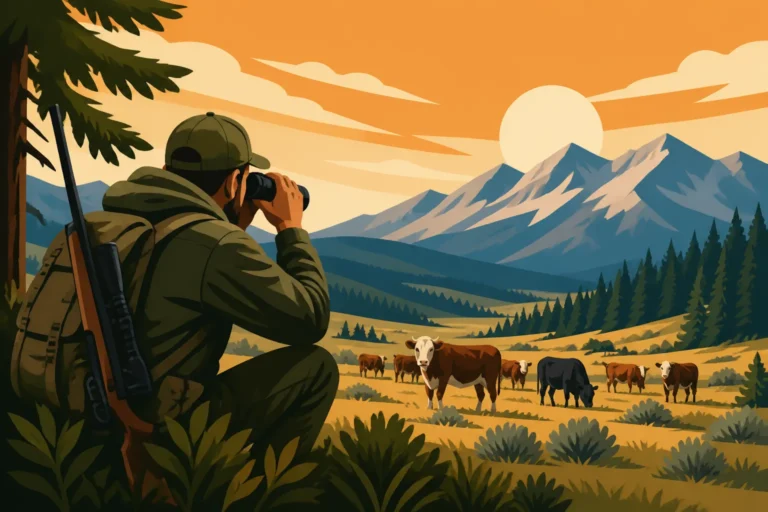
Spot-and-Stalk: While cutblocks are often dense, there are usually elevated points or clearings that offer opportunities for glassing. If you can find a vantage point overlooking a large portion of the cutblock, perhaps an adjacent ridge or even a high point within the block itself, you can use your optics to systematically pick apart the cover. Look for animals feeding in the more open patches, or bedded down using slash for cover. This is where quality binoculars or a spotting scope truly shine. Once you spot an animal, the stalk begins. This is often the trickiest part in a cutblock, as the terrain can be noisy and the cover tricky. Use terrain features and pockets of thicker regeneration to conceal your approach. This method takes practice, similar to Glassing an Interior Hillside for Mule Deer but with the added challenge of navigating tougher ground.
Often, a combination of both is best. Start your morning by glassing from a vantage point, then move into still-hunting the most promising sections of the block, always keeping an eye out for an opportunity to transition back to a spot-and-stalk if an animal is sighted.
Key Considerations and Challenges
Hunting third-year cutblocks isn't without its difficulties. The very characteristics that make them attractive to game also present significant challenges to the hunter. Being aware of these can help you prepare and increase your chances of success.
Navigating Difficult Terrain and Visibility
The dense regeneration, combined with the leftover logging debris, can make moving quietly and efficiently incredibly tough. You'll often be pushing through thorny bushes, climbing over large logs, and trying to step around hidden holes and tripping hazards. This makes for slow going, which can be both physically draining and mentally frustrating. Your boots will get a serious workout, so ensure they are waterproof and offer excellent ankle support. Think about bringing gaiters to keep debris out of your boots and protect your lower legs from scrapes.
Visibility is another major hurdle. While the browse is attractive, it also creates a broken landscape where a deer or bear can disappear in a few steps. Your shooting lanes will often be limited to very short distances, sometimes only 30-50 yards. This means you need to be constantly aware of your surroundings, be ready to shoot quickly, and have a clear understanding of your backstop and what lies beyond your target. Practice shooting in awkward positions and from kneeling or standing, as you might not always have a prone opportunity. When moving through areas like this, it’s a good idea to consider techniques for Stalking a Bedded Buck in Open Timber, adapting them to the denser cutblock environment.
Dealing with Changing Conditions and Pressure
Game animals, especially deer and elk, are incredibly sensitive to changes in their environment. Weather, in particular, can greatly influence their behaviour in a cutblock. A sudden rainstorm might push them deeper into the thickest cover, making them harder to find. Conversely, a clear, sunny day might see them out feeding more openly in the early morning or late evening. Always check the forecast and dress in layers. For more specific weather considerations, particularly in the coastal areas, check out Hunting British Columbia's Coastal Rain.
Hunter pressure is another significant factor. Popular cutblocks, especially those easily accessible from British Columbia's Logging Road Network or those you can find by Finding Open Forest Roads in British Columbia, can see a lot of foot traffic. If other hunters are constantly moving through, animals will become wary and quickly seek out thicker, undisturbed pockets or even move completely out of the cutblock during daylight hours. To combat this, consider hunting during weekdays, venturing further from main access points, or focusing on the very early morning and late evening when other hunters might be heading in or out. Sometimes, getting beyond a gate, as detailed in Hunting a Deactivated Road Beyond the Gate, can lead to undisturbed pockets of these prime cutblocks.
Ethical Considerations and Safety
Hunting any area requires a strong commitment to safety and ethical practices, and cutblocks are no exception. Given the dense cover and limited visibility, wearing blaze orange or blaze pink is not just a good idea, it's often legally required and crucial for hunter safety in British Columbia. This ensures you are highly visible to other hunters, reducing the risk of accidents. Always identify your target positively and be absolutely sure of your shot placement and what lies beyond it. The broken terrain can make it difficult to retrieve game, so be prepared with a good packing plan and know how to field dress efficiently. If you're successful in bringing down a deer, remember the importance of Meat Care in British Columbia's Warm Early Seasons, especially if hunting during a mild autumn.
Furthermore, British Columbia is bear country, and cutblocks, with their abundant food sources, are prime habitat for both black bears and grizzlies. Always carry bear spray, know how to use it, and be vocal while moving through thick areas to avoid surprise encounters. Read up on Bear Safety While Hunting in British Columbia before heading out. Be mindful of property lines and private land; always know your boundaries. Respect the land, pack out everything you pack in, and leave no trace.
| Cutblock Stage | Typical Duration | Vegetation Characteristics | Hunting Potential | Key Challenges for Hunter |
|---|---|---|---|---|
| Year 1-2 (Fresh) | 1-2 years | Stumps, slash, disturbed soil, very early pioneering plants. | Low | No cover, no food, animal avoidance, difficult travel. |
| Year 3-5 (Sweet Spot) | 2-3 years | Waist-high browse (willow, fireweed, aspen), regenerating conifers, berry bushes. | High (Deer, Elk, Bear) | Dense browse, limited visibility, noisy travel, potential for multiple bedding/feeding areas. |
| Year 6-10 (Dense Regeneration) | 4-5 years | Dense saplings (conifers and deciduous), thickets, less ground browse. | Moderate (Cover, bedding) | Impenetrable cover, very limited visibility, hard to move quietly. |
| Year 11+ (Maturing Forest) | 5+ years | Developing canopy, ground shaded out, less browse, more mature timber. | Lower (Travel, edges) | Less direct food, animals move to edges or clearings, better cover but less food. |
Disclaimer
Hunting in British Columbia carries inherent risks, including but not limited to adverse weather, dangerous terrain, and wildlife encounters. The information provided in this guide is for informational purposes only and should not be considered a substitute for professional guidance, thorough personal preparation, and adherence to all current hunting regulations. Always prioritize safety, respect wildlife, and obtain all necessary licenses and permits before embarking on any hunting activity.