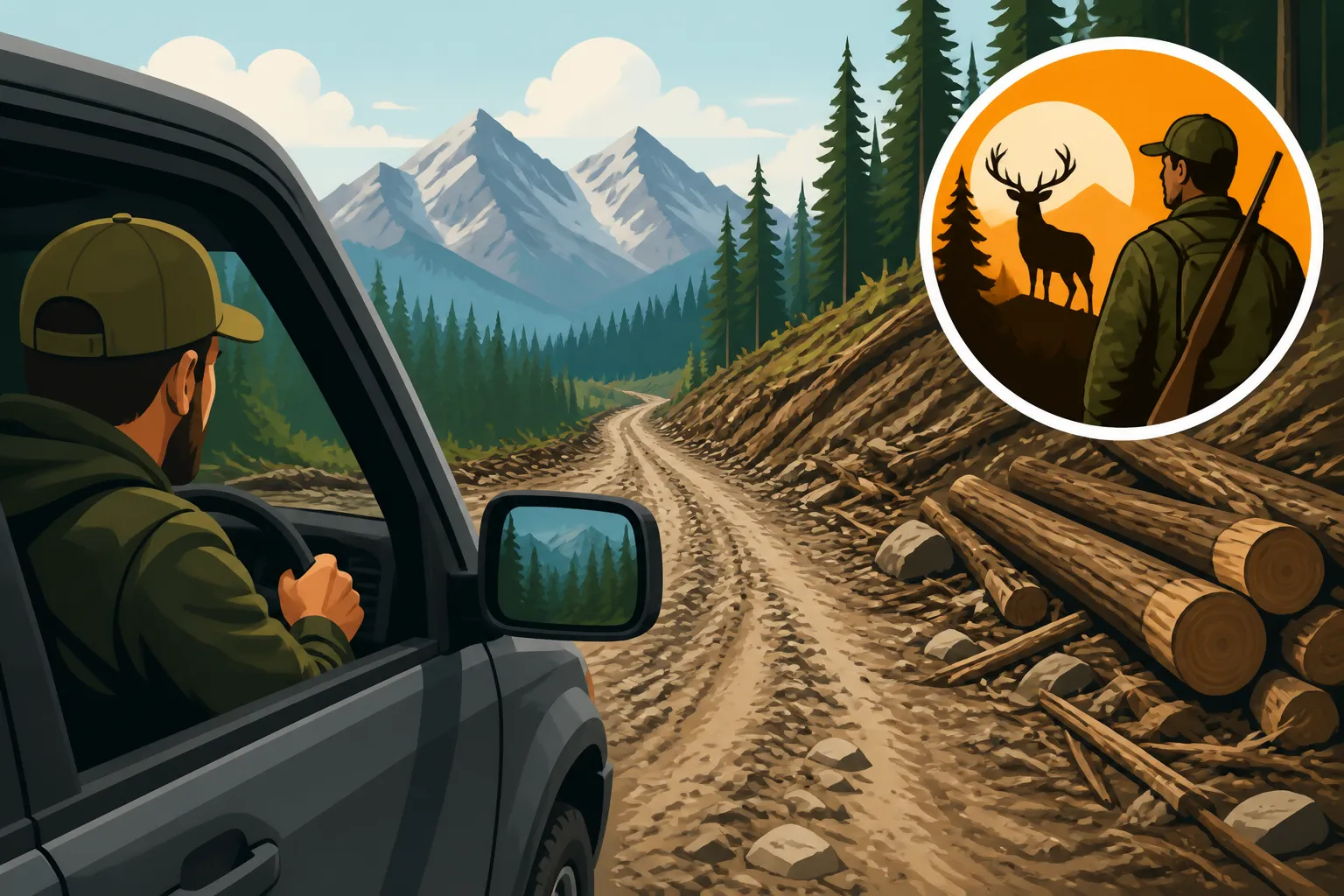
Driving a Deactivated Logging Road
Navigating the vast wilderness of British Columbia for hunting often means venturing far beyond the pavement, and sometimes, even beyond the well-maintained gravel of active forest service roads. Many hunters face the frustrating reality of finding promising areas only to discover the access road has been "deactivated," leaving them wondering if it's worth the risk or even possible to proceed. This guide will walk you through everything you need to know about successfully and safely driving deactivated logging roads, helping you unlock remote hunting grounds while minimizing potential headaches.
What Exactly is a Deactivated Logging Road?
When you’re looking at a map, whether it’s a digital overlay on an app or a crumpled paper FSR map, you’ll see lines representing roads. Some are solid, indicating active use, others might be dashed or faded, pointing to something different. A deactivated logging road falls into this latter category. Essentially, it’s a road that was once actively used by logging companies or other industrial operations but has since been closed down, often permanently, to regular vehicle traffic. This closure isn't just a suggestion; it's a deliberate physical alteration of the roadbed to prevent vehicular access.
The frustration hits hard when you've identified a promising management unit, perhaps through hours of scouting, only to find the main artery leading into it is now a series of trenches and overgrown brush. It feels like a lockout, especially if you're trying to reach an area with less hunting pressure. Understanding why these roads are deactivated and how they're changed is the first step in deciding whether to attempt passage or turn around.
Why Roads Get Deactivated
There are several compelling reasons why a perfectly good logging road might suddenly become impassable. Often, it boils down to environmental protection. When logging operations cease in an area, the intent is often to let nature reclaim the land and protect sensitive ecosystems. Deactivating roads prevents erosion, helps restore natural drainage patterns, and reduces disturbance to wildlife. Think of it as putting the land to bed after a period of intense activity.
Another major factor is safety and liability. An abandoned road isn't maintained, meaning culverts can wash out, bridges can collapse, and slopes can become unstable. The entities that once managed these roads don't want the responsibility of people getting hurt on them, so deactivation physically discourages entry. It also limits access to certain sensitive areas, like crucial winter ranges for deer and moose, or areas designated for wildlife management. This isn't always about keeping hunters out, but about managing overall human impact.
Common Deactivation Methods
Deactivation isn't a one-size-fits-all approach; it can range from relatively minor inconveniences to completely impassable obstacles. The most common methods you'll encounter are water bars. These are raised berms or trenches dug across the road to divert water off the road surface, preventing it from eroding the roadbed. They might seem small at first, but encountering a series of aggressive water bars can quickly chew up your undercarriage if you're not careful.
Other methods include the removal of culverts and bridges, creating substantial gaps in the road that can be dangerous or impossible to cross without specialized equipment. Large earth berms, sometimes coupled with deep trenches, are often constructed at the entrance to a deactivated road, creating an obvious "no entry" point. You might also find physical gates, either locked or chained, that explicitly block vehicle access. Sometimes, it’s simply a matter of the road becoming so overgrown with brush, fallen trees, and deep ruts that it’s naturally reclaimed by the forest. Recognizing these methods is crucial for assessing the challenge ahead.
The Risks and Rewards of Driving Deactivated Roads
The decision to tackle a deactivated logging road is never one to take lightly. It’s a classic high-risk, high-reward scenario that every British Columbia hunter eventually faces. On one hand, the allure of untouched hunting grounds, away from the crowds, can be incredibly tempting. On the other, the potential for vehicle damage, getting stuck, or even a serious accident is very real.
It's essential to weigh these factors honestly before you commit. Many a successful hunt has started down a barely-there track, but just as many have ended with a broken axle or a long, cold walk out. There's a fine line between adventurous and foolhardy, and understanding where that line lies for you and your equipment is paramount.
Access to Untouched Areas
The biggest reward, and frankly, the primary motivation for attempting to drive a deactivated road, is the promise of getting into areas that see significantly less hunting pressure. Most hunters will stick to active forest service roads or easily accessible trails. If you can push deeper, you might find pockets of undisturbed game, especially wary older bucks or bulls that have learned to avoid road hunters. These remote areas often provide prime habitat, as reduced human activity allows wildlife to follow their natural patterns without constant disruption.
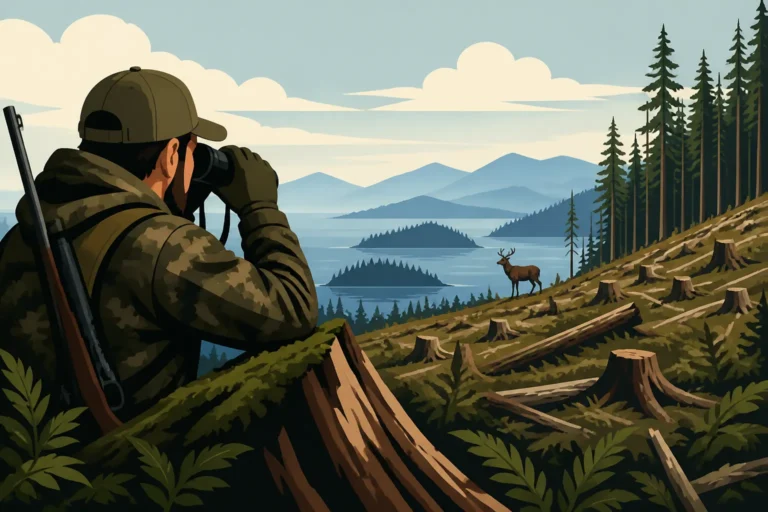
Imagine reaching an alpine basin or a remote clearcut edge that’s usually a multi-day hike for most hunters. Being able to drive a significant portion of that distance can mean more time scouting, more time hunting, and a much less arduous pack-out if you’re successful. It can literally put you in a position to encounter the kind of animals most people only dream of. For those willing to invest in the right gear and knowledge, these roads are a gateway to truly wild British Columbia hunting experiences.
Vehicle Damage and Safety Concerns
Now, let's talk about the cold, hard reality: driving deactivated roads is incredibly hard on your vehicle. Water bars can scrape, bend, or rip off undercarriage components like exhaust pipes, fuel lines, and diff covers. Deep ruts can lead to high-centering, leaving your tires spinning uselessly. Overgrown brush can scratch your paint, shatter mirrors, or even crack windshields. It's not uncommon for tires to be punctured by sharp rocks or old logging debris. A broken tie rod, a seized differential, or a ripped CV boot can turn a dream hunt into a nightmarish recovery operation that could cost thousands.
Beyond mechanical issues, safety is a huge concern. You're often alone, far from cell service, on roads that are literally designed to be difficult. Rollovers are a risk on steep, rutted sections. Getting stuck means you might have to hike out for help, potentially exposing you to weather extremes or wildlife encounters, which is why having robust emergency planning in British Columbia's backcountry is vital. Think about the terrain – these roads frequently traverse steep, uneven ground, and washouts can appear without warning. A small mistake can have serious consequences.
Legal and Ethical Considerations
It's crucial to understand the legal and ethical boundaries when dealing with deactivated roads. Just because you can physically get past an obstacle doesn't always mean you should. Locked gates are a clear sign of restricted access. Trying to bypass them by driving around or cutting chains is illegal and can result in significant fines, loss of hunting privileges, and even criminal charges. Many deactivated roads pass through private forest lands, especially on Vancouver Island, where specific access permits are often required, even for walking. Always check local regulations and land ownership before venturing into questionable areas.
Ethically, respect the intent behind the deactivation. If a road is closed to protect sensitive wildlife habitat, forcing your way in undermines conservation efforts and reflects poorly on the hunting community. Leave no trace, pack out all your garbage, and minimize your impact on the environment. Understanding British Columbia's trespass and private land law is crucial for responsible hunting, ensuring you respect property boundaries and access rules. If you do use a road, try to leave it as you found it, or better.
Preparing Your Vehicle for Deactivated Roads
Attempting to drive a deactivated logging road without the right vehicle preparation is a recipe for disaster. This isn't your average gravel road cruise; it's an off-road expedition where every component of your truck or SUV will be tested. Investing time and money in proper setup can mean the difference between a successful trip and a stranded vehicle.
It’s all about redundancy, capability, and common sense. You wouldn't go into a major surgery without a skilled team and the right tools, and you shouldn't tackle these roads without the mechanical equivalent. Think proactively about every possible scenario, from losing traction to puncturing a tire.
Vehicle Type and Modifications
First and foremost, a high-clearance 4×4 vehicle is almost non-negotiable. Forget your sedan or even an AWD crossover – they simply don't have the ground clearance or robust drivetrain components to handle severe water bars, deep ruts, and rocky terrain. A full-size pickup truck or a rugged SUV like a Toyota 4Runner or Jeep Wrangler is a much better starting point.
Modifications are key. A lift kit (2-4 inches) will provide crucial ground clearance, protecting your differentials, transfer case, and fuel tank. Skid plates for your undercarriage are an absolute must; they act as armour against sharp rocks and impacts. Good all-terrain (AT) or mud-terrain (MT) tires are essential for grip on loose, muddy, or rocky surfaces. Consider a tire with a strong sidewall to resist punctures. While not always necessary, a front or rear locker can dramatically improve traction in challenging situations. Don’t forget a full-sized spare tire, and ensure it's in good condition, not a worn-out donut.
Essential Recovery Gear
Getting stuck is not a matter of if, but when you're venturing onto truly deactivated roads. Having the right recovery gear is just as important as your vehicle modifications. A winch, securely mounted to your vehicle, is probably the most valuable piece of equipment you can have. Make sure it's properly rated for your vehicle's weight and that you know how to use it safely. Along with a winch, you'll need tree savers, snatch blocks, and recovery straps.
Beyond winching, a high-lift jack can be invaluable for lifting a vehicle that's high-centered or has a flat tire in uneven terrain. A good quality shovel, axe, or chainsaw will help you clear debris or dig yourself out of mud. Traction boards (like MaxTrax or similar) can provide instant grip when tires are spinning. And perhaps most critically, robust communication devices are non-negotiable. Forget cell phones; invest in a satellite messenger or a satellite phone for emergency contact, as you'll often be far beyond where British Columbia cell coverage ends.
Pre-Trip Inspection
Before you even leave your driveway, perform a thorough pre-trip inspection. Check all fluid levels: oil, coolant, brake fluid, power steering fluid, and differential fluids. Inspect all tires, including your spare, for proper inflation and any signs of damage or excessive wear. Check your brakes, lights, and wipers. Look for any loose hoses, wires, or leaking components.
Pay close attention to your suspension components – shocks, springs, bushings – for any signs of wear or damage that could be exacerbated by rough roads. Ensure all recovery gear is present, functional, and easily accessible. Pack a comprehensive tool kit, including a tire repair kit and an air compressor. Think of it as preparing for a journey where you might be your own mechanic for a while. Taking the time here can save you immense trouble and potential danger later on.
Navigating and Driving Techniques on Deactivated Roads
Driving deactivated logging roads isn't like cruising the highway. It requires a different mindset, a slower pace, and a keen eye for obstacles. Your ability to read the terrain and adapt your driving will be the determining factor in whether you make it through successfully or end up stuck. This isn't about speed; it's about methodical, calculated progress.
Remember, the goal is to get in, get out, and bring your vehicle back in one piece. Patience and caution are your best friends when tackling these challenging routes. You might feel the urge to push through quickly, especially when the weather turns, but that's exactly when mistakes happen.
Reading the Terrain
The most crucial skill for driving deactivated roads is learning to "read" the terrain. This means constantly scanning the road ahead, not just a few feet in front of your bumper. Look for the path of least resistance. Observe how water bars are constructed: some will be gentle rolling bumps, others will be sharp-edged trenches that demand careful approach. Identify washouts where heavy rain has eroded sections of the road, potentially leaving deep channels or undermining the road surface.
Pay attention to vegetation. Overgrown sections often hide rocks, stumps, or deep ruts. Look for areas where other vehicles might have passed, noting their tire tracks. Sometimes, the "best" line might be counter-intuitive, requiring you to drive at an angle over an obstacle rather than straight on. Scout ahead on foot if visibility is poor or an obstacle looks particularly daunting. This is not the time to be lazy; getting out and walking a hundred yards can save you hours of recovery or thousands in repairs.
Safe Driving Practices
Slow and steady wins the race on deactivated roads. Keep your speed to a crawl, especially when approaching water bars, ruts, or rocky sections. Engage 4-wheel drive (4-low is often best) even on relatively flat sections, as it provides better control and engine braking. When going over water bars, approach them slowly and at an angle if possible, allowing one wheel at a time to traverse the obstacle. This helps prevent high-centering and reduces the impact on your suspension.
When descending steep, rutted sections, use your lowest gear and let your engine braking do most of the work, only lightly touching the brakes if absolutely necessary. Avoid sudden movements with the steering wheel or accelerator. Maintain a light, consistent throttle when climbing loose slopes to prevent wheel spin and maintain traction. Remember the advice for driving a deactivated logging road – it's about finesse, not brute force.
What to Do When You Encounter Obstacles
You will encounter obstacles that challenge you. When you do, don't panic. First, stop and assess. Can you safely drive over, around, or through it? Get out of your vehicle and walk the obstacle. Look for hidden rocks, soft spots, or potential hang-up points. If there's an easy bypass, take it, but ensure it's not damaging to the environment or creating new, unauthorized trails.
If you decide to proceed, plan your line carefully. Use a spotter if you have one – someone outside the vehicle who can guide you. If you're alone, you'll need to get in and out of your vehicle multiple times to check your progress. Don't be afraid to turn back. Sometimes, the smart move is to acknowledge that a particular section is beyond your vehicle's capability or your comfort level. There are often other ways to access hunting areas, even if they require a longer hike or a different approach, perhaps by hunting British Columbia's logging road network that are still active. It’s far better to come home empty-handed than to leave your vehicle broken in the backcountry.
Planning Your Route and Contingencies
Successful navigation of deactivated roads hinges heavily on meticulous planning. You can't just point your truck down a faded line on a map and hope for the best. Modern tools combined with old-school reconnaissance and robust contingency plans are essential for safety and efficiency.
Getting lost or running into an impassable obstacle without a backup plan is a sure way to ruin a hunt and potentially put yourself in harm's way. This is where the work you put in at home pays off immensely in the field.
Using Digital Tools
Digital mapping platforms are incredibly powerful for scouting and planning. Apps like GoHunt, Gaia GPS, or OnX Hunt are invaluable for identifying potential deactivated roads, understanding land ownership, and even getting a sense of the terrain through satellite imagery. Before you leave, spend hours poring over these maps. Look for roads that appear faded or overgrown in satellite view. Often, roads that show up as lines but don't seem to connect to active FSRs in a smooth manner are prime candidates for deactivation.
Use these tools to mark potential turn-around points, alternative routes, and emergency bail-out locations. Download offline maps to your phone or GPS device, as cell service will almost certainly disappear. While they are amazing, remember that satellite imagery can be outdated. What looked like a passable track from space might now be a full-blown forest. Tools like Scouting a British Columbia Management Unit Online are a great starting point, but always verify with other sources and on-the-ground recon.
Physical Maps and Reconnaissance
Despite the advancements in digital technology, don't underestimate the value of physical maps. A good old-fashioned paper map, such as a large-scale recreation map or even a topographic map, serves as an invaluable backup if your electronics fail. Mark your planned route, alternate routes, and key landmarks. These maps often provide more detail on elevation changes, water crossings, and other topographical features that can indicate road conditions.
Beyond maps, real-world reconnaissance is often the best planning tool. If you can, take a separate trip (without your hunting gear) to simply scout the access roads. Drive as far as you can, walk beyond gates or trenches, and assess the true condition of the road. This direct observation is irreplaceable. You'll get a real feel for the difficulty and make an informed decision. Sometimes, you'll discover that a road is completely impassable, saving you a much more problematic situation on your actual hunting trip. This pre-trip scouting aligns with the principles of Finding Open Forest Roads in British Columbia and will greatly enhance your chances of success.
Emergency Preparedness
Venturing onto deactivated roads puts you in remote territory, making emergency preparedness non-negotiable. Always inform someone reliable of your exact route, your expected return time, and what to do if you don't check in. Have a detailed plan for what you'll do if your vehicle breaks down, you get injured, or you become lost.
Your satellite communication device (satellite messenger or phone) is your lifeline. Test it before you leave. Pack extra food, water, warm clothing, a first-aid kit, and a shelter—enough to survive for several days if you're forced to hike out. A good survival kit should always be with you, not just in your vehicle. Understand the potential for severe weather changes in British Columbia's mountains and prepare for them. For more on this, check out our guide on Emergency Planning in British Columbia's Backcountry. Being prepared for the worst allows you to enjoy the best, and when you're far out on a deactivated road, self-reliance is your most valuable asset.
Ethical Considerations and Respectful Access
When pushing into the backcountry on deactivated roads, our actions as hunters carry significant weight. We are ambassadors for our sport, and how we treat the land, wildlife, and other users directly impacts public perception and future access. It's not just about legal compliance; it's about being a responsible, respectful, and ethical outdoorsperson.
The privilege of hunting in British Columbia's wild places is a tremendous one, and it comes with the responsibility to preserve that access and those resources for generations to come.
Leave No Trace Principles
The Leave No Trace principles are paramount when exploring deactivated roads. These roads often lead into more pristine, less-traveled areas, making it even more important to minimize your impact. This means packing out everything you pack in – absolutely no garbage, even "biodegradable" items like fruit peels, should be left behind. Stay on established trails or the roadbed itself; avoid creating new tracks or disturbing vegetation unnecessarily.
When camping or stopping, choose durable surfaces and disperse your impact. Don't build large, destructive campfires unless absolutely necessary for warmth or safety, and ensure any fire is completely out before leaving. Minimize noise and disturbance to wildlife. The goal is that someone following in your footsteps shouldn't even know you were there, beyond perhaps your tire tracks on the road.
Respecting Gates and Signs
This point cannot be stressed enough: respect all gates, chains, and "No Entry" signs. Deactivated roads are often explicitly closed for very good reasons, whether for environmental protection, private land access control, or public safety. Attempting to bypass a locked gate by driving around it, cutting chains, or removing barriers is not only illegal but also reflects poorly on all hunters. These actions can lead to permanent closures, impacting everyone's ability to access an area, even by foot.
If a sign indicates a road is closed to motorized vehicles, respect that. Sometimes, the road is perfectly accessible on foot, offering a fantastic opportunity for a backpack hunt. Understanding rules like Vehicle Rules on British Columbia Crown Land and Road Closures on British Columbia Forest Roads is crucial. Remember, access is a privilege, not a right, and abusing it jeopardizes everyone's future.
Dealing with Wildlife and Other Users
Deactivated roads, precisely because they are less traveled, are often used by wildlife as travel corridors. Be extra vigilant for animals, especially around bends or over crests. Drive slowly to avoid surprising or injuring wildlife. If you encounter animals, give them plenty of space and avoid disturbing them.
You might also encounter other outdoor enthusiasts – hikers, mountain bikers, naturalists, or even other hunters on foot or horseback. Be courteous and share the backcountry. Yield to those on foot or horseback, as startling them or their animals can be dangerous. A friendly wave and a slow pass go a long way in fostering good relationships between different user groups. Remember that many of these areas, even on deactivated roads, could lead to prime spots for Hunting an Old Growth Edge or other sensitive habitats. Maintaining a positive image for hunters benefits us all.
Table: Essential Gear for Deactivated Road Travel
| Category | Item | Description |
|---|---|---|
| Vehicle Recovery | Winch (properly rated) | Self-recovery from mud, snow, or difficult obstacles. |
| Winch accessories | Tree saver strap, snatch block, D-shackles, gloves. | |
| Recovery straps/kinetic rope | For pulling out a stuck vehicle, ensure appropriate rating. | |
| Hi-Lift Jack | Lifts vehicle high for tire changes or placing traction boards. | |
| Traction Boards (e.g., MaxTrax) | Provides traction in mud, sand, or snow when tires are spinning. | |
| Shovel, Axe/Chainsaw | Clearing debris, digging out stuck tires, removing fallen trees. | |
| Tire Management | Full-size spare tire | Essential for remote travel, ensure it's in good condition. |
| Tire repair kit | Plugs for punctures. | |
| Air compressor & gauge | Re-inflating tires after repairs or airing down for traction. | |
| Lug wrench & Jack (factory or aftermarket) | For changing tires. | |
| Navigation & Comms | Satellite Messenger/Phone (e.g., Garmin InReach, Spot) | Crucial for emergency communication beyond cell service. |
| GPS device with offline maps | Dedicated unit or phone with downloaded maps (e.g., GoHunt, Gaia GPS). | |
| Physical maps & compass | Backup navigation, good for understanding terrain. | |
| Two-way radios (FRS/GMRS/VHF) | For convoy travel or communicating within short range. | |
| Emergency & Survival | Comprehensive First-Aid Kit | Tailored for remote backcountry injuries. |
| Emergency food & water (3+ days) | Enough to sustain you if stranded. | |
| Extra warm clothing, rain gear | Layers appropriate for British Columbia's variable weather. | |
| Fire starting kit | Matches, lighter, fire steel, tinder. | |
| Headlamp/flashlight | With extra batteries. | |
| Shelter (tarp, emergency blanket) | For unexpected overnight stays. | |
| Tools & Maintenance | Basic tool kit | Wrenches, sockets, screwdrivers, zip ties, duct tape. |
| Fluids (oil, coolant, power steering) | Small amounts for top-offs or minor repairs. | |
| Jumper cables | For battery issues. | |
| Miscellaneous | Bear spray (easily accessible) | Mandatory for safety in British Columbia's bear country. |
| Water filter/purification tablets | For safe drinking water from natural sources. | |
| Bug spray | Especially important in spring and summer. | |
| Trash bags | To pack out all waste. |
Disclaimer
The information provided in this guide is for general informational purposes only and does not constitute professional advice. Driving deactivated logging roads involves inherent risks, including but not limited to vehicle damage, personal injury, and legal consequences. Always exercise extreme caution, assess your own skills and equipment, and adhere to all local, provincial, and federal laws and regulations. The author and publisher are not responsible for any incidents, damages, or injuries that may result from attempting to follow the advice or information presented herein. Your safety is your responsibility.