Glassing a Willow Flat for Moose
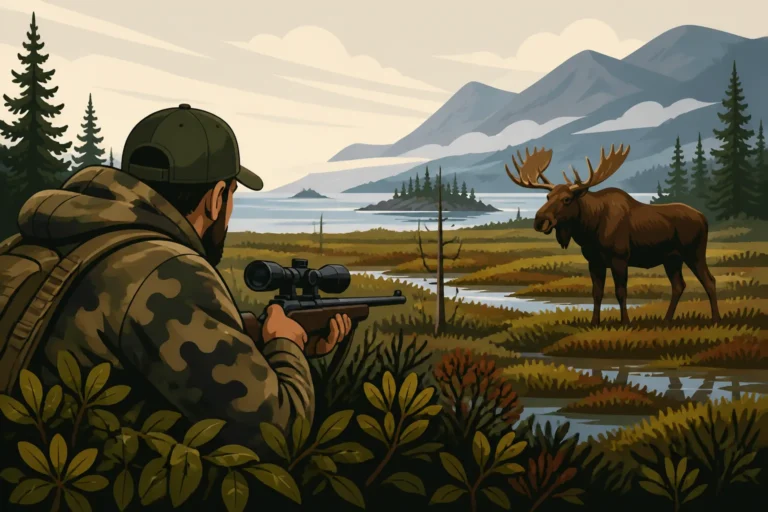
Hunting moose in British Columbia can often feel like searching for a needle in a haystack, especially when they disappear into the seemingly impenetrable tangle of dense timber and thick brush. It’s a common frustration, trying to locate these massive animals when they’re intent on staying hidden. This guide is all about tackling that challenge head-on, focusing on how to effectively glass expansive willow flats – often prime moose habitat – to significantly increase your chances of spotting one of these magnificent creatures.
Why Willow Flats Are Moose Magnets in British Columbia
If you spend any time studying moose in British Columbia, you'll quickly learn that certain habitats just scream "moose." Among the most prominent of these are the sprawling, often wet, willow flats that punctuate our vast landscapes. These areas aren't just pretty scenery; they are critical lifelines for moose, providing everything they need to thrive.
Understanding Moose Habitat Preferences in BC
Moose are creatures of habit, and their habits revolve around food, water, and cover. Willow flats deliver on all three counts in spades. The sheer abundance of tender, nutritious browse, primarily willows themselves, but also red osier dogwood, aspen, and other deciduous shrubs, makes these areas a five-star buffet for them. In spring, as new growth emerges, moose will pour into these flats to gorge themselves after a long winter. During the hot summer months, the dense canopy of the willows provides much-needed shade, and the proximity to water sources – be it a meandering creek, a sprawling lake, or a series of beaver ponds – means easy access to cool relief and aquatic vegetation, which moose absolutely love.
These flats are found across many of British Columbia's prime moose regions. You'll see them dominating river valleys and lowlands in the Cariboo, Omineca, and Peace River regions, areas renowned for their healthy moose populations. They're particularly prevalent where floodplains have been established over centuries, creating rich, moist soils perfect for willow growth. Even in areas impacted by What Wildfire Did to Moose Habitat, willow flats can bounce back quickly, becoming key foraging zones as the ecosystem recovers.
Reading the Landscape: Identifying Promising Willow Flats
Not all thickets are created equal, and knowing how to identify a truly promising willow flat from just a patch of dense brush is key. When you're scouting, either on foot or through maps, look for low-lying areas, often adjacent to or crisscrossed by water features. Rivers, creeks, and lakes are huge indicators. A series of Hunting Moose Around a Beaver Pond is almost always surrounded by prime willow browse. These low-lying areas collect moisture, which is essential for lush willow growth.
Beyond the immediate flat, consider the surrounding terrain. Moose, especially bulls, will often bed down in denser timbered slopes bordering these flats during the day, moving out into the willows to feed during cooler periods. A flat that backs onto a timbered ridge or a dense spruce stand offers that crucial escape cover and bedding potential, making it even more attractive to moose. Using tools like GoHunt's mapping features can help you pinpoint these topographical nuances, allowing you to identify potential willow flats and their adjacent cover zones before you even step foot in the field. Understanding Scouting a British Columbia Management Unit Online can give you a significant advantage in pre-planning.
The Art of Glassing: Techniques for Willow Flat Success
Glassing for moose in a willow flat isn't about a quick glance; it's a deliberate, methodical process that demands patience and the right tools. Unlike open country where a whole animal might be visible, here you're often looking for fragments, subtle clues that betray a moose's presence.
Essential Gear for Effective Moose Glassing
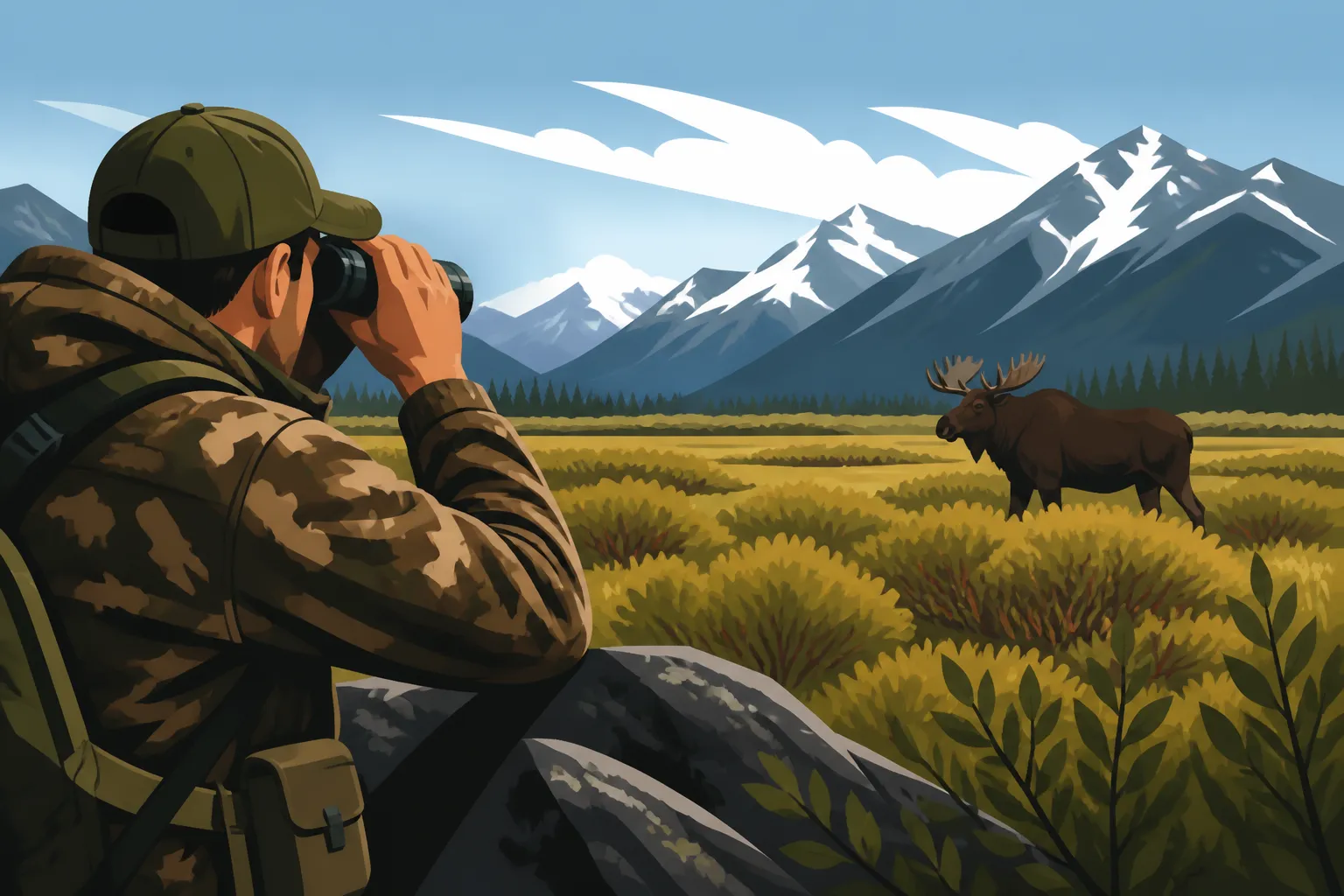
You wouldn't try to hammer a nail with a screwdriver, and you shouldn't try to effectively glass a vast willow flat without the right equipment. Your optics are your most important tools. A good pair of binoculars, something in the 10×42 or 12×50 range, is your primary workhorse. They offer a wide field of view and enough magnification to pick apart distant details. However, to truly dissect a dense willow flat, a high-quality spotting scope, ideally in the 20-60x magnification range, is absolutely indispensable. This is where you'll resolve those "moose-shaped" blobs into an actual animal.
Crucially, a tripod is non-negotiable for both your binoculars and your spotting scope. Trying to hand-hold high-magnification optics for extended periods will lead to eye strain, fatigue, and missed opportunities. A stable tripod allows you to lock onto a spot, methodically scan, and really study the details without the wobble. I’ve seen countless hunters, especially newer ones, struggle with this, and the difference a solid tripod makes is night and day. Don't skimp on this. While you're at it, a good rangefinder is always useful, not just for shooting, but for accurately judging distances across the flat as you scan. And for comfort during long glassing sessions, a small foam pad or stool can make a huge difference. Investing in good optics, perhaps through brands often discussed on GoHunt forums for their robust field performance, truly pays off.
Strategic Positioning and Scanning Methods
Finding the right vantage point is paramount. You need to be elevated enough to see into the flat, not just over the top of it. This might mean climbing a small ridge, perching on a cutbank overlooking a river, or utilizing an old clearcut edge that offers an unobstructed view. The higher you are, the better your perspective, allowing you to peer over more of the dense vegetation. However, be mindful of your silhouette against the skyline and try to use natural cover to break up your outline.
Once you’re set up, resist the urge to just randomly sweep your binoculars around. Instead, adopt a systematic scanning method. The "grid" method involves mentally dividing the flat into smaller, manageable squares and thoroughly scanning each square, left to right, then dropping down and scanning right to left, much like reading a book. The "pie slice" method works well for larger, more circular flats, where you scan from a central point outwards, moving in arcs. The key is slow, deliberate movement. Pause often. Let your eyes adjust and pick apart the details. Don't be afraid to zoom in with your spotting scope on anything that looks even slightly out of place. Focus your attention on the edges where the willows meet timber, water, or other terrain, as well as any variations in willow height or density, and areas of deep shadow where a moose might be bedded. The best times to glass are typically early morning and late evening when moose are most active, or after a rain shower when the air is clear and animals might be moving.
What to Look For: Identifying Moose in the Brush
This is where the real skill comes in. You're rarely going to spot a whole, standing moose in the middle of a dense willow flat. Instead, you're looking for fragments, anomalies, or subtle signs. Keep an eye out for:
- Dark Patches: A moose's dark hide can often look like a shadow or a burnt stump. Pay attention to any patch that seems too dark, too regular, or too out of place.
- Ear Flicks or Movement: Even a slight twitch of an ear, a swish of a tail, or a subtle shift in weight can give them away. These are often the first things you'll see.
- Gleam of Antlers: A bull's antlers, even if mostly obscured, might catch the sunlight at just the right angle, revealing a tell-tale reflection.
- Legs or Body Lines: Look for vertical lines (legs) or the distinct horizontal line of a moose's back, breaking up the otherwise chaotic verticality of the willows.
- Disturbed Vegetation: Freshly broken branches, trampled paths, or areas where willows seem "pushed aside" can indicate recent moose activity.
- Sign: While harder to spot from a distance, if you're close enough to glass an edge, look for tracks or fresh droppings.
Think of it like a "Where's Waldo?" puzzle. You're not looking for Waldo's whole body, but rather his red and white stripes, or the unique shape of his hat. A moose in a willow flat is much the same.
Overcoming Challenges and Maximizing Your Chances
Glassing for moose in these environments isn't without its challenges. There are environmental factors, the sheer scale of the landscape, and the unpredictable nature of wild animals that can test your patience. But with the right mindset and strategy, you can overcome these hurdles.
Dealing with Mirages, Glare, and Obstructions
One of the most frustrating aspects of glassing large open areas, especially willow flats, is dealing with mirages and glare. As the sun gets higher and the ground heats up, heat shimmer can distort your view, making it incredibly difficult to discern details at a distance. This is why glassing during the cooler parts of the day – early morning and late evening – is often most productive. If you must glass during midday, try to set up with the sun at your back or at least to your side to minimize direct glare into your optics. Using natural shade, such as the edge of a timber stand, can also help.
Obstructions are another constant battle. The dense, tall nature of willow flats means that a moose only needs to take a few steps to disappear entirely. This reinforces the need for systematic, slow scanning. Don't get discouraged if you lose sight of something; simply return to your last known point and expand your search pattern slowly from there. High-quality optics, often recommended by platforms like GoHunt, typically have excellent coatings that reduce glare and improve clarity, which can make a noticeable difference in these challenging conditions.
Patience and Persistence: The Moose Hunter's Virtues
It sounds cliché, but patience truly is a virtue when hunting moose in British Columbia, especially when glassing willow flats. Moose are large animals, but they are masters of disappearing. They often bed down for long stretches, becoming virtually invisible. You might scan an area for an hour, see nothing, take a break, and then re-scan the exact same spot an hour later to find a bull has materialized. Their ability to remain motionless is astounding.
This means you need to commit to long glassing sessions. Don't just scan an area once and move on. Revisit promising sections, especially at different times of the day. The changing light can reveal things you missed earlier. Think of it as a mental game; it's easy to get bored or discouraged, but the persistent hunter is often the one rewarded. Keep your focus, break up the monotony by focusing on smaller sections, and remind yourself that the moose you're looking for could be just a slight shift of your binoculars away. Knowing When British Columbia's Moose Rut Peaks can also give you insight into when they might be more active and visible.
Integrating Other Hunting Methods with Glassing
While glassing is highly effective, it's rarely a standalone tactic. It works best when integrated with other hunting methods. For instance, once you've identified a promising willow flat, you might want to consider Hunting British Columbia's Logging Road Network to get close to the edges of these areas before you start glassing. You might still-hunt the adjacent timber stands, moving slowly and quietly, occasionally stopping to glass the willow flat from a new angle.
During the rut, combining glassing with calling can be deadly. You might spot a bull bedded far off, and then use Calling Moose in British Columbia's Interior to coax him into a more accessible position or to at least get him to stand up and expose himself further. Or, you might glass an area, confirm moose are present, and then strategize an approach using a combination of still-hunting and short-range calling. If you're fortunate enough to harvest a moose in such a remote area, remember that Getting a Moose Out on a British Columbia River often involves significant effort and planning, which you can start considering even as you glass. Likewise, if you're navigating more remote zones, having a plan for Horseback Hunting British Columbia's Backcountry might be part of your overall strategy to access those deep, untouched willow flats.
| Aspect | Optimal Conditions | What to Look For | Common Challenges |
|---|---|---|---|
| Time of Day | Early morning, late evening | Movement, feeding activity, antler reflections | Glare, heat shimmer |
| Weather | Overcast, post-rain, clear but cool | Animals standing out against fresh, wet foliage | Fog, heavy rain, strong winds |
| Vantage Point | Elevated ridges, cutbanks, clearcut edges | Breaks in cover, feeding patterns, bedding areas | Limited visibility, dense canopy |
| Moose Activity | Feeding, walking, standing (often near water) | Head, ears, dark body mass, leg movements | Bedded animals, mirages |
| Optics | High-quality binoculars (10-12x), spotting scope | Fine details, subtle changes in shape and color | Eyestrain, blurry images (if poor optics) |
| Patience | Essential, especially when animals are still | Repeated scans, focusing on anomalies | Discouragement, rushing the scan |
Disclaimer
Hunting is an activity with inherent risks. This guide is for informational purposes only and does not substitute for experience, proper training, adherence to all local, provincial, and federal regulations, and common sense. Always prioritize safety, understand and respect wildlife, and obtain all necessary licenses and permits before heading into the field. Be aware of changing weather conditions, carry appropriate emergency gear, and inform someone of your hunting plans.