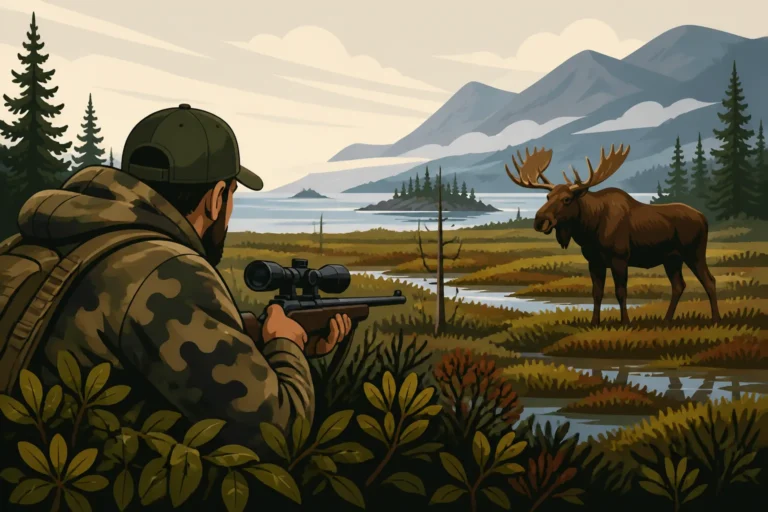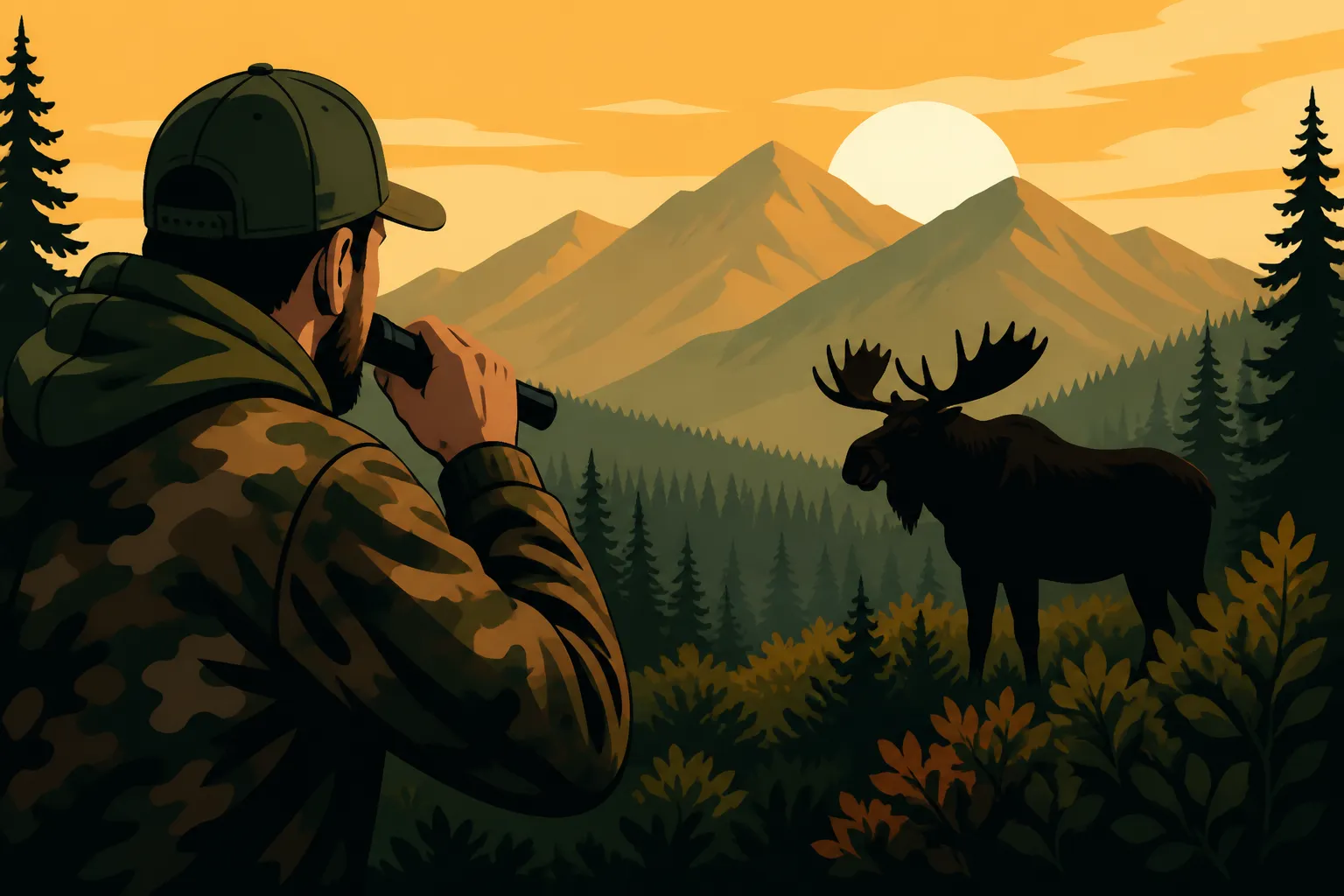
Calling Moose in British Columbia’s Interior
Hunting moose in British Columbia's vast and rugged interior presents a unique set of challenges. Their sheer size, combined with the dense forests and expansive wilderness, can make locating these majestic animals feel like finding a needle in a colossal haystack. Many hunters spend days, even weeks, covering ground without a single sighting, leading to understandable frustration. This comprehensive guide is designed to equip you with the knowledge and tactics for effectively calling moose in British Columbia's interior, helping you turn those silent hunts into successful encounters.
Understanding Moose Communication
Moose are incredibly vocal animals, especially during the breeding season, known as the rut. Their calls are a fundamental part of their social structure and critical to understanding their behavior in the wild. If you want to call them in effectively, you first need to understand why they make the sounds they do.
The Urgency of the Rut
The rut is the prime time for moose calling. Typically, this period peaks from late September through October in many parts of British Columbia's interior, though it can vary slightly by region and elevation. During this time, bull moose are actively seeking cows, and cows are eager to find a suitable mate. This intense drive makes both sexes highly responsive to calls that mimic their mating rituals. The air is thick with anticipation, and a well-placed call can cut through the stillness, triggering a powerful response from a nearby animal looking to either mate or assert dominance. This is also when you'll hear calls like those discussed in Calling Moose in the Rut.
For hunters, the rut is a window of opportunity where moose are less wary and more predictable in their reactions. Their hormones are running high, overriding some of their natural caution. You might be able to entice a bull to walk right into your setup, or bring a cow in close to investigate, which can sometimes bring a bull along with her. Understanding the timing of this biological imperative is your first step to success. Researching British Columbia Moose Season Dates will help you align your hunt with the peak rut activity.
The Different Sounds of Moose
Moose have a surprisingly diverse vocabulary, each call serving a specific purpose. Recognizing these sounds and knowing how to replicate them is crucial. The primary calls you'll want to master include cow calls, bull grunts, and the distinct sound of raking brush.
Cow calls are often long, drawn-out moans, sometimes with a whining or desperate quality. These calls are designed to attract a bull, signaling her readiness to breed. A bull hearing this sound will often come to investigate, sometimes even traveling a considerable distance. These can range from soft, questioning mews to more insistent, urgent cries.
Bull grunts are typically shorter, guttural sounds. They can indicate a bull's presence, challenge a rival, or express his interest in a cow. A series of deep grunts often signals a bull that is actively working a breeding area or is responding to a cow call. These sounds are about dominance and presence, and learning to mimic them can provoke an aggressive response from a mature bull. When considering What a British Columbia Bull Moose Weighs, it's clear these animals are formidable, and their grunts carry an authoritative weight.
Raking involves a bull rubbing his antlers against trees or brush, creating a scraping and breaking sound. This isn't strictly a vocalization, but it's a vital part of their communication, signaling a bull's size, strength, and frustration, especially when searching for a cow or challenging another bull. It's an auditory display of dominance, and a skilled caller can simulate this to great effect.
Essential Gear for Moose Calling
Effective moose calling isn't just about technique; it's also about having the right tools. The wilderness of British Columbia's interior demands reliable gear that can withstand the elements and help you communicate effectively with these massive animals.
Calling Devices
While some experienced callers can use only their natural voice, most hunters benefit from various calling devices. These tools amplify your calls and help you achieve the authentic tones that moose respond to.
Common tools include diaphragm calls, which fit in your mouth and allow for hands-free operation, producing realistic cow moans and bull grunts. External reed calls, often made of rubber or plastic, are also popular, providing a broader range of sounds and are easier for beginners to master. Additionally, birch bark or plastic megaphones are frequently used to project calls across long distances in dense timber, mimicking the natural resonance of a moose. The large, funnel-like shape of these devices allows for a powerful projection that can really carry through the timber of the Cariboo or Omineca regions. Choosing the right call often comes down to personal preference and practice. Try a few out before your hunt to see what feels most natural and produces the most authentic sounds for you.
Decoys and Scents
While not always necessary, decoys and scents can significantly enhance your calling efforts by adding a visual and olfactory dimension to your auditory presentation. They can be especially effective in drawing a cautious bull the final few yards.
Moose decoys range from full-size replicas to simple silhouettes of a cow or bull. A cow decoy, particularly during the rut, can be a powerful attractant, drawing in bulls that are hesitant to commit to a call alone. Placing a decoy strategically to appear as if it's feeding or just standing can make your setup much more convincing. Imagine a mature bull scanning a willow flat, hearing your cow call, and then seeing what looks like a lone cow. That visual confirmation can often seal the deal.
Scent lures, particularly those mimicking cow in estrus or bull urine, can further enhance the realism of your setup. These can be sprayed on bushes around your calling location or applied to a drag rag to create a scent trail. The combination of sight, sound, and smell creates a multi-sensory trap that can overcome even the most wary moose. Just remember to always be mindful of where the wind is carrying your scent, as you don't want it to alarm an approaching animal before it reaches your setup.
Field Optics and Listening Aids
In the vast, often heavily timbered landscapes of British Columbia, hearing and seeing your quarry effectively are paramount. You're not always going to get a direct line of sight.
High-quality binoculars (10×42 or 10×50 are excellent choices) and a spotting scope are indispensable. They allow you to survey distant clearings, cutblocks, or willow flats for movement, especially when trying to pinpoint where a vocal moose might be. In the interior, especially in areas like the Peace Region or the Kootenays, terrain can be open enough for long-distance glassing. Tools like those found on the GoHunt platform can help you identify these types of terrain features and potential moose hotspots before you even set foot in the field, allowing you to plan your calling spots more strategically.
Beyond visual aids, specialized listening devices or even just cupping your hands behind your ears can help you discern faint grunts or brush raking that might otherwise be missed. This is especially true when you're waiting for a bull to respond to your calls. Sometimes, their initial responses are subtle – a distant grunt, the snap of a twig, or the soft swish of antlers through brush. Being able to detect these early indicators allows you to adjust your calling intensity or strategy, increasing your chances of success. When Glassing a Willow Flat for Moose, for instance, keen hearing is just as important as keen eyesight.
Mastering Moose Calling Techniques
The art of moose calling is a delicate balance of timing, realism, and understanding the nuances of moose behavior. It's not just about making noise; it's about speaking their language.
Cow Calls: The Seductive Plea
The cow call is arguably the most effective and widely used moose call, particularly during the rut. It's designed to appeal to a bull's strongest instinct: the urge to breed. But there's more to it than just a simple moan.
A good cow call should sound long, drawn out, and sometimes have a slightly nasal or even desperate tone. Start softly, then gradually increase in volume, letting the call fade out naturally. Mimic a cow that's looking for a bull. In the early rut, softer, more questioning calls might work. As the rut intensifies, a more urgent, prolonged moan can really get a bull's attention. Think about the sound of a female searching for a partner and vary your calls accordingly. Don't be afraid to experiment with pitch and duration.
When you're calling, listen intently. A bull might not respond immediately with a grunt. He might rake some brush, or simply start walking towards you silently. Pay attention to every sound, even the subtle ones. If you get a response, don't overcall. Sometimes, a few well-placed calls are more effective than a constant barrage. Remember, you're trying to convince a large, wary animal that there's a real cow nearby. A great resource for understanding where moose might be found is Moose in British Columbia's Interior and North.
Bull Grunts: Challenging the Dominant
While cow calls are about attraction, bull grunts are about challenge and dominance. These calls are best used when you believe there's a bull in the area, or if you've already had a cow call response and want to escalate the interaction.
Bull grunts are typically shorter, deeper, and more guttural than cow calls. They can be single grunts, or a series of grunts, often ending with a challenging "urrp." The key is to convey a sense of a confident, dominant bull. If you hear a bull grunt in response to your cow call, mimicking his grunts can draw him in, especially if he perceives you as a rival. This is particularly effective in areas known for larger bulls, such as parts of the Omineca or Cariboo regions.
Be careful not to sound too weak or too aggressive right off the bat. Start with a few confident grunts and see how the bull responds. If he grunts back more intensely, you can match his intensity. If he goes silent, back off a bit. This is a conversation, a game of cat and mouse where you're trying to lure him into your territory. A powerful bull grunt, especially when combined with raking, can be an irresistible challenge for a territorial bull.
Raking: Simulating a Dominant Bull
Raking is a non-vocal calling technique that can be incredibly effective, especially when paired with vocal calls. It simulates a bull rubbing his antlers on trees or brush, a common behavior during the rut.
To rake, find a sturdy sapling or a patch of thick brush and use a sturdy stick, a shed antler, or even your call tube to scrape, snap, and break branches. Mimic the sounds a large bull would make as he thrashes vegetation, asserting his dominance and frustration. The objective is to create a dynamic, forceful sound that suggests a powerful bull is actively working the area. This technique is so effective, there's even a guide dedicated to it: Raking Brush for a Bull Moose.
Raking adds a crucial layer of realism to your calling setup. It provides both an auditory and potentially a visual cue if you're close enough for a bull to hear the rustling. It can draw in a bull who is looking for a fight, or simply curious about a new competitor in his territory. Combine raking with some deep bull grunts and a soft cow moan to create a truly irresistible scenario for a rutting bull.
Combining Calls for Maximum Effect
The most successful moose callers don't just use one type of call; they orchestrate a symphony of sounds to create a realistic and compelling narrative for an approaching moose. This often involves mimicking an entire scenario.
Start with a series of cow calls to pique a bull's interest. Once you get a response, whether it's a grunt or the sound of him moving, introduce some soft bull grunts. This suggests a bull is moving in on your cow. Then, add raking sounds to intensify the perceived competition. This creates a scene where a cow is calling, and a bull is moving in, challenging any other potential suitors.
Varying your call sequence, duration, and intensity is key. Don't be afraid to take long pauses, sometimes 15-20 minutes, allowing the sounds to dissipate and giving a bull time to react or approach silently. Sometimes, silence after a series of calls can make a bull anxious enough to come in for a look. Always be listening, always be watching, and be ready to react quickly when a moose appears. Mastering these combinations can dramatically improve your chances of success, especially when you're hunting British Columbia's extensive interior terrain.
Strategic Considerations for Interior Moose Hunting
Calling moose in British Columbia's interior isn't just about making the right sounds; it's also about understanding the environment and planning your approach. The vast, diverse landscape demands strategic thinking.
Reading the Landscape
The interior of British Columbia offers a mosaic of habitats, from dense conifer forests to open burns and willow-choked river bottoms. Knowing where moose are likely to be, and how to use the terrain to your advantage, is critical for successful calling.
Moose prefer areas with abundant browse, often found in regenerating clearcuts, riparian zones along rivers and lakes, and mature forests with a good understory. Look for fresh tracks, broken saplings, rub trees, and droppings – these are all indicators of recent moose activity. Areas around beaver ponds, for example, are often hotspots because they provide both water and lush vegetation, making Hunting Moose Around a Beaver Pond a consistently productive strategy. Use topographical maps, aerial imagery, and tools like GoHunt to identify these prime areas before you even leave camp. They can help you visualize the terrain, pinpoint potential travel corridors, and mark ideal calling locations.
When setting up to call, consider the wind direction carefully. Moose have an incredible sense of smell, and if they catch your scent, the game is over. Always call with the wind in your favor, blowing away from where you expect the moose to approach. Also, choose a location with good visibility, allowing you to see an approaching moose before it sees you, but also with enough cover to break up your silhouette. An elevated position can offer a broader view and help your calls carry further.
Wind, Weather, and Time of Day
These environmental factors play a significant role in moose behavior and calling effectiveness. Ignoring them can lead to wasted effort and missed opportunities.
Wind is your biggest enemy and your best friend. As mentioned, it's crucial for scent control. A strong, swirling wind makes calling difficult because it disperses your sound and makes it nearly impossible to predict where your scent will go. Aim for calmer days or times of day when the wind is more consistent. You can use terrain features like valleys or ridges to help funnel your calls and manage your scent.
Weather conditions also influence moose activity. Overcast, drizzly, or cool days are often excellent for calling, as moose are more active and vocal. Hot, sunny days tend to make moose more lethargic and less responsive, as they seek shade and conserve energy. However, don't rule out calling on sunny days entirely; early mornings and late evenings can still be productive.
The time of day is another critical consideration. Moose are most active during dawn and dusk. These crepuscular periods are when they are typically feeding and moving, and thus, most receptive to calls. However, during the peak of the rut, especially for big, dominant bulls, you can often draw them in mid-day. Always begin calling an hour before first light and continue until well after sunrise, and then again in the late afternoon until dark. Be prepared for extended periods of calling and waiting, especially when hunting Moose Hunting British Columbia's Interior.
Patience and Persistence
Moose hunting, especially with calling, is not a quick-fix endeavor. It demands immense patience and unwavering persistence. You might call for hours or even days without a response, only for a bull to suddenly appear out of nowhere.
It's common for hunters to call for 20-30 minutes in a spot, then move on. While this can work, often, a moose might be a long distance away, and it takes time for them to hear your call, process it, and decide to investigate. A good strategy is to set up in a promising area and commit to calling for at least an hour, sometimes two, before moving. This includes periods of silence, allowing any distant moose to approach without feeling pressured.
Persistence also means not giving up if your first few calling setups are unproductive. Moose move, and their receptiveness to calls can change daily. Keep moving to new areas, adapting your strategy based on the sign you find and the conditions you encounter. Remember, you're not just calling an animal; you're often engaging in a psychological battle, trying to entice a creature that lives by instinct and caution. Your dedication and willingness to stick with it are often the deciding factors between an empty tag and a filled freezer.
Common Mistakes and How to Avoid Them
Even seasoned hunters can make mistakes when calling moose. Understanding these common pitfalls and actively working to avoid them will significantly increase your odds of success.
Overcalling and Undercalling
This is a classic dilemma for moose callers, and finding the right balance is an art form that comes with practice.
Overcalling happens when a hunter makes too many calls, too loudly, and too frequently. Imagine a real moose hearing a non-stop, overly aggressive barrage of calls – it would likely sound unnatural and potentially alarming. Overcalling can make a moose wary, cause it to hang up just out of sight, or even send it running in the opposite direction. It sounds less like an enticing natural interaction and more like a human trying too hard. If a bull starts responding but then goes quiet, it's a good indication you might be overdoing it.
To avoid this, observe how real moose interact. Often, their communication involves periods of silence, listening intently before responding. After a series of calls, wait. Give it 10-20 minutes, or even longer if you've had a distant response. Let the silence draw them in. Sometimes, the softest, most infrequent calls are the most effective.
Undercalling, on the other hand, means not calling enough or not with enough conviction. In the vastness of British Columbia's interior, your calls need to carry. If your calls are too soft or too infrequent, distant moose might never hear you, or they might not perceive enough urgency to investigate. This can be especially true in windy conditions or dense timber, where sound doesn't travel far.
To counter undercalling, project your calls, especially cow moans, using a megaphone or your cupped hands. Vary the intensity; start soft, but don't be afraid to put some power behind your calls if you're trying to reach distant areas or challenge a bull you know is in the vicinity. The goal is to be heard and understood, without being overwhelming.
Ignoring the Wind and Terrain
These are fundamental elements of hunting that are often overlooked in the excitement of the hunt, leading to quick failure.
Ignoring the wind is perhaps the most common and critical error. Moose have an incredibly keen sense of smell, far superior to their eyesight. If an approaching moose catches your scent, even faintly, it will likely flee without you ever knowing it was there. Hunting British Columbia's diverse landscapes means constantly monitoring wind direction. In mountainous terrain, winds can swirl unpredictably, especially in valleys or near ridges. Use a wind checker frequently. This simple puff bottle can tell you exactly which way your scent is traveling. Always try to position yourself so the wind is blowing away from where you expect the moose to approach, or so that the moose has to pass through an area where you have a clear shot before it can get downwind of you.
Ignoring the terrain means not using the natural landscape to your advantage, or even worse, allowing it to work against you. Calling from an open position with no cover, for instance, makes you highly visible and vulnerable. Setting up where there are natural funnels, like along a ridge line or beside a swamp, can direct moose movement and give you a better idea of where they'll approach. Dense timber can muffle your calls, but also provide excellent cover. Open clearings might carry calls further but offer less concealment.
Take time to "read" the area you're hunting. Consider the topography, vegetation, and natural travel corridors. Think about where a moose would likely come from if it responded, and position yourself for the best possible shot while remaining hidden and keeping the wind in your favor. Scouting a British Columbia Management Unit online or with tools like GoHunt can provide invaluable insights into terrain features before you even set foot in the field.
Lack of Patience
We touched on this earlier, but it's worth reiterating as a common mistake because it's so easy to fall into this trap. Hunters, by nature, want action, and it's tempting to move on quickly if nothing happens.
The truth is, moose can be incredibly slow to respond. A bull might hear your call from a kilometer away, think about it for 15 minutes, then slowly start walking, stopping every hundred yards to listen. This process can take a long time, sometimes over an hour, before he finally appears. If you call for 15 minutes and then pack up, you might be walking away from a moose that was just starting to commit.
Combat this by committing to longer calling sessions in promising areas. Instead of moving every 20 minutes, plan to sit for at least an hour, or even two. Break up your calling sequences with long periods of silence. During these silent periods, stay absolutely still and listen. This is often when a bull will make his move, as he expects the "other moose" to also be quiet and listening. Give that call time to work its magic. Remember, when Hunting Moose Off a British Columbia Forest Road, you often have easy access to areas, but the moose might be deeper in, and patience is key to drawing them out.
Safety First in Moose Country
Hunting in British Columbia's interior is an incredible experience, but it comes with inherent risks, especially when calling in large animals like moose. Prioritizing safety is paramount for any successful and responsible hunt.
Bear Awareness
British Columbia is home to both black bears and grizzly bears, and both can be encountered in moose country. Moose calling can inadvertently attract bears, especially grizzlies, who are opportunistic and might investigate the sounds of an injured animal or a potential meal.
Always be acutely aware of your surroundings, especially when calling. Scan frequently, not just for moose, but for any other movement in the brush. Carry bear spray and know how to use it effectively. Have it readily accessible, not buried in your pack. A powerful firearm, like a .30-06 or larger, is also a prudent choice for moose hunting in bear country. When you're dealing with Quartering a Moose in Grizzly Country, having a plan and being prepared is not just smart, it's essential.
If you hear suspicious sounds or spot a bear, especially a grizzly, cease calling immediately. Evaluate the situation. If the bear appears to be coming towards you, make noise, make yourself look as large as possible, and be prepared to use your deterrents. Never run from a bear. It's vital to know the difference between defensive and predatory behavior in bears and to react accordingly. For more in-depth preparation, review specific guidance on Bear Safety While Hunting in British Columbia.
Hunting Partners and Communication
Going into British Columbia's backcountry alone is always riskier than hunting with a partner. A hunting buddy adds a layer of safety, and proper communication is critical.
When calling, having a partner allows one person to call while the other watches for approaching game, covering different angles. This increases your chances of spotting a moose early and also enhances your safety, as one person can focus on the call while the other is vigilant for bears or other hazards. If a moose does come in, your partner can also help direct your shot or back you up.
Before heading out, ensure you and your partner have a clear communication plan. Discuss hand signals, verbal cues, and what to do in various scenarios, such as when a moose is spotted, if a bear appears, or if one of you gets separated. Carry reliable communication devices like satellite messengers or GPS units with two-way messaging, as cell service is often non-existent in the remote interior. Having an emergency plan, including first-aid supplies and knowledge, is not just wise; it could be life-saving.
| Moose Call Type | Description | Primary Purpose | Best Time to Use | Notes |
|---|---|---|---|---|
| Cow Moan | Long, drawn-out, sometimes nasal "moooaaan" | Attract bulls for breeding | Peak rut, early morning/late evening | Vary intensity; use for silent approach |
| Bull Grunt | Short, deep, guttural "err-ah, err-ah" | Challenge rivals, express interest | When bulls are known to be nearby | Match intensity; often follows cow calls |
| Raking Brush | Scrapping, breaking sounds with stick/antler | Simulate dominant bull activity | With grunts or to signal presence | Adds realism; can provoke aggressive response |
| Calf Bawl | Short, high-pitched "maaa!" | Distress call | Early season, or to call in cows | Use cautiously, can attract predators |
| Snort/Blow | Short, sharp expulsion of air | Alarm or warning | Don't replicate; indicates danger | Listen for this to know if you're busted |
Disclaimer
Hunting is an inherently risky activity. This guide provides information for educational and entertainment purposes only and is not a substitute for professional training, local regulations, or personal responsibility. Always prioritize safety, understand and follow all British Columbia hunting regulations, and consider hiring a licensed guide if you are new to hunting in the region. The author and publisher are not responsible for any accidents, injuries, or legal infractions that may occur.