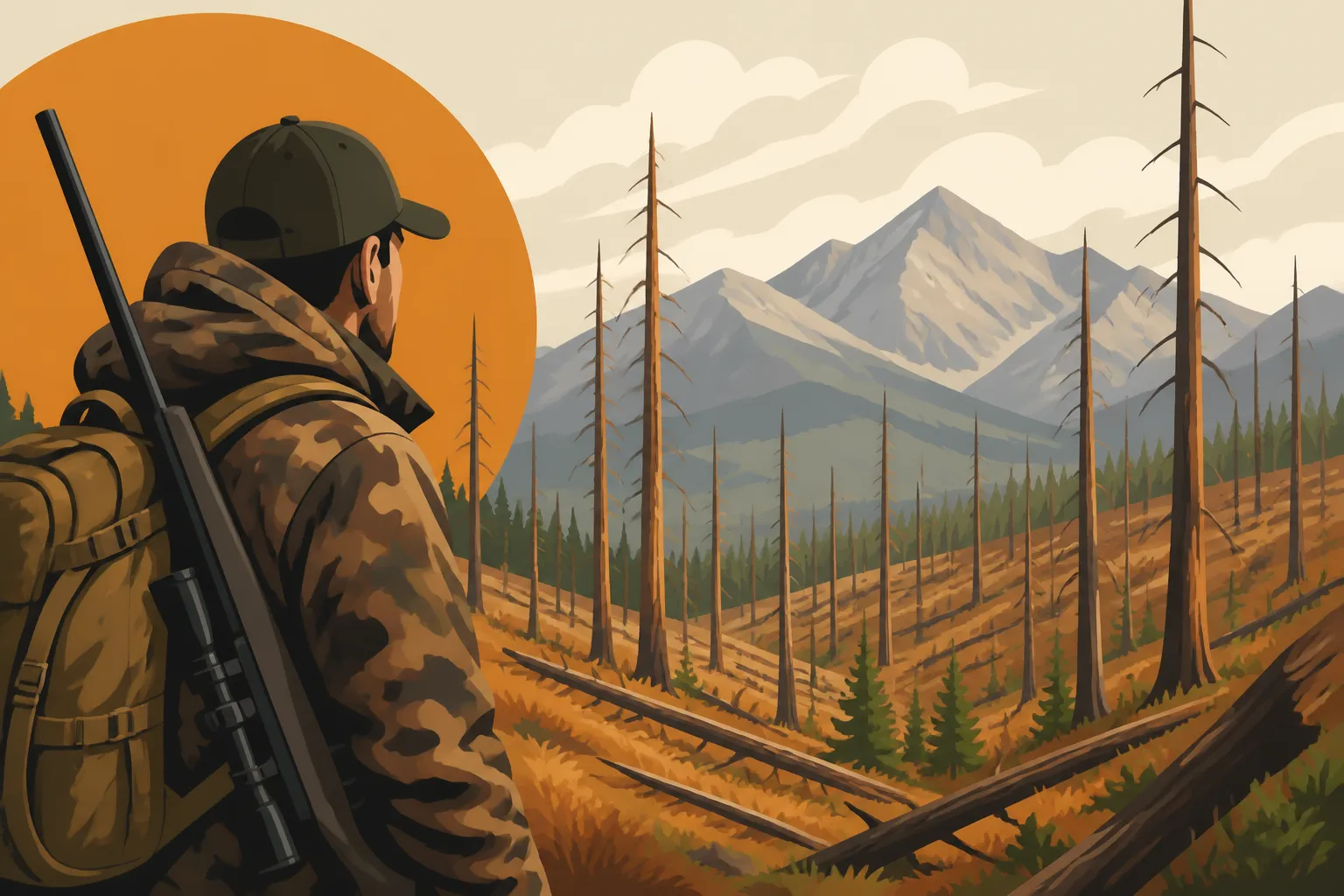
Hunting a Beetle-Kill Pine Flat
You’ve been scouting British Columbia for game, perhaps looking at maps online, and you keep seeing these huge swaths of grey, dead timber. Your first thought might be, "Nothing lives in that mess." It looks apocalyptic, a tangled graveyard of trees, and honestly, it can be intimidating to even consider stepping foot in there. But believe me, ignoring these beetle-kill pine flats means you're overlooking some of the most dynamic and productive hunting grounds in the province. This guide is here to walk you through understanding these unique environments, why game animals seek them out, and how you can successfully navigate and hunt these areas for species like mule deer, moose, and even bears.
Understanding the Lifecycle of a Beetle-Kill Pine Flat
When you encounter a beetle-killed forest, especially vast pine flats, it's not a static, dead landscape. It's actually a dynamic ecosystem in transition, constantly changing, and each stage offers different opportunities and challenges for the hunter. Understanding this lifecycle is key to predicting game movement and identifying prime hunting spots.
The Initial Attack and Red Stage
This is the first, most visual stage of a pine beetle infestation. The beetles, often mountain pine beetles, burrow into the tree, and the tree fights back by producing pitch. But when the attack is overwhelming, the tree succumbs. Initially, the needles will turn a vibrant red or orange, often referred to as "red attack" or "red stage." From a distance, entire hillsides can look like they’ve been painted with rusty brushstrokes.
During this phase, the trees are still standing and usually retain their needles, providing a dense canopy. The forest floor might still be relatively shaded. While the trees are technically dying, they haven't yet begun to fall. Game animals in this stage might still use these areas for traditional cover, especially if the understory is healthy. It's not yet the "mess" you typically think of with beetle kill, but it’s a warning sign of changes to come. If you’re hunting here, access might be easier than in later stages, but the visual cues of dying trees can still make it a bit eerie and less inviting than a vibrant green forest.
The Grey Stage and Needle Drop
Following the red stage, usually within a year or two, the needles fall, leaving behind stark, grey, bark-less trunks. This is the "grey stage," and it's where the real habitat transformation begins. With the canopy gone, sunlight floods the forest floor for the first time in decades, sometimes even a century. This sudden influx of light is like flipping a switch for dormant vegetation.
Suddenly, an explosion of new growth occurs. Grasses, fireweed, huckleberries, saskatoons, willows, and young aspen sprouts begin to carpet the ground. This understory regeneration is absolutely critical for game animals. While the standing grey trees offer little in the way of cover themselves, this new growth provides an incredible food source and visual concealment close to the ground. For hunters, this stage can offer improved visibility through the standing timber compared to a healthy, dense pine forest, but the ground cover can still hide animals effectively. It's a stage where you need to start paying close attention to the new vegetation.
The Falling Timber Stage
This is the "mess" stage that often deters hunters, but also creates incredible habitat. Over the next decade or two, and sometimes even longer, the standing grey trees gradually begin to fall. Wind events, heavy snows, and simply the natural process of decay bring them down. This creates a crisscrossed labyrinth of dead logs, often piled several feet deep, making travel incredibly difficult.
While frustrating for human navigation, this dense tangle of downfall is a goldmine for game. It creates unparalleled thermal cover, especially in cold weather, and exceptional bedding areas. A large buck or a bull moose can simply lie down in a blowdown and be virtually invisible. The decomposing logs also return nutrients to the soil, further enhancing the new growth beneath. Hunting in this stage requires extreme patience and slow movement, but it can pay off immensely if you understand how animals utilize the chaos. This is also where you need to be most mindful of hazards, which we'll discuss later.
Why British Columbia Game Animals Thrive in Beetle-Kill Zones
It seems counterintuitive, right? A dead forest, full of obstacles, would be a terrible place for animals. But what hunters often miss is that "dead" doesn't mean "barren." It means transformed. These areas, especially after the initial needle drop and subsequent understory growth, become prime real estate for a variety of British Columbia's big game species.
A Buffet for Browsers and Grazers
The sudden opening of the canopy in beetle-killed pine flats allows sunlight to reach the forest floor, triggering a massive flush of new vegetation. This is like ringing the dinner bell for herbivores. Species that rely heavily on browse and forbs find an abundance of food where once there was only sparse growth under dense pine.
Mule deer, for instance, absolutely relish the new growth. You’ll find them browsing on regenerating willow, aspen suckers, and a host of herbaceous plants like fireweed. The nutrient-rich understory provides critical forage, especially in spring and fall. These areas often become preferred feeding grounds, contrasting sharply with the relatively barren forest floor of a mature, healthy pine stand. If you want to know more about what these deer eat, check out What Mule Deer Eat in the Dry Interior. Moose are another species that benefits immensely. They are voracious browsers, and the explosion of willow, aspen, and other deciduous shrubs provides an ideal food source, particularly in the later grey and falling timber stages. You might find them spending significant time in these areas, especially where there's moist ground supporting lush new growth. Even black bears will frequent these zones, especially when berry bushes like huckleberry and saskatoon flourish in the increased sunlight.
Cover and Thermal Regulation
While the standing dead timber might not look like much, the combination of fallen logs and the dense, regenerating understory creates exceptional cover. Picture a large buck or a bull moose bedding down in a tangle of crisscrossed logs, camouflaged by a thicket of young willow and fireweed. From above, they are invisible. From the side, they are a ghost in the shadows and broken timber. This offers both visual concealment from predators and crucial thermal regulation.
In colder weather, the dense network of fallen trees traps snow and wind, providing a sheltered microclimate. Animals can bed down out of the direct blast of winter winds, conserving energy. Conversely, in warmer weather, while the direct sun can be intense, the shade provided by log piles and thicker patches of undergrowth can offer respite. This layered environment means animals can find comfort regardless of the conditions, moving subtly within the tangle to adjust to temperature fluctuations throughout the day. The sheer difficulty of human travel also contributes to these areas being low-pressure zones for game, making them feel safer.
Predator Dynamics and Natural Corridors
The chaotic nature of beetle-kill flats doesn't just offer cover from human hunters; it provides a complex landscape that can both aid and hinder predators. While predators like wolves and cougars will certainly hunt in these areas, the dense downed timber creates a maze of escape routes for prey. A deer or moose can often use the difficult terrain to its advantage, putting space between itself and a pursuing predator.
Animals also learn to create and utilize the paths of least resistance through these tangled zones. You'll often find distinct game trails winding through gaps in the logs, along old skidder tracks that are now overgrown, or following subtle changes in elevation. These natural corridors become predictable travel routes, even if they appear random to an untrained eye. For the observant hunter, identifying these pathways is paramount. They reveal how animals move from bedding to feeding areas, and from one patch of cover to another, giving you an advantage in what seems like an impenetrable fortress.
Effective Hunting Strategies for Beetle-Kill Pine Flats
Hunting beetle-kill terrain can feel like solving a puzzle, but with the right approach, it can be incredibly rewarding. You can't just walk through it like an open forest; it requires specific tactics, patience, and a willingness to adapt.
Scouting Smartly with Digital Tools
Before you even step foot in a beetle-kill flat, your scouting needs to start digitally. This is where tools like onX Hunt and GoHunt truly shine. Satellite imagery allows you to identify the different stages of beetle kill – the red attack, the grey stage, and the areas of heavy downfall. Look for patterns in the landscape. Where does the beetle kill meet a healthy timber stand? Are there creek bottoms or natural draws running through it? Are there old logging roads or clearcuts nearby? These "edges" are often critical transition zones where game will move between different habitat types. Scouting a British Columbia Management Unit Online is a great resource for getting started with your digital scouting.
Pay close attention to topography. Even subtle changes in elevation can create pockets of different vegetation or offer better vantage points. Look for fingers of timber or benches that might provide sheltered bedding areas within the deadfall. Mark potential access points, old roadbeds, and any areas that look slightly less dense for easier travel. This pre-season reconnaissance is invaluable for developing a game plan and ensuring you’re not just wandering blindly into a timber graveyard. Remember, the goal is to find the best part of the beetle kill, not just any part.
Still-Hunting Through the Chaos
Still-hunting is perhaps the most effective, albeit challenging, technique in dense beetle-kill. Forget covering ground quickly; your pace will be excruciatingly slow, and that’s precisely the point. The mantra here is "one step, stop, look, listen." Every single step needs to be deliberate, testing the ground for unstable logs or crackling branches. The noisy environment of a beetle-kill flat can actually work to your advantage; the sounds of cracking wood underfoot, or branches scraping, can sometimes be masked by the natural sounds of the forest or even the wind.
Your focus should be on detecting the slightest movement, a flick of an ear, a patch of hide through the dense tangle. Animals will often be bedded down in the thickest parts, so you're essentially trying to jump them, but you want to do it on your terms. Look for horizontal lines (the backs of animals) in a vertical world (the standing and fallen trees). Pay attention to any rubs on standing trees, fresh droppings, or disturbed ground – these are clear indicators of recent animal activity. Follow what seem like game trails, as they often represent the path of least resistance for animals. This type of hunting is physically demanding and mentally taxing, but it puts you right into the animals' sanctuary. Still-Hunting Second Growth for Blacktail offers relevant tips, even though it's for a different deer species.
Glassing Edges and Openings
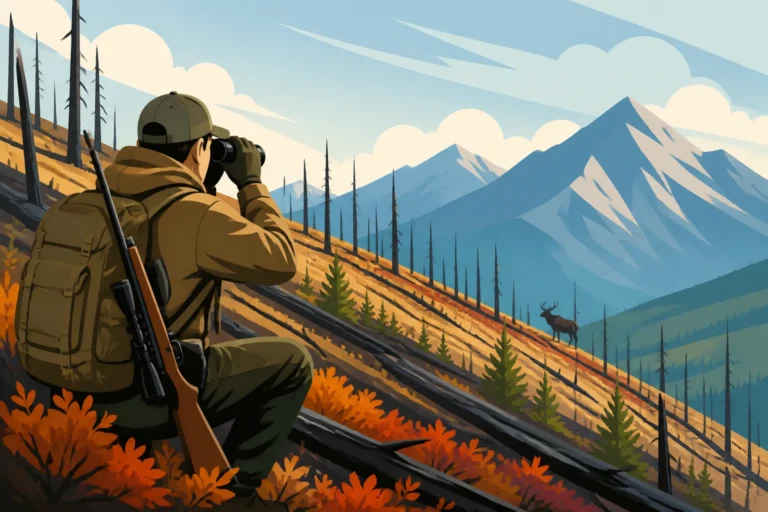
While still-hunting is crucial for the densest areas, intelligent glassing from external vantage points can also be highly productive. Instead of plunging headfirst into the thickest deadfall, try to find elevated positions on the periphery. This might be a rocky outcrop, a ridge, or the edge of an adjacent clearcut or healthy timber stand. From these vantage points, you can systematically pick apart the beetle-kill flat with your binoculars or spotting scope.
Focus your glassing on any natural openings, old skid trails that have greened up, patches where the downfall is less severe, or where two habitat types converge. Animals often move into these more open areas to feed during low-light conditions – early morning and late evening. The broken canopy of a grey-stage beetle kill can also make it easier to spot animals, as light filters through in patches, creating shadows that might conceal game, but also offer contrasting light. Patience is key here; spend extended periods behind your glass, letting your eyes adjust, and looking for subtle movements or unnatural shapes. Consider reading Glassing an Interior Hillside for Mule Deer for more glassing tactics.
Utilizing Natural Funnels and Game Trails
Despite the seemingly random chaos of fallen timber, animals are creatures of habit and efficiency. They will always seek the path of least resistance, and in a beetle-kill flat, this often creates natural funnels and distinct game trails that you can learn to identify and exploit. Look for areas where the fallen logs create narrow corridors, or where a slight rise in elevation offers a clearer path. Creek bottoms, old overgrown logging spurs, or saddles between small hills can also act as natural funnels.
Once you’ve identified these pathways, either through digital scouting or by finding fresh sign on the ground, you can develop an ambush strategy. If you can pattern animal movement – perhaps they're moving from a bedding area in the thickest downfall to a feeding area on a regenerating slope – you can position yourself along one of these funnels. This requires patience and often a quiet sit, but it increases your chances of intercepting an animal that is actively traveling. Think about prevailing winds and set up downwind of any expected travel routes.
Navigating and Staying Safe in Beetle-Kill Terrain
Hunting in beetle-kill pine flats isn't just about strategy; it's also about preparedness and safety. This environment presents unique challenges that you won't typically find in healthy timber or open country. Ignoring these hazards can lead to serious injury or getting lost.
The Physical Demands and Footwear
Let me tell you, hunting through a beetle-kill flat is a workout. It’s physically exhausting. You’re not just walking; you’re stepping over, crawling under, and navigating around an endless maze of fallen logs. Expect your pace to be incredibly slow – sometimes less than a kilometre an hour. This means you need to be in good physical condition, and you need to manage your energy and hydration carefully. What looks like a short distance on a map can take hours on the ground.
Your footwear is absolutely critical here. Forget lightweight hiking shoes. You need sturdy, high-ankle supporting boots with excellent traction. Boots that offer superb ankle support will help prevent sprains and twists as you inevitably stumble, step on unstable logs, or post-hole between pieces of downfall. Waterproofing is also a huge plus, as the ground can be boggy and moist. Be prepared for your boots to take a beating from sharp broken branches and stumps. Carry spare laces and be ready for wear and tear.
The Hidden Hazards: Deadfall and Widowmakers
Beyond the physical challenge, beetle-kill flats pose significant dangers. The most pressing is the risk of "widowmakers" – standing dead trees that can fall without warning. These trees are often rotten at the base, and a strong gust of wind or even a subtle ground tremor can bring them down. Avoid hunting on particularly windy days if you're in an area with a lot of standing dead timber. Always be aware of the trees around you, especially when taking a break or setting up a shot.
The fallen logs themselves present trip hazards, but also the risk of unstable piles that can shift or roll, pinning a leg or worse. Be mindful of logs covered by snow, as they can conceal hidden gaps or uneven ground. Sharp, broken branches and splinters are everywhere, so consider wearing durable hunting pants and even gaiters to protect your legs. Every step needs to be calculated to avoid slips, falls, and impalements.
Staying Found and Communication
It's incredibly easy to get disoriented in a beetle-kill flat. The homogenous landscape of grey, dead trees offers very few distinct landmarks, and the dense cover often obscures distant features. Your compass and GPS device are your best friends here. Don't rely solely on your phone; always carry a dedicated GPS unit or a reliable app like onX Hunt, and know how to use it. Mark your starting point and leave a digital breadcrumb trail as you move.
Cell service is often non-existent in these remote areas of British Columbia. A satellite communication device is not a luxury; it's a necessity if you're venturing deep into these areas. Devices like Garmin inReach or Zoleo can literally be lifesavers for emergency communication, or even just checking in with loved ones. Always let someone know your detailed hunting plan, including your intended route and expected return time. Safety should always be your number one priority when exploring British Columbia's backcountry. For more on staying connected in remote areas, see Satellite Communication on a Remote Hunt.
Meat Care and Extraction Challenges
Successfully harvesting an animal in a beetle-kill flat is only half the battle; getting that animal out is where the real work begins. The dense, tangled nature of these areas makes packing out game an extremely strenuous and time-consuming task. Trying to drag a whole deer or quarter a moose through thick downfall is nearly impossible and certainly inefficient.
You'll almost certainly need to quarter your animal on site. For larger game like moose, this might mean boning out the meat to reduce weight and bulk. Quartering a Moose in Grizzly Country provides excellent guidance on this process. Even with an animal quartered, navigating the logs with a heavy pack frame will test your endurance to its limits. Consider using a quality frame pack for heavy loads. Packing Meat With a Frame Pack offers tips for efficient meat packing. Be prepared for multiple trips, or consider a team approach with hunting partners. If you're fortunate enough to harvest an animal in a beetle-kill flat, celebrate the success, but then immediately switch to problem-solving mode for the extraction. Proper planning for this stage is crucial to ensure your hard-earned meat doesn't spoil.
Beetle-Kill Hunting: Pros and Cons
To sum it up, hunting beetle-kill pine flats offers unique advantages but comes with undeniable challenges. Here's a quick overview:
| Feature | Pros | Cons |
|---|---|---|
| Game Abundance | High forage for deer, moose, bears; good bedding and cover. | Animals can be extremely well hidden in dense cover. |
| Access | Often on Crown land, potentially less hunting pressure. | Extremely difficult foot travel due to dense downfall. |
| Visibility | Open canopy can allow glassing into new growth (grey stage). | Dense downed timber can block lines of sight, challenging still-hunting. |
| Safety | Relatively quiet for animals due to human aversion. | High risk of falling trees, unstable logs, injury, and getting lost. |
| Extraction | None | Extremely challenging to pack out meat, slow going. |
| Habitat Type | Dynamic, regenerating ecosystem offering varied food sources. | Can appear desolate and unproductive to the untrained eye. |
Embrace the challenge, prepare thoroughly, and you might just find that these seemingly dead forests hold some of British Columbia's most vibrant hunting opportunities.
Disclaimer
This article is for general informational purposes only and does not constitute professional advice. Laws, prices and regulations vary by location and change over time. Consult a qualified professional for guidance on your specific situation.