Radio Channels on Active Logging Roads
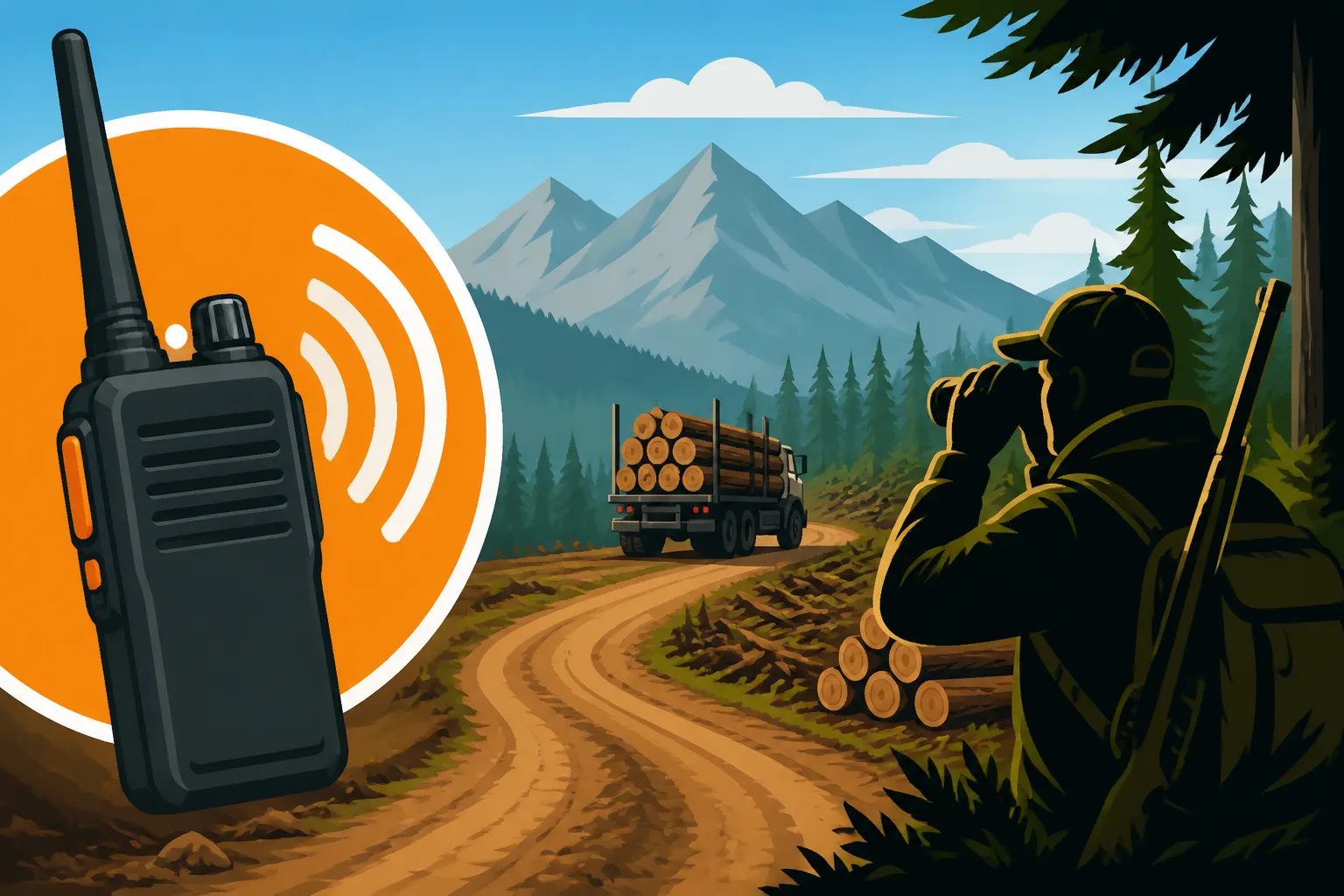
There's a unique knot of anxiety that tightens in every British Columbia hunter's stomach when you're rumbling down a narrow, dusty, or sometimes slick logging road, a road that feels like it's taking you further and further into the wild, only to suddenly encounter a massive logging truck barreling towards you. It's an instant jolt of fear, often followed by a scramble for the ditch and a moment of wishing you'd known that truck was coming. This guide is all about equipping you with the knowledge and best practices for navigating British Columbia's active logging roads safely, specifically focusing on the critical role of radio channels in preventing those heart-stopping encounters.
Why Radio Channels are Non-Negotiable on British Columbia's Forest Service Roads
Driving on British Columbia's Forest Service Roads (FSRs) isn't like cruising down a paved highway. These are working roads, the arteries of the forestry industry, and they come with a distinct set of challenges and dangers. One of the biggest challenges, and frankly, one of the most terrifying, is the potential for head-on collisions with industrial traffic. These aren't just pickups; we're talking about fully loaded logging trucks, sometimes pulling multiple trailers, heavy equipment transporters, and grader trucks, all of which are much larger, heavier, and less maneuverable than your typical hunting rig.
The raw power and sheer size of these vehicles mean they cannot stop or swerve easily, especially on steep grades or tight corners. If you meet one unexpectedly around a blind bend, the consequences can be catastrophic. Imagine cresting a rise in your overloaded truck, gear rattling, anticipation building for the hunt, and suddenly seeing the grill of a six-axle log truck filling your windshield. It’s a situation no one wants to be in, and it's precisely why understanding and using FSR radio channels is not just a good idea, it's absolutely vital for your safety and the safety of everyone else on that road.
The Hidden Dangers of Industrial Traffic
Many FSRs are single-lane in stretches, or they're wide enough for two vehicles but lack shoulders, leaving little room for error. The road surfaces themselves can be highly unpredictable – ranging from finely graded gravel to deeply rutted mud, often with large potholes or washboard sections. Dust can reduce visibility to near zero in dry conditions, and persistent rain can turn clay sections into greasy slides. Add to this the fact that logging trucks often travel at considerable speeds, especially when empty, or crawl along when fully loaded, dictating a pace that recreational users might not expect.
These industrial drivers are professionals, operating on tight schedules, and they rely on the radio system to coordinate their movements and ensure safety. They expect other road users, especially those venturing deep into active work zones, to be on the correct channel and calling out their positions. Ignoring this system puts you, your passengers, and the logging crews at immense risk. The roads are built for them, maintained by them, and their livelihood depends on efficient, safe passage. As recreational users, we are guests in their workspace, and showing respect by adhering to their safety protocols, particularly radio communication, is paramount. This diligence directly contributes to British Columbia Blaze Orange and Safety Rules that every hunter should adhere to.
Your Role as a Responsible Road User
Think of using an FSR radio as a courteous, rather than optional, interaction. It's about being a responsible member of the road-sharing community. By announcing your presence, direction, and specific location, you are actively contributing to everyone's safety. It allows industrial traffic to anticipate your movements, slow down, or find a pull-out before you meet them on a blind corner. Conversely, it gives you the heads-up to pull over safely when a log truck announces its approach, saving you from a scary, last-second dodge.
While you might be using a navigation app like onX Hunt to track your route or find Finding Open Forest Roads in British Columbia, these apps, for all their incredible detail about terrain and boundaries, don't provide real-time traffic information. That's where the two-way radio comes in. It’s your direct link to the pulse of the road. Without it, you’re driving blind, relying purely on luck, and that’s a gamble no hunter should ever take in the backcountry.
How British Columbia's Logging Road Radio System Works
Navigating British Columbia's extensive network of Forest Service Roads (FSRs) safely requires more than just a good map; it demands an understanding of the unwritten rules of the road, particularly the use of two-way radio channels. This system, while seemingly informal, is a highly effective, almost instinctual protocol that keeps thousands of industrial vehicles and recreational users from colliding daily.
The Basics of a "RR Channel" VHF System
The vast majority of active logging roads in British Columbia operate on a designated "RR Channel," which stands for "Resource Road Channel" or "Road Radio Channel." These are specific VHF (Very High Frequency) radio frequencies, typically in the 150-170 MHz range, that are assigned to particular road systems or geographic areas. The idea is simple: anyone on that stretch of road uses the same frequency to announce their position, direction, and type of vehicle.
You'll usually find signs at the entrance to an active FSR clearly indicating the channel to use. For example, a sign might read "RADIO CHANNEL: RR4 – 153.210 MHz." This is your cue. You need a functioning VHF radio in your vehicle, tuned to that exact frequency, and ideally with a good external antenna for optimal range. Without the right equipment, you're effectively deaf and mute on a road where everyone else is communicating. Understanding these specific channels is just as important as knowing the lay of the land when Scouting a British Columbia Management Unit.
Common Call-Out Protocol
The protocol for radio communication is standardized across British Columbia, ensuring everyone understands the messages. The general rule is to call out your position at every kilometre (mileage marker), every major junction, and before and after any blind corners, hills, or bridges.
Here’s a breakdown of a typical call-out:
-
"Kilometer 10 (or 'Kilo 10'), going up (or 'going in'), light."
- Kilometer 10: Your approximate location, usually taken from roadside signs or your odometer.
- Going up/Going in: Your direction of travel (e.g., "up" usually means heading away from the paved highway, "in" means heading deeper into the FSR network).
- Light: Indicates you are an empty, lighter vehicle (e.g., a pickup, SUV). If you were a loaded logging truck, you'd say "loaded."
-
"Junction of XYZ Branch, going right, light."
- This specifies a turn onto a different branch road, again indicating direction and vehicle type.
The goal is to provide clear, concise, and timely information. You're not just broadcasting; you're listening intently for others. If you hear "Kilo 11, going down, loaded," you know a big truck is headed your way from the next kilometer marker, and you should start looking for a safe pull-out.
| Call-Out Element | Description | Example | Purpose |
|---|---|---|---|
| Location | Nearest Kilometer Marker (Kilo), or named Junction/Bridge. | "Kilo 12" | Pinpoints your position. |
| Direction | "Going In" (away from main road), "Going Out" (towards main road), "Down". | "Going In" | Indicates your travel path. |
| Load Status | "Light" (passenger vehicle), "Loaded" (heavy industrial vehicle). | "Light" | Helps industrial users gauge your maneuverability. |
| Trigger Points | Kilometer markers, major junctions, blind corners, crests, bridges. | "Approaching blind corner" | Warns of hazards ahead. |
| Confirmation | Listening for others, acknowledging if necessary. | "Copy that, Kilo 12" | Ensures message receipt and helps coordinate passes. |
Finding the Right Channel and Equipment
One of the initial challenges is figuring out which channel to use. While signs are prevalent on main FSRs, branch roads might not always have clear signage. Often, the same channel is used for an entire FSR network. In some cases, major industrial operations might have their own private channels that intersect public FSRs; in these rare instances, you might need to carry multiple pre-programmed channels or ask at a local forestry office or logging camp if you can safely do so.
Your radio itself is crucial. A basic handheld VHF radio can work in a pinch, but a permanently mounted mobile unit with a robust external antenna will provide much better range and reliability, which is essential in British Columbia's rugged terrain. Many hunting vehicles in BC are equipped with these. You'll also need a licence to operate a VHF radio, so make sure you're compliant. Don't forget, if you're exploring British Columbia's Logging Road Network, this communication tool is your lifeline.
When Communication Fails
Even with a radio, there are times when you won't hear anything, or your signal won't carry. This could be due to terrain blocking the signal, being out of range, or simply that there's no industrial traffic at that moment. Never assume an empty channel means an empty road. Always drive defensively, slow down, and be prepared to stop quickly around blind corners, crests, and through dense timber where visibility is limited. A good rule of thumb is to drive only as fast as you can stop within half the visible distance ahead. This principle is vital, especially when considering Driving a Deactivated Logging Road or any road with uncertain conditions.
Best Practices for Using FSR Radio Channels
Knowing how the system works is one thing, but truly integrating it into your hunting trip requires adopting some critical best practices. This isn't just about flipping on a radio; it's about active participation and a safety-first mindset that ensures smooth travels for everyone sharing British Columbia's vast FSR network.
Equipping Your Rig Properly
First and foremost, you need the right gear. A dedicated mobile VHF radio mounted in your vehicle is highly recommended over a handheld unit. These mobile units typically offer higher power output (usually 25-50 watts compared to 5-8 watts for a handheld) and are designed to run off your vehicle's power, meaning no dead batteries mid-road. More importantly, pair it with a good quality external antenna mounted on your roof or hood. This significantly improves transmission and reception range, which is absolutely critical in British Columbia's mountainous, heavily treed terrain where signals can easily be blocked.
Before you head out, test your radio. Ensure you know how to change channels quickly and that your microphone is easily accessible. If you're new to FSR radio use, practice making clear, concise calls. A common mistake is mumbling or speaking too fast. Remember, clarity over speed. And always have a backup power source if you’re using a handheld, or ensure your vehicle's electrical system is in good order for a mobile unit. For those venturing far afield, considering Satellite Communication on a Remote Hunt for emergency situations is also a smart move, but it won't replace your FSR radio for traffic.
The Art of the Call-Out
Making an effective call-out is simple, but it requires attention. Always speak clearly and at a moderate pace. Identify your location as precisely as possible – using kilometer markers is best. If there are no markers, refer to prominent geographical features, named junctions (if you know them), or simply state "approaching blind corner at unmarked junction."
Consistency is key. Make your calls at every marked kilometer, before and after blind corners, before and after cresting hills, and at any major turn-offs. When you approach a junction, call out your approach and then again after you've made your turn and are continuing on the new road. The rule of thumb: if you can't see what's coming, call it out. This regular cadence helps others track your progress and avoids confusion.
Example calls:
- "Mainline Channel 4, kilo 15, going in, light." (Entering a new kilometer)
- "Mainline Channel 4, approaching blind corner, kilo 17, going in, light." (Before a hazard)
- "Mainline Channel 4, clear of blind corner, kilo 17, going in, light." (After a hazard)
- "Mainline Channel 4, turning onto Branch 200 at kilo 25, going in, light." (At a junction)
Active Listening and Situational Awareness
Your radio is as much for listening as it is for transmitting. Keep the volume at a level where you can clearly hear transmissions over road noise, but not so loud that it's distracting. Listen for call-outs from industrial traffic. If you hear a loaded log truck calling out "Kilo 10, going out, loaded," and you're at Kilo 8 going in, you know you have about two kilometers to find a safe pull-out.
Situational awareness extends beyond just the radio. Pay attention to fresh tire tracks, dust clouds in the distance, or the distinct sound of heavy equipment. These are all clues that industrial activity is present, even if you haven't heard a radio call. Remember, not everyone will have a radio, and some vehicles (like smaller contractor trucks) might not be calling out consistently. Always be prepared for the unexpected. Even with onX Hunt showing you the road network, it won't show you a rock slide or a grader around the bend.
Handling Meetings and Yielding
When you do encounter another vehicle, especially an industrial one, the unwritten rule is that the lighter vehicle (you, in your hunting truck) yields to the heavier, loaded vehicle. This usually means pulling over to the widest part of the road, or into a designated pull-out if one is available. Give them ample room. Logging trucks are long and wide, and their drivers appreciate the courtesy. A quick "thanks" over the radio as they pass is also a nice touch.
If you're on a narrow, blind section and you hear an industrial vehicle approaching, try to find the safest spot to stop. If you've been calling out your position, they'll know you're there and can adjust their speed. Sometimes, you might even get a call from an industrial driver asking your location to help coordinate a safe pass. Be ready to respond clearly and calmly. This kind of interaction is a testament to the system working effectively, making the Hunting British Columbia's Alpine in September journey a little safer.
Troubleshooting and Common Pitfalls on FSR Radio Channels
Even with the best intentions and proper gear, things can sometimes go awry on British Columbia's FSRs. Understanding common issues and how to troubleshoot them can save you a lot of stress and keep you safer.
Noisy or Silent Channels
It's common to turn on your radio and hear either static or absolute silence. Don't immediately assume your radio is broken or the road is empty.
- Static/Interference: This often indicates you're on the right channel but might be picking up distant signals or local electrical interference. Try adjusting your squelch setting – this filters out background noise, making true transmissions clearer. If the static is overwhelming, try moving your vehicle slightly, as sometimes a specific spot can have localized interference.
- Silence: A completely silent channel can be misleading. It might mean no industrial traffic is operating at that moment, or you might be out of range of active conversations due to terrain. Never assume silence means safety. Continue to make your regular call-outs and drive defensively. In areas known for poor reception, you might try a test call like "Radio check, Kilo X, going in, light" to see if anyone responds.
Identifying the Correct Channel
This is a frequent point of confusion. While many FSRs have clear signs at their entrance, smaller branch roads or older FSRs might not.
- Look for Signs: Always keep an eye out for white signs with black lettering at the entrance to FSRs. They are the primary source for channel information.
- Ask Locals: If you're heading into an unfamiliar area without clear signs, a quick stop at a local gas station, tackle shop, or even a community forum online (before you lose cell service) might yield the channel information from hunters or locals who frequent that area. Apps like GoHunt might show you the road networks, but they rarely include dynamic channel information.
- Scan Channels: Some advanced radios have a scanning feature that can help you identify active channels. However, this isn't foolproof as traffic might be intermittent, and you could miss a critical call. It's best to stick to known channels.
- Different Industries: Be aware that some FSRs might be used by multiple industries (e.g., logging and mining), and they might have slightly different protocols or designated channels for their specific operations. Always prioritize the channel indicated for general road use. If you are exploring Hunting British Columbia's Coastal Rain or deep interior, these nuanced understandings become even more critical.
Misunderstandings and Missed Calls
Communication is only effective if both parties understand each other.
- Clarity of Speech: Speak slowly and clearly into the microphone. Avoid jargon unless it's standard FSR terminology (like "light" or "loaded").
- Overlapping Calls: Sometimes, two people will try to transmit at the same time, resulting in garbled, unreadable messages. If this happens, wait a few seconds for the channel to clear, and then make your call again. Patience is key.
- Distance and Terrain: Recognize that radio waves travel in line of sight, and British Columbia's mountains and dense forests are excellent at blocking signals. A call from "Kilo 20" might be completely inaudible to you at "Kilo 10" if there's a mountain range or deep valley between you. This is why consistent, frequent call-outs are so important – you need to bridge those gaps.
- Road Closures: Sometimes, an FSR might be temporarily closed for blasting, heavy construction, or emergency repairs. While these often have physical barriers and signs, listening to the radio might provide advance warning or details about alternate routes. Always check for Road Closures on British Columbia Forest Roads before you head out.
The Consequences of Not Using a Radio
The biggest pitfall, of course, is simply not using a radio.
- Safety Risk: The risk of a serious collision, injury, or even fatality skyrockets when you are not communicating. This is not hyperbole; it is a very real danger.
- Impacting Others: You put industrial workers, who are often working long hours in challenging conditions, at unnecessary risk and disrupt their operations. You become an unpredictable element in a highly structured, safety-focused environment.
- Legal Implications: In some jurisdictions or on certain FSRs controlled by specific companies, there might be regulations or company policies requiring radio use. While enforcement on recreational users can vary, if an incident occurs and you weren't using a radio where it was expected, you could face legal repercussions or be deemed liable.
- Bad Reputation: As hunters and recreational users, we already fight for access and public perception. Being seen as careless or disrespectful on active industrial roads doesn't help our cause. Be a good ambassador for the outdoor community by adhering to safety protocols. This ties into the broader message of Emergency Planning in British Columbia's Backcountry.
By understanding these nuances, equipping yourself appropriately, and committing to clear, consistent communication, you can navigate British Columbia’s FSRs with confidence and, most importantly, safety.
Disclaimer
This article is for general informational purposes only and does not constitute professional advice. Laws, prices and regulations vary by location and change over time. Consult a qualified professional for guidance on your specific situation.