Camping Rules on British Columbia Crown Land
There’s nothing quite like the freedom of packing up your gear, heading deep into the British Columbia backcountry, and setting up camp wherever the trail takes you. For many of us, this is the essence of hunting in this incredible province. But the idea of "Crown land" can feel a bit like a wild west movie—you know it's vast, but the specific rules around pitching a tent and settling in can be pretty confusing. This guide is here to untangle those regulations, helping you understand exactly what's permitted when you're looking to set up camp on British Columbia's public lands, so your adventure can be stress-free and responsible.
Understanding Crown Land and Public Access in British Columbia
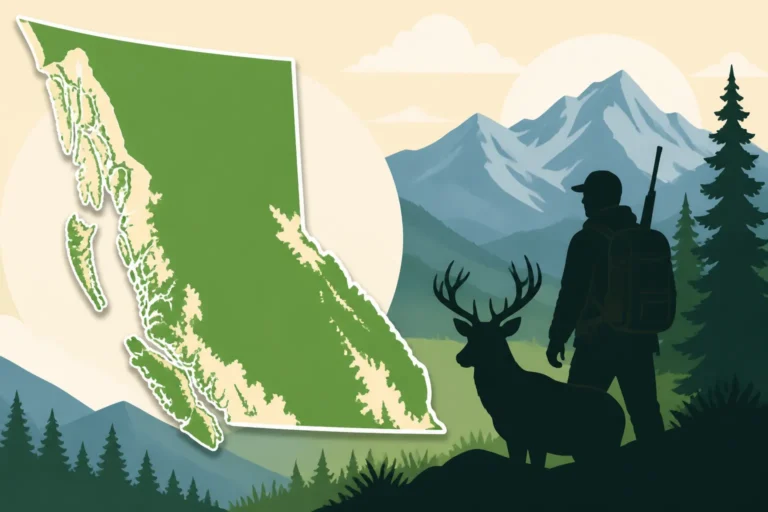
British Columbia is a massive province, and a huge percentage of it is what we call Crown land. This is essentially public land, managed by the provincial government, and it's the playground for most of our hunting, fishing, and outdoor recreation. But just because it's public doesn't mean it's a free-for-all; there are rules, and knowing them is key to staying out of trouble and preserving these incredible spaces.
What Exactly is Crown Land?
Think of Crown land as the province's backyard. It encompasses vast forests, towering mountain ranges, pristine lakes, and winding rivers—the very places we chase deer, moose, and bears. Most of the land outside of municipalities, private holdings, and provincial/national parks falls under this designation. It’s what gives British Columbia hunters such incredible opportunities to explore, from the coastal rainforests to the dry interior plateaus and the sprawling northern wilderness. The sheer scale of it is what draws so many of us to hunt here, knowing that there's still so much wild country to discover. It's often where you'll find the best opportunities for Public Hunting Land in British Columbia, offering everything from easily accessible areas near logging roads to remote, fly-in only spots.
The Right to Roam Versus Specific Regulations
While British Columbia generally embraces a "right to roam" philosophy, allowing public access to Crown land for recreation, this isn't an absolute free pass. There are crucial distinctions, especially when it comes to activities like camping. You might assume you can just pull off any forest service road and set up shop, but that's not always the case. For example, specific areas might be designated for other uses, be under a temporary closure for logging or wildfire, or be adjacent to private property where your presence would be considered trespassing.
This is where understanding the lay of the land becomes absolutely vital. You need to know if you're truly on Crown land, or if you've inadvertently strayed onto a private timber holding, a First Nations reserve, or even a provincial park where rules are entirely different. Tools like onX Hunt can be incredibly useful for overlaying property boundaries right on your map, giving you a clear picture of where you stand. Likewise, a good old-fashioned Finding a British Columbia Management Unit Map can be indispensable. Always double-check before you commit to a spot, especially if you're unsure.
General Camping Rules for Recreational Sites and Dispersed Camping
When it comes to camping on British Columbia Crown land, there are generally two main categories: designated recreation sites and what we call "random" or "dispersed" camping. Each has its own set of expectations and rules, and mixing them up can lead to a less-than-ideal experience, or worse, a fine.
Camping at Designated Recreation Sites
British Columbia has hundreds of designated Recreation Sites scattered across the province, often near lakes, rivers, or along well-used forest service roads. These are managed sites, typically by the province or a delegated organization, and they usually offer basic amenities. We're talking about things like outhouses, picnic tables, and sometimes fire rings or boat launches. They're designed for a more structured camping experience than just pulling over and throwing up a tent.
You'll often find these sites clearly marked with signage, and many will have a small fee associated with them, which goes towards maintenance. The rules here are usually straightforward: respect the facilities, keep noise down, and adhere to posted limits on group size or vehicle numbers. While they offer convenience, they also come with less solitude than true backcountry camping. For hunters, they can be a great base camp if you're exploring a new area and want some basic facilities, or if you're hunting with a family and want a bit more comfort. Just remember that these sites can fill up quickly, especially during peak seasons or long weekends, so don't count on one being open when you arrive.
Dispersed Camping on Unmanaged Crown Land (Random Camping)
Now, this is where the real freedom of British Columbia Crown land shines for many hunters. Dispersed, or "random," camping means setting up your camp pretty much anywhere on unmanaged Crown land, away from designated sites, private property, or restricted areas. There are no picnic tables, no outhouses, and definitely no fees. It’s you, your camp, and the wilderness.
However, this freedom comes with significant responsibility. The overarching rule, and one that cannot be stressed enough, is the "Leave No Trace" principle. Everything you pack in, you must pack out. This includes all your garbage, food scraps, and anything else you brought with you. Beyond that, the primary regulation for random camping is usually a duration limit: you cannot occupy a single site for more than 14 days in any 30-day period. This rule is in place to prevent people from establishing semi-permanent residences on public land and to ensure equitable access for everyone. It means that if you're on an extended hunting trip, you'll need to break down camp and move a reasonable distance to a new location after two weeks.
When you're dispersed camping, assume there are no facilities. That means bringing your own water, or filtering/treating natural water sources. Human waste must be properly managed by digging catholes far from water sources and trails, or by packing it out if you’re in sensitive areas. For your hunting camp, this style of camping is often the default, allowing you to position yourself strategically for game. Many hunters will drive deep into Hunting British Columbia's Logging Road Network or hike far off the beaten path to find that perfect, secluded spot.
Specific Considerations for Hunters Camping on Crown Land
As hunters, our presence in the backcountry carries a unique set of responsibilities, especially when we set up camp. Our actions not only affect our own experience but also the wildlife we pursue and the perception of hunters by other land users.
Camp Location and Proximity to Hunting Activity
Choosing your camp location as a hunter is about more than just finding a flat spot for your tent. You need to consider the game you're after and other people who might be using the land. Ethically, you want to avoid setting up your primary camp directly in an active game trail or a known feeding area, as this can disrupt natural patterns. Instead, look for a spot that offers good access to your hunting grounds but is slightly off the main routes animals might use.
Also, be mindful of blocking access for others. If you're parking a truck and trailer at the end of a forest service road, ensure there’s still room for other vehicles to turn around or pass. Setting up close to private residences or active agricultural operations is generally a no-go; always keep a respectful distance. If you're Backpacking Into British Columbia Sheep Country, you might be looking for a Setting a Spike Camp Above Timberline, which inherently reduces human interaction and impact. The key is to be thoughtful and minimize your footprint, both physically and in terms of disturbance.
Campfires and Fire Bans
Nothing beats a crackling campfire on a cool evening after a long day of hunting, but in British Columbia, fires come with serious responsibility. Fire bans are a regular occurrence, especially in our dry summers and early fall, and they can be implemented with little warning. Always, always check the current fire danger rating and any active prohibitions for the region you're in before you even think about lighting a match. The consequences of starting a wildfire, even accidentally, are severe and can be catastrophic.
If fires are permitted, use existing fire rings where possible. If not, build a small, contained fire in a safe location, far from overhanging branches, dry grass, or deadfall. Clear a wide perimeter down to bare mineral soil, and ensure you have water and a shovel readily available. Never leave a fire unattended, and before you go to bed or leave camp, make sure it's dead out—cold to the touch, no embers. For many early season hunts, especially during archery season, it's safer and often necessary to plan for a no-fire camp, relying on propane stoves for cooking.
Waste Management and Bear Safety
This point cannot be overemphasized: pack out everything you pack in. This includes all food packaging, empty bottles and cans, and even small bits of garbage like twist ties or cigarette butts. There are no garbage services on Crown land, and leaving trash behind degrades the wilderness for everyone else. This is particularly crucial for hunters, as improperly managed food waste or game scraps can attract dangerous wildlife.
When camping in British Columbia, you are almost always in bear country, and proper food storage is paramount. All food, scented items (like toothpaste, deodorant, and cooking fuel), and garbage must be stored securely away from your tent. This means using bear-resistant containers, hanging food from a tree well off the ground and away from the trunk, or storing it in a hard-sided vehicle that bears cannot access. Cook away from your sleeping area to keep food odors from lingering around your tent. If you're field dressing an animal, move the gut pile well away from your camp and any trails. Remember, Bear Safety While Hunting in British Columbia is not just about carrying bear spray, but about proactive prevention. Proper waste management is a huge part of that.
Duration and Relocation
As mentioned, the 14-day rule for random camping means you need to move your primary camp periodically. This doesn't mean you have to pack up and drive to a completely different watershed. Often, moving a few hundred meters or a kilometer away to a new, previously undisturbed spot is sufficient. The intent is to prevent long-term occupation and minimize environmental impact on a single site.
For hunters, this rule often aligns with how we hunt anyway. If game activity shifts, or if you've exhausted the opportunities in one immediate area, moving camp allows you to explore new terrain without always driving back to a distant home base. It encourages exploration and keeps you agile. Whether you're making a temporary move after two weeks or establishing satellite spike camps for short periods, being fluid with your camp location is a smart strategy for both compliance and hunting success. It might involve a full break-down if you're Hunting British Columbia Without a Truck and relying on foot power for Packing Out of British Columbia's Steep Country, or just a short hop down a new spur road if you have vehicle access.
Navigating Restrictions and Special Zones
The vastness of British Columbia's Crown land can be deceptive; not all of it is open to the same activities or rules. Hunters need to be especially diligent in understanding where they are and if any specific restrictions apply to their chosen hunting or camping area.
Wildlife Management Areas and Parks
British Columbia is home to numerous provincial parks, conservancies, and ecological reserves, where hunting and often camping are either prohibited entirely or subject to very strict regulations. You absolutely cannot assume that because an area looks wild and unpopulated, it's open to hunting or random camping. Always check the specific regulations for any park or protected area. Similarly, Wildlife Management Areas (WMAs) are established to protect critical wildlife habitat. While hunting may be allowed in some WMAs, camping rules can be different from general Crown land. Some may have designated camping spots, while others might restrict camping to minimize disturbance. You need to consult the specific rules for the WMA you plan to enter; British Columbia Wildlife Management Area Rules are usually detailed in the provincial hunting synopsis or on the government's website. Always know before you go.
Private Land and Guide Outfitter Territories
Another common pitfall for hunters is inadvertently setting up camp on private land. While Crown land makes up the majority of the province, there are still countless parcels of private property, including large corporate timber holdings, private ranches, and small recreational lots, often interspersed within public lands. These private lands are not open for public camping or hunting without explicit permission from the landowner. It's your responsibility to know whose land you're on. This is where modern mapping applications like onX Hunt or even GoHunt become invaluable, showing property boundaries and landowner information right on your phone or GPS.
Furthermore, non-resident hunters in British Columbia generally require the services of a licensed guide outfitter to hunt big game, or they must possess a Permit to Accompany from a resident. Guide outfitter territories cover vast swathes of British Columbia, and while residents can generally hunt within these territories (following all other rules), they are specifically designated areas for commercial guiding operations. Non-residents with a Permit to Accompany are restricted to hunting with their accompanying resident and generally within the spirit of traditional resident hunting, not typically setting up extensive camps within a guide's primary operating area without prior arrangement.
Forest Service Road Access and Closures
British Columbia's extensive network of Forest Service Roads (FSRs) provides access to much of the province's Crown land, including prime hunting and camping areas. However, these are working roads, primarily used by the forestry industry. This means conditions can change rapidly. Roads can be actively logged, meaning heavy machinery, large trucks, and strict radio communication protocols are in effect. Pulling over to camp on an active haul road can be incredibly dangerous.
Roads can also be deactivated—meaning culverts removed, bridges taken out, or large trenches dug across the road surface—making them impassable to vehicles. These deactivations can happen at any time. Weather events like heavy rain or snow can also lead to washouts or closures. Before heading out, especially on unfamiliar FSRs, check for current Road Closures on British Columbia Forest Roads. Local knowledge, talking to forestry workers, or checking online resources can save you a lot of grief. Being prepared to hike in from a deactivated section or adjusting your plans due to an unexpected closure is just part of hunting and camping in BC's interior.
Here's a quick reference for camping on British Columbia Crown land:
| Aspect | Do's | Don'ts |
|---|---|---|
| Location | Use existing clearings; aim for flat, durable surfaces; check maps. | Camp on private land; block roads; disrupt sensitive habitats or game trails. |
| Duration | Move camp every 14 days within a 30-day period. | Stay in one spot indefinitely; leave structures. |
| Fires | Check fire bans; use existing rings; build small, contained fires. | Light fires during bans; leave fires unattended; cut live trees for firewood. |
| Waste | Pack out ALL garbage; use bear-resistant food storage; dig catholes. | Bury garbage; leave food scraps; attract bears with improper storage. |
| Impact | Stay on designated trails/roads; minimize noise; respect wildlife. | Drive off-road; disturb other campers or residents; harass animals. |
| Preparedness | Bring water/filter; have emergency plan; carry maps & comms. | Rely on cell service; go unprepared for weather or emergencies. |
Conclusion
Camping on British Columbia Crown land offers unparalleled opportunities for hunters and outdoor enthusiasts to immerse themselves in the province's wild beauty. It's a privilege we all share, and with that privilege comes a significant responsibility. By understanding and respecting the rules—from the 14-day limit on random camping to stringent fire regulations and meticulous waste management—we ensure these incredible landscapes remain accessible and pristine for generations to come. Whether you're setting up a cozy tent by a remote lake or establishing a rugged spike camp high in the alpine, being a responsible land user is the best way to guarantee future adventures. Happy camping, and safe hunting!
Disclaimer
This article is for general informational purposes only and does not constitute professional advice. Laws, prices and regulations vary by location and change over time. Consult a qualified professional for guidance on your specific situation.