Hunting British Columbia’s Northern Rockies
The call of British Columbia’s Northern Rockies is a powerful one, beckoning hunters with its promise of wild, untamed adventure and truly remarkable big game. However, this isn't a casual weekend trip; the sheer scale, rugged terrain, and remote nature of this region can be overwhelming for those not fully prepared. This comprehensive guide will peel back the layers of hunting in the Northern Rockies, providing insights into its unique landscape, the magnificent species that call it home, and the planning and strategies you'll need to successfully navigate this challenging yet deeply rewarding wilderness.
The Untamed Landscape of British Columbia's Northern Rockies
British Columbia's Northern Rockies are a realm of staggering beauty and immense solitude, forming a significant portion of the larger Rocky Mountain range within the province. This is not the gentle rolling hills of some hunting grounds; this is a land of dramatic peaks, deep river valleys, vast plateaus, and dense boreal forests. Understanding the core characteristics of this landscape is crucial to appreciating the challenges and opportunities it presents to the hunter.
Geography and Ecosystems: A Land of Extremes
The Northern Rockies are characterized by towering, often glaciated peaks that give way to extensive subalpine and alpine plateaus. Below these high elevations lie immense tracts of spruce, pine, and fir forests, interspersed with aspen stands, willow thickets along waterways, and open grasslands in some valleys. You'll find everything from barren rock and ice at the highest reaches to boggy muskeg and dense timber in the lower elevations. This diverse topography creates a mosaic of habitats, each supporting specific wildlife. The sheer scale means that a day's hunt might take you from a river bottom to high alpine meadows, demanding versatility in your approach and gear. Hunting British Columbia's Alpine in September is a prime example of the kind of diverse terrain you might encounter.
The climate here is also one of extremes. Summers, while beautiful, can still deliver unexpected snow at elevation, while winters are long and intensely cold, driving most game to lower, more protected areas. Early fall hunts often start mild in the valleys but quickly turn frigid and snowy higher up. Knowing these shifts is vital for choosing appropriate clothing and emergency gear. The ruggedness also impacts access, with many areas only accessible by foot, horseback, or specialized vehicles, often after navigating miles of challenging roads.
The Scale of Solitude: Why the Northern Rockies Feel Different
What truly sets the Northern Rockies apart is its profound sense of wilderness. Compared to the more accessible regions further south, hunter density here is significantly lower. You can travel for days without seeing another human, which is both its greatest allure and its most significant challenge. This solitude means game often behaves more naturally, less pressured by human presence. However, it also means that self-reliance is paramount. Help is often many hours, if not days, away.
This vastness is a double-edged sword: immense potential for unpressured animals, but also immense distances to cover and game to locate. A "small" management unit here can be larger than some entire European countries. Navigating this scale requires not just physical stamina but also meticulous planning, a deep understanding of mapping tools like onX Hunt, and a respect for the sheer power of the wild. You're not just hunting animals; you're immersed in an ancient, uncompromising landscape.
Big Game Opportunities in the Northern Rockies
The Northern Rockies are a big game hunter's paradise, offering a diverse array of species that thrive in its expansive and often untouched habitats. From the majestic moose to the elusive Stone's sheep, understanding which animals call this region home and where to find them is key to a successful hunt.
Moose: Kings of the Northern Wilderness
British Columbia's Northern Rockies are renowned for their moose populations. These massive animals prefer areas with abundant browse, often found in willow flats along river bottoms, around beaver ponds, and in regenerating cutblocks. While moose are present throughout the forested areas, the greatest densities tend to be found in the vast river drainages and interconnected wetland systems that characterize the region. Bulls can grow to impressive sizes here, a testament to the rich forage and minimal pressure in many areas.
Hunting moose in the Northern Rockies often involves a combination of strategies. Calling, particularly during the rut, can be incredibly effective in bringing a bull into close range. Still-hunting through dense timber and along the edges of clearings, especially after an early snow, can also yield results. Access is often a major factor; many prime moose habitats are deep in the backcountry, requiring considerable effort to reach. Remember to review Moose Hunting British Columbia's Interior for broader strategies.
Mountain Sheep and Goats: High-Country Challenges
For many, the ultimate Northern Rockies hunt is for mountain sheep or goats. This region is home to healthy populations of both Stone's sheep and mountain goats, found in the rugged, high-elevation terrain. Stone's sheep, with their striking dark coats and white patches, are particularly sought after, inhabiting the highest alpine ridges, open slopes, and rocky outcroppings well above timberline. Goats, with their shaggy white coats, are masters of the vertical world, frequenting cliffs, steep rocky faces, and high basins.
Hunting these species is a physically demanding endeavor. It requires extensive glassing from distant vantage points, patient stalking across unforgiving terrain, and often multi-day backpack trips deep into the mountains. Success hinges on physical fitness, keen optics, and the ability to make precise shots at long ranges in variable conditions. For dedicated sheep hunters, this region is a global hotspot, offering opportunities for truly magnificent rams. Don't forget to study Stone's Sheep in Northern British Columbia and Hunting Mountain Goat on British Columbia Rock to prepare.
Elk, Bears, and Predators: Diverse Opportunities
Beyond moose and sheep, the Northern Rockies also host significant populations of Rocky Mountain elk, particularly in some of the southern reaches of the region where valleys broaden and offer more forage. Elk hunts here often involve bugling during the rut or spot-and-stalk tactics in more open timber and burn areas. Elk Hunting in British Columbia provides a good foundation for these hunts.
Black bears are ubiquitous across the region, found from the valley bottoms to the fringes of the alpine. Spring bear hunting is popular, as bears emerge from hibernation and seek fresh green growth along logging roads, avalanche chutes, and river flats. Fall bears are often found on berry slopes, putting on fat for winter. Keep bear safety in mind, as grizzly bears also inhabit these areas, though they are not legal to hunt. Review Black Bear Hunting British Columbia's Spring for timing. Finally, wolves and coyotes are prevalent, offering predator hunting opportunities for those interested. Calling them in can add another exciting dimension to a hunt.
| Species | Primary Habitat Types | Key Hunting Strategy | Physical Demand |
|---|---|---|---|
| Moose | Willow flats, beaver ponds, regenerating cutblocks, river drainages | Calling, still-hunting, glassing clearings | Moderate to High |
| Stone's Sheep | High alpine ridges, open slopes, rocky outcroppings above timberline | Extensive glassing, patient stalking, backpack hunting | Very High |
| Mountain Goat | Cliffs, steep rocky faces, high basins, glaciated terrain | Glassing, vertical stalking, rigorous backpack hunts | Very High |
| Rocky Mountain Elk | Broad valleys, timbered slopes, burn areas, open grasslands | Bugling (rut), spot-and-stalk in timber/openings | High |
| Black Bear | Logging roads, avalanche chutes, berry slopes, forest edges | Spot-and-stalk, glassing open areas (spring/fall) | Moderate |
| Wolf / Coyote | Forested areas, open valleys, remote wilderness | Calling, opportunistic encounters | Low to Moderate |
Note: Caribou populations in British Columbia are generally in decline and hunting opportunities are very limited or closed in many areas. Always check the current regulations carefully.
Navigating the Vast Northern Rockies: Access Challenges and Solutions
Access is arguably the single biggest determinant of your hunting experience in British Columbia's Northern Rockies. This isn't a region with neatly paved roads leading to every promising ridge. Instead, you'll encounter a complex network of active and deactivated logging roads, immense river systems, and vast roadless areas that demand creativity and specialized equipment to reach.
The Forest Service Road (FSR) Network: Your Primary Arteries
British Columbia's Forest Service Roads (FSRs) are the lifeblood of access into much of the Northern Rockies. These are typically gravel roads, varying wildly in condition from well-maintained mainlines to rough, overgrown tracks that require a high-clearance 4×4, often with aggressive tires. Many FSRs are active logging roads, meaning you'll need a radio to call out your movements and be constantly vigilant for active machinery. Ignoring radio protocols can be incredibly dangerous. Finding Open Forest Roads in British Columbia and Driving a Deactivated Logging Road are essential reading before heading out.
Beyond the main FSRs, you'll find countless spur roads, some still usable, others becoming quickly reclaimed by nature. Many of these roads become impassable due to washouts, fallen trees, or simply extreme grades. It's crucial to consult up-to-date maps (digital tools like onX Hunt are invaluable here), satellite imagery, and recent trip reports to understand the condition of the roads you plan to travel. Always factor in extra time for unexpected obstacles, and never underestimate the potential for vehicle damage far from any repair shop.
Jet Boats, Bush Planes, and Horseback: Reaching the Deep Backcountry
While FSRs offer a starting point, many of the most remote and productive hunting grounds in the Northern Rockies are beyond vehicle access. This is where more specialized forms of transportation come into play. Jet boats are commonly used on the larger river systems, allowing hunters to access vast stretches of river bottom and tributary mouths, far from any road. This opens up incredible opportunities for moose and bear, but demands proficiency in river navigation and extreme caution. Jet Boat Access on British Columbia Rivers offers more detail on this method.
For truly remote, high-country hunts—especially for sheep and goats—bush planes are often the only practical option. Flying into a remote lake or airstrip dramatically cuts travel time and allows access to areas that would be weeks of foot travel away. However, this comes with significant cost and requires meticulous planning for gear, weight limits, and recovery of game. Horseback hunting is another classic method for accessing the backcountry, particularly for covering large distances with heavy gear. It offers a unique experience and can be less impactful than motorized travel in sensitive areas. Horseback Hunting British Columbia's Backcountry provides a deeper dive into this traditional approach.
Navigating Deactivated Roads and Roadless Areas
Once you push beyond the active FSRs and their immediate spurs, you'll inevitably encounter deactivated roads. These are roads that have been intentionally blocked or rendered impassable to vehicles, often with large earth berms, trenches, or removed bridges. For the prepared hunter, a deactivated road doesn't mean the end of access; it means the start of a foot or ATV journey. Many excellent hunting spots lie just a few kilometers past these blockages.
The ultimate challenge, of course, are the truly roadless areas, where no vehicle has ever tread. These vast wilderness tracts, like parts of the Muskwa-Kechika Wilderness, require true expedition-style hunting, often involving weeks in the field, navigating by map and compass or GPS, and relying entirely on what you can carry or bring in by horse or plane. This is where the Northern Rockies truly demand peak fitness, advanced bushcraft skills, and an unwavering commitment to self-sufficiency.
Essential Planning for a Northern Rockies Hunt
A successful hunt in British Columbia's Northern Rockies is less about luck and more about meticulous, often months-long, planning. The remoteness and scale of this region amplify the importance of preparation, from understanding regulations to choosing the right gear and using modern mapping tools.
Licences, Tags, and Understanding Regulations
Before you even dream of spotting an animal, you need to ensure all your paperwork is in order. Every hunter in British Columbia requires a basic hunting licence, and then specific species licences (tags) for each animal they intend to harvest. The Northern Rockies fall primarily within Region 7A (Omineca) and Region 7B (Peace), with some overlap into other regions depending on the specific area. It is absolutely critical to understand the specific regulations for the Management Unit (MU) you plan to hunt. British Columbia's Management Units and Regions outlines how these administrative boundaries work.
Many prime species in the Northern Rockies, especially sheep, goat, and sometimes moose or elk, are managed through the Limited Entry Hunting (LEH) draw system. This means you must apply in advance for a chance to win an authorization to hunt that specific species in a particular zone during a set timeframe. General Open Seasons (GOS) exist for other species or in different MUs, but bag limits and antler restrictions are common. Always consult the most current British Columbia Hunting and Trapping Regulations Synopsis, as rules can change annually. This is your bible for legal hunting. British Columbia's Species Licences and Tags explains the tagging system.
Mapping Tools and Technology: Your Digital Lifeline
In the vastness of the Northern Rockies, reliable navigation is paramount. Gone are the days of relying solely on paper maps, though a physical map and compass are still non-negotiable backups. Digital mapping applications, particularly onX Hunt and GoHunt, have revolutionized backcountry navigation. These apps, used on a smartphone or dedicated GPS device, provide detailed topographical maps, satellite imagery, and most critically, overlays for Crown Land boundaries, private property, and even Forest Service Roads.
With onX Hunt, you can download maps for offline use, mark waypoints for camp, water sources, and game sightings, track your movements, and accurately determine your location even without cell service. GoHunt offers similar robust mapping features alongside a wealth of specific Western hunting information that can be invaluable for research. These tools help you understand terrain, identify potential game habitat, and navigate complex road systems or track through dense bush. Invest time in learning these applications thoroughly before your hunt, understanding how to use them to their full potential for planning, navigation, and emergency preparedness.
Gear Selection: Prepared for Anything
The Northern Rockies are no place for inadequate gear. The variable weather, rugged terrain, and remote nature demand equipment that is durable, functional, and reliable. Your gear list will be extensive, but here are some critical considerations:
- Layered Clothing: Think technical fabrics that wick moisture, insulate effectively, and provide waterproof/windproof outer layers. Weather can change from sun to snow in minutes.
- Quality Footwear: Sturdy, waterproof, broken-in mountain boots are essential for traversing rocky slopes, wet ground, and steep ascents.
- Optics: High-quality binoculars (10x or 15x) and a spotting scope (20-60x) are vital for glassing vast expanses, especially for sheep and goats.
- Shelter: A bomb-proof tent or reliable tarp system is crucial for staying dry and warm in adverse conditions.
- Navigation: Primary GPS device/smartphone with mapping apps (onX Hunt), backup GPS, paper maps, compass, and power banks.
- Communication: Satellite messenger (like a Garmin InReach or Spot device) is non-negotiable for emergency communication in areas without cell service.
- First Aid & Survival: Comprehensive kit, fire starters, water filter, emergency blanket, signaling devices.
- Bear Safety: Bear spray, carried on your person, and potentially a firearm for defense, depending on local regulations and personal comfort. See Bear Safety While Hunting in British Columbia.
- Meat Care: Game bags, knife kit, rope for hanging meat, and potentially a pack frame for heavy loads. Meat Care in British Columbia's Warm Early Seasons can give you general tips, but expect colder weather in the Northern Rockies.
Packing for a Northern Rockies hunt is a delicate balance of bringing everything you need for survival and success, while minimizing weight for strenuous travel. Every item must earn its place in your pack.
Effective Hunting Strategies for Northern Rockies Terrain
Hunting in British Columbia's Northern Rockies demands a blend of patience, physical endurance, and adaptive strategies tailored to the challenging terrain and the behavior of the game animals. This isn't a walk in the park; it's a true wilderness experience requiring keen observation and smart tactics.
Mastering the Art of Glassing
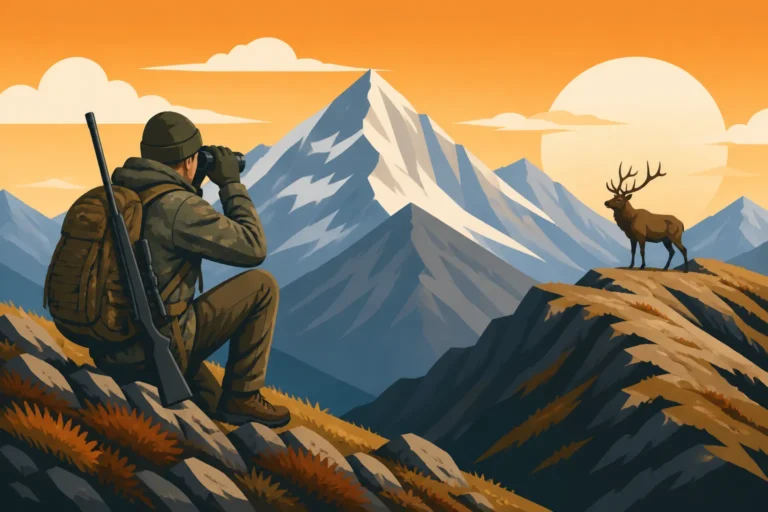
In a landscape as immense as the Northern Rockies, your eyes and optics are your most important tools. Glassing—using binoculars or a spotting scope to systematically scan vast areas from a vantage point—is the cornerstone of success, especially for sheep, goats, and often moose and elk. You're not just looking for an entire animal; you're looking for a patch of hide, a flicker of an ear, or an unnatural shape against the natural landscape.
Find a high point with an expansive view, set up comfortably, and slowly pick apart the terrain. Pay close attention to transition zones: timber edges, avalanche chutes, creek bottoms, and the interface where alpine meadows meet rocky slopes. Animals often feed or bed in these areas. For sheep and goats, concentrate on sunny, south-facing slopes in the morning and evening. For moose, scour willow thickets and beaver ponds. This methodical approach can save you countless miles of walking and put you in a position to plan a successful stalk. Glassing an Interior Hillside for Mule Deer offers general glassing principles that apply here too.
Spot-and-Stalk: The Ultimate Test
Once an animal is spotted, the real work of the spot-and-stalk begins. This involves carefully planning an approach that minimizes detection by the animal, using terrain features, wind direction, and cover to your advantage. In the Northern Rockies, a stalk can be incredibly challenging due to the steep, broken ground, dense timber, or wide-open alpine. You might need to drop into a valley and climb another mountain just to get within shooting range, a journey that could take hours.
Wind direction is paramount; always approach with the wind in your face or quartering. Move slowly, deliberately, and be prepared to stop and freeze if the animal looks your way. Pay attention to your foot placement to avoid dislodging rocks or breaking branches. For sheep and goats, stalks can often require crawling over sharp rock or crossing scree slopes. For moose in dense cover, it might be a slow, quiet creep. The spot-and-stalk is a chess match against a wild animal on its home turf, demanding extreme patience and focus.
The Role of Calling and Still-Hunting
While glassing and spot-and-stalk dominate mountain hunting, other strategies are highly effective for specific species and habitats. Calling is particularly potent for moose during the rut. Cow calls, bull grunts, and even antler rattling can draw a curious or territorial bull into range. Positioning yourself strategically in thick cover downwind from likely moose hangouts, then initiating calls, can be exhilarating. Remember Calling Moose in the Rut for more tactics.
Still-hunting—moving slowly and deliberately through timber, pausing frequently to observe and listen—is another underutilized strategy. This is especially effective in dense forest or regenerating clearcuts where visibility is limited, such as when hunting moose or bear. It requires immense patience and a keen awareness of your surroundings. You're trying to move as silently as possible, using your senses to detect game before it detects you. This technique is particularly effective during or just after a light snow, which can muffle your footsteps and highlight fresh tracks.
Prioritizing Safety and Preparedness in Remote British Columbia
The grandeur and wildness of British Columbia's Northern Rockies come with inherent risks. Unlike hunting closer to populated areas, help is often days away. Therefore, prioritizing safety and being fully prepared for any eventuality is not just good practice; it's absolutely critical for survival.
Bear Safety: Coexisting with Apex Predators
The Northern Rockies are prime grizzly and black bear country. Encounters are a real possibility, and being prepared is paramount. Always carry bear spray on your person, easily accessible, and know how to use it effectively. A sturdy firearm, if you are proficient and legally permitted to carry one for defense, can be an additional layer of protection, particularly for larger bears. When camping, meticulous food storage is essential: hang food, cooking gear, and scented items from a tree, away from your tent, or store them in bear-resistant containers. Never cook or eat in your sleeping area.
Be noisy when moving through dense bush to avoid surprising a bear. Understand bear behavior: how to identify signs of their presence, what to do in an encounter (e.g., how to differentiate defensive charges from predatory ones, and appropriate responses). If you harvest an animal, field dress it quickly and efficiently, and move the carcass away from your camp. Be especially vigilant when packing out meat, as the smell can attract bears from long distances. What to Do If You See a Grizzly provides crucial information.
Weather Extremes and Emergency Planning
Weather in the Northern Rockies is notoriously unpredictable and can change rapidly. A sunny morning can turn into a blizzard in the afternoon, even in early fall. Always check the forecast before heading out, but be prepared for conditions far worse than predicted. This means packing extra layers, a reliable waterproof outer shell, and emergency shelter. Hypothermia is a constant threat in wet, cold conditions.
Beyond weather, think about other potential emergencies: injuries, getting lost, or equipment failure. A comprehensive first-aid kit, a reliable fire starter, and sufficient emergency food and water are non-negotiable. Always leave a detailed trip plan with a trusted contact, including your intended route, timelines, and emergency contacts. Emergency Planning in British Columbia's Backcountry cannot be stressed enough for this region.
Communication in the Backcountry: Satellite Devices are Your Lifeline
Cell service is virtually non-existent in the vast majority of the Northern Rockies. Relying on a cell phone for communication or navigation is a recipe for disaster. This makes satellite communication devices essential. A satellite messenger (like an InReach or Spot device) allows you to send and receive text messages, share your location, and, most importantly, trigger an SOS call to emergency services even when far from any cellular signal.
These devices are not just for emergencies; they allow you to check in with family, receive critical weather updates, or coordinate logistics if you're using a bush plane or jet boat. Make sure your device is fully charged, has an active subscription, and you are familiar with its operation before you leave home. Practice sending messages and understanding its features. In this remote wilderness, your satellite device might be your only link to the outside world. Satellite Communication on a Remote Hunt is vital reading.
Conservation and Ethical Hunting in a Pristine Wilderness
Hunting in British Columbia's Northern Rockies is more than just harvesting an animal; it's an immersive experience in one of the continent's last great wild places. With this privilege comes a profound responsibility to uphold ethical hunting standards and contribute to the conservation of this pristine environment and its wildlife.
Adhering to Regulations and Compulsory Reporting
Ethical hunting begins with a thorough understanding and strict adherence to all regulations. This includes respecting season dates, bag limits, antler point restrictions, and species-specific rules. The regulations are designed to ensure sustainable wildlife populations and fair chase. In British Columbia, many big game species, especially moose, sheep, and goats, are subject to compulsory reporting and sometimes compulsory inspection. This means you must report your harvest within a specified timeframe and, for some species, present the head and/or hide to a provincial official for inspection.
Compulsory inspection allows wildlife biologists to collect valuable data on animal health, age, and population trends, which directly informs future management decisions. Failing to comply with these rules can result in significant penalties and undermine conservation efforts. Hunters are also encouraged to provide accurate harvest data even for voluntarily reported species, as every piece of information helps paint a clearer picture of wildlife health. Compulsory Reporting Within Thirty Days covers the requirements.
Minimizing Impact and Leaving No Trace
The concept of "Leave No Trace" is particularly pertinent in the Northern Rockies. This philosophy guides how we interact with the wilderness to ensure it remains pristine for future generations. Pack out everything you pack in, including all garbage, spent cartridges, and any waste. Do not leave behind food scraps, which can attract animals and habituate them to human presence.
When setting up camp, choose durable surfaces, minimize your footprint, and avoid damaging vegetation. When traveling off-trail, stick to durable ground like rock or dry grass to prevent erosion. Human waste should be buried at least 6-8 inches deep and 200 feet from water sources, trails, and campsites. The goal is for anyone following in your footsteps to find no evidence of your passing. This respect for the land is a core tenet of ethical hunting.
Responsible Meat Care and Trophy Management
The responsible hunter ensures that harvested game meat is cared for properly and not wasted. In the Northern Rockies, this can be a significant challenge given the potential for warm weather, long pack-outs, and the presence of bears. Learn proper field dressing techniques to cool the carcass quickly. Use clean game bags to protect the meat from flies and dirt. If you’re in bear country, hanging meat high in a tree or taking other precautions to secure it overnight is crucial. Packing Out of British Columbia's Steep Country discusses the physical demands and techniques involved.
For trophy animals, proper caping and hide care are just as important. Learn how to correctly cape an animal for taxidermy, especially in a remote setting. Cool the hide as quickly as possible and salt it if you're in the field for an extended period. Wasting edible meat is illegal and unethical. The effort involved in hunting these magnificent animals should be matched by the effort to utilize them fully and respectfully. This commitment to responsible stewardship ensures the long-term health of British Columbia's hunting heritage.
Disclaimer
This article is for general informational purposes only and does not constitute professional advice. Laws, prices and regulations vary by location and change over time. Consult a qualified professional for guidance on your specific situation.