Public Hunting Land in British Columbia
It's an age-old question for anyone new to hunting in British Columbia, or even seasoned veterans exploring new corners of this vast province: "Where can I actually hunt?" With an immense landscape, countless regulations, and a mix of public and private land, figuring out where you can legally and ethically pursue game can feel like navigating a maze. This comprehensive guide is here to untangle that complexity, giving you a clear understanding of public hunting land in British Columbia and how to access it responsibly.
Understanding Crown Land in British Columbia
British Columbia is a province of truly epic scale, and a huge portion of that land is, in fact, "public." But understanding what "public land" actually means for a hunter here, and where those boundaries lie, is the first crucial step to planning any successful outing. It's not as simple as drawing a line on a map and saying "everything on this side is fair game."
What "Public Land" Truly Means Here
In British Columbia, the term "public land" is largely synonymous with "Crown land." This refers to land owned by the provincial government, held "in trust for the public." Unlike some other jurisdictions where public land might be managed by various federal or state agencies with differing rules, here, the provincial Crown is the primary owner. This means the province sets the overarching rules and regulations for how that land can be used, including hunting.
However, it's vital to understand that Crown land is not a blanket designation for unrestricted access or hunting. Within Crown land, there are many layers of further designation: parks, protected areas, ecological reserves, municipal boundaries, resource extraction tenures (like logging or mining), and First Nations reserves, all of which come with their own set of rules that can restrict or prohibit hunting. So, while you might be on Crown land, you still need to verify the specific regulations for that particular parcel. It's the wild west feel with a heavy dose of bureaucracy, which can certainly test your patience as you try to sort it all out.
The Sheer Scale of British Columbia's Crown Land
Roughly 94% of British Columbia is Crown land. Let that sink in for a moment. That's an astronomical amount of territory, far more than many other hunting destinations. This vastness is what makes hunting in BC so appealing, offering incredible opportunities for remote wilderness experiences, diverse game species, and the chance to truly get away from it all. You can literally drive for hours, or even days, and still be on land managed by the province.
This immense scale means that finding public land to hunt on is rarely the core issue. The challenge often lies in accessing that land, understanding its specific management unit rules, and navigating the various resource activities that might be happening within it. It's a double-edged sword: endless possibilities, but also endless details to sort through. From the coastal rainforests to the interior drylands, and up into the northern reaches, the landscape changes dramatically, but the underlying principle of Crown land ownership remains consistent.
Distinguishing Crown Land from Private and Parks
While the majority is Crown land, the remaining 6% is private land, and a significant portion of that includes parks and protected areas. Private land, as you'd expect, is off-limits to hunting without explicit permission from the landowner. This often means working with ranchers, farmers, or timber companies, which can be a whole process in itself. Trespassing laws in British Columbia are clear, and it’s always your responsibility to know whose land you’re on. British Columbia Trespass and Private Land Law outlines this more clearly.
Provincial parks and protected areas are also a special category. Most provincial parks are entirely closed to hunting. However, some larger, less developed parks or ecological reserves may have specific hunting opportunities, often under Limited Entry Hunting (LEH) authorizations, but these are exceptions rather than the rule. It’s absolutely critical to check the specific regulations for any park you might be considering, as the default is usually no hunting. Similarly, federal lands, such as national parks or military bases, have their own distinct rules, almost universally prohibiting hunting. Always assume private or park land is closed to hunting unless you have definitive, documented proof otherwise.
Navigating British Columbia's Hunting Regions and Management Units
Once you grasp the concept of Crown land, the next layer of the onion involves understanding how British Columbia segments its vast territory for regulatory purposes. This is where Hunting Regions and Management Units (MUs) come into play, and they are absolutely critical for any hunter to comprehend.
The Nine Hunting Regions Explained
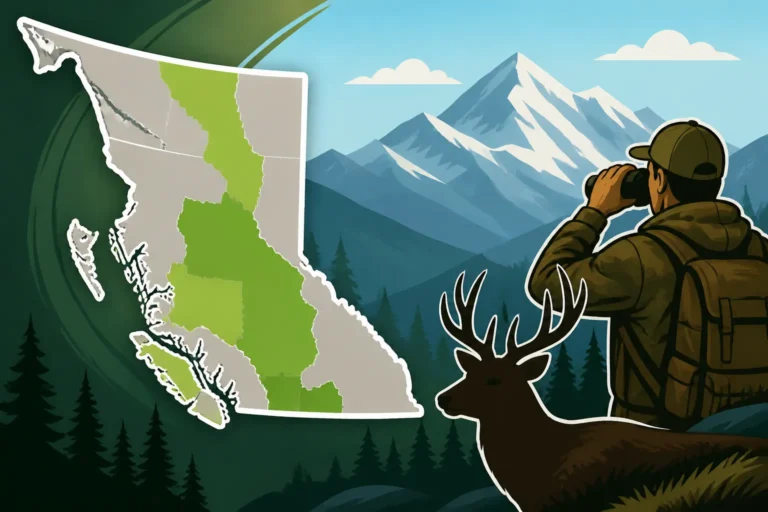
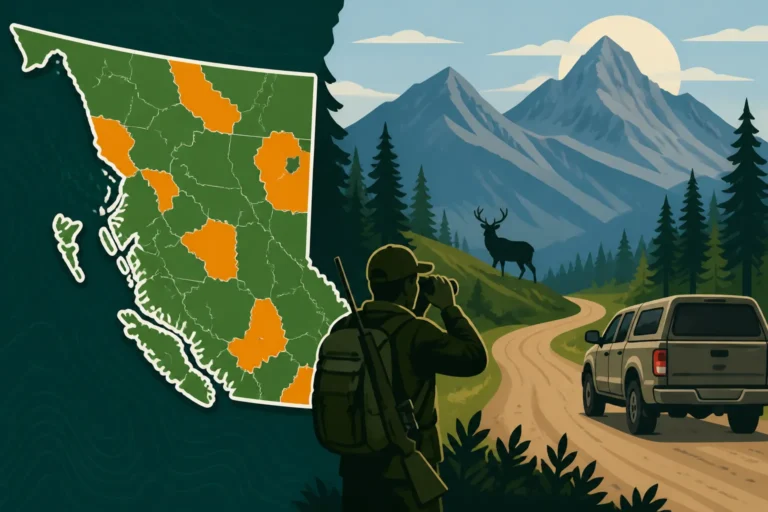
British Columbia is divided into nine administrative hunting regions. These regions are broad geographical areas, each with its own unique characteristics, game populations, and often, slightly different season dates and bag limits for various species. Think of them as the overarching umbrellas under which more granular regulations sit. For instance, deer season in Region 1 (Vancouver Island) will likely have different start and end dates and antler restrictions than deer season in Region 7 (Omineca) or Region 4 (Kootenay).
Each region is numbered, from Region 1 (Vancouver Island) to Region 9 (Peace). These regional boundaries often follow major geographic features or administrative lines, but they are not always intuitive on a general map. Knowing which region you're in, or planning to hunt, is the first step in narrowing down the applicable regulations. It also gives you a sense of the general landscape and what species are most prevalent. For instance, coastal blacktail are predominantly found in Regions 1 and 2, while moose are common throughout Regions 5, 6, 7, 8, and 9.
Deciphering Management Unit (MU) Numbers
Below the regional level, British Columbia breaks down its hunting areas into hundreds of smaller, specific zones known as Management Units (MUs). These are the truly granular divisions that dictate precise season dates, bag limits, and whether a hunt is General Open Season (GOS) or Limited Entry Hunting (LEH). An MU number typically starts with the region number, followed by a series of other digits (e.g., 4-01, 7-34, 6-12). British Columbia's Management Units and Regions provides a deeper dive into this system.
Understanding MU boundaries is paramount because regulations often change from one MU to the next, even if they share a border. You might be legally hunting an antlerless deer in MU 3-14, but cross into MU 3-15, and suddenly it's a four-point or better buck-only zone. Ignorance of these boundaries is not an excuse for a violation, and the consequences can be severe. It takes diligent map work and careful attention to detail, but it's non-negotiable for responsible hunting.
Using Digital Tools for MU Navigation
Gone are the days when you relied solely on paper maps, although they still have their place as a backup. Modern technology has revolutionized how hunters can navigate British Columbia's MUs and land designations. Digital mapping applications are an absolute game-changer. Tools like onX Hunt and GoHunt allow you to overlay MU boundaries directly onto satellite imagery or topographic maps, making it incredibly easy to see exactly where you are in relation to these crucial lines.
These apps also often display Crown land boundaries, private land parcels, and even forest service roads, providing an all-in-one resource right on your phone or GPS device. You can download maps for offline use, which is essential given how often cell service disappears once you leave the main highways here. Before heading out, spend time with these tools. Familiarize yourself with the MU boundaries, potential access points, and any obvious private land parcels in your chosen area. Cross-referencing these digital maps with the official BC hunting regulations synopsis is the gold standard for preparation. Finding a British Columbia Management Unit Map can help you get started.
Accessing British Columbia's Crown Land
Having a clear understanding of what Crown land is and how it's broken down into regions and MUs is foundational. But the next, and often most challenging, piece of the puzzle is actually accessing these vast tracts of public hunting ground. British Columbia's landscape isnaks it unique, with an extensive network of industrial roads alongside remote wilderness.
The Forest Service Road (FSR) Network
The backbone of access to much of British Columbia's interior and coastal Crown land is its extensive Forest Service Road (FSR) network. These are gravel roads built and maintained primarily by forestry companies (though technically Crown land infrastructure) to facilitate logging operations. Many FSRs are open to public vehicle traffic and provide the main arteries into prime hunting country. You'll find these roads winding through valleys, climbing mountainsides, and often leading to smaller, less-maintained spur roads. British Columbia Forest Service Road Access covers these in more detail.
However, hunting along FSRs comes with important considerations. Firstly, these are active industrial roads, meaning you'll often encounter heavy logging trucks, road graders, and other industrial vehicles. Always drive defensively, use your radio if on a designated channel, and be prepared to give way. Secondly, regulations often restrict shooting from or across FSRs, or within a certain distance of them. Always check the specific rules in the hunting synopsis. Lastly, the condition of FSRs can vary wildly, from well-graded mainlines to rough, pothole-ridden tracks that require a high-clearance 4×4. Always carry spare tires, a jack, and recovery gear when venturing onto FSRs, especially into more remote areas.
Deactivated Roads and Beyond the Gate
As logging blocks are finished, or if roads become unstable, forestry companies or the government may "deactivate" FSRs. This often involves digging large cross-ditches, removing bridges, or placing locked gates. A deactivated road, or one behind a locked gate, doesn't necessarily mean it's no longer Crown land, but it does mean vehicular access is cut off. This can be a frustration for hunters hoping to drive deep into an area. Deactivated Roads on British Columbia Crown Land delves into this.
However, a locked gate or a deactivated road simply means you can't drive past that point. In many cases, these areas remain open for foot, horseback, or bicycle access. This is where some of the best hunting opportunities can be found, as these areas often see significantly less hunting pressure simply because they require more effort to reach. Planning for a hunt beyond a gate means packing lighter, considering a backpack hunt, or organizing a horse pack trip. It changes the dynamic of your hunt entirely, shifting it from a vehicle-supported trip to a true backcountry endeavor, but it's often well worth the effort for the solitude and quality hunting experience it provides.
Backcountry Access: Horse, Foot, and Float
Beyond the road network, true backcountry access opens up a world of remote hunting opportunities in British Columbia. This involves accessing areas by foot, horseback, or watercraft, often leading to untouched valleys, high alpine basins, and vast wilderness tracts. This is where the sheer scale of BC's Crown land really shines, offering experiences that are increasingly rare in more populated regions.
For foot access, planning involves meticulous route selection using topo maps, considering elevation gain, river crossings, and dense bushwhacking. A well-conditioned body, a sturdy backpack, and reliable navigation skills are paramount. Horseback hunting, while a significant undertaking, allows hunters to cover vast distances, carry more gear, and pack out heavy game more efficiently. Horseback Hunting British Columbia's Backcountry offers insights here. For coastal areas or regions with large lakes and rivers, jet boats, canoes, or rafts can provide excellent access, opening up river bars, lake shores, and remote inlets. Each method requires specialized gear and skills, but they unlock access to some of the most spectacular and lightly hunted country British Columbia has to offer.
Specific Public Land Types and Their Rules
While much of British Columbia is Crown land, not all Crown land is managed under the same set of rules, particularly when it comes to hunting. It's crucial for hunters to understand these different designations, as they can significantly impact where and how you can pursue game.
British Columbia Wildlife Management Areas (WMAs)
British Columbia has designated specific areas as Wildlife Management Areas (WMAs), which are managed primarily for wildlife habitat and conservation values. These areas are typically established in critical habitats, such as winter ranges, wetlands, or migratory bird staging areas. While WMAs are indeed Crown land, they often come with their own specific regulations that supersede general provincial hunting rules. British Columbia Wildlife Management Area Rules can give you an overview.
Hunting is generally allowed within WMAs, but it's not uncommon to find unique restrictions. These might include specific dates when certain zones are open or closed, restrictions on vehicle access, prohibitions on ATVs or snowmobiles, or limitations on hunting methods (e.g., archery-only zones). For example, some WMAs might have areas specifically closed to hunting during waterfowl staging periods, or vehicle restrictions during the spring to protect sensitive habitats. It is absolutely essential to check the current regulations synopsis for the specific WMA you plan to hunt, as rules can change to reflect conservation needs. These areas are incredibly important for wildlife, and adherence to their specific rules is vital for their continued health and for maintaining hunting access.
Provincial Parks: A Nuanced Approach
As mentioned earlier, British Columbia's provincial parks are generally not open to hunting. The primary mandate of BC Parks is conservation and recreation, and hunting is typically not compatible with that mission. However, there are some very specific and limited exceptions, often within larger, more remote wilderness parks or protected areas where historical hunting rights or management objectives allow for it. These exceptions are rare, highly regulated, and almost always subject to the Limited Entry Hunting (LEH) system.
You cannot just assume that because a park appears remote, it's open to hunting. In fact, you should assume the opposite. If you do find an LEH opportunity within a park boundary, the access and hunting conditions will be incredibly specific and often very challenging. You might have to pack in by foot for days, and there could be strict rules about where you can camp, what kind of weapon you can use, or how you must pack out your animal. Always consult British Columbia Provincial Park Hunting Rules and the regulations synopsis for the exact details, as hunting in a park without authorization can lead to severe penalties, including fines and license suspension.
Recreation Sites and Random Camping
British Columbia boasts a fantastic network of designated Recreation Sites on Crown land, managed by BC Recreation Sites and Trails. These are typically rustic campgrounds with basic amenities like picnic tables, fire rings, and outhouses, often accessible by FSRs. Many hunters utilize these sites as base camps for their hunts, offering a comfortable and designated spot to return to after a day in the field. They are generally located on Crown land that is open to hunting in the surrounding area, making them convenient for staging.
Beyond designated recreation sites, "random camping" is largely permitted on Crown land in British Columbia, meaning you can pitch a tent almost anywhere, provided you are not on private land, within a park, or in an area with specific restrictions. This offers immense flexibility for hunters looking for a truly remote camp experience. However, when random camping, adherence to "Leave No Trace" principles is paramount. Pack out everything you pack in, minimize your impact, and ensure any campfires are within current fire regulations. Remember, while you can camp almost anywhere on Crown land, you still must follow all hunting regulations for that specific MU, including rules about shooting distances from roads, dwellings, or established camps.
| Land Type | Hunting Generally Permitted | Special Regulations/Considerations | Typical Access Methods |
|---|---|---|---|
| General Crown Land | Yes | Subject to MU-specific season dates, bag limits, weapon restrictions. | FSRs, deactivated roads (foot/horse), backcountry hiking/boating |
| Wildlife Management Areas (WMAs) | Yes | Specific WMA rules often supersede general MU rules (e.g., vehicle bans, seasonal closures). | FSRs, often with internal vehicle restrictions. |
| Provincial Parks | Rarely | Generally closed to hunting; rare exceptions usually via LEH with strict conditions. | Restricted access, often foot or specialized routes only. |
| Private Forest Land (Crown Timber Lease) | Sometimes | Requires permission from leaseholder (often timber companies), may involve access fees or permits. | Company-managed gates and FSRs, often with restricted public access. |
| Private Farm/Ranch Land | No (without permission) | Always requires explicit, written permission from landowner. | Direct landowner contact, often gated access points. |
| First Nations Reserve Land | No (without permission) | Hunting rights reserved for members; non-members require explicit invitation/permission. | Community roads, private access. |
Private Forest Land and Access Agreements
While British Columbia boasts an incredible amount of public Crown land, there's a significant portion of the landscape, especially in coastal regions and certain parts of the interior, that falls under "private forest land" or land where Crown timber rights have been leased to private companies. This adds another layer of complexity to hunting access.
The Complexity of Private Timber Holdings
Many large tracts of land in British Columbia are privately owned by timber companies, or they are Crown lands where exclusive timber harvesting rights have been granted. These areas are actively managed for forestry, and while they might look like typical Crown land from the outside, they are often treated differently regarding public access. On Vancouver Island, for example, massive swathes of what appears to be prime hunting country are, in fact, owned and managed by private forestry corporations.
The companies that own or manage these lands have a vested interest in protecting their investments, managing their operations, and ensuring public safety (especially during active logging). This often translates into controlled access. They might have extensive networks of logging roads that could provide excellent access to game-rich areas, but these roads are often behind locked gates, or access is restricted during certain times or seasons. Understanding who owns or manages the land is crucial before planning a hunt, and it's not always obvious on a standard map.
Understanding Access Permits and Gates
Access to private forest lands or Crown land under private timber tenure is often granted through formal access agreements or permits, particularly during non-operational periods or specific hunting seasons. Some major timber companies, like Mosaic Forest Management on Vancouver Island, have established online permit systems where hunters can purchase permits to access certain areas for recreational use, including hunting, during designated times. These permits often come with specific rules regarding gate hours, allowed activities, and safety protocols.
It's a system that can be frustrating, as it means an additional cost and administrative step for hunters, and access isn't guaranteed. Gates may open and close depending on logging activity, fire risk, or other operational needs. However, these systems do offer a legal and structured way to get into areas that might otherwise be completely off-limits. Always check the websites of the major timber companies operating in your desired area well in advance of your hunt to see what, if any, access programs they have in place. Never assume a gate will be open, and never attempt to bypass a locked gate, as this is trespassing.
Respecting Private Land Boundaries
Even if you have successfully gained access to private forest land or are hunting on general Crown land, you will inevitably encounter boundaries with truly private holdings—ranches, farms, or residential properties. Respecting these boundaries is not just a matter of courtesy; it's a legal requirement. Knowing exactly where private land begins and ends is critical to avoid trespassing and potential fines, or worse, losing your hunting privileges.
Digital mapping tools, like onX Hunt or GoHunt, are invaluable for overlaying private property lines onto your maps, giving you a clear visual guide in the field. Always be aware of your surroundings, look for fences, signs, or other markers. If you accidentally cross onto private land, immediately leave the area. If game you've shot crosses onto private land, you cannot pursue it without explicit permission from the landowner. It's an uncomfortable situation, but one that demands respect for property rights. Maintaining a good relationship between hunters and landowners is crucial for preserving access in the long run.
Overcoming Common Access Challenges
Even with a good grasp of Crown land, MUs, and private land, British Columbia throws some unique challenges at hunters when it comes to practical access in the field. Being prepared for these hurdles can make the difference between a successful hunt and a frustrating failure.
Road Closures and Environmental Restrictions
One of the most common and impactful challenges hunters face in British Columbia is dealing with road closures and environmental restrictions. Active logging operations mean roads can be closed for safety reasons at any time, sometimes with little warning. You might drive for hours only to find a gate or a "Road Closed" sign, forcing a last-minute change of plans. Road conditions can also deteriorate rapidly due to weather, making once-passable routes impassable.
Environmental restrictions are another significant factor. Wildfires are a persistent threat in British Columbia, especially in the dry interior, and fire bans or area closures can shut down access to vast tracts of land during peak hunting season. Reading British Columbia Wildfire Closures can help you prepare for this. Similarly, extreme weather events, like heavy rainfall causing washouts or mudslides, can close FSRs for extended periods. Always check DriveBC for major road conditions and regional fire centre websites for fire bans and area closures before and during your hunt. Flexibility and having backup plans for alternative hunting areas are essential when facing these unpredictable challenges.
Navigating Guide Outfitter Territories
British Columbia has a unique system of guide outfitter territories, which are geographically defined areas where licensed guide outfitters have exclusive rights to guide non-resident hunters for specific species. While residents are free to hunt within these territories (provided they follow all other regulations), the presence of guide outfitters can sometimes create access ambiguities or perceived conflicts. British Columbia Guide Outfitter Territories Explained provides extensive detail on this system.
It's important to understand that a guide outfitter's territory is not private land; it's still Crown land open to resident hunters. However, guide outfitters often establish camps, maintain trails, and invest significant resources in their areas. While a resident hunter has every right to be there, it's generally good etiquette to avoid interfering with a guided hunt if you encounter one. Communication can go a long way. If you find yourself hunting near a prominent outfitter camp, be mindful of your presence and try to minimize disruption. Knowing where these territories are can help you plan your hunt to either avoid them entirely or be prepared for potential encounters.
First Nations Territory and Consultation
First Nations in British Columbia hold constitutionally protected Aboriginal rights and title, which include inherent hunting, fishing, and trapping rights within their traditional territories. While there are ongoing processes to define and reconcile these rights, hunters need to be aware that much of British Columbia's Crown land falls within various First Nations traditional territories.
Generally, non-First Nations hunters can hunt on Crown land in these territories as per provincial regulations. However, there are instances of specific closures or restrictions that may be put in place through consultation processes with First Nations, particularly in areas of high cultural significance or where specific wildlife populations require additional protection. It's always respectful and responsible to be aware of the First Nations territories you are hunting within. While direct consultation by individual hunters isn't usually required, staying informed through official government publications and understanding the local context contributes to a respectful hunting culture.
Responsible Use of British Columbia's Public Lands
Access to British Columbia's vast public hunting grounds is a privilege, not a right. As hunters, we have a profound responsibility to use these lands ethically, safely, and sustainably, ensuring they remain healthy and accessible for future generations.
Leave No Trace Principles in the Backcountry
When venturing into British Columbia's backcountry, especially in remote areas where human impact is minimal, adhering to Leave No Trace principles is absolutely critical. This means planning ahead and preparing, traveling and camping on durable surfaces, disposing of waste properly, leaving what you find, minimizing campfire impacts, respecting wildlife, and being considerate of other visitors. For hunters, this translates to things like packing out all your trash (including spent casings and gut piles if required by regulations or if they're near sensitive areas), avoiding cutting live trees for campfires, and keeping your camp clean and tidy.
Proper meat care is also a component of Leave No Trace. While packing out all edible meat is a legal requirement, how you dispose of offal or other non-edible parts should be done thoughtfully, away from trails, water sources, and common access points to avoid attracting scavengers to areas frequented by people. Our actions leave a lasting impression, not just on the land itself, but also on the public perception of hunters. By being impeccable stewards of the land, we help ensure continued access and public support for hunting.
Safety and Preparedness for Remote Hunting
British Columbia's public lands, particularly the remote backcountry, can be unforgiving. Hunters venturing into these areas must prioritize safety and preparedness. This starts with a thorough trip plan shared with someone reliable, outlining your destination, route, expected return time, and contingency plans. Essential gear includes reliable navigation tools (GPS, compass, map), first-aid supplies, emergency shelter, fire-starting tools, sufficient food and water, and appropriate clothing for rapidly changing mountain weather.
Communication in the backcountry is often limited, so consider carrying a satellite messenger or satellite phone for emergencies. Bear safety is also paramount, especially in grizzly country; carrying bear spray and knowing how to use it, along with proper food storage and camp hygiene, are essential. Emergency Planning in British Columbia's Backcountry offers more guidance. Being realistic about your physical abilities, especially when planning to pack out large game from steep terrain, is also a key component of safety. Never underestimate the mountains, and always be prepared to spend an unplanned night out.
Reporting Violations and Protecting Access
Protecting British Columbia's public hunting land and the integrity of hunting itself requires collective vigilance. Unfortunately, violations do occur, whether it's poaching, illegal road construction, garbage dumping, or other activities that harm wildlife or habitat. When you witness or suspect a violation, it's your responsibility to report it to the appropriate authorities.
The Report All Poachers and Polluters (RAPP) line is a dedicated service in British Columbia for reporting environmental violations, including hunting and fishing infractions. Providing detailed information, including location, time, descriptions of individuals or vehicles, and photos if safely possible, can be incredibly helpful for conservation officers. By actively participating in the enforcement of regulations, hunters play a vital role in deterring illegal activities, protecting wildlife populations, and ultimately, safeguarding public hunting access for everyone.
Disclaimer
This article is for general informational purposes only and does not constitute professional advice. Laws, prices and regulations vary by location and change over time. Consult a qualified professional for guidance on your specific situation.