How Big a Mountain Goat Gets
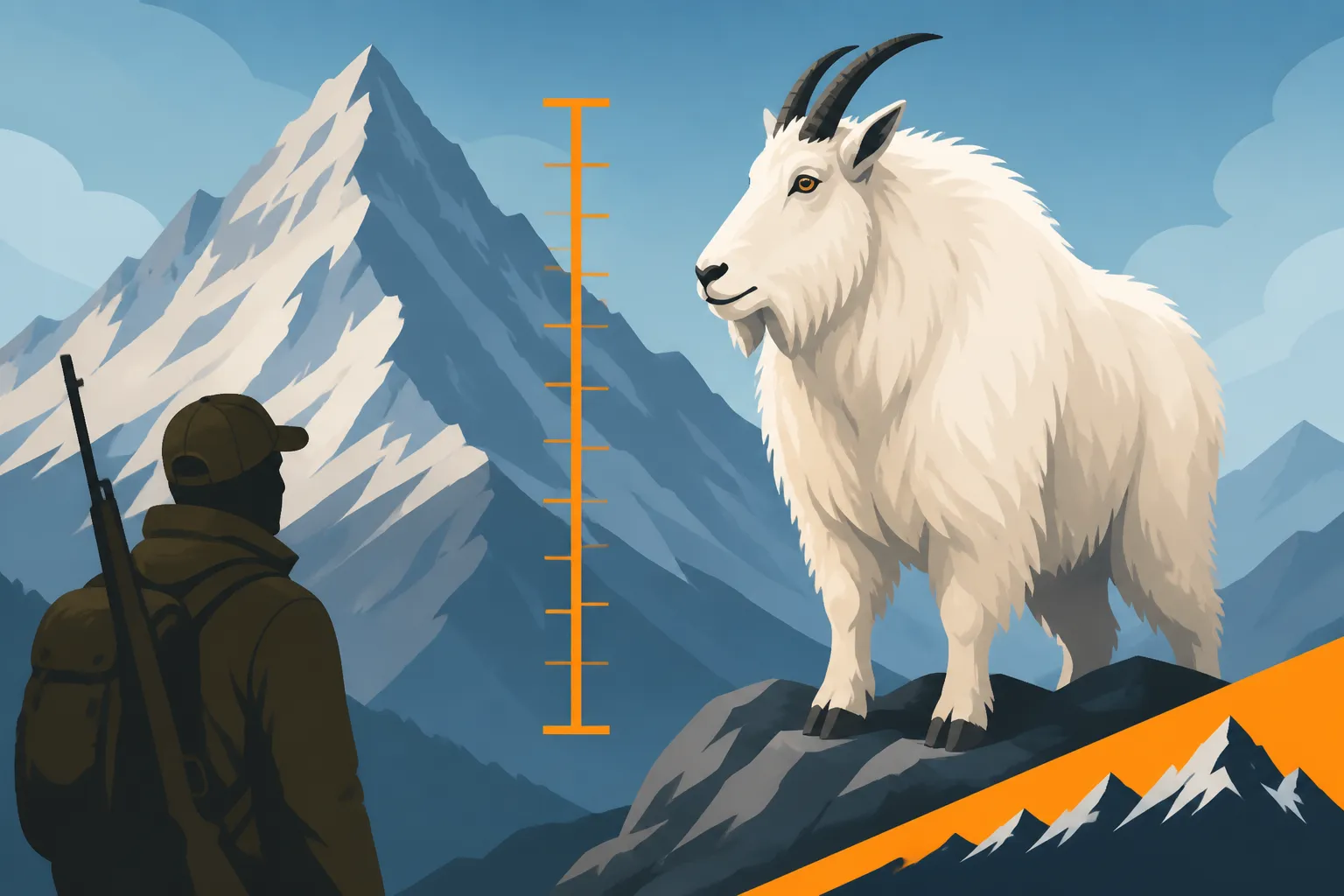
Hunting British Columbia's iconic mountain goat is a dream for many, but often, the sheer scale of the landscape and the animals themselves can be incredibly deceptive. You spot a distant white speck against a towering cliff face, and your mind immediately races: "Is that a mature billy? How big is it really?" It's a question that plagues every hunter when glassing these high-country dwellers. This guide aims to pull back the curtain on how truly massive British Columbia mountain goats can get, what makes them so formidable, and how you can better judge their impressive size in the wild.
The Majestic Mountain Goat: An Overview of Size and Stature
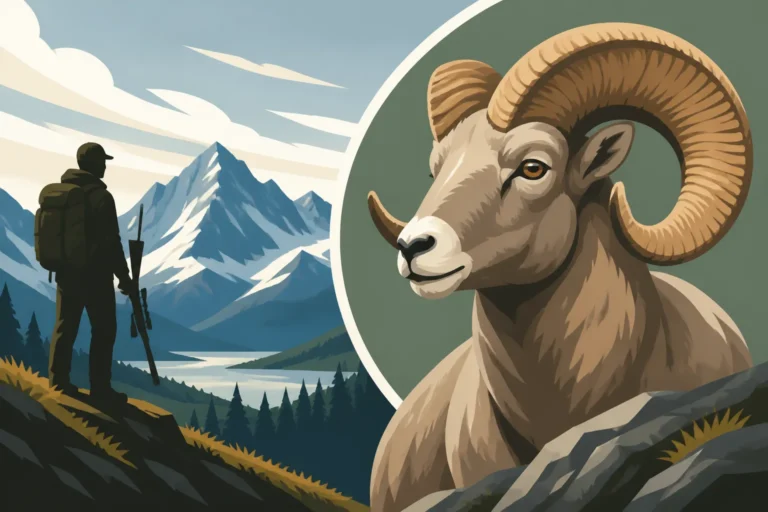
There's something truly awe-inspiring about seeing a mountain goat in its natural habitat. Perched precariously on a sheer cliff, their pure white coats stand out like beacons against the grey rock and green timberline. But don't let their elegant appearance fool you; these are incredibly tough, compact animals built for survival in some of the most unforgiving terrain on earth. Understanding their physical dimensions is the first step to truly appreciating their "bigness."
Average Physical Dimensions of British Columbia Mountain Goats
When we talk about "big," we're often thinking about weight. An average mature mountain goat billy in British Columbia can easily tip the scales, ranging anywhere from a lean 150 pounds up to a stout 300 pounds or more in prime condition. Nannies, while still robust, are generally smaller, typically weighing between 100 to 175 pounds. Now, imagine carrying even a 150-pound animal, quartered out, off the side of a mountain, and you quickly realize the scale of the challenge.
Their height at the shoulder usually falls between 35 to 40 inches, and their body length, from nose to tail, can stretch up to 55 to 70 inches. These aren't dainty creatures. They possess incredibly powerful, stocky legs, broad chests, and deep bodies, all designed for navigating steep, rocky terrain. They are a solid block of muscle and bone, perfectly adapted to their vertical world. The density of their bone structure and the thickness of their hide and dense wool contribute significantly to their overall weight, often making them feel even heavier than expected when you finally get your hands on one. This dense build is a crucial adaptation for surviving brutal alpine winters, providing both insulation and a resilient frame.
Beyond the Tape Measure: What "Big" Really Means in Goat Hunting
For hunters, "big" isn't just about total body weight; it's often about the trophy quality, which means those impressive black horns. Mountain goat horns are truly unique, growing year after year, forming distinct annuli (rings) that tell the story of the animal's life. A truly "big" goat in a hunter's eyes usually refers to an older, mature billy with long, heavy, and well-developed horns.
Horn length is often the primary measure, with mature billies frequently sporting horns between 8 to 10 inches, and exceptional animals pushing into the 10-12+ inch range. But length isn't the only factor; base circumference is equally, if not more, important. A thick, heavy base indicates an older, more dominant animal. Sometimes, a goat with slightly shorter but incredibly thick-based horns will score higher and look more impressive than a goat with longer, spindly horns.
The subtle curvature and sharp tips also play a role in their aesthetic appeal. There's a certain "presence" to an old, battle-scarred billy, his horns polished from years of rubbing, his coat thick and gleaming, that transcends mere measurements. It's about the entire package – the animal's age, its physical prowess, and the testament to its survival in an incredibly harsh environment. This holistic view is often what truly defines a "big" goat for those who pursue them.
Factors Influencing Mountain Goat Size in British Columbia
Mountain goats are surprisingly resilient, but like all wild animals, their growth and ultimate size are heavily influenced by a combination of inherent traits and environmental factors. British Columbia, with its vast and varied mountainous terrain, provides a mosaic of conditions that can lead to significant differences in goat size across the province.
Age and Sex: Key Determinants of Growth
Just like with other big game, age is paramount when it comes to a mountain goat's size. Billies, the males, grow larger than nannies, and they reach their prime size and horn development between 6 to 10 years of age. A young billy, say 2-3 years old, might have decent horn length, but it won't have the mass or the fully developed body size of a truly mature animal. As billies age, their horns continue to grow, adding length and gaining mass at the base.
Nannies, on the other hand, typically reach their peak body size and horn growth earlier, often by 4-6 years of age. While their horns continue to grow with age, they rarely achieve the length or especially the basal circumference of a mature billy. The demands of gestation and raising kids also mean that nannies often put their energy into reproduction rather than maximizing body or horn growth after a certain point.
Aging a mountain goat in the field can be tricky. Experienced hunters look for horn annuli, the growth rings, which can indicate age, but they can be worn or difficult to see at a distance. Body characteristics are also key. Older billies often have deeper chests, thicker necks, and a more robust, "blocky" appearance compared to younger animals or nannies. They might also show more wear and tear, like scars on their coat or broken horn tips, a testament to their long life in a rugged landscape.
Habitat, Nutrition, and Genetics: The Environmental Impact
The "where" truly matters when it comes to how big a mountain goat gets. British Columbia is home to a robust population of Mountain Goats in British Columbia's Peaks, and the quality of their habitat directly correlates with their overall health and size. Areas with abundant and nutritious forage, particularly crucial mineral licks, allow goats to put on more body mass and grow stronger, healthier horns. These prime feeding grounds, often found in subalpine meadows or specific rock formations, provide the necessary nutrients for optimal development.
Furthermore, areas with stable, less-disturbed populations and strong genetic lineages can consistently produce larger animals. Remote, pristine mountain ranges, far from human encroachment, often harbor more robust animals simply because they face fewer stressors and have access to untouched resources. Consider the towering peaks of the Coast Range or the Northern Rockies; these vast, rugged territories provide ample space and resources for goats to thrive, contributing to why British Columbia's Mountain Goat Numbers remain strong in many regions.
Conversely, areas with poorer forage quality, higher population densities leading to increased competition, or those affected by habitat degradation might see smaller average body sizes and horn development. Weather also plays a significant role; harsh winters can limit forage availability and put stress on herds, impacting overall growth. It's a complex interplay of factors, but healthy habitat is undeniably the foundation for healthy, large mountain goats. If you're utilizing tools like GoHunt, looking at public land data and habitat types can give you a hint about the potential for larger animals in a given management unit.
Field Judging Mountain Goat Size: Tips for Hunters
One of the most exhilarating and nerve-wracking parts of mountain goat hunting is the challenge of field judging. These animals are often miles away, high on a cliff, and the elements can make accurate assessment incredibly difficult. Patience and a keen eye are your best allies here.
Distinguishing Billies from Nannies and Understanding Horn Characteristics
Accurately telling a billy from a nanny is your first and most critical step, especially since most hunting regulations aim to protect nannies. Here’s a quick guide, but remember that variations exist:
| Characteristic | Mature Billy (Male) | Mature Nanny (Female) |
|---|---|---|
| Body Build | Larger, more robust, "blocky," deeper chest, thicker neck. Front shoulders often appear more massive. | Smaller, more slender, often appears "leggy." Belly may appear distended if pregnant or with kids. |
| Horn Shape & Size | Generally longer, thicker at the base, with less uniform taper. Often exhibit a more distinct backward curve with a slight outward flare at the tip. Tips may be more worn or broomed. | Shorter, more slender, with a more uniform, often needle-like taper from base to tip. Tends to curve backward but with less outward flare. |
| Horn Color | Often darker, more polished, especially near the tips, from rubbing. | Can be lighter or more uniform, though still dark. |
| Urination Stance | Urinates forward, between the front legs (though rarely seen). | Urinates backward, between the hind legs (rarely seen). |
| Behavior | May be solitary or in small bachelor groups. Can be more assertive, often seen higher on the peaks or away from nannies with kids. | Often seen with kids (single or twins) or in larger groups of nannies and younger goats. |
| Hair Tufts | Sometimes a slight tuft of hair can be seen between the horns. | Generally lacks a prominent hair tuft. |
When it comes to horn characteristics, focus on three things: length, mass (base circumference), and overall shape. Use your spotting scope to really scrutinize the horns. Look for horns that appear long relative to the goat's ears – a good sign of length. Then, assess the base. Does it look thick and heavy, almost merging seamlessly into the skull, or does it appear slender? Thick bases are a hallmark of older, trophy-class billies. Pay attention to the curve and any outward flare at the tips; billies tend to have more pronounced characteristics.
Consider using a reference point, such as the length of the goat's ear, which is typically around 6-7 inches, to help estimate horn length. For instance, if the horn appears to be twice the length of the ear, you're likely looking at a decent billy. However, judgment is always tricky with perspective. Glassing multiple animals from different angles if possible can also help. Platforms like GoHunt can be invaluable in pre-scouting a unit, as they often provide topographical maps and satellite imagery that allow you to understand the terrain you'll be glassing and anticipate potential goat locations, helping you practice your judging skills even before you're in the field.
Common Misconceptions and Challenges in the Field
The biggest challenge in field judging is distance and perspective. A goat that looks massive in one situation can appear much smaller when you close the distance, and vice-versa. Here are some common pitfalls:
- Distance Magnification: Your optics, while powerful, can also play tricks. A goat miles away can seem monumental. Always try to close the distance safely and reassess.
- Terrain Distortion: A goat on a small bench can look huge; a truly big goat on a vast, open slope can appear dwarfed. Always compare the goat's size to known elements in the landscape, like rocks or small trees, if possible.
- Solo Animals are Always Billies: While older billies are often solitary, nannies can also be alone, especially if they've lost their kid or are temporarily separated from a group. Don't assume.
- "Long" Horns Mean "Big" Goat: As mentioned, mass is critical. A long, thin-horned goat might not be as desirable as a slightly shorter, but much heavier-horned billy.
- The "Fog Line" Illusion: When hunting in British Columbia's coastal rain or alpine, fog can create optical illusions, making animals appear closer or larger than they are. Exercise extreme caution and wait for clear visibility.
The best advice is to take your time. Observe the goat's behavior. If it's alone and acting dominant, it's more likely a billy. If it's with other goats and appears to be leading, especially with small kids around, it's almost certainly a nanny. Be patient, use the best optics you can afford, and when in doubt, pass. The mountains will always be there, and so will other goats. The ethical imperative is to be absolutely sure of your target. Learning how to identify British Columbia's Mountain Goat Numbers and their specific habits within a region can also increase your success in locating a worthy billy.
The Ultimate Reward: Packing Out a British Columbia Mountain Goat
So, you've located a magnificent billy, judged it carefully, and made a clean, ethical shot. The hard part, some might say, is just beginning. Packing a mountain goat out of British Columbia's steep, rugged country is an experience that will test your physical and mental limits like few other hunts.
The Sheer Challenge of the Pack Out
You've finally made it to your goat, and the animal that looked so majestic and almost ethereal on the cliff face is now a substantial, solid mass of bone, muscle, and dense hide. The reality of its weight immediately sinks in. Even after quartering, removing the hide, and separating the head, you're still looking at hundreds of pounds of cargo, all of which needs to be transported, often vertically, down incredibly difficult terrain. This is Why Goat Hunting Is the Hardest Pack Out is a common refrain among hunters.
The terrain itself is often the biggest obstacle. You might be navigating loose scree fields, steep rock slides, dense subalpine timber, or even snow and ice, all while carrying a heavy, awkward load. Every step needs to be deliberate, every handhold secure. The sheer physical exertion required is immense, and it's not uncommon for a pack out to take many hours, or even days, depending on the distance and elevation. This is where meticulous pre-hunt physical conditioning pays off, and having a solid plan for Getting Meat Out of Steep British Columbia Country is absolutely essential. A good frame pack is non-negotiable, allowing you to distribute the weight efficiently and carry substantial loads. Remember, getting the meat off the mountain quickly and safely is paramount to preserving its quality.
Trophy Care and Long-Term Appreciation
Once you've safely descended with your hard-won trophy, the next step is proper care. For the hide, especially with its beautiful white hair, quick cooling and careful handling are key. Any dirt, blood, or prolonged heat can quickly degrade the hide quality. Getting it thoroughly cooled and then salted as soon as possible is critical if you plan for a full body mount or a rug. The skull and horns also need attention; ensure they are kept clean and free from flesh to prevent bacterial growth.
The experience of a mountain goat hunt, and the resulting trophy, is a profound one. It’s a testament to enduring patience, physical fortitude, and an unwavering commitment to pursuing game in the most challenging environments. The horns, often displaying years of growth rings, become a silent chronicle of the animal's life and your journey. Whether displayed prominently in your home or simply held in your hands, they represent not just a hunt, but an adventure into British Columbia's wildest places. The true "bigness" of a mountain goat, ultimately, extends far beyond its physical dimensions, encompassing the sheer magnitude of the quest itself.
Disclaimer
This article is for general informational purposes only and does not constitute professional advice. Laws, prices and regulations vary by location and change over time. Consult a qualified professional for guidance on your specific situation.