Reading LEH Odds Before You Apply
Trying to navigate British Columbia's Limited Entry Hunting (LEH) system can feel like deciphering a secret code, especially when you're staring at a spreadsheet of odds, wondering if your dream hunt is even remotely possible. It's frustrating to invest time and money into applications without a clear understanding of your chances. This comprehensive guide will walk you through how to read and interpret LEH odds, helping you make smarter, more strategic choices for your next hunting season.
Understanding the Limited Entry Hunting System
Before we dive into the nitty-gritty of odds, it's crucial to grasp the foundation of British Columbia's Limited Entry Hunting (LEH) system. This isn't just a random lottery; it's a carefully managed program designed to balance hunter opportunity with wildlife conservation.
The Purpose of Limited Entry Hunting
British Columbia is a wild and diverse province, home to incredible big game species like moose, elk, and various types of deer. However, these populations, while robust in many areas, can also be sensitive to over-harvesting, especially in specific regions or for particular animal classes (like mature bull moose or prime rams). The LEH system was put in place precisely to manage this. Instead of a general open season where anyone with a valid species license can hunt, LEH zones and seasons control the number of hunters by issuing a limited number of authorizations through a draw. This ensures sustainable harvests, protects breeding populations, and often allows for a better hunting experience by reducing hunter congestion in popular areas. It’s about quality and sustainability, not just quantity.
How the Application Process Works
The LEH application process is fairly straightforward once you get the hang of it, though it does require a bit of planning. As a resident hunter, you'll first need a valid British Columbia hunting license and a Wildlife Identification Number (FWID). Once you have these, you can browse the official British Columbia Hunting and Trapping Regulations Synopsis, which is updated every two years. This document lists all the available LEH zones, their specific season dates, legal game, and the number of authorizations available. You then apply online for your chosen hunts, prioritizing your selections. You can apply for multiple species and zones, but you'll rank your choices in order of preference. If you draw your first choice, your other choices are automatically removed from consideration. If you don't draw your first, you move on to your second, and so on. Understanding How British Columbia's LEH System Works is fundamental to participating effectively.
British Columbia's LEH Application Deadlines
One of the most critical aspects of the LEH system, and frankly, one that often catches new hunters off guard, is the strict application deadline. Miss it, and you're out of luck for the entire year, no matter how good your strategy. Typically, the LEH application period opens in the spring, often around April, and closes in late May or early June. For example, in recent years, the deadline has consistently been set for the last Friday in May. These dates are firm, and there are no extensions. It's absolutely crucial to mark this on your calendar and submit your application well in advance. Don't wait until the last minute, as technical glitches or busy servers can add unnecessary stress. You can always find the exact dates in the annual regulations synopsis or by checking online resources like the BC government's hunting portal. Familiarizing yourself with British Columbia's LEH Application Deadlines is paramount to avoiding disappointment.
Why Understanding LEH Odds Matters
Applying for an LEH draw without looking at the odds is a bit like playing the lottery blindfolded. While there's always an element of chance, understanding the odds can dramatically improve your application strategy and help you manage your expectations.
Managing Expectations
Let's be honest, we all dream of drawing that coveted Stone's Sheep tag or an "any bull" moose authorization in a prime area. But the reality is, some of these draws have extremely low odds, sometimes less than 1%. Applying for them year after year without understanding this can lead to constant disappointment and a feeling of wasted application fees. By analyzing the odds, you gain a realistic perspective. You'll know which hunts are true long shots and which ones offer a more reasonable chance of success. This doesn't mean you shouldn't apply for your dream hunt, but it helps temper expectations and encourages a more diversified application strategy. It allows you to prioritize and recognize when a lower-demand hunt might be a better use of your bonus points or application choices.
Maximizing Your Application Strategy
Knowledge of LEH odds is your most powerful tool for crafting an effective application strategy. Instead of just picking hunts based on what sounds good, you can make data-driven decisions. For example, if you see that a particular Moose hunt in the Omineca region has historically high draw success for a specific season, you might prioritize it over a hunt in a more popular, low-odds Kootenay zone, especially if you're keen to hunt moose that year. This strategic approach extends to how you utilize your bonus points, which we'll discuss later. Every application choice and every bonus point is a valuable commodity. Understanding the odds helps you invest those resources where they have the highest potential return, whether that's drawing a tag or accumulating points for a future high-demand draw. It allows you to tailor your applications to your hunting goals, whether those goals are to hunt a specific species every few years or to eventually draw a trophy-class animal.
Making Informed Choices for Desired Species
Some species are inherently more difficult to draw than others due to their limited populations, specific habitat requirements, or simply overwhelming popularity. Mountain goats and bighorn sheep, for instance, are almost always LEH only and have notoriously low draw odds. If your primary goal is to hunt a specific animal, say Elk, knowing the odds for different Elk LEH zones across the province can guide your choices. You might discover that while the "any bull" Roosevelt Elk draws on the coast are incredibly tough, a spike-fork Elk draw in the Peace Region has significantly better odds, especially for accumulating bonus points. This information helps you decide if you want to pursue a species in a challenging, highly sought-after area or increase your chances by applying in a more accessible region. It’s all about informed decision-making based on the data available. You can also explore Which Species Are LEH Only to better understand the landscape of draw hunts.
Where to Find British Columbia LEH Odds
The quest for understanding LEH odds begins with knowing where to look. Thankfully, the information isn't hidden away in some secret vault; it's publicly available, though sometimes requires a bit of digging or the use of specialized tools.
Official Government Publications
The primary and most authoritative source for LEH odds comes directly from the British Columbia government, specifically the Ministry of Forests, Lands, Natural Resource Operations and Rural Development (FLNRORD). After each LEH draw, the government typically publishes a "LEH Draw Statistics" report. This comprehensive document details the number of applications received for each hunt, the number of authorizations issued, and consequently, the success rate. These reports are usually available on the BC government's hunting website, often under the "Limited Entry Hunting" section. They'll break down the data by hunt code, species, season, and even by residency type (resident, youth, senior). While these reports are incredibly valuable for understanding past draw success, they are historical data; they reflect what happened in previous years, not what will happen this year. However, they provide the most accurate baseline for predicting future odds.
Third-Party Tools and Resources
While the government provides the raw data, sifting through pages of statistics can be a bit overwhelming for many hunters. This is where third-party tools and resources really shine. Websites and apps dedicated to hunting analysis often take this raw government data and present it in a much more user-friendly, digestible format. They might offer interactive tables, search filters, and even predictive analytics to help you visualize your chances. A great example of such a resource is GoHunt, which compiles and often analyzes LEH draw data not just for British Columbia but for other regions as well. These platforms can simplify the process of comparing odds across multiple hunts and help you understand the nuances without having to build your own spreadsheet. They can be particularly helpful for new hunters or those who find government PDFs a bit dense. Always ensure any third-party tool you use is sourcing its data directly from official government releases to maintain accuracy.
Historic Data for Trend Analysis
The true power of LEH odds lies not just in looking at a single year's data but in analyzing trends over multiple years. While the government provides annual reports, a dedicated hunter (or a good third-party tool like GoHunt) can compile several years of data to identify patterns. Has the number of applications for a particular moose draw been steadily increasing? Have the odds for a specific Elk hunt been consistently low or high? Are certain zones becoming more popular, leading to tougher draws? By observing these trends, you can make more educated predictions about the upcoming draw. For example, a hunt that had unusually high odds one year might revert to its historical average the next, or a slowly climbing application count might indicate a hunt that will become harder to draw in the near future. This trend analysis helps you anticipate changes and adjust your application strategy accordingly, perhaps by applying for a less popular hunt that still offers good opportunity before it becomes oversaturated. This deeper dive gives you an edge over simply looking at the most recent data point.
Decoding the Numbers: What Do the Odds Mean?
Seeing a percentage or a ratio on a draw report can be a bit abstract. What do these numbers truly represent for your personal chances? Let's break down how to interpret these figures effectively.
Understanding Application Categories Resident, Senior, Youth
When you look at the official LEH draw statistics, you'll notice that the odds are often broken down by application category. In British Columbia, this typically means separate odds for general "Resident" hunters, "Senior" residents, and "Youth" (junior) hunters. This distinction is crucial because the number of authorizations allocated to each category, and therefore the competition within each, can vary significantly. For example, while a general resident might face a 5% chance of drawing a specific Mule Deer tag, a youth hunter applying for the same hunt might have slightly better odds if fewer youth hunters applied or if a small number of tags are specifically set aside. Always ensure you're looking at the odds for your specific applicant type. It wouldn't make sense to gauge your chances as a resident by looking at senior draw success rates, as they operate in different pools. This segmented data ensures fairness and provides specific insights into your likelihood of success.
Interpreting Success Rates and Points
The "success rate" is usually presented as a percentage (e.g., 10% or 1 in 10). This means that for every 100 applicants, roughly 10 people were successful in drawing that particular tag. While straightforward, it's vital to understand what "points" mean in this context. British Columbia employs a bonus point system for its LEH draws. For every year you apply for an LEH and are unsuccessful, you accrue a bonus point for that species. When you apply in subsequent years, your bonus points are essentially added to your application, giving you a higher "weight" in the draw. So, if a hunt has a 10% success rate, someone with 5 bonus points has a statistically better chance than someone with 0 points, though it's still not a guarantee. The system isn't strictly based on "who has the most points gets the tag"; rather, points increase your odds of being drawn. So, a high number of bonus points means you're more likely to be successful, but it doesn't guarantee a draw until you hit extremely high point totals in some very specific, low-demand draws. Learning How LEH Points Carry Over is key to leveraging this system.
Here's a simplified example of how success rates and points might look:
| LEH Hunt Code | Species | Zone | Season | Resident Applicants | Authorizations | Success Rate (%) | Average Points Drawn |
|---|---|---|---|---|---|---|---|
| 4-08A-001 | Moose | Omineca | Oct 1-15 | 1200 | 60 | 5.0% | 8 |
| 3-26B-002 | Elk | Kootenay | Sept 1-10 | 850 | 15 | 1.8% | 12 |
| 6-04A-001 | Mule Deer | Cariboo | Sept 1-10 | 450 | 45 | 10.0% | 3 |
| 1-05A-001 | Goat | Coast | Aug 20-30 | 300 | 3 | 1.0% | 15 |
Note: "Average Points Drawn" refers to the typical number of bonus points held by successful applicants in that draw category in the previous year.
The Role of Party Applications
British Columbia allows hunters to apply as a party, which can be a double-edged sword when it comes to odds. When you apply as a party, the system considers the application with the lowest number of bonus points among all party members. So, if you have 10 points for moose, but your hunting buddy applying with you has 2 points, your party application will be entered into the draw as if it has 2 points. If successful, all members of the party draw a tag. The benefit is obvious: if one person draws, everyone gets to hunt together. The drawback is equally clear: you effectively sacrifice the advantage of higher bonus points if you apply with someone who has significantly fewer. This makes Applying as an LEH Party a strategic decision. You need to weigh the desire to hunt together against the individual odds of each hunter and the potential to build points independently. For high-demand hunts where every point counts, applying solo might offer better individual chances, while for more accessible hunts, a party application can be a great way to guarantee a shared experience.
Strategies for Applying Based on Odds
Once you understand how to read and interpret LEH odds, you can start developing a sophisticated application strategy that goes beyond just wishful thinking.
Balancing Dream Hunts with Realistic Chances
We all have those "once-in-a-lifetime" hunts we dream about – a giant bull moose, a mature ram, or a specific trophy mule deer. These hunts often have incredibly low odds, sometimes less than 1-2%. It's perfectly fine to apply for these dream hunts; after all, someone has to draw them! However, a smart strategy balances these long shots with more realistic opportunities. For example, you might put your dream Stone's Sheep hunt as your first choice, knowing the odds are slim, but then follow it with a second or third choice for a Mule Deer hunt in a region with 8-10% odds, or an "any bull" Elk hunt in a lesser-known management unit. This approach ensures that you're accumulating bonus points for your dream hunt while still giving yourself a decent chance of drawing something to hunt in the current year. It's about playing the long game for those coveted tags while ensuring you still get to participate in a British Columbia hunting season.
Using Bonus Points Effectively
The bonus point system is designed to reward persistent hunters, and understanding how to leverage it is paramount. Every year you apply and don't draw, you get a point for that species. When you finally draw a tag for that species, your points reset to zero for that specific animal. This means you need to be strategic about when and where you spend your hard-earned points. For high-demand hunts with very low odds, accumulating points over many years is often the only realistic path to drawing. Conversely, for hunts with higher odds, you might be able to draw with fewer points, or even zero. You might decide to "burn" a moderate number of points on a good opportunity hunt that still aligns with your goals, rather than waiting indefinitely for a super-low odds tag. Regularly reviewing How LEH Points Carry Over and the "average points drawn" for your target hunts (as seen in the table above) can help you decide if you have enough points to be competitive or if you should continue building them. GoHunt offers great tools to visualize point accumulation and average draw success.
Applying for Lower-Demand, High-Opportunity Hunts
Sometimes, the best strategy is to look beyond the most popular draws and seek out "sleeper" hunts that offer good opportunity with less competition. These are often hunts for specific antler restrictions (like a "spike-fork only" Elk hunt), hunts in more remote or less accessible areas, or hunts during less conventional seasons (e.g., late-season antlerless draws). These hunts might not be your "dream" tag, but they often come with significantly better odds, allowing you to draw a tag, gain valuable hunting experience, and potentially fill your freezer. Moreover, drawing one of these tags still allows you to accumulate bonus points for other species. For example, if you draw a Cow Moose tag, your Moose points reset, but your Elk or Sheep points remain intact. This allows you to stay active in the field while continuing to build points for those harder-to-get tags. Scouting these areas, possibly by referring to Reading LEH Odds by Zone and looking at success rates across various management units, can reveal hidden gems. This strategy ensures you're maximizing your time in the field while still working towards bigger goals.
Common Pitfalls and Misconceptions in LEH Applications
Even with a good understanding of the system, hunters can fall prey to common mistakes or misunderstandings. Avoiding these can save you frustration and improve your overall success rate.
Ignoring Regional Nuances
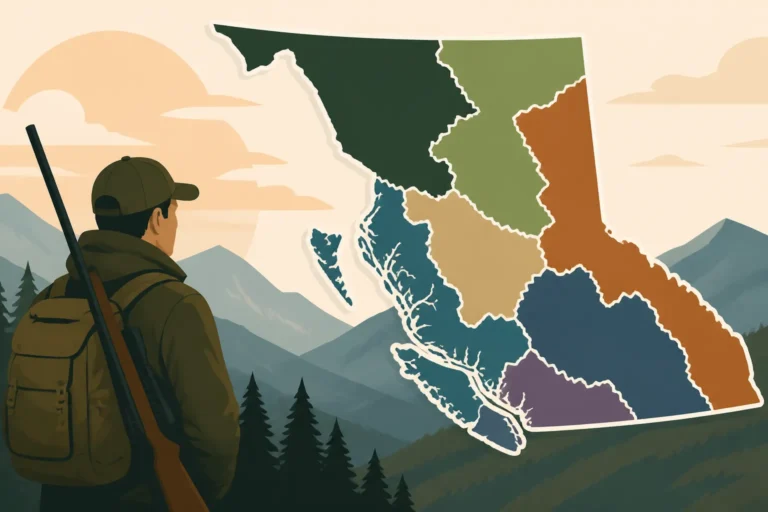
British Columbia is a massive province with incredibly diverse ecosystems, wildlife populations, and hunting cultures. What works in the Kootenays might be completely different from the Coast or the Omineca. It's a common mistake to look at general provincial LEH trends or even regional ones without diving into the specifics of individual Management Units (MUs). The odds for an Elk hunt in one MU within Region 4 (Kootenays) could be vastly different from another MU just a few valleys over, due to local access, population density, or historical hunting pressure. Always look at the specific hunt code and the MU it applies to. Don't assume that because a species is plentiful in a certain region, all hunts for that species in that region will have similar odds. Each MU has its own story, and the regulations synopsis details these specifics. Consulting resources like What Each of the Nine Regions Covers can help you start, but local MU data is paramount.
Misinterpreting "Any Bull" or "Any Buck" Categories
The terms "Any Bull" or "Any Buck" might sound like the golden ticket to a trophy animal, and while they do allow for the harvest of any legal male animal, they often come with a significant catch: extremely high demand and correspondingly low odds. Hunters often gravitate towards these categories, driving up application numbers, which makes them very difficult to draw without a substantial number of bonus points. For example, an "Any Bull" Moose draw will almost always have lower odds than a "Spike-Fork Only" or "Antlerless" Moose draw in the same area. While the allure of a large trophy is understandable, prioritizing these "any animal" hunts exclusively can lead to years of unsuccessful applications. Understanding British Columbia's Any Bull LEH Hunts details the specific rules and realities. It's often more strategic, especially for hunters with fewer points, to focus on antler-restricted or sex-specific hunts that still offer great hunting experiences and fill the freezer, while simultaneously accumulating points for those "any" tags down the line.
The Illusion of "Guaranteed" Draws
Perhaps the biggest misconception among hunters, particularly those new to the LEH system, is the idea that accumulating enough bonus points will eventually guarantee a draw. While it's true that a high number of points dramatically increases your chances, no draw in British Columbia is truly "guaranteed" unless you have the absolute maximum number of points for a specific hunt with limited applications (a rare scenario). Even with a high number of points, there's always an element of chance involved. The system is still a lottery, albeit one where your tickets carry more weight with each point. Hunters might get frustrated after years of accumulating points, feeling they are "due" for a draw, only to be unsuccessful again. It's important to remember that points increase probability, not certainty. Stay realistic, continue to diversify your application strategy, and appreciate that drawing an LEH tag is often a significant achievement, not an entitlement. Consistent application and a well-researched strategy, aided by tools like GoHunt, will undoubtedly increase your long-term success, but always be prepared for the element of surprise.
Disclaimer
The information provided in this guide is for general informational purposes only and is not legal advice. Hunting regulations and LEH draw specifics in British Columbia can change. Always consult the most current British Columbia Hunting and Trapping Regulations Synopsis and official government websites before making any hunting plans or submitting LEH applications.