Which Species Are LEH Only
Trying to figure out which species you can hunt in British Columbia with a general open season tag versus those coveted animals that are only available through the Limited Entry Hunting (LEH) draw can feel like deciphering a secret code. It’s a common frustration, and understanding these distinctions is crucial for planning your hunting adventures and avoiding disappointment. This guide is here to shed light on which species in BC are exclusively managed through the LEH system, helping you navigate the complexities and set realistic expectations for your next pursuit.
Understanding British Columbia's Limited Entry Hunting (LEH) System
The hunting landscape in British Columbia is diverse, offering incredible opportunities across a vast, wild province. However, with such a rich natural heritage comes the responsibility of careful management to ensure these opportunities remain for future generations. That's precisely where the Limited Entry Hunting (LEH) system comes into play. It's a method designed to distribute hunting pressure, manage animal populations, and provide high-quality hunting experiences, especially for species that are either highly sought-after, vulnerable, or have specific conservation needs.
Why LEH Exists for Specific Species
At its heart, the LEH system is a conservation tool. Imagine if everyone could hunt a mountain sheep every year; the populations simply couldn't sustain that kind of pressure. For certain species, particularly those with naturally lower population numbers, slow reproductive rates, or high trophy value, an unlimited general open season would quickly lead to overharvesting and jeopardize their long-term health. The province wants to ensure sustainable hunting opportunities while also providing a fair chance for resident hunters to pursue these iconic animals. It’s a delicate balance, and the LEH draw is how BC Fish and Wildlife tries to achieve it. It also allows for very specific management in certain geographical areas, ensuring local populations aren't disproportionately impacted. This system ensures that even when you don't draw a tag, you know the resource is being managed responsibly.
How the LEH Draw Works
The LEH draw is essentially a lottery system. Hunters apply for specific species in designated management units (MUs) during an application period, usually spanning from late spring into early summer. Each application costs a nominal fee, and you can apply for multiple species and zones. If your name is drawn, you receive an authorization to hunt that specific species within that particular management unit during a set season. Crucially, if you are successful in drawing a tag, you are often ineligible to apply for that same species (or a similar high-value species) in the following year, ensuring more hunters get a chance over time. Hunters accumulate "points" for unsuccessful applications, theoretically increasing their odds in subsequent years, though the system can still feel random given the sheer number of applicants for highly coveted tags. If you're looking to delve deeper into the mechanics, our guide on how British Columbia's LEH System Works provides a thorough breakdown.
The Species Exclusively Under LEH in British Columbia
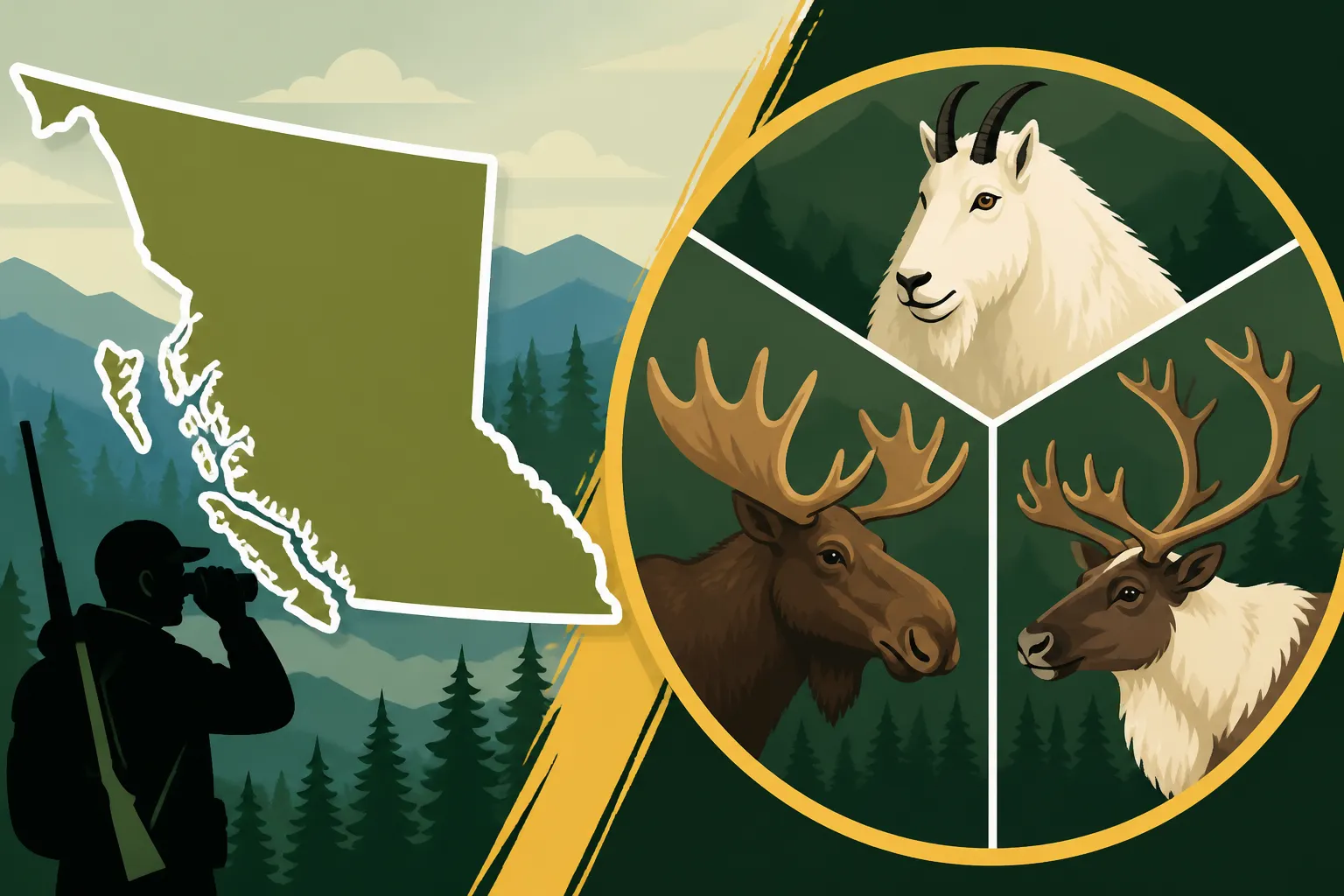
When we talk about "exclusively LEH," we mean animals that cannot be hunted through a general open season (GOS) tag anywhere in the province. These are the true gems of British Columbia hunting, and drawing one of these tags is often a once-in-a-lifetime opportunity for many. These are the animals that demand careful planning and, more often than not, a good deal of patience to finally get a tag in hand.
Mountain Sheep
Without a doubt, mountain sheep are the poster children for British Columbia's LEH system. All three species found in BC—Rocky Mountain Bighorn Sheep, California Bighorn Sheep, and Stone's Sheep (including Fannin Sheep)—are exclusively hunted through LEH.
- Rocky Mountain Bighorn Sheep are found in the southeastern and central interior regions, particularly in the Kootenays and parts of the Thompson-Okanagan. Their magnificent curling horns make them an iconic big game animal.
- California Bighorn Sheep primarily inhabit the dry, rugged areas of the Fraser Canyon and Thompson River drainage. They are slightly smaller than their Rocky Mountain cousins but equally challenging to pursue.
- Stone's Sheep are found in the vast, remote mountains of northern British Columbia, including the Spatsizi and Cassiar regions. These dark-bodied sheep with their often golden-coloured horns are an ultimate prize for many mountain hunters. Our guide on Stone's Sheep in Northern British Columbia offers more insights into hunting these incredible animals.
The rationale behind their LEH-only status is clear: sheep populations are naturally low, they are highly sensitive to habitat disturbance, and their slow reproductive rates mean they can't bounce back quickly from overhunting. The LEH system allows for precise management of harvest quotas, often targeting older rams to maintain healthy breeding populations and ensure sustainable hunting pressure. Hunters often wait many years, accumulating points, before drawing one of these highly sought-after tags.
Mountain Goat
Another species strictly managed by the LEH system is the majestic Mountain Goat. These hardy animals make their home in the most rugged, high-alpine environments across the province, from the Coast Range to the Northern Rockies. Their pristine white coats and incredible climbing abilities make them truly unique. Our detailed look at British Columbia's Mountain Goat Numbers explains more about these animals.
Mountain goats are particularly vulnerable to overharvesting due to their patchy distribution, relatively low numbers, and specific habitat requirements. They also have a very high value as a trophy, which could lead to excessive pressure if not carefully regulated. The LEH system allows wildlife managers to set very specific quotas for each mountain unit, often only allowing a handful of tags for an entire region, ensuring that hunting doesn't negatively impact local populations. The physical demands of a mountain goat hunt are legendary, often requiring hunters to access incredibly steep and remote terrain, and drawing a tag for one of these animals is a dream for many.
Roosevelt Elk
While Rocky Mountain Elk have general open seasons in certain areas of the province (with specific antler restrictions, of course), the colossal Roosevelt Elk found along British Columbia's coastal rainforests are managed exclusively through the LEH system. These are truly massive animals, far larger than their Rocky Mountain cousins, and they inhabit dense, often challenging terrain on Vancouver Island and parts of the mainland coast. You can learn more about the specifics in our Roosevelt Elk Draw Rules article.
Their LEH status is largely due to their relatively smaller population sizes compared to Rocky Mountain Elk, their localized distribution, and the unique challenges of hunting them in dense coastal environments. Managing them through LEH helps to control harvest levels and maintain healthy herd dynamics in these specific ecosystems. Drawing a Roosevelt Elk tag is an incredible achievement, and the hunt itself is an unforgettable experience, often involving battling rain, thick brush, and steep terrain.
Caribou
British Columbia's Caribou populations have faced significant challenges over the past few decades, leading to severe restrictions on hunting. As a result, where hunting for caribou is still permitted (which is in very few, highly specific areas), it is exclusively through the LEH system. This reflects an extreme level of conservation effort. The vast majority of caribou herds in BC are either closed to hunting entirely or have severely limited tags due to declining numbers across the province.
The LEH system, in this context, serves as a last resort to allow extremely limited, highly controlled harvests, typically only for specific subspecies or herds that are deemed stable enough to sustain a minimal harvest. For many caribou herds, the focus is entirely on recovery and habitat protection, with hunting being a non-factor. It's a somber reminder of the delicate balance required in wildlife management.
Other Species With Significant LEH Opportunity (But Not Exclusively LEH)
While the species above are only available through the LEH draw, many other popular game animals in British Columbia feature LEH opportunities alongside general open seasons. These LEH draws often exist for specific management units, prime hunting periods, or for larger-antlered animals, offering hunters a chance at a higher-quality experience or targeting specific animals.
Moose
Moose are a prime example of a species managed through a combination of general open seasons and LEH draws. In many regions of the Interior and Northern British Columbia, there are general open seasons for moose, often with specific antler point restrictions (e.g., "spike-fork," "2-point," or "bull with 10 points or more on one side"). However, some of the most sought-after moose hunts, particularly for mature bulls in specific zones, are strictly LEH. Our article on British Columbia Moose Season Dates details these regulations.
These LEH hunts are often in areas with high moose densities, or where managers want to ensure a certain age class of bulls survives to maturity. For example, an LEH might authorize the harvest of "any bull" in a unit where the GOS is limited to a "spike-fork" bull. The draw offers a chance at a truly impressive animal and reduces overall pressure on the general population during peak rut periods. Applying for an LEH moose tag can significantly increase your odds of encountering a mature bull, especially in areas where general open season pressure can be high.
Elk (Rocky Mountain)
Similar to moose, Rocky Mountain Elk in British Columbia are hunted through a mix of general open seasons and LEH draws. In regions like the Kootenays and parts of the Peace River Country, general open seasons exist, often with strict antler restrictions (e.g., "6-point or more"). However, the opportunity to hunt "any bull" or to extend your hunting season into the peak of the rut often comes through the LEH system.
LEH elk tags are highly coveted, as they open up access to prime rutting periods or allow for the harvest of any legal bull, providing a much higher chance at a trophy animal. These draws are essential for managing local herd sizes, distributing hunting pressure, and safeguarding specific age structures within the elk populations. If you dream of hearing a bull bugle and having the opportunity to call one in during the peak of the action, an LEH elk tag is likely your best bet.
Specific Deer Hunts
While Mule Deer and Black-tailed Deer have extensive general open seasons across the province, especially for bucks with certain antler configurations (like the common "4-point antler rule"), there are specific LEH hunts for deer as well. These often occur in management units that are known for producing larger-bodied animals or mature bucks, or during extended seasons not available under GOS.
For instance, an LEH might be offered for "any mule deer buck" in a particular management unit known for large bucks, or it might extend a season into a later rut period than typically allowed by GOS. These limited draws help manage trophy potential and ensure that specific local populations are not over-harvested. Hunters targeting a particular trophy animal might find themselves looking at LEH opportunities even for deer, despite their widespread availability. It’s all about finding those specific, high-quality hunting experiences. You can always consult our guide on Mule Deer Across British Columbia's Interior for more information on general hunting opportunities.
Navigating the LEH Regulations and Maximizing Your Chances
The LEH system can feel daunting, especially for new hunters or those new to British Columbia. However, with a bit of research and strategic planning, you can significantly improve your understanding and, eventually, your chances of drawing a desirable tag. Knowledge is power when it comes to the draw.
Deciphering the Annual Synopsis
The single most important document for any BC hunter is the current British Columbia's Two-Year Regulations Synopsis. This publication, updated every two years, contains all the critical information regarding hunting seasons, bag limits, and, crucially, a complete list of all LEH opportunities for the upcoming seasons. You'll find specific details on which species, in which management units, and for what dates, are available through the draw.
It's not light reading, but taking the time to go through the regulations for the species and regions you're interested in is non-negotiable. Pay close attention to the antler restrictions, the specific open dates, and any special conditions or notes for each LEH. These regulations change, sometimes subtly, from cycle to cycle, so always ensure you're referencing the most current synopsis.
Using Tools and Resources
In today's digital age, hunters have access to a wealth of tools that can help demystify the LEH system. Platforms like GoHunt, while primarily focused on the US, sometimes offer valuable insights or similar analytical tools that can be adapted for understanding draw odds and harvest success rates, though you'll typically need to consult BC-specific resources for direct application information. The provincial government's own hunting website is the official source for applying for LEH and checking results.
Many online forums and local hunting communities also offer invaluable advice and shared experiences. Don't be afraid to connect with experienced hunters who can offer guidance on specific management units or species. Understanding historical draw odds, which are usually published by the province, can help you make more informed decisions about where to apply and what your realistic chances are.
Applying Strategically
Applying for LEH isn't just about picking your favorite animal; it's about strategy. Consider these points:
- Preference Points: Many LEH systems, including BC's, incorporate some form of preference or loyalty points. Understand how these points accumulate and how they might affect your draw odds for certain high-demand species.
- Party Applications: For some species, applying as a party (a group of hunters) is an option. This can be beneficial if you're planning a hunt with friends or family, though it often means everyone in the party must have enough points to draw the tag at the same level.
- Realistic Expectations: For truly premium tags like sheep or mountain goat, the odds can be incredibly low, sometimes less than 1%. It's important to be realistic and understand that drawing these tags might take many, many years. Focus on applying for a mix of high-demand and more accessible LEH hunts to keep your hopes up.
- Research Specific Zones: Don't just apply for a species; research the specific management unit. What's the access like? What's the terrain? What are the success rates in that area? Tools for Scouting a British Columbia Management Unit Online can give you a significant advantage.
Remember, every application is a step closer. Even if you don't draw a coveted sheep tag this year, those preference points are building up, and the dream remains alive.
Summary of Exclusively LEH Species
To make it a little easier to digest, here's a quick overview of the species that are only available through British Columbia's Limited Entry Hunting system:
| Species | LEH Only? | Primary Reason for LEH Status |
|---|---|---|
| Rocky Mountain Bighorn Sheep | Yes | Low population numbers, high trophy value, slow reproductive rates, specific conservation needs. |
| California Bighorn Sheep | Yes | Low population numbers, high trophy value, slow reproductive rates, specific conservation needs. |
| Stone's Sheep | Yes | Low population numbers, extreme remoteness, high trophy value, sensitive populations. |
| Mountain Goat | Yes | Vulnerable populations, patchy distribution, slow reproductive rates, high trophy value. |
| Roosevelt Elk | Yes | Smaller population sizes, localized distribution, specific habitat requirements (coastal). |
| Caribou | Yes | Severely declining populations, critical conservation status, very limited hunting. |
This table highlights the species you absolutely need an LEH tag for. Other species like moose and Rocky Mountain elk will often have LEH draws for specific units or enhanced opportunities, but they also have general open season options elsewhere.
Disclaimer
Please remember that hunting regulations in British Columbia can change. While this guide provides general information, always refer to the most current British Columbia Hunting and Trapping Synopsis published by the provincial government, as well as any in-season updates or notices, before planning or undertaking any hunting activity. It is the hunter's responsibility to know and follow all applicable laws and regulations.