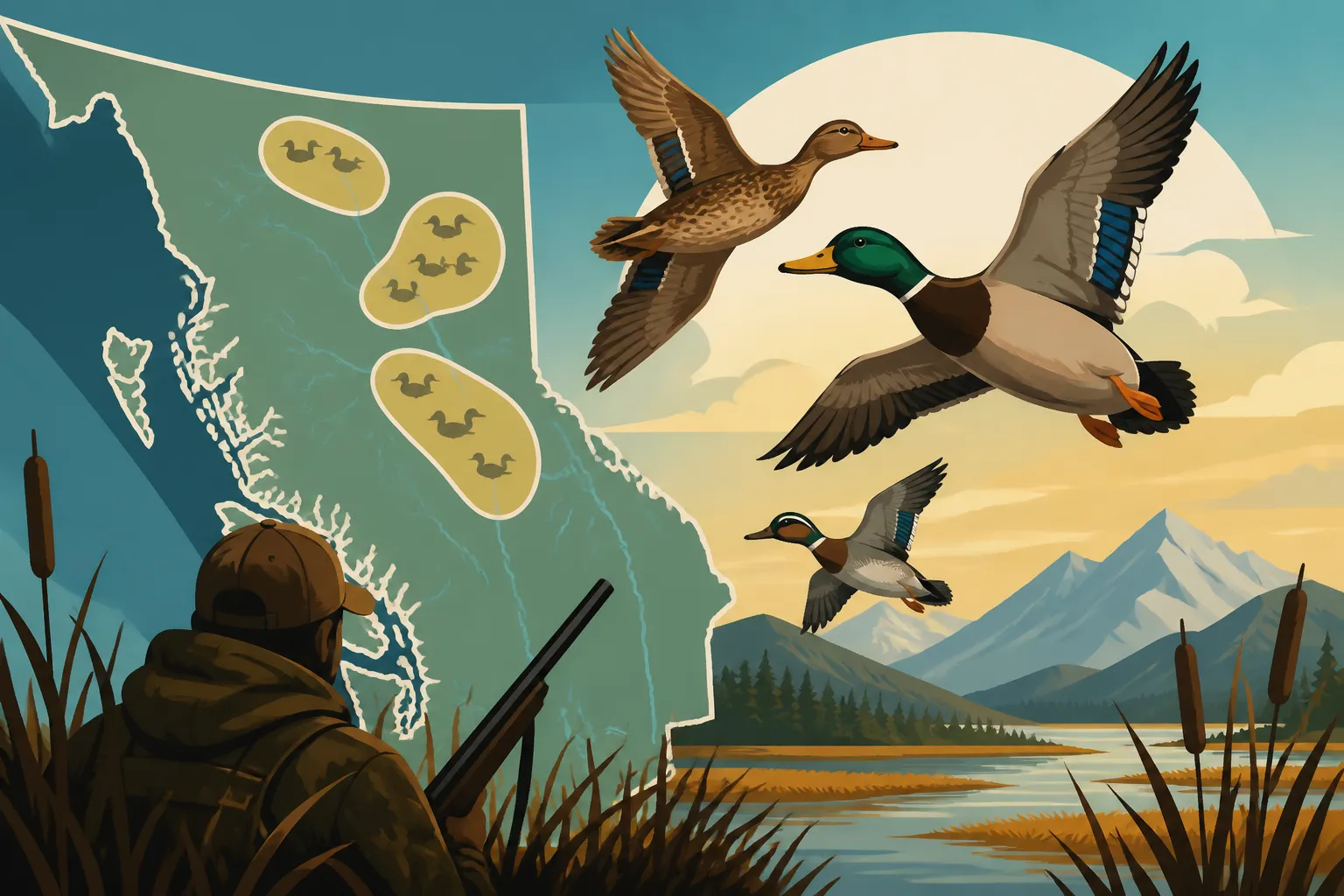
Interior Waterfowl and Where They Stage
Finding productive waterfowl hunting in British Columbia's vast interior can feel like searching for a needle in a haystack if you don't understand where ducks and geese prefer to gather. Unlike the predictable coastal estuaries, interior birds move through a mosaic of wetlands, lakes, and agricultural fields. This guide will help you decipher those patterns, pinpoint prime staging areas, and ultimately improve your chances of a successful hunt in the diverse landscapes of BC's interior.
Decoding British Columbia's Interior Waterfowl Species
British Columbia's interior is a fascinating place, a real melting pot for a variety of waterfowl species on their annual journeys. It's not just a fly-through zone; it's a vital pit stop, a refuelling station, and for many, a wintering ground or breeding haven. Understanding which birds you're likely to encounter is the first step to knowing where they might be staging. It's truly a different ballgame than hunting the coastal regions, which often see different species and habitat preferences.
Common Duck Species and Their Preferences
When you're out in the BC interior, you'll primarily be chasing dabbling ducks, though divers certainly make an appearance. Mallards are the undisputed kings, seemingly everywhere there's water. They love shallow marshes, flooded fields, and slow-moving river systems. You'll often find them dabbling in the margins, tipping up to feed on submerged vegetation and agricultural grains. Their adaptability is truly remarkable, allowing them to thrive from the southern Okanagan to the northern Peace Country. Green-winged Teal, with their incredible speed, are also interior stalwarts, favoring smaller sloughs and flooded areas with plenty of dense cover. Pintails, often called "sprigs" for their distinctive tail feathers, are another common sight, especially in agricultural areas where they feed on waste grain.
Other dabblers like Wigeon, Gadwall, and Shovelers are also regulars. Wigeon are particularly fond of aquatic vegetation and can often be found grazing in open water or along muddy banks. Gadwall prefer more vegetated wetlands and are often less wary than their Mallard cousins. Shovelers, with their distinctive spoon-shaped bills, are filter feeders, making them partial to nutrient-rich, often muddier, waters where they can sift out invertebrates. Knowing these individual preferences helps you narrow down potential staging locations. You wouldn't expect to find a large concentration of Shovelers in a clear, deep lake, for instance, but a shallow, mucky slough? Absolutely.
Geese and Other Migratory Birds
Geese add another exciting dimension to interior waterfowl hunting. Canada Geese are ubiquitous, from the farmlands of the Kootenays to the sprawling fields of the Peace River region. They are opportunistic feeders, thriving on agricultural crops like peas, wheat, and barley, as well as natural grasses. You'll see them in massive flocks, often using large, open bodies of water as roosting sites before flying out to feed in nearby fields. Their sheer numbers can be impressive, creating a cacophony that announces their presence from miles away.
Lesser Snow Geese can also be found passing through, though less commonly than on the coast, particularly in the northern parts of the province or during specific migration windows in the south. While not as prevalent as Canadas, they offer a thrilling hunt when their migration lines up with your scouting efforts. Beyond ducks and geese, interior wetlands also host a variety of other migratory birds that, while not game species, contribute to the rich ecological tapestry of these staging grounds. Swans, cranes, and various shorebirds all rely on these same critical habitats. Understanding the full ecosystem helps appreciate the importance of these staging areas, and sometimes, where there are non-game birds, there are also the game birds you're after.
Critical Interior Staging Habitats and Their Features
The interior of British Columbia offers a vast and varied landscape, and just like real estate, when it comes to waterfowl, it's all about location, location, location. Birds are looking for a specific set of criteria: safety, food, and water, but how these come together across the diverse terrain defines their staging habits. It's a much different picture than the tidal flats and salt marshes of the coast, often requiring a more nuanced understanding of freshwater ecosystems.
Marshlands and Wetlands
Marshlands and wetlands are the absolute lifeblood for interior waterfowl, especially during migration. These areas, whether large river deltas, shallow oxbow lakes, or expansive sloughs, provide a complex mosaic of open water, emergent vegetation, and diverse food sources. Think of the Cariboo's numerous shallow lakes and marshes, or the slower sections of rivers like the Fraser, Thompson, and Columbia that create backwater sloughs. These areas are rich in aquatic invertebrates, seeds from sedges and rushes, and tubers, making them ideal feeding grounds for a wide variety of ducks. They also offer crucial cover from predators, allowing birds to rest and refuel in relative safety.
The health of these wetlands is paramount. A vibrant marsh system with a good mix of shallow and slightly deeper water, interspersed with cattails, bulrushes, and willow thickets, is a magnet for dabblers. These areas often experience fluctuating water levels, which can either create new feeding opportunities or dry up traditional spots, making scouting essential. Hunters looking for prime locations to set up a spread often focus on these transitional zones where birds move between loafing and feeding areas. Understanding the specific plant life present can also indicate what species might be attracted. For example, a marsh heavy with smartweed and wild millet will draw different birds than one dominated by coontail and pondweed.
Agricultural Fields and Flood Zones
The vast agricultural landscapes of regions like the Peace River, the Okanagan, and the Fraser Valley (yes, technically interior, even if it's closer to the coast) are massive draws for geese and many duck species, particularly during fall migration. After crops like wheat, barley, and peas are harvested, they leave behind waste grain, a high-energy food source that is irresistible to migrating birds. Canada Geese, in particular, will descend on these fields in enormous numbers, spending their days grazing and building up reserves for the next leg of their journey.
Flood zones, either natural or managed, often connect these agricultural areas to water sources, creating perfect staging habitats. A harvested field that gets a good soaking rain or is adjacent to a swollen river can quickly become a temporary lake, offering both food and safe roosting water. These ephemeral spots can be incredibly productive for a short window. Hunters often focus on gaining permission to hunt these private lands, or identifying public access points that border them. The key is understanding flight lines between their feeding fields and their nighttime roosts on larger bodies of water. This is where scouting the general area and observing bird movements becomes critical. Using tools that help identify land ownership can be extremely helpful here, as much of this productive ground is privately owned.
Large Lakes and River Systems
While marshlands provide the shallow feeding grounds, large lakes and extensive river systems act as major staging hubs and secure roosting sites, especially for geese and diving ducks. Lakes like Okanagan Lake, Shuswap Lake, or Williston Lake, with their vast expanses of open water, offer safety from terrestrial predators. Birds can congregate here in huge numbers, resting during the day before moving out to feed in surrounding areas. Divers like Canvasbacks, Redheads, and scaup will often use deeper parts of these lakes, feeding on mollusks and aquatic vegetation found below the surface.
Major river systems, particularly the slower, braided sections with sandbars, islands, and backwater channels, also serve as critical staging points. Think of sections of the Fraser River beyond the tidal influence, or the Columbia River. These rivers offer a constant source of flowing water, which can keep areas ice-free longer into the season, providing crucial access to food and water when shallower wetlands freeze up. The sandbars and gravel bars often provide secure loafing and roosting areas, especially for geese. Understanding the dynamics of these river systems—how currents, snags, and shifting sandbars create different habitats—is key to locating where birds will stage. They often prefer quieter, less disturbed sections away from heavy human activity, making scouting from a boat or observing from a distance invaluable.
The Annual Waterfowl Migration Cycle in BC's Interior
Understanding the rhythms of the year is fundamental to successful waterfowl hunting in British Columbia's interior. These birds are driven by ancient instincts, moving with the seasons in a grand annual spectacle. Pinpointing when and why they move dictates where they'll be, and how long they might stay. It's a complex dance influenced by weather, food availability, and the pressing need to breed or escape harsh winters.
Spring Migration and Nesting
As the interior shakes off winter's chill, usually beginning in March and peaking through April, the northward migration begins. This is when waterfowl return to their breeding grounds. For many, British Columbia's interior is their breeding ground. Mallards, Canada Geese, Green-winged Teal, and a host of other species arrive, seeking out suitable wetlands, potholes, and secluded marshy areas to nest and raise their young. You'll see pairs, not huge flocks, as they disperse across the landscape to find their territories.
During this time, the focus isn't on staging in large groups, but on finding isolated areas for breeding. The interior's myriad small ponds, beaver dams, and prairie potholes become vital nurseries. While spring hunting isn't permitted for most waterfowl, understanding this phase is crucial for conservation. Healthy breeding grounds mean robust populations for the fall hunt. Areas that were bustling with large flocks in the fall might be almost empty in the spring, save for a few wary pairs setting up shop. Monitoring spring conditions can also provide clues for fall, as successful breeding years often lead to more birds in the autumn skies.
Fall Migration and Staging Peaks
Fall is the time hunters eagerly anticipate. Beginning in September and continuing through October and November, British Columbia's interior becomes a major flyway. The young birds are fledged, and both adults and juveniles begin their southward journey. This is when staging truly comes into its own. Birds gather in massive flocks, often numbering in the thousands, utilizing prime feeding and roosting sites. The timing of this peak migration is heavily dependent on weather patterns further north. Early cold snaps in Alaska or northern Canada can push birds south quickly, while a mild autumn might mean a more drawn-out migration.
Different species have different migration timelines. Pintails and some teal species might move earlier in the fall, while hardy Mallards and Canada Geese often linger until significant ice forms on their preferred waters. The peak of staging varies by region and species, but generally, late October and early November see some of the largest concentrations. Hunters should pay close attention to weather forecasts both locally and to the north. A strong cold front pushing south can trigger a fresh wave of birds, filling up historically productive staging areas. This is where diligent scouting, sometimes over several weekends, really pays off. Watching for these new arrivals and understanding their immediate needs – food, water, and shelter – is the key to positioning yourself for success.
Wintering Habits in Milder Regions
While many interior waterfowl continue their journey south to warmer climates, some regions of British Columbia's interior offer mild enough conditions for certain species to overwinter. The lower Okanagan Valley, parts of the Fraser Valley, and areas where rivers remain open due to current or geothermal activity can hold significant numbers of ducks and geese throughout the colder months. These areas become crucial sanctuaries when vast swathes of the interior are locked in ice.
Mallards and Canada Geese are particularly hardy and can often be found in open water on larger lakes or rivers, feeding on waste grain in nearby agricultural fields that haven't been completely covered in snow. These wintering birds become very wise to hunting pressure, often using vast tracts of open water as daytime refuges. They'll venture out to feed primarily at dawn and dusk, making for challenging but rewarding hunts. When all the smaller sloughs and potholes freeze solid, these remaining open water bodies become bottlenecks, concentrating birds and offering opportunities for those willing to brave the colder conditions. Understanding where rivers typically remain open, or which larger lakes tend to stay unfrozen, is essential for pursuing these late-season opportunities.
Scouting for Productive Waterfowl Staging Areas
You can have the best decoys and call like a pro, but if you're not where the birds want to be, it's all for naught. Scouting is the absolute cornerstone of consistent waterfowl hunting success in British Columbia's interior. It's about being a detective, reading the landscape, and understanding the subtle clues the birds leave behind. Don't underestimate the power of knowing an area intimately, because staging areas can shift year to year based on water levels, crop rotations, and pressure.
Identifying Potential Staging Habitats
Start your scouting by identifying the types of habitats we've discussed: marshlands, agricultural fields adjacent to water, and sections of large lakes or rivers. Use topographical maps, satellite imagery, and online mapping tools to pinpoint these areas. Look for concentrations of small ponds, beaver activity, oxbow lakes along rivers, and large, shallow depressions that could hold water. For agricultural fields, identify those that have recently been harvested, particularly those growing grains like wheat, barley, or peas. Sometimes, it's not the biggest body of water that's most productive, but a series of smaller, interconnected sloughs. This is where resources like GoHunt can be invaluable. Their mapping layers and community insights might highlight publicly accessible lands or provide details about habitat features that aren't immediately obvious on basic maps.
Don't forget to look for areas with minimal human disturbance. Waterfowl are wary creatures, and they'll choose places where they feel safe. This often means areas away from busy roads, hiking trails, or frequent fishing spots. Remember that prime staging areas are often transition zones: where a field meets a marsh, or where a river bends to create a quiet backwater. These are the highways and rest stops for migrating birds. Pay attention to changes in elevation too; even a slight dip in a field can hold enough water after a rain to attract ducks.
On-the-Ground Reconnaissance and Observation
Once you've narrowed down potential areas on your map, it's time to get boots on the ground – or at least binoculars in hand. This is where you confirm your suspicions and gather real-time intelligence. Drive or walk quietly through the area, always observing. Look for signs of bird activity: droppings along shorelines, disturbed vegetation in fields, and most importantly, actual birds. Early morning and late evening are the best times to observe flight patterns. Watch where birds are flying from and to. Are they leaving a specific field to go to a certain lake? Are they using a particular marsh as a midday loafing spot?
Listen. The sounds of distant honking or quacking can lead you to concentrations of birds you might not otherwise see. Use a spotting scope to observe birds from a distance, minimizing disturbance. Take notes: time of day, weather conditions, water levels, crop status, and species observed. Over several scouting trips, these notes will paint a clear picture of how birds are using the landscape. Remember that birds will react to pressure; an area that was hot one week might be dead the next if too many hunters have been through. Being flexible and having multiple scouted locations is key. For hunters thinking about Hunting British Columbia's Interior Marshes, this on-the-ground work is especially critical as these complex environments can hide birds surprisingly well.
Utilizing Technology and Local Knowledge
In today's hunting world, technology is a powerful scouting tool. Beyond satellite imagery, many apps offer property lines, topographic data, and even weather overlays that can help you understand habitat and access. As mentioned, a platform like GoHunt can provide detailed maps and data that help in identifying Crown land access, which is crucial in BC. You can mark potential blinds, flight paths, and obstacles, building a digital scouting journal.
However, never underestimate local knowledge. Chat with farmers, landowners, and other hunters (if they're willing to share!). They often have invaluable insights into historical bird movements, water levels, and agricultural practices that attract birds. Sometimes, a casual conversation at a local diner or gas station can yield the most accurate, up-to-date information. Just remember to be respectful and offer to share your own observations if appropriate. For those considering Hunting British Columbia's October Rifle Opener, this blend of tech and local insight is also vital for understanding game movement. Combining your digital maps with a farmer's insight into which fields were planted with which crops three seasons ago can give you an edge that satellite imagery alone simply can't.
Hunting Strategies for Interior Waterfowl Staging Areas
Once you've done your homework and found those promising staging areas, it's time to put a plan into action. Hunting interior waterfowl, especially during their staging phases, requires a blend of camouflage, calling, and strategic decoy placement, all tailored to the specific environment you're in. This isn't a one-size-fits-all approach; adaptability is your best friend.
Decoy Spreads and Camouflage Tactics
Decoy spreads for interior waterfowl often need to be realistic and adaptable. In large fields for geese, big, visible full-body or silhouette decoys are a must. You'll want to deploy a substantial spread to draw attention from a distance, often placing smaller groups of feeders with a few sentries. For ducks in marshes or sloughs, a mixed spread of Mallards, Pintails, and Teal can be effective. Consider adding motion decoys, like spinning wing teal, to create the illusion of active birds, especially on calm days. The key is to mimic what the birds are naturally doing in that specific staging area, whether it's loafing, feeding, or just resting.
Camouflage is absolutely critical. Birds coming into a staging area are often high and circling, with an excellent vantage point. You need to be completely concealed. In fields, a layout blind brushed in with local stubble is ideal. In marshes, a natural blind built into thick reeds or a well-camouflaged boat blind is essential. Think about your face and hands too – often the first things birds pick up. Wear gloves and a face mask, and ensure no shiny objects are exposed. Pay attention to your dog's blind as well; they need to be as concealed as you are. A successful decoy spread means nothing if the birds flare because they spotted movement or unnatural shapes.
Calling Techniques for Interior Birds
Calling is an art, and it's particularly effective when birds are actively staging and looking for companionship. For Canada Geese, a variety of honks, clucks, and murmurs can draw them in. Mimic the sounds of a contented flock on the ground or the excited hails of new arrivals. Watch their reaction; sometimes less is more. For ducks, a good Mallard call is indispensable. Learn to produce a greeting call, a feeding chuckle, and a comeback call. Again, adapt to the birds' behaviour. If they're locked up and coming, a soft feeding chuckle might be all you need. If they're circling far out, a more insistent comeback call could seal the deal.
Don't overcall. Many new hunters make the mistake of calling too much or too aggressively. Observe the birds' responses. If they're ignoring you, try a different sequence or volume. If they're responding, keep doing what's working. Practice is key, and listening to actual birds in the field will teach you more than any instructional video. Remember that during peak staging, birds are often less wary and more responsive to calls as they seek out larger groups. This is especially true for younger, less experienced birds, making for some exciting action. Knowing when to make a soft chuckle versus a loud hail can be the difference between birds cupping their wings over your decoys or flaring into the next county. This knowledge is honed by spending time in the field, much like mastering the nuances of Calling Moose in the Rut requires deep understanding of animal behaviour.
Timing Your Hunt
Timing your hunt around the birds' natural movements is paramount. Waterfowl, especially geese, often have a predictable schedule: fly out to feed at first light, return to a safe roosting area mid-morning, then fly out again to feed in the late afternoon before returning to roost for the night. This means dawn and dusk are typically the most productive times for field hunts or hunts near major roosting areas. If you're hunting a small marsh, mid-morning might be good as birds drop in for a rest.
The weather also plays a huge role. Overcast, windy days are often fantastic for waterfowl, as the wind helps conceal hunter movement and makes birds fly lower and more erratically. They also tend to be less wary in poor weather. Bright, calm days can be challenging, as birds can see everything from miles away. Keep a close eye on cold fronts and storms. A big weather system can push new birds into an area, revitalizing a slow hunt. For those pursuing Waterfowl Hunting British Columbia's Estuaries, the tidal charts are critical, but in the interior, it's all about atmospheric pressure, wind direction, and temperature fluctuations that dictate success.
Conservation and Responsible Hunting Practices
As hunters, we have a profound responsibility to ensure the future of waterfowl hunting in British Columbia's interior. Our actions in the field directly impact bird populations and habitat, making ethical and responsible practices not just recommendations, but necessities. It's about preserving the resource for generations to come, ensuring those vibrant staging areas continue to host abundant birds.
Adhering to Regulations and Bag Limits
This might seem obvious, but it's the foundation of responsible hunting. Always know and strictly adhere to all federal and provincial hunting regulations, season dates, and bag limits. This includes understanding British Columbia's Duck Season Dates and Goose Season Dates by Region, as these can vary significantly even within the interior. Migratory birds fall under federal jurisdiction, so ensure you have your Federal Migratory Game Bird Permit and Wildlife Habitat Conservation Stamp in addition to your provincial licence and species tags. These funds directly contribute to habitat conservation efforts across the country.
Respecting bag limits isn't just about avoiding a fine; it's about sustainable harvesting. Biologists set these limits based on population data to ensure healthy breeding populations remain. Taking more than your legal limit jeopardizes the resource for everyone. Furthermore, understanding specific rules regarding methods of take, such as gauge restrictions or shot material, is crucial. For instance, Non-Toxic Shot Requirements for Waterfowl are federal law and vital for preventing lead poisoning in birds and the broader ecosystem. Ignorance of the law is never an excuse, so always carry a copy of the current regulations synopsis and refer to it frequently.
Ethical Shooting and Retrieval
One of the most important aspects of responsible waterfowl hunting is ethical shooting and diligent retrieval. Always strive for clean, humane kills. This means knowing your effective range and only taking shots at birds within that range. A bird that is too far out might be wounded and fly off to die elsewhere, contributing to unnecessary waste and suffering. Spend time at the range patterning your shotgun and practicing your swing to ensure you're a proficient and responsible shot.
Equally important is diligent retrieval. A good hunting dog is an invaluable asset for waterfowl, but even without one, every effort must be made to locate and recover downed birds. Mark where the bird falls, note landmarks, and search thoroughly. Leaving wounded or dead birds unretrieved is not only against regulations but is a profound disrespect to the animal and the hunting tradition. It also paints hunters in a poor light. Consider the conditions – strong currents in a river, dense cattails in a marsh – and plan your retrieval strategy before you shoot. Sometimes, it's better to pass on a shot if you can't be confident in retrieving the bird.
Habitat Stewardship and Respect for Landowners
Good hunters are good stewards of the land. This means leaving no trace, packing out all your trash, including spent shells, and minimizing your impact on sensitive wetland environments. Avoid damaging vegetation unnecessarily, and if you're building a blind, use natural materials that blend in and will decompose. Be mindful of fragile ecosystems, particularly around nesting areas or sensitive plant communities.
When hunting on private land, which is often the case for productive field hunts, respect for landowners is paramount. Always ask for permission well in advance, and adhere to any specific rules they might have. Offer to share some of your harvest, or help with a chore around their property. Close gates, don't block access roads, and avoid driving on wet fields. A good relationship with a landowner can open up hunting opportunities for years to come, whereas a single act of disrespect can close them forever. Our ability to access prime interior staging areas often hinges on these relationships.
Key Staging Areas Across British Columbia's Interior
British Columbia's interior is vast, covering a huge range of ecosystems and climates. Pinpointing every single staging slough would be impossible, but understanding the general regions known for their waterfowl activity can give you a solid starting point. Each region offers its own unique flavour of habitat and species composition, making for diverse hunting opportunities.
Peace River Region's Agricultural Belts and Rivers
The Peace River region in northeastern British Columbia is perhaps the most famous interior waterfowl staging ground, particularly for Canada Geese and a variety of dabbling ducks. This expansive area is characterized by vast agricultural fields that stretch for miles, providing an endless buffet of waste grain after harvest. The Peace River itself, along with its tributaries like the Halfway and Beatton Rivers, creates critical water sources and roosting areas. Large shallow lakes and numerous small sloughs dot the landscape, offering secluded spots for ducks.
Hunters here often focus on securing access to private agricultural lands, setting up large field spreads for geese. The migration here can be phenomenal, with thousands of birds moving through as cold weather pushes them south from further north. The sheer scale of the landscape means birds have ample space to spread out, but it also means good scouting is essential to find those concentrations. Beyond geese, Mallards and Pintails thrive in the Peace, utilizing both the agricultural fields and the region's abundant wetlands. For hunters interested in Hunting a Peace Country Grain Field, this area offers some of the province's most consistent action.
Cariboo-Chilcotin's Lakes and Marsh Systems
Moving south into the central interior, the Cariboo-Chilcotin region offers a different but equally rich waterfowl experience. This area is characterized by its "lake country" – thousands of small to medium-sized lakes, ponds, and extensive marsh systems. The Cariboo is a critical breeding ground for many species, and in the fall, these waterways become significant staging areas as local birds gather and migrants pass through. Rivers like the Quesnel and Chilcotin also create important wetland habitats.
Dabbling ducks like Mallards, Green-winged Teal, and Gadwall are abundant here, utilizing the nutrient-rich waters and diverse vegetation of the marshes. Canada Geese also use the larger lakes for roosting, often flying out to graze on ranchlands and smaller agricultural plots. Access often involves navigating a network of forest service roads to reach more remote lakes and sloughs. This region can be particularly good in early to mid-fall before severe cold locks up many of the smaller water bodies. Learning to read these diverse wetland environments, perhaps by Hunting a British Columbia Lakeshore for Moose and observing waterfowl at the same time, will greatly enhance your success.
Okanagan-Thompson's Valleys and River Corridors
The warmer, drier climate of the Okanagan and Thompson regions still offers excellent waterfowl opportunities, particularly along the major river systems and large lakes. The Okanagan Valley, with its string of lakes (Okanagan, Skaha, Osoyoos), provides crucial open water for overwintering birds and major staging for migrants. The surrounding agricultural lands, especially orchards and vineyards, don't typically attract geese like grain fields do, but smaller grain and hay fields along the valley bottoms are utilized. The Thompson River and its associated wetlands also create important corridors.
Here, you'll find a mix of dabblers and divers. Mallards and Canada Geese are prominent, using the open lakes for roosting and smaller pockets of wetlands or river backwaters for feeding. Diving ducks can also be found on the larger, deeper lakes. Hunting in this region often involves identifying specific shallow bays, river oxbows, or smaller private farm ponds where birds concentrate. The milder climate means hunting can extend later into the season than in more northern parts of the interior, but birds can also become very wary due to sustained pressure. Scouting access to private lands along the valley bottoms or identifying public access points on large lakes is key.
Kootenay Rockies' Rivers and Mountain Valleys
Southeastern British Columbia, encompassing the Kootenay and Rocky Mountain Trench, provides another unique interior waterfowl experience. This region is characterized by significant river systems like the Columbia and Kootenay, which create extensive wetlands, oxbow lakes, and reservoirs. The mountain valleys themselves funnel migration, making certain areas key staging points.
Canada Geese are particularly abundant in the Kootenays, drawn to the agricultural fields in the valley bottoms and using the large rivers and reservoirs for roosting. Mallards, Pintails, and Wigeon are also common, frequenting the many sloughs and marshy areas created by the rivers. The region's diverse terrain means you might be hunting ducks in a small mountain-valley pond one day and geese on a massive river bar the next. The influence of the Rocky Mountains often brings earlier cold weather, which can push birds through rapidly, creating intense but short-lived staging events. For hunters who enjoy the challenge of diverse terrain, hunting a Kootenay Creek Draw might even yield a few ducks if the conditions are right, though it's more typically big game country.
| Species | Primary Interior Habitat | Preferred Food | Peak Staging Time | Key Regions |
|---|---|---|---|---|
| Mallard | Shallow marshes, sloughs, flooded fields, river margins | Seeds, aquatic vegetation, waste grain, invertebrates | Oct – Nov (some overwinter) | All interior regions |
| Canada Goose | Agricultural fields, large lakes, major rivers | Waste grain, grasses, aquatic plants | Sept – Dec (some overwinter) | Peace, Cariboo, Kootenay, Okanagan |
| Green-winged Teal | Small sloughs, shallow marshes, ephemeral wetlands | Seeds (esp. smartweed), aquatic invertebrates | Sept – Oct | Cariboo, Peace |
| Northern Pintail | Shallow open water, flooded fields, river deltas | Waste grain, aquatic seeds | Sept – Oct (early mover) | Peace, Cariboo |
| Wigeon | Open water of marshes, lake margins, flooded fields | Aquatic vegetation, grasses | Oct – Nov | Cariboo, Okanagan |
| Canvasback | Large, deeper lakes, river backwaters | Aquatic tubers, seeds, mollusks | Oct – Nov | Okanagan, Kootenay |
Disclaimer
This article is for general informational purposes only and does not constitute professional advice. Laws, prices and regulations vary by location and change over time. Consult a qualified professional for guidance on your specific situation.