British Columbia’s California Bighorns
Hunting British Columbia's iconic California Bighorn sheep is a challenge many aspire to, but the journey to understanding these magnificent animals and the intricacies of pursuing them can be overwhelming. From deciphering their preferred high-alpine haunts to navigating the highly competitive Limited Entry Hunting system, it's easy for even experienced hunters to feel a bit lost. This comprehensive guide aims to shine a light on British Columbia's California Bighorn sheep, offering detailed insights into their biology, specific range, conservation status, and the demanding yet incredibly rewarding experience of hunting them in our province.
Understanding British Columbia's California Bighorn Sheep
California Bighorn sheep are truly magnificent animals, perfectly adapted to some of the most rugged and breathtaking landscapes British Columbia has to offer. They represent a unique subspecies of bighorn sheep, distinct from their Rocky Mountain cousins, and understanding these differences is key to appreciating them.
Distinctive Physical Characteristics
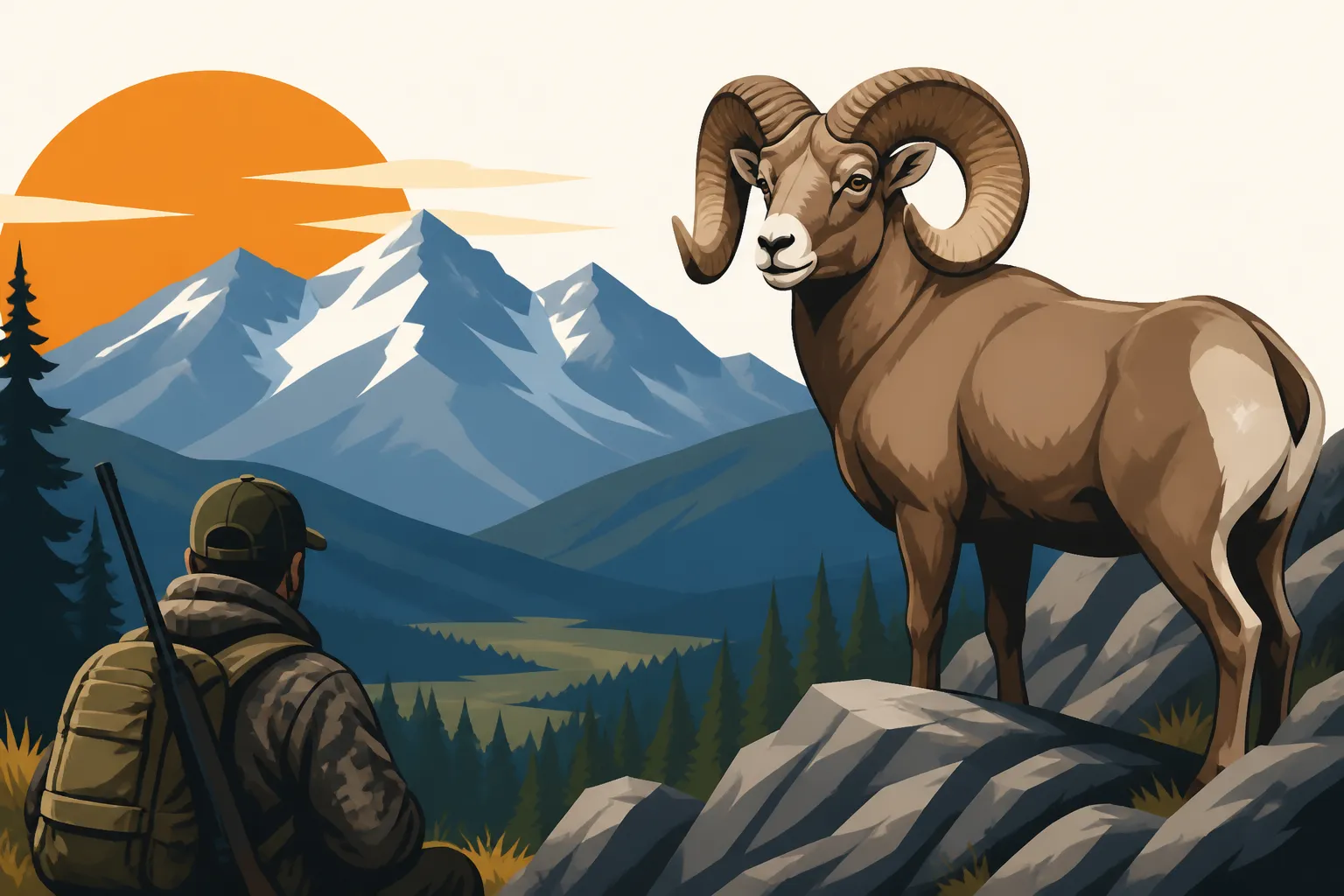
When you first lay eyes on a California Bighorn ram, you’ll be struck by their powerful build and impressive horns. While they share the classic brown coat and white rump patch of all bighorns, their coloration tends to be a lighter, more golden-brown compared to the darker, often grizzled appearance of Rocky Mountain Bighorns. This subtle difference can sometimes make them blend even more seamlessly into the dry, sun-drenched slopes they call home. Rams typically weigh between 150 to 200 pounds, with ewes being smaller. Their horns are a defining feature: heavy, ridged, and curling in a tight spiral back and then outward, but generally not as massive or outwardly flared as some of the Rocky Mountain rams you might see. They’re built for navigating steep, unforgiving terrain, with special cloven hooves that provide incredible grip on rocky ledges.
Beyond the overall size and colour, paying close attention to the horn structure is paramount. California Bighorn horns tend to have a tighter curl and often don't broom as much at the tips as their Rocky Mountain relatives. This is particularly important when considering legal definitions for hunting. They are a testament to natural selection, allowing them to thrive in environments where most other large ungulates simply wouldn't survive. It’s a remarkable sight to watch them effortlessly bound up what looks like an impassable cliff face.
Judging Age and Horn Curl in the Field
For any hunter, understanding how to accurately judge a ram's age and horn curl in the field is not just a skill; it's a legal necessity and a mark of respect for the animal and the resource. British Columbia often has specific regulations regarding legal rams, typically requiring a 4/5 curl or better, meaning the tip of the horn must extend past a line drawn across the top of the eye and extend at least 270 degrees. This can be surprisingly tricky to judge, especially at long distances or when the ram is positioned awkwardly. You need good optics and a lot of practice.
Learning to identify annual growth rings, which are visible as annuli on the horns, is another critical aspect of aging a ram. These rings, much like tree rings, indicate yearly growth, though they can be less distinct on older rams. Experienced sheep hunters often carry a small spotting scope with a reticle to help measure curl, or they use comparison photos. The goal is always to be absolutely certain before making a shot, as mistaking a sub-legal ram can lead to serious consequences. This is where meticulous scouting and patience really pay off, allowing you to observe a ram for extended periods, perhaps even over a full day, to ensure it meets the legal requirements.
Preferred Habitats and Geographic Range
British Columbia's diverse landscapes offer distinct environments for its various game species, and the California Bighorn sheep are particularly selective about where they make their home. They are creatures of specific, rugged habitats that provide both sustenance and protection.
Rugged, Arid Terrain Specialists
California Bighorn sheep are true specialists when it comes to habitat. Unlike moose that prefer wetland edges or elk that roam through timbered valleys, these sheep thrive in arid, open, and often precipitous country. Their preferred terrain includes steep, rocky slopes, canyon lands, and grassy benches interspersed with cliffs and escape routes. They are rarely found deep in dense timber; instead, they gravitate towards south-facing slopes that melt out early in spring, offering the first green shoots. These areas often receive intense sunlight, which keeps snow depths manageable in winter and promotes the growth of nutritious grasses and forbs throughout the warmer months.
The dryness of these regions also plays a significant role. They are well-adapted to environments with limited water sources, often relying on dew, snow, or sparse springs. This means their core habitats are often found within the rain shadow of mountain ranges, where precipitation is lower, and the landscape is characterized by sagebrush, bunchgrasses, and scattered Ponderosa pine or Douglas fir. This type of habitat provides the necessary visibility to detect predators while offering immediate vertical escape routes. It’s a harsh, unforgiving world, but one they navigate with incredible grace and resilience.
Key Regions for California Bighorns in British Columbia
In British Columbia, the primary stronghold for California Bighorn sheep lies within the dry interior, particularly concentrated along the Fraser, Thompson, and Okanagan river systems. These regions, with their deep canyons, expansive grasslands, and rugged mountains, offer the ideal blend of habitat requirements. Specific areas like the Fraser Canyon slopes, the bluffs overlooking the Thompson River near Ashcroft and Kamloops, and the dry hills of the South Okanagan are well-known for their California Bighorn populations.
- Fraser Canyon: From Boston Bar south towards Hope, the steep, rocky cliffs and benches of the Fraser Canyon provide critical habitat.
- Thompson River Valley: The dry, rolling hills and canyon walls surrounding the Thompson River, particularly between Lytton and Kamloops, are prime sheep country. You can spend hours glassing these open hillsides for a glint of horn.
- Chilcotin Plateau: Certain pockets of the Chilcotin, particularly those bordering the Fraser River, also hold small, isolated herds.
- Okanagan Valley: The drier parts of the North and South Okanagan, with their characteristic sagebrush and bunchgrass ecosystems, support significant populations.
When you're trying to figure out where to focus your scouting efforts, online resources like the British Columbia's Wild Sheep and Where They Live maps can be incredibly useful. These areas are characterized by lower elevations than where you'd typically find Stone's sheep, but still demanding in terms of physical exertion due to the steep, broken ground. It's a testament to these animals that they thrive in places many other species find inhospitable.
Life Cycle and Behavioral Patterns
Understanding the annual rhythm and social dynamics of California Bighorn sheep is crucial for both conservation and ethical hunting. Their lives are dictated by the seasons, food availability, and the ever-present threat of predators.
Seasonal Movements and Rutting Behavior
Like many mountain-dwelling species, California Bighorn sheep undertake seasonal movements, though perhaps not as dramatically as some caribou herds. In spring, as the snow recedes, ewes and lambs move to higher, greener pastures, often on steep, south-facing slopes, seeking fresh forage and safety from predators. Rams typically form their own bachelor groups and may range over larger areas, often at higher elevations than the ewes and lambs, especially during the summer months. As fall approaches, both sexes begin to drift towards winter ranges, which are typically lower elevation, windswept slopes that offer access to forage when snow covers higher ground.
The rut, or breeding season, typically peaks in November and early December. This is a spectacular time to observe rams, as they descend from their summer haunts and engage in dramatic head-butting contests to establish dominance and breeding rights. These clashes, which can be heard echoing across canyons, are powerful displays of strength and resilience. A mature ram will often pick a smaller group of ewes and defend them aggressively from other males. After the rut, rams are often exhausted and vulnerable, quickly seeking out quality forage to regain strength before the harsh grip of winter truly sets in. This period of intense competition is a critical phase in the life cycle, ensuring the strongest genetics are passed on.
Diet, Social Structure, and Survival Strategies
California Bighorn sheep are primarily grazers, with their diet consisting mainly of grasses and forbs. They are opportunistic feeders, however, and will browse on shrubs and small trees, especially during leaner winter months when grasses are scarce. Their ability to digest tough plant material, combined with their capacity to extract moisture from their food, makes them incredibly efficient at surviving in arid environments. This dietary flexibility is a key adaptation to their often sparse habitats.
Socially, bighorns live in segregated groups for much of the year. Ewes, lambs, and yearlings form nursery bands, which offer safety in numbers and communal vigilance against predators. Rams, as mentioned, live in bachelor herds, typically consisting of smaller groups of similarly aged males. Older, more dominant rams may be solitary. This segregation helps reduce competition for resources during different stages of their life cycle. Their primary survival strategy against predators like cougars, wolves, and occasionally bears is their incredible agility and knowledge of the steep, rocky terrain. When threatened, they will quickly ascend cliffs to areas inaccessible to most predators, relying on their powerful legs and sure-footedness for escape. They are constantly alert, using their keen eyesight to spot danger from a distance, making them a truly challenging animal to approach in their natural environment.
Conservation Status and Management Efforts
The story of British Columbia's wild sheep, including the California Bighorn, is one of both challenge and success. They face ongoing threats, but dedicated conservation efforts are working to ensure their future.
Current Population Trends and Challenges
Historically, California Bighorn populations in British Columbia, much like other bighorn subspecies across North America, faced significant declines due to unregulated hunting, habitat loss, and, most critically, disease. Domestic sheep, introduced during early settlement, carry pathogens like Mycoplasma ovipneumoniae (M. ovi), which can be devastating to wild sheep, causing pneumonia and high mortality rates, particularly in lambs. While populations have largely stabilized and even seen modest increases in some areas since the mid-20th century due to rigorous management, they remain vulnerable.
Today, challenges persist. Habitat fragmentation from human development, increased road access leading to more human-wildlife conflicts, and the continued risk of disease transmission from domestic sheep and goats are constant concerns. Climate change also poses a long-term threat, potentially altering their critical forage and winter ranges. Drought conditions can impact forage quality and availability, while changes in snowpack affect access to food and create new challenges for lamb survival. Researchers and wildlife managers continually monitor herd health and population dynamics to understand these pressures and adapt management strategies.
Regulatory Framework and Future Outlook
Management of British Columbia's California Bighorn sheep is a collaborative effort involving the provincial government (through the Ministry of Water, Land and Resource Stewardship), First Nations, and various conservation organizations such as the Wild Sheep Society of British Columbia. A cornerstone of this management is the Limited Entry Hunting (LEH) system, which strictly controls the number of tags issued annually. This ensures that hunting pressure is sustainable and doesn't negatively impact herd viability. Hunters interested in pursuing these animals must apply through the British Columbia's Limited Entry Hunting Draws system, and success rates are notoriously low, reflecting the precious nature of this resource.
Conservation efforts extend beyond hunting regulations. Habitat restoration projects, aimed at improving forage quality and increasing connectivity between fragmented sheep ranges, are vital. Research into disease transmission and herd health continues, providing critical data to inform management decisions. Organizations often partner on initiatives like prescribed burns to enhance grassland health or fence domestic livestock out of critical wild sheep areas. While the future holds challenges, the dedicated work of wildlife biologists, conservationists, and responsible hunters offers a hopeful outlook for British Columbia's California Bighorns. Their survival relies on continued vigilance, adaptive management, and the collective commitment to protect these iconic mountain dwellers.
Hunting British Columbia's California Bighorns
Hunting California Bighorns in British Columbia is not just about the shot; it's about the entire demanding experience. It’s an adventure that tests your physical and mental limits, often over many days in some of the province's most unforgiving terrain.
Navigating Limited Entry Hunting (LEH) Draws
For resident hunters, drawing a California Bighorn tag in British Columbia is often a once-in-a-lifetime opportunity, and for good reason—the odds are incredibly steep. These tags are almost exclusively allocated through the Limited Entry Hunting (LEH) system, designed to control harvest rates and ensure sustainability. When British Columbia's LEH Applications Open, you'll find hundreds, sometimes thousands, of applicants vying for just a handful of tags in any given Management Unit. This means accumulating priority points over many years is often the only realistic path to drawing one of these coveted authorizations.
This process can be frustrating, especially when you've been applying year after year. Websites like GoHunt provide valuable resources, including detailed draw odds and historical data, which can help you make informed decisions when applying for your LEH. They can help you analyze past draws and identify zones where your points might give you a slightly better chance. Remember, the cost of a British Columbia Deer and Elk Tags, or any species licence for that matter, is separate from the LEH application fee, and securing the LEH authorization is the first, often hardest, hurdle. The sheer difficulty of drawing a tag only adds to the immense value and respect associated with harvesting a California Bighorn ram. It truly becomes a deeply earned privilege.
Essential Gear, Tactics, and Physical Demands
Once you've somehow beaten the odds and drawn that precious LEH tag, the real planning begins. Hunting California Bighorns demands top-tier gear, meticulous planning, and an unwavering commitment to physical fitness. This is not a hunt for the faint of heart or those who are out of shape. You’ll be covering vast distances over incredibly steep, rocky, and often unstable terrain, often far from any roads or trails. Your conditioning needs to be impeccable, something you should start working on well before the season. Getting your Fitness for a British Columbia Sheep Hunt in order means hiking, climbing, and carrying a weighted pack to simulate the demands of the field.
Essential gear includes premium optics—a high-power spotting scope (20-60x or 20-70x) and quality binoculars (10x or 15x) are non-negotiable for Glassing an Alpine Basin for Rams and those distant ridges. You’ll also need sturdy, ankle-supporting mountain boots, a reliable rifle with accurate long-range capability, and a robust frame pack for Packing Out of British Columbia's Steep Country. Tactics revolve around extensive glassing, patiently dissecting every rockslide, bench, and draw for a hint of movement. Once a ram is spotted, the stalk can be hours, sometimes a full day, of navigating treacherous terrain, staying out of sight, and constantly managing the wind. Setting a Spike Camp Above Timberline might be necessary to position yourself for an early morning ascent or a late evening stalk. GoHunt also offers insights into gear lists and tactics from seasoned sheep hunters, providing invaluable advice for those heading into this demanding country.
Differentiating California Bighorns from Other Wild Sheep
British Columbia is home to several incredible wild ungulates, and while many are quite distinct, a few can be confused, especially when seen at a distance. Knowing how to tell California Bighorn sheep apart from other species is critical for hunters and wildlife enthusiasts alike.
California vs. Rocky Mountain Bighorns
While both are bighorn sheep and share many characteristics, there are nuanced differences between the California and Rocky Mountain subspecies, which can often be found in different regions of British Columbia.
| Feature | California Bighorn | Rocky Mountain Bighorn |
|---|---|---|
| Coat Color | Lighter, golden-brown to tan | Darker, often grey-brown or grizzled |
| Horn Shape (Rams) | Tighter curl, often less outward flare, sometimes shorter. Tips may not broom as much. | Heavier, more massive horns, often wider curl, more outward flare. Tips frequently broom. |
| Body Size | Generally slightly smaller (150-200 lbs rams) | Larger, heavier bodied (200-300+ lbs rams) |
| Primary Habitat | Arid, dry interior canyons and grasslands, lower elevation mountains. | Rugged, high-elevation rocky mountains, often more timbered slopes. |
| Geographic Range | Central and Southern Interior BC (Fraser/Thompson/Okanagan) | Eastern BC (Kootenays, Northern Rockies) |
The primary visual distinction, as summarized in the table, lies in their overall size and horn morphology. Rocky Mountain Bighorns tend to be larger, with heavier, more widely flaring horns. The curl on a California Bighorn is often tighter and more compact, making them appear somewhat smaller in stature even when seen side-by-side with their eastern counterparts. Geographically, their ranges are largely distinct, as noted in British Columbia's Rocky Mountain Bighorns information, though there can be some overlap in certain transitional zones, making identification even more challenging. Always check the specific Management Unit regulations for which subspecies is present and what legal requirements apply.
Bighorns vs. Stone's Sheep and Mountain Goats
Beyond the bighorn subspecies, hunters in British Columbia may also encounter Stone's sheep and Mountain Goats, which occupy similar, rugged mountain environments. Telling these apart is usually more straightforward due to more pronounced differences.
Stone's sheep, found in the northern reaches of British Columbia, are easily distinguished by their darker coloration, ranging from slate grey to almost black, often with a white rump patch and sometimes a white muzzle and belly. Their horns are also dark, unlike the light amber of bighorns, and tend to have a more slender, flared-out curl. These are truly magnificent animals of the far north, typically found in high, remote alpine basins rather than the arid canyons of the interior. If you're hunting in the Omineca or Skeena regions, you're more likely to encounter Stone's sheep than California Bighorns.
Mountain goats, while sharing the same extreme alpine habitat preferences as sheep, are visually distinct. Their pure white coats, shaggy hair, and relatively short, sharp, dagger-like black horns that curve slightly backward make them unmistakable. Goats are typically found at even higher elevations and steeper, rockier cliffs than bighorn sheep, often above the timberline year-round. They are built for sheer vertical escape and are less likely to be seen on the open, grassy slopes that bighorns frequent. Understanding these differences is not only about successful identification but also about appreciating the incredible diversity of British Columbia's wild mountain species.
Disclaimer
Hunting in British Columbia carries inherent risks and requires adherence to strict regulations. This guide provides general information and should not replace careful review of the current British Columbia Hunting Regulations Synopsis, available from the provincial government. Always prioritize safety, ethical hunting practices, and respect for wildlife and the environment. Ensure you have all necessary licences, tags, and permits before venturing into the field.