Hunting Bears on a Coastal Estuary in May
Hunting bears on British Columbia's vast and wild coast in May can be an incredibly rewarding experience, but it’s also fraught with unique challenges that often trip up even seasoned hunters. The ever-present rain, unpredictable tides, and the sheer scale of the landscape can make finding and successfully harvesting a bear seem like an impossible task. This guide is dedicated to breaking down the specifics of hunting black bears on a coastal estuary in May, offering practical advice and insights to help you navigate this rugged environment and increase your chances of success.
The Allure of British Columbia's Coastal Estuaries for Spring Bears
May marks a prime time for spring bear hunting along British Columbia's coast, and estuaries are often the epicentre of this activity. After a long winter in hibernation, bears emerge with a ravenous appetite, and the early spring growth that flourishes in these nutrient-rich tidal zones provides exactly what they need. It’s a dynamic, ever-changing landscape that, once understood, can be incredibly productive.
Post-Hibernation Feast: Why Bears Seek Estuaries in May
When bears first stumble out of their dens in early spring, their systems are craving easily digestible, high-protein food to kickstart their metabolism and replenish depleted reserves. While the forest interior is still playing catch-up, with many new greens yet to emerge, coastal estuaries explode with lush, verdant growth. These tidal flats, constantly enriched by silty river deposits, offer an abundance of succulent sedges and grasses that are incredibly appealing. Bears will often spend hours, sometimes entire days, grazing like cattle on these open areas. Think of it as their first, most accessible salad bar after months of fasting. Beyond the greens, estuaries also act as natural traps for carrion. Winter-killed deer or other animals washed up by the tides, or even salmon carcasses from the previous fall, become easy pickings, offering a critical protein boost that can draw bears from kilometres away. This concentration of food sources is why hunters often find multiple bears feeding within the same general estuary system, making them high-priority scouting areas. If you're wondering When British Columbia Bears Leave the Den, you'll find that by May, most are certainly out and actively feeding.
Tidal Rhythms and Opportunistic Feeding
The tides are the pulse of the estuary, dictating not only bear movement but also hunting opportunities. Bears, being creatures of efficiency, quickly learn to utilize the changing water levels. At low tide, vast mudflats and grassy expanses are exposed, allowing bears to spread out and graze on new growth or scavenge for anything left behind by the receding water. This is often when they are most visible and accessible for glassing. However, as the tide comes in, these feeding areas shrink, pushing bears towards the treeline or higher ground. They might take advantage of the rising water to access new sections of shoreline, or simply retreat to thick cover to wait out the high tide.
Understanding the tide schedule is not just about finding bears, it's also about safety and access, especially if you're hunting from a boat or planning a stalk. A rising tide can quickly cut off escape routes or make a successful stalk impossible by covering vital terrain. Conversely, a falling tide can open up new opportunities as fresh feeding grounds are revealed. Paying close attention to the specific tide charts for your hunting area is paramount. Hunters who successfully adapt their plans to the tide are the ones who consistently find themselves in the right place at the right time.
Prime Locations and Access Considerations
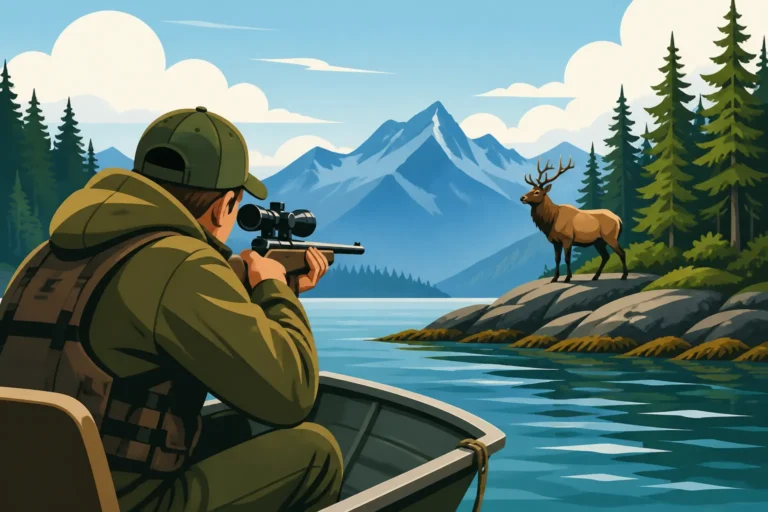
British Columbia’s coast is a labyrinth of inlets, fjords, and river mouths, many of which host extensive estuaries. Identifying prime locations involves looking for areas where rivers or significant creeks empty into the ocean, creating those critical nutrient deposits. Good examples include the mouths of rivers flowing into larger inlets or bays along the Sunshine Coast, Vancouver Island, or even more remote regions of the Central Coast. Access to these locations is almost exclusively by boat. Whether it’s a small skiff, a zodiac, or a larger cabin cruiser, your vessel is your lifeline. These hunts are often conducted from the water, utilizing the boat as a mobile base for glassing and approaching. For those considering Hunting From a Boat on the Coast, estuaries are a fantastic starting point. It's rare to find easy road access to the best estuary hunting grounds, requiring a commitment to marine travel and an understanding of coastal navigation. Many hunters choose to combine this with Boat-Based Coastal Hunts in British Columbia, using their boat as a platform for multiple days of exploration.
Essential Scouting and Preparation for an Estuary Hunt
Preparation for a coastal estuary hunt is markedly different from an interior hunt. You're dealing with a dynamic marine environment, unpredictable weather, and often, remote wilderness. Meticulous planning is key to a safe and successful outing.
Harnessing Mapping Tools and Tide Charts
Before you even launch the boat, your scouting begins with maps. High-quality topographical maps, marine charts, and satellite imagery are your best friends. Services like GoHunt, or other online mapping tools, allow you to study potential estuaries from afar, identifying key features like the extent of mudflats, areas of dense vegetation, river channels, and proximity to steep timbered slopes where bears might bed. You'll want to pinpoint areas that offer a good combination of open feeding grounds and nearby cover. Pay attention to any small islands or higher ground within the estuary itself, as these can become temporary refuges for bears during high tide.
Crucially, you must obtain accurate tide charts for your specific hunting dates and location. These are non-negotiable. Many coastal towns will have local tide tables available, or you can find them online from sources like Fisheries and Oceans Canada. Knowing the times of high and low tide, and the predicted heights, will inform your entire hunting strategy. Will the tide expose a vast feeding flat at dawn? Or will it push bears into a specific treeline at midday? Your approach and timing will revolve around these predictions. Here's a simplified look at how tide changes can influence your hunting strategy:
| Tide Phase | Bear Behavior | Hunting Opportunity | Potential Challenge |
|---|---|---|---|
| Falling Tide | Bears move onto newly exposed flats to feed | Excellent for glassing, identifying fresh tracks | Mudflats can become impassable, shallow water for boats |
| Low Tide | Maximize feeding on exposed sedges/carrion | Longest window for distant spot-and-stalk | Bears can be spread out, require long stalks |
| Rising Tide | Bears may move towards treeline or higher ground | Concentrates bears in predictable areas near cover | Rapidly changing landscape, can cut off stalkers |
| High Tide | Bears often rest or move into heavy timber | Reduced visibility, bears in dense cover | Limited feeding activity, difficult to spot |
Tailoring Your Gear for the Coastal Environment
Hunting the coast means embracing the wet. Your gear needs to be up to the task. Waterproof outer layers – jacket, pants, and reliable rubber boots or knee-high waders – are absolutely essential. Forget "water-resistant"; you need truly waterproof. Layers are critical underneath, allowing you to regulate your temperature as you exert yourself or sit still glassing. Good quality optics, like binoculars (10×42 or 10×50 are ideal) and a spotting scope on a sturdy tripod, are vital for picking apart the vast open flats and dense treelines. Given the potential for long distances, a rangefinder is also a must-have for accurate shot placement.
A reliable boat is, of course, central to this type of hunt. Ensure it's seaworthy, equipped with all necessary safety gear (flares, PFDs, first-aid kit), and carries enough fuel, plus a reserve. Don't forget anchors, ropes, and a plan for securing your boat, especially if you plan to get out and hike. For safety and peace of mind, a satellite communication device like a Garmin inReach or a Zoleo is strongly recommended, as cell service is often non-existent in these remote areas. Consider what you’ll need for Emergency Planning in British Columbia's Backcountry.
Planning for Weather and Water Safety
The British Columbia coast is infamous for its rapidly changing weather. Sunny skies can turn to torrential rain and strong winds in a matter of hours. Always check the marine forecast before heading out, and be prepared for worse conditions than predicted. Heavy fog is also a common occurrence, especially in May, which can drastically reduce visibility and make navigation hazardous. Always have a GPS and chart plotter on board, and know how to use them, especially if you find yourself enveloped in fog.
Water safety is paramount. Always wear a PFD when travelling in the boat, especially if alone. Be mindful of currents, submerged rocks, and driftwood, which can all pose significant hazards. If you're navigating shallow river mouths or tidal channels, understand your boat's draft and the tides to avoid getting stranded. It's always a good idea to inform someone of your float plan – your intended route, where you're going, and when you expect to return. This simple step could be life-saving if something goes wrong.
Mastering the Art of Spot-and-Stalk on Tidal Flats
Coastal estuary hunting is predominantly a spot-and-stalk game, demanding patience, keen observation, and precise execution. The open nature of the terrain means bears are often visible from long distances, but it also means they have an excellent vantage point of their surroundings.
Effective Glassing and Identifying Bear Sign
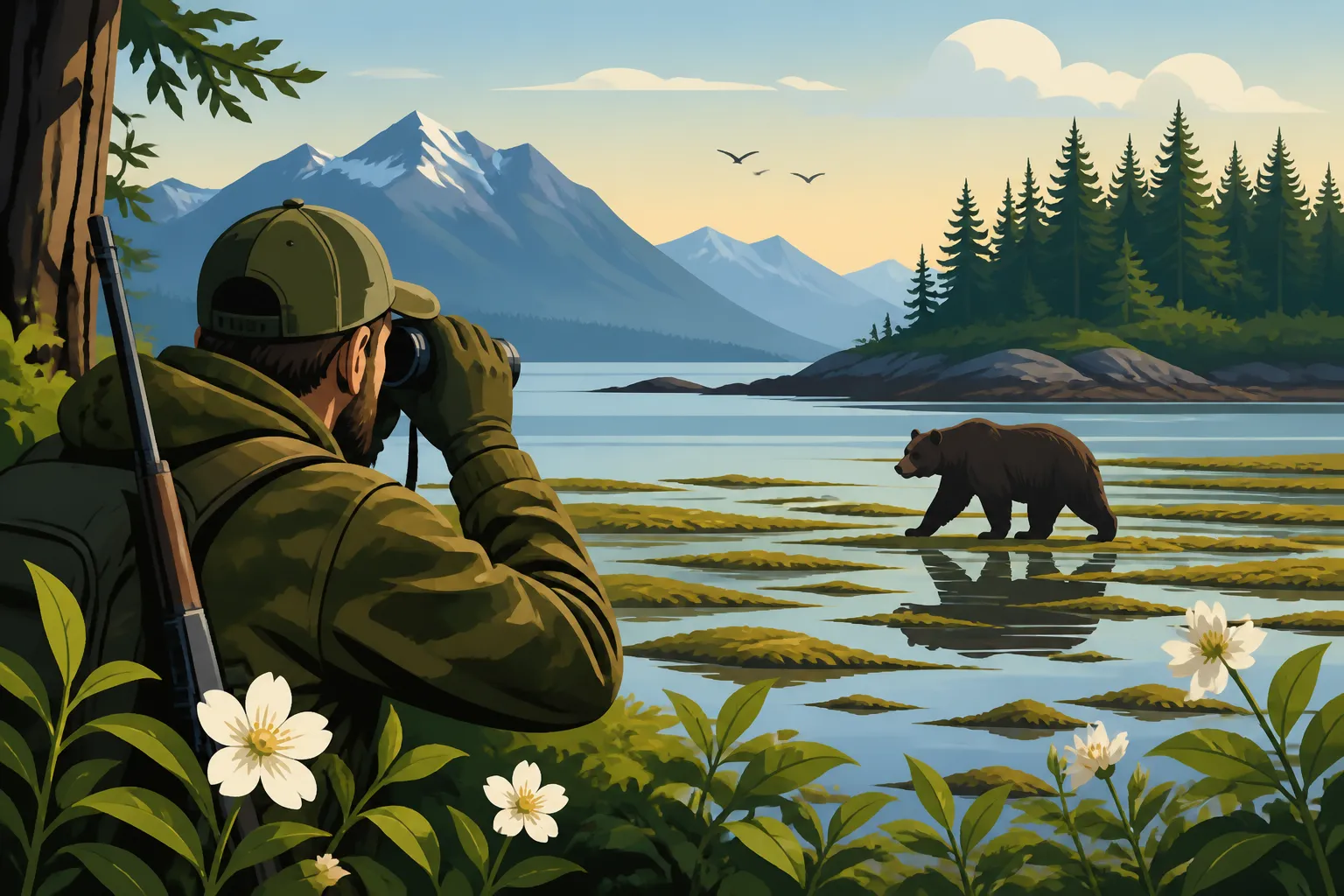
Your best tool for finding bears on an estuary is your optics. Set up in a vantage point that offers a panoramic view of the flats, ideally with the sun at your back if possible. Spend considerable time methodically glassing every square inch of the area. Don't just scan; pick it apart section by section, looking for any dark blob that doesn't belong, or any movement. Bears can appear surprisingly small in the vastness of an estuary. Pay particular attention to the edges of the treeline where bears often emerge, and to areas where fresh green growth is most prominent.
Even if you don't spot a bear initially, look for sign. Fresh tracks in the mud are a clear indicator of recent activity. Turned-over rocks or torn-up patches of sod can indicate where a bear has been foraging. If you're seeing lots of fresh sign but no bears, it might mean they're in the adjacent timber, waiting for a specific tide, or you might need to adjust your timing. Comparing this to Glassing Logging Roads for Spring Bears will highlight the difference in terrain and cover.
The Critical Skill of Judging a Coastal Black Bear
Judging bears accurately is incredibly important, especially with the objective of harvesting a mature boar. In May, bears are often still lean from hibernation, and their coats might not be at their prime, making judging challenging. Look for key indicators of a boar:
- Head Shape: Boars typically have a blockier, more angular head with smaller-looking ears relative to the size of their head. Sows tend to have a more triangular face and larger-looking ears.
- Body Shape: A mature boar will have a substantial build, often with a noticeable neck and heavy shoulders. Sows, especially those with cubs (which you absolutely cannot harvest), will often appear more slender in the body, particularly if they've been nursing.
- Legs: Boars often appear to have shorter, stockier legs for their body size compared to the lankier look of many sows.
- Behavior: Boars tend to be more solitary and deliberate in their movements. While sows can also be solitary, they may appear more cautious or constantly checking their surroundings if cubs are nearby.
It's always best to observe a bear for a significant period to confirm its sex and size. If you see cubs, even if they're quite large, that bear is off-limits. For more detailed advice, read up on Judging a Boar From a Sow With Cubs. Patience here is critical; never rush the shot if you're uncertain.
Strategic Stalking and Ethical Shot Placement
Once you've spotted a bear and made the decision to stalk, the real chess match begins. The openness of the estuary means minimal cover, making a direct approach incredibly difficult. You'll need to use any available terrain features – a small rise, a patch of alders, or the riverbank itself – to conceal your approach. Pay meticulous attention to the wind, as a bear's nose is its most potent defence. Always approach from downwind, even if it means taking a significantly longer, circuitous route.
Move slowly, deliberately, and be prepared to stop and remain motionless for extended periods if the bear looks up. Monitor the tide: is it rising or falling? How will this affect your escape route or the bear's movement? Plan your final approach to put you in a position for an ethical shot within your comfortable range. Shot placement on bears is critical; aim for the lungs/heart zone, typically just behind the shoulder. Given the challenging terrain of mudflats, a well-placed shot is essential for a quick, humane kill and a manageable recovery. A wounded bear can quickly disappear into the dense treeline or the rising tide.
Post-Harvest Care, Regulations, and Backcountry Safety
Successfully harvesting a bear on a coastal estuary is only half the battle. The unique environment presents specific considerations for regulatory compliance, meat preservation, and safety.
Navigating British Columbia's Compulsory Reporting and Bear Rules
British Columbia has strict regulations regarding bear hunting, particularly black bears. After harvesting a black bear, you are generally required to report your harvest within 30 days. This is known as British Columbia's Compulsory Reporting Rules. This typically involves submitting details online or to a designated inspection station, including the management unit, date of kill, and sex of the bear. While physical compulsory inspection (where you bring the skull or hide to an official) is less common for black bears than some other species, you are still responsible for being fully aware of all current regulations. Always consult the most recent British Columbia Hunting and Trapping Synopsis before your hunt, as rules can change. Be particularly mindful of areas where specific antler restrictions or non-toxic shot rules for waterfowl might apply, even if you’re hunting bears.
It's also crucial to remember that grizzly bears are protected in British Columbia and cannot be hunted. While they tend to prefer different habitats, grizzlies can occasionally be found near estuaries, especially those with salmon runs. Being able to distinguish between a black bear and a grizzly, even at a distance, is a critical skill for any hunter in BC.
Preserving Your Harvest in Mild May Conditions
May on the BC coast can see mild temperatures, which means quick and proper meat and hide care is paramount to prevent spoilage. As soon as the bear is down, get to work. Field dress the animal promptly to allow the carcass to cool as quickly as possible. Skinning the bear and quartering it into major muscle groups will also aid in cooling. For a What a Coastal Black Bear Weighs, this can be a substantial amount of meat.
If you’re hunting from a boat, having a large cooler packed with ice is essential. Get the meat out of the sun and into ice as soon as possible. If you’re planning to pack the meat out on foot, consider using game bags and hanging the meat in the shade with good airflow, though this can be challenging on an estuary with limited trees. The goal is to reduce the internal temperature of the meat rapidly. The hide, especially if you intend to get it tanned, also needs immediate attention. Salt the hide thoroughly to preserve it, particularly if you have a multi-day trip. Understanding Keeping Meat Cool in an Early Season will be a major asset here.
Staying Safe in Coastal Bear Country
While you're actively hunting black bears, you also need to be acutely aware of general bear safety. Even though you’re looking for them, an unexpected encounter can always happen. Carrying bear spray and knowing how to use it is a good practice, especially during a stalk or when in thick cover. Always make noise when moving through dense bush to avoid surprising a bear. For comprehensive advice on this topic, refer to Bear Safety While Hunting in British Columbia.
Beyond bear encounters, the coastal environment itself demands respect. As mentioned earlier, unpredictable weather, rapidly changing tides, and cold water are significant hazards. Always dress appropriately, carry emergency supplies, and communicate your plans. Be mindful of slip-and-fall hazards on wet, uneven terrain and slippery mudflats. Hunting on the British Columbia coast is an incredible adventure, but it requires a high degree of self-reliance, preparedness, and respect for the powerful forces of nature.
Disclaimer
The information provided in this guide is for general informational purposes only and does not constitute legal advice. Hunting regulations in British Columbia can change. It is the responsibility of every hunter to consult the most current British Columbia Hunting and Trapping Synopsis, available from the provincial government, and adhere to all applicable federal, provincial, and local laws and regulations before engaging in any hunting activities.