Crossing the Border With a Rifle
There's nothing quite like the anticipation of a British Columbia hunting trip, whether you're dreaming of big Interior moose, coastal blacktail, or high-country sheep. But for many hunters coming from outside Canada, especially those bringing their own rifle, that excitement can quickly turn to anxiety when they think about crossing the border. The rules surrounding firearms can seem daunting and complex, and nobody wants their well-planned adventure derailed at customs. This guide is here to cut through the confusion, offering a clear, empathetic walkthrough of what you need to know and do to bring your hunting rifle into British Columbia smoothly and legally, ensuring your focus remains on the hunt, not the border.
Understanding Canadian Firearm Regulations for Non-Residents
Navigating international borders with a firearm can feel like walking a tightrope, and Canada's regulations, while perhaps stricter than some are used to, are designed for public safety. It’s crucial to understand these rules before you even pack your bags, let alone approach a port of entry.
The Basics: What You Need to Know Up Front
Canada classifies firearms into three main categories: non-restricted, restricted, and prohibited. For hunters, the vast majority of commonly used hunting rifles and shotguns fall under the "non-restricted" category. This is the category we’ll be focusing on, as restricted and prohibited firearms generally cannot be imported for hunting purposes by non-residents, with very few exceptions. Trying to bring in a firearm that is not permitted can lead to serious legal trouble, including seizure of your firearm, fines, and even a ban from entering Canada in the future. It’s a huge headache you absolutely want to avoid.
What this means for you is that your trusty bolt-action rifle, your lever-action, or your standard pump or semi-automatic hunting shotgun, assuming it meets barrel length and magazine capacity requirements (which we’ll get into), is likely considered non-restricted. However, certain semi-automatic rifles that might be legal for hunting in your home country could be classified as restricted or even prohibited in Canada. Always, always check specific models if you have any doubt. Ignorance of the law is not an excuse at the border, and customs officers are well-versed in Canadian firearm classifications. It’s your responsibility to know before you go.
The Non-Resident Firearm Declaration Form (CAFC 909)
This form is your golden ticket for bringing your non-restricted hunting firearm into Canada. It’s essentially a temporary license and registration for your specific firearm while you are in the country. Trying to cross the border without this form properly filled out and declared is a recipe for a bad day. The good news is that it’s not overly complicated if you prepare.
You can download the CAFC 909 form online from the Canadian Border Services Agency (CBSA) website. It's best to fill it out in advance, but do NOT sign it until you are in front of a CBSA officer at the port of entry. They will witness your signature and officially validate it. The form requires details about yourself, the specific firearm(s) you are bringing (make, model, serial number, calibre/gauge, barrel length), and your reason for importing it (e.g., "hunting in British Columbia"). There is a fee associated with processing this declaration, so be prepared to pay that at the border. While a single form covers up to three non-restricted firearms, most hunters only bring one or two. Make sure every single detail matches your firearm exactly – a wrong serial number or an incorrectly listed calibre can cause significant delays or issues. Keep several copies of the validated form with you at all times, one with your firearm, one with you personally, and maybe one tucked safely in your vehicle. For a deeper dive into this specific process, check out Declaring a Firearm at the Canadian Border.
Permissible Firearms for Hunting in British Columbia
Knowing which firearms are allowed and which are absolutely off-limits is paramount. It’s not just about what you can hunt with, but what Canada considers legal for entry.
Non-Restricted Rifles and Shotguns
The good news is that most common hunting rifles and shotguns used in the United States and other countries are classified as non-restricted in Canada and are therefore permissible for import with the proper declaration. This includes popular bolt-action rifles like a Remington 700 or a Winchester Model 70, lever-action rifles such as a Marlin 336, and pump-action or semi-automatic shotguns like a Mossberg 500 or a Benelli Nova. These are the workhorses of the hunting world and are perfectly suited for the diverse game found in British Columbia, from deer to moose to bears.
However, there are specific criteria. For rifles and shotguns, the barrel must be at least 18.5 inches (470mm) long. Shorter barrels generally push a firearm into the restricted or prohibited category. Also, pay close attention to magazine capacity. For semi-automatic centerfire rifles, the magazine capacity is limited to five rounds. For shotguns, whether pump or semi-automatic, the capacity is also five rounds. Most traditional hunting firearms will naturally comply with these limits, but it’s worth double-checking, especially if you have aftermarket magazines. If your rifle takes detachable magazines, you might need to ensure they are pinned or modified to only accept five rounds. This isn't just a suggestion; it's a legal requirement that will be scrutinized at the border. You wouldn't want to get all the way here only to find your rifle is good but your magazine isn't.
What's Definitely Not Allowed
This is where many hunters can unintentionally run into trouble. Certain firearms that are legal and common for hunting or sport shooting in the United States are explicitly classified as restricted or prohibited in Canada. Handguns, for example, are almost universally classified as restricted and cannot be imported by non-residents for hunting. While you might legally carry a sidearm in your home state, bringing one into Canada for "bear protection" or any other reason without extremely rare, specific authorizations is not permitted and will result in seizure and charges. Leave your handgun at home.
Beyond handguns, certain semi-automatic "assault-style" rifles are prohibited. These are often modern sporting rifles (MSRs) that, despite potentially being used for hunting elsewhere, are not permitted in Canada. Examples would include AR-15 variants or certain AK-47 variants, even if chambered in common hunting calibres. It's crucial not to confuse your country's definitions with Canada's. If there is any doubt about your specific model, do not bring it. It's far better to borrow a non-restricted rifle from a Canadian friend or guide, or even purchase a suitable one upon arrival if you plan to become a resident, than to risk seizure and legal repercussions at the border. For more information on legal firearm requirements, you can refer to Legal Rifle Calibres for Big Game. Also, while not typically an issue for hunting, fully automatic firearms are strictly prohibited. The regulations are also very clear on ammunition types; generally, only common sporting ammunition is permitted, with certain specialized or armour-piercing rounds being prohibited.
The Border Crossing Process: What to Expect
You've got your forms, your rifle is packed correctly, and you know the regulations. Now, it's time for the actual crossing. Knowing what to expect can significantly reduce stress.
Arriving at the Port of Entry
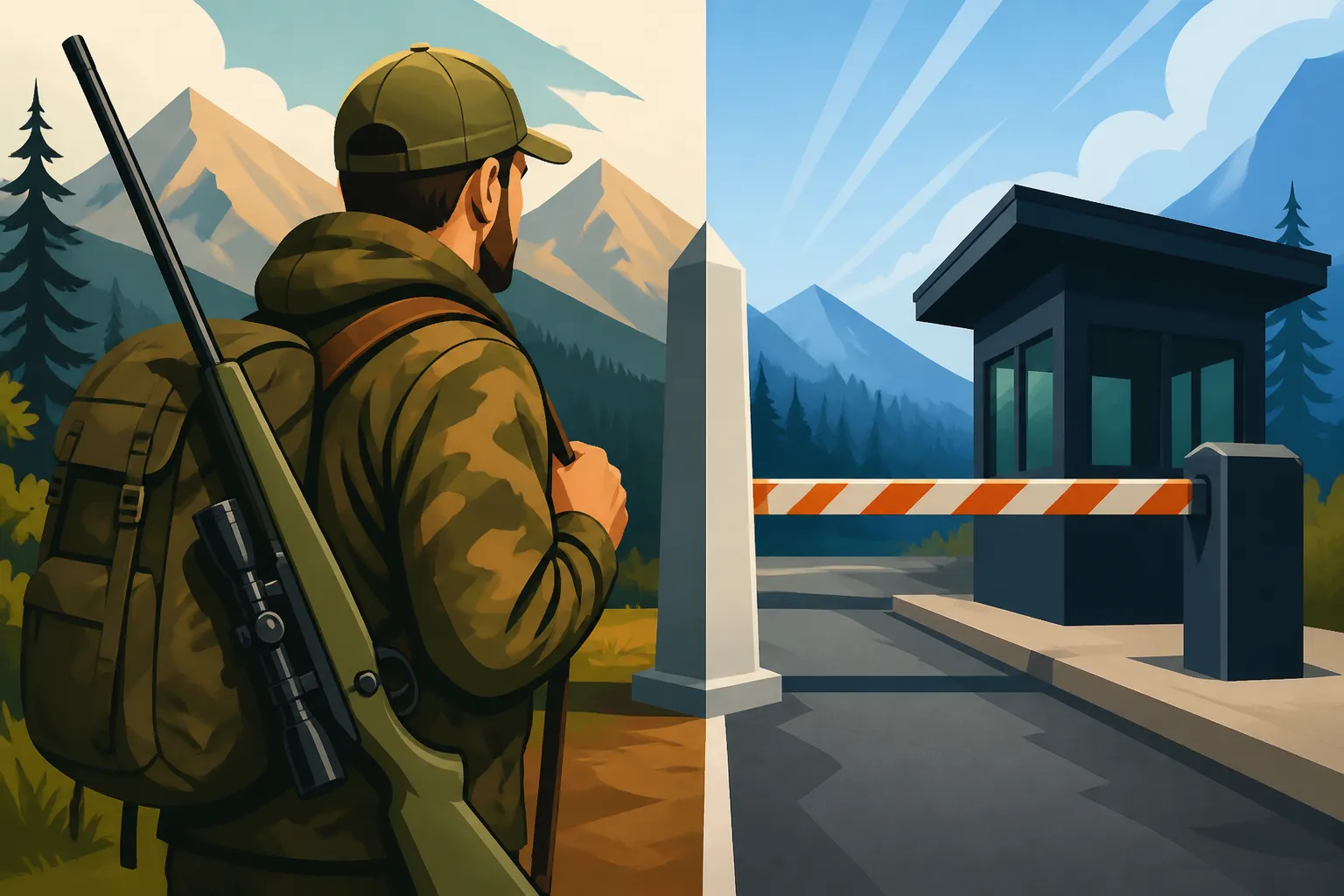
When you arrive at a Canadian port of entry, whether it's by land or air, you will first speak with a CBSA officer. This is where you declare your firearm(s). It's crucial to be upfront, calm, and clear. State immediately that you are entering for hunting purposes and that you have a firearm to declare. Present your completed (but unsigned) CAFC 909 form along with your passport and any other required travel documents. The officer will review your form, ask you to sign it in their presence, collect the fee, and then validate it. They may also ask to inspect your firearm(s) to verify the details on the form.
This inspection is standard procedure. Ensure your firearm is unloaded, locked in a secure case, and easily accessible for inspection without having to dig through all your luggage. This demonstrates your compliance and preparedness. Do not try to rush the process or get frustrated; customs officers are doing their job to ensure security. If there are any discrepancies or questions, answer honestly and respectfully. Trying to hide something or being evasive will only create more problems. It’s much better to have a slightly longer wait than to face a seizure or charges. Remember, this is about ensuring your entry is smooth, so cooperation is key.
Storage and Transport Requirements While in British Columbia
Once you’ve successfully declared your firearm and crossed into British Columbia, there are still rules about how you must store and transport it. These rules are for your safety and the safety of others and apply throughout your stay. Generally, when your non-restricted firearm is not in use for hunting, it must be unloaded and stored securely. This means it should be in a locked case, a locked vehicle, or have a trigger lock on it. You can't just toss it on the back seat of your truck. Ammunition must also be stored separately from the firearm, and ideally in a locked container itself. These measures prevent unauthorized access and are critical for public safety.
For transport in a vehicle, the firearm must be unloaded and encased (a soft case is usually fine for transport, but a hard, lockable case is best for security and airline travel). This applies whether you're driving to your hunting camp, moving between different hunting areas, or heading home. Even if you're just moving it from your vehicle to your tent at camp, it should be unloaded. These rules are designed to prevent accidental discharges and deter theft. Understanding these guidelines helps you maintain compliance and ensures that you can focus on the hunting experience itself without worrying about legal infringements. If you are also moving your harvest, you'll need to know about Transporting Game Meat in British Columbia.
Planning Ahead: Tips for a Smooth Entry
The key to a stress-free border crossing is thorough preparation. Don't leave anything to chance, and certainly don't wait until the last minute.
Gathering All Your Paperwork
Beyond your Non-Resident Firearm Declaration Form (CAFC 909) and your passport, you’ll need a few other crucial documents. First and foremost, you will need your British Columbia hunting license and any species tags you plan to use. Non-residents must generally purchase these in advance or through their guide. It's a good idea to have proof of your hunter education (e.g., your hunter safety card from your home state/province), as you’ll need to demonstrate your eligibility to hunt in British Columbia to purchase your license and get your FWID (Firearms and Wildlife ID). You can learn more about the overall licensing process here: British Columbia Hunting Licences and Fees. You’ll also want to understand the specifics of what tags you'll need for specific game: British Columbia's Species Licences and Tags.
If you are hunting with an outfitter, bring your confirmation or contract. This serves as proof of your hunting plans and can smooth over any questions about your intentions. If you own your firearm and are not the original purchaser, having proof of ownership (e.g., a bill of sale or registration certificate) can be helpful, though usually not strictly required if your serial numbers match your declaration. Imagine getting to the border and realizing you left a critical document back home – that’s a nightmare. A checklist is your best friend here. Consider using a dedicated folder for all your hunting and travel documents, easily accessible but secure.
Understanding Your Hunting Plans
Customs officers might ask about your specific hunting plans. Be ready to articulate them clearly. If you’re on a guided hunt, have your outfitter’s name, contact information, and the general area you'll be hunting. This demonstrates legitimate intent. If you're self-guided (and eligible as a non-resident under specific conditions or a Permit to Accompany arrangement), be prepared to explain where you're going, which Management Unit(s) you intend to hunt, and for what species. You don't need to give them your secret spots, but you should be able to provide enough detail to satisfy their queries about your lawful purpose.
This information isn't just for the border, it's essential for your overall hunt planning. Resources like BookYourHunt can be invaluable for non-residents looking to secure a guided hunting experience in British Columbia, connecting you with reputable outfitters and ensuring your trip is legitimate from the get-go. Similarly, if you’re doing extensive research for a self-guided trip, platforms like GoHunt often provide planning tools and detailed information that can help you articulate your itinerary clearly. Having a well-defined plan not only streamlines your border crossing but also shows the authorities that you are a responsible and prepared hunter. It also pays to read the entire regulations synopsis for British Columbia, which can be found here: British Columbia's Two-Year Regulations Synopsis.
Common Pitfalls and How to Avoid Them
Even with the best intentions, things can go sideways. Knowing the common mistakes can help you steer clear of trouble.
Misunderstandings and Consequences
One of the most common pitfalls is simply not understanding Canada's firearm classification system. What might be an "ordinary hunting rifle" in your home country could be a "prohibited firearm" here, leading to immediate seizure. We're talking about situations where hunters inadvertently bring in semi-automatic rifles with features that are perfectly legal south of the border but are strictly banned in Canada. The consequences for this are severe: your firearm will be seized, you could face criminal charges, significant fines, and potentially a lifetime ban from entering Canada. This isn't just a minor inconvenience; it's a permanent mark on your record that affects future travel.
Another frequent issue is failing to properly declare. Some hunters, either out of ignorance or an ill-advised attempt to circumvent the rules, try to sneak a firearm across. The CBSA is highly skilled at detecting undeclared items. If caught, not only will your firearm be seized, but you will also face hefty penalties for making a false declaration. The penalties are far more severe for non-declaration than for a simple mistake on the form that can be corrected. Always declare everything truthfully, even if you're uncertain; it's always better to over-declare and clarify than to be caught under-declaring. The officers are there to facilitate legal entry, but they are also there to enforce the law, and they take firearm regulations very seriously.
Staying Informed and Prepared
The best defense against these pitfalls is proactive research and preparation. Before your trip, visit the official Canadian Border Services Agency (CBSA) website. They have dedicated sections for non-residents importing firearms, with up-to-date information and links to the necessary forms. Don't rely solely on word-of-mouth or outdated forum posts; regulations can change. If, after reviewing all the official resources, you still have questions about your specific firearm or circumstances, pick up the phone and call the CBSA directly. Their agents can provide definitive answers and clarify any ambiguities. This might seem like an extra step, but a five-minute phone call could save you an entire trip's worth of heartache.
Beyond the border, familiarize yourself with British Columbia's hunting regulations, including any specific rules for non-residents, which can be found in the British Columbia Hunting and Trapping Synopsis. This information will also cover safety rules such as British Columbia Blaze Orange and Safety Rules. Being informed about the rules surrounding your hunt itself demonstrates a responsible attitude that extends to your firearm handling. The goal is to make your entry into British Columbia for your hunting adventure as seamless as possible, allowing you to focus on the incredible experience of hunting in our beautiful province. Don't let border anxiety steal the joy from your trip – prepare thoroughly, declare honestly, and enjoy the hunt! Non-residents should also be aware of the specific Rules for Non-Residents Hunting British Columbia, which cover much more than just firearm entry.
| Document Type | Purpose | Action | Key Point |
|---|---|---|---|
| Passport | Proof of citizenship and identity for entry into Canada | Ensure it's valid and current | Absolutely essential for international travel |
| Non-Resident Firearm Decl. Form (CAFC 909) | Temporary license/registration for your firearm in Canada | Fill out in advance, but DO NOT SIGN until with CBSA officer | Must be accurate; fee payable at border |
| British Columbia Hunting License | Legal permission to hunt in BC | Purchase in advance or with guide, have FWID ready | Proof of hunter education needed to obtain |
| Species Tags | Specific permission to harvest a particular animal | Required for each species you intend to hunt | Ensure they match your hunting plans |
| Outfitter Contract (if applicable) | Proof of legitimate hunting trip for guided hunts | Keep handy with other travel documents | Can help clarify intentions to border officials |
| Proof of Hunter Education | Demonstrates competence as a hunter | Have your hunter safety card or equivalent certificate | Required to get your BC FWID and purchase licenses |
| Firearm Ownership Proof (optional) | Can help confirm ownership if questions arise | Bill of sale, registration, or previous declaration | Usually not strictly required if serials match, but good to have |
| Return Travel Tickets | Proof of intent to leave Canada | Have ready if asked, especially for air travel | Shows you're not planning to stay beyond your permitted visit |
Disclaimer
This article is for general informational purposes only and does not constitute professional advice. Laws, prices and regulations vary by location and change over time. Consult a qualified professional for guidance on your specific situation.