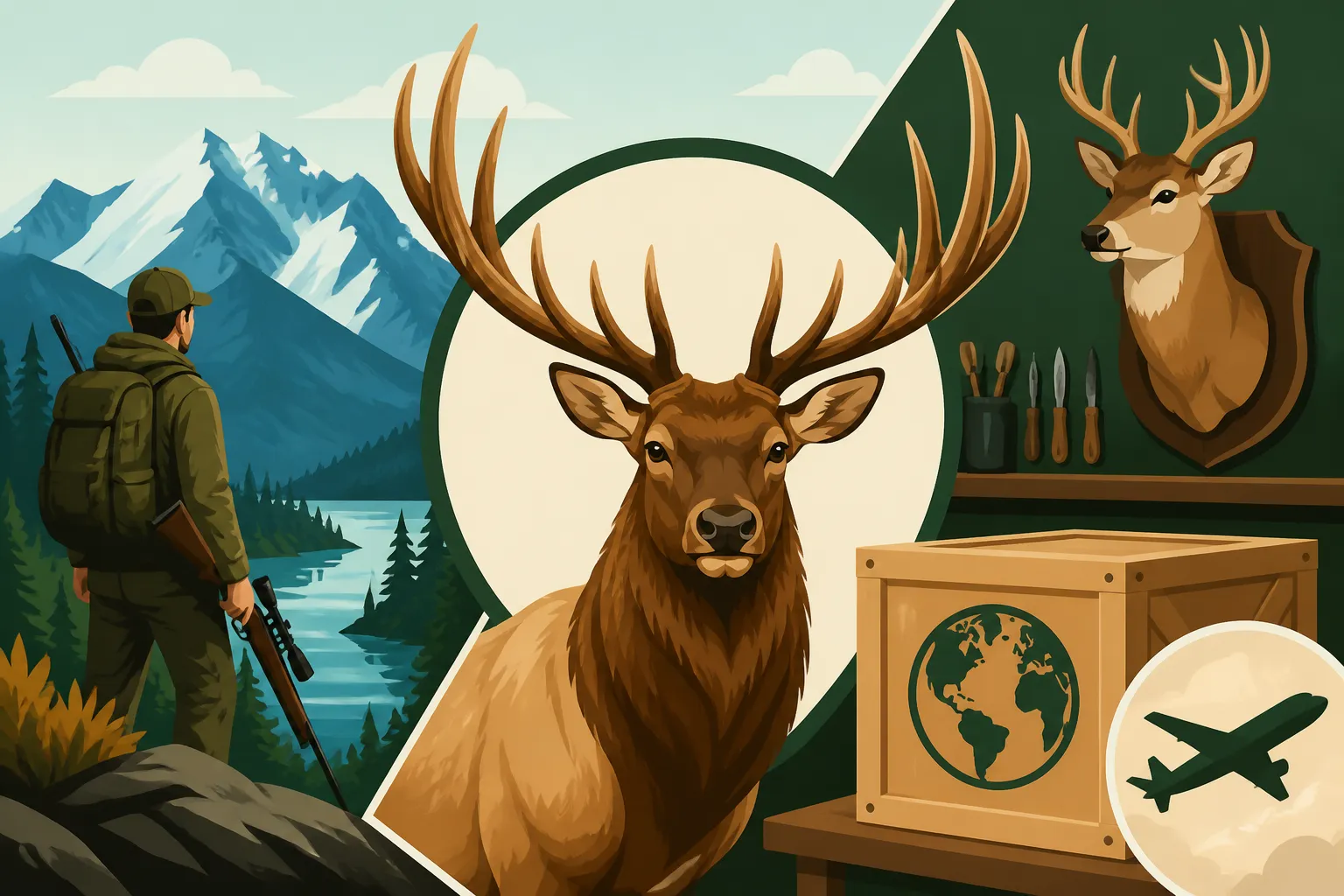
British Columbia Taxidermists and Trophy Export
After the thrill of a successful hunt in British Columbia, the last thing you want to face is the stress and confusion of getting your hard-earned trophy properly cared for, mounted, and safely back home. It's a logistical puzzle that can feel overwhelming, especially if you're an out-of-province or international hunter navigating unfamiliar regulations and distances. This comprehensive guide will walk you through everything you need to know about British Columbia taxidermists and the often-complex process of exporting your trophy.
The Initial Decisions: Field Care to Taxidermy Choice
Bringing home a magnificent animal from the vast wilderness of British Columbia is an incredible accomplishment. But the hunt doesn't truly end until that memory is preserved, either as a European mount on your wall or a full shoulder mount bringing the animal back to life. The first critical steps happen right there in the field.
Field Care: The Foundation of a Good Mount
The quality of your taxidermy mount starts literally moments after your animal is down. Improper field care is the number one reason hides are rejected or result in a less-than-perfect mount. For a shoulder mount, knowing how to cape correctly is essential. This means making the right cuts – a dorsal cut down the back, circular cuts around the animal's midsection, and meticulous incisions around the legs and neck. You're aiming to remove the hide with enough extra material for the taxidermist to work with, especially around the brisket and shoulders.
Once the hide is off, cooling it down quickly is paramount. British Columbia can offer diverse conditions; a fall moose hunt in the interior might be crisp, but an early season bear hunt on the coast could be quite warm and wet. In warmer temperatures, especially, the hide needs to breathe to prevent hair slippage. After cooling, it’s all about preservation. Salting with non-iodized salt is the gold standard for long-term storage, drawing out moisture and inhibiting bacterial growth. This usually requires a generous initial salting, letting it drain, and then a second, more thorough salting. Don't forget the skull; clean it of as much flesh as possible if you're keeping it for a European mount or to provide to the taxidermist for measurements. Neglecting this crucial step in the backcountry can spoil an otherwise perfect trophy. For more insights on this, you might find information in Meat Care in British Columbia's Warm Early Seasons helpful, as the principles of cooling apply to hides too.
Local vs. Home-State Taxidermist
Once you have your hide and skull properly cared for in the field, a significant decision looms: do you entrust your trophy to a British Columbia taxidermist or ship the raw materials back to your home province or state? Both options have their merits and drawbacks.
Choosing a local BC taxidermist can often simplify logistics immediately after the hunt. Many outfitters or guides have established relationships with reputable local studios and can facilitate the transfer of your trophy directly from camp. This means less immediate stress about cross-border shipping of raw materials, which can be fraught with specific rules and inspections. A BC taxidermist will also be intimately familiar with the local species, their anatomy, and nuances, potentially leading to a more accurate and lifelike mount. However, you'll need to factor in the cost and complexity of eventually shipping the finished mount back home, which can be bulky and require specialized crating.
On the other hand, shipping raw hides and skulls to your trusted taxidermist back home allows you to work with someone whose quality you already know and who understands your aesthetic preferences. This eliminates the need to vet a new taxidermist from afar. The initial shipping of raw materials might seem daunting, but it often requires less specialized handling than a finished mount. You'll need to ensure all proper permits and CITES documentation are in order if shipping across international borders. The key here is excellent communication between you, your guide, and your home-state taxidermist to ensure the hide is prepared precisely to their specifications for tanning and mounting.
Choosing a British Columbia Taxidermist
If you decide to go with a British Columbia taxidermist, finding the right one is paramount. Start by asking your guide or outfitter for recommendations. Reputable guides often work with taxidermists they trust, and their reputation relies on satisfied clients. Online research is also valuable; look for websites, portfolios, and reviews.
When vetting a potential taxidermist, don't hesitate to ask detailed questions. Inquire about their experience with the specific species you harvested – a deer specialist might not be the best choice for a bear rug. Ask to see examples of their work, both in person if possible or through high-quality photos. Discuss their turnaround times, which can vary significantly depending on their workload and the complexity of your mount. A good taxidermist will be transparent about their process, from tanning to finishing, and will provide a clear breakdown of estimated costs. Remember that the cheapest option isn't always the best; quality craftsmanship will ensure your trophy is a lasting tribute to your hunt. Platforms like GoHunt or BookYourHunt might offer directories or forums where hunters share recommendations and experiences, which can be a valuable starting point.
Understanding Taxidermy Options and Costs
Once you've secured your trophy and made initial decisions about where it will be mounted, it's time to consider the various ways your animal can be preserved and displayed. Each option carries different artistic and financial implications.
Common Taxidermy Mount Types
The world of taxidermy offers a spectrum of ways to immortalize your British Columbia harvest. The most popular choice for deer, sheep, goat, and even bear is often the shoulder mount. This involves mounting the head, neck, and shoulders of the animal onto a form, capturing its essence and typically requiring less space than a full mount. Shoulder mounts can be posed in various ways – alert, curious, or even aggressively. For a truly impressive display of a large animal like a moose or an elk, a pedestal mount might be considered; it's essentially a shoulder mount elevated on a custom base, allowing for a more dynamic presentation and often a more substantial feel.
For predators like black bears or even wolves harvested in BC, rugs are a common and functional option. The hide is tanned, backed with felt, and often includes the head mounted realistically. This provides a tactile and impressive display. A life-size mount is the ultimate tribute, showcasing the entire animal in a dynamic pose. This is particularly popular for bears, cougars, or mountain goats, but requires significant space and budget. Finally, the European mount is a simpler, more rustic option that focuses on the cleaned, bleached skull and antlers (or horns). This is a fantastic choice for any species, especially if you're on a tighter budget or have limited space, and still offers a powerful representation of your hunt.
| Mount Type | Description | Common Species | Space Requirement | Relative Cost |
|---|---|---|---|---|
| Shoulder Mount | Head, neck, and shoulders mounted on a form. | Deer, Elk, Moose, Sheep, Goat, Bear, Caribou | Moderate | Moderate |
| Pedestal Mount | Shoulder mount elevated on a custom base, often with habitat elements. | Deer, Elk, Moose, Sheep, Goat | Moderate to High | Moderate |
| Life-Size Mount | Entire animal mounted in a realistic pose. | Bear, Cougar, Wolf, Goat, Deer (fawn/yearling) | Very High | Very High |
| Rug | Tanned hide, felt-backed, with mounted head. | Bear, Wolf, Cougar, Lynx | Low (floor/wall) | Moderate |
| European Mount | Cleaned and bleached skull with antlers/horns. | Deer, Elk, Moose, Sheep, Goat, Bear (skull only) | Low | Low |
The Investment: What Influences Taxidermy Costs
The cost of taxidermy is an investment in preserving a memory, and it varies widely based on several factors. The most significant influences are the species of animal and the type of mount you choose. Larger animals like moose or elk naturally require more materials, time, and specialized forms than a deer, driving up the price. A full life-size mount will always be considerably more expensive than a shoulder mount or a European mount due to the sheer amount of work and materials involved.
Beyond these basics, pose complexity can also play a role. A standard straight-forward shoulder mount might be a base price, while a custom, dynamic pose with intricate muscle detail could incur additional fees. The quality and type of base for a pedestal or full-size mount, including habitat elements like rocks, vegetation, or custom wood, will also add to the final cost. Extra detailing, such as open mouth poses for predators, custom pedestals, or intricate habitat scenes, also contributes to the overall price. It's crucial to get a detailed quote from your chosen taxidermist and understand what is included. Don't be shy about asking for an itemized breakdown so there are no surprises down the line. Remember, you're paying for skill, artistry, and the long-term preservation of your trophy.
Preparing for Your Trophy's Journey to the Studio
Once your animal is harvested and field-dressed, getting the raw trophy materials (hide, skull, antlers) to the taxidermy studio, whether local or back home, requires careful planning. For hides, especially if they are going to be shipped raw, proper skinning and salting are critical. Many taxidermists prefer a green hide to be frozen solid if shipping locally or stored in a freezer before transport. If it's traveling a longer distance, a thorough salt-drying process is essential. The hide needs to be completely dry and stiff before packaging to prevent spoilage.
For antlers or horns, ensure they are securely removed from the skull plate (if not taking the whole skull) and protected from damage during transit. Skulls for European mounts need to be cleaned of major flesh and brain matter, then ideally frozen or thoroughly dried to prevent decomposition before reaching the cleaner or taxidermist. When transporting across British Columbia, you'll need your appropriate hunting licence and species tag to prove legal possession of the animal parts. Keep detailed records and photographs of your trophy, especially before shipping, as a backup. Proper labeling with your contact information and the taxidermist's details is also a must for any package.
The Intricacies of Trophy Export from British Columbia
For non-resident hunters, getting your trophy out of British Columbia and across international borders can be the most daunting part of the entire process. It's not just about getting the mount done; it's about navigating a maze of paperwork and regulations.
Required Documentation for Export
Exporting a trophy from British Columbia requires specific documentation to ensure legality and smooth passage across borders. First and foremost, you will need your British Columbia hunting licence and species tag that was attached to the animal. This proves legal harvest. Often, a "Certificate of Origin" or similar provincial document might be issued by the BC government or your outfitter, confirming the animal was legally taken within the province.
For certain species, particularly those listed under the Convention on International Trade in Endangered Species of Wild Fauna and Flora (CITES), additional federal permits are required. This notably applies to sheep (Bighorn, California, Stone's) and mountain goats. While grizzly bear hunting is currently closed in BC, if you had a trophy from a jurisdiction where it's legal, grizzlies would also fall under CITES regulations. You'll need to apply for both Canadian CITES export permits and potentially CITES import permits for your home country. These permits require detailed information about the harvest, the hunter, and the intended destination. The application process takes time, so it's vital to start this early. Your chosen taxidermist or a customs broker can often assist with these applications, as can a reputable guide outfitter who has experience with non-resident hunters and trophy export. Ensure all your British Columbia's Compulsory Reporting Rules are followed, as this is often tied to obtaining necessary export documents. You can learn more about this by reading CITES Paperwork for a Sheep or Goat.
Shipping Logistics: Crating and Carriers
Once your trophy is finished by the taxidermist, whether it's a finished mount or just the raw, tanned hide and cleaned skull, it needs to be safely transported. This often involves specialized crating. A finished mount, especially a large shoulder or life-size piece, will be carefully packed in a custom-built wooden crate to protect it from damage during transit. These crates can be quite large and heavy.
For shipping, you typically have options ranging from freight forwarders specializing in oversized cargo to international shipping companies. Air cargo is faster but generally more expensive, while ground shipping via freight can be more economical but takes longer. Your taxidermist will usually have preferred shipping partners they work with regularly and can help arrange the logistics. It's crucial to ensure your shipment is properly insured against damage or loss. When getting quotes for shipping, be aware that costs are influenced by the size and weight of the crate, the destination, and the urgency of delivery. This is where a good taxidermist's experience truly shines, as they can guide you through these complex arrangements. You'll also need to consider Transporting Game Meat in British Columbia if you're taking any meat home, though trophy export is a distinct process.
Customs and Border Regulations
Navigating customs and border regulations is perhaps the trickiest part of trophy export. When your trophy leaves Canada and enters another country (e.g., the United States), it becomes subject to both Canadian export laws and the import laws of the destination country. For US hunters, this means dealing with US Customs and Border Protection (CBP) and potentially the US Fish and Wildlife Service (USFWS).
You will need to accurately declare your trophy and present all required documentation, including your BC licence, tag, any provincial certificates, and CITES permits if applicable. USFWS regulations specifically require an import declaration (Form 3-177) for wildlife, which must be filed upon import. Some ports of entry might have dedicated wildlife inspection facilities, while others might require your shipment to be routed through a designated port for inspection. Any discrepancies in paperwork or undeclared items can lead to significant delays, fines, or even seizure of your trophy. Working with a customs broker who specializes in wildlife and trophies can be an invaluable asset, as they are experts in navigating these complex legal waters and can proactively address potential issues. This might be a topic where platforms like GoHunt have articles or forums detailing specific experiences, or an outfitter found on BookYourHunt could provide practical advice for their clients.
Common Pitfalls and How to Avoid Them
Even with the best intentions, the journey from field to finished mount can have its share of challenges. Being aware of common pitfalls can help you avoid costly mistakes and ensure your trophy is preserved perfectly.
Mishandling in the Field
As mentioned earlier, inadequate field care is a primary culprit for poor-quality mounts. Mistakes like not caping properly, leaving too much meat on the hide, not salting thoroughly, or failing to cool the hide quickly enough can lead to irreversible damage. Hair slippage, where the hair detaches from the hide due to bacterial action, is a common issue that often cannot be salvaged by even the most skilled taxidermist. Once hair slips, that section of the hide is ruined.
To avoid this, educate yourself on proper caping techniques for the type of mount you desire well before your hunt. Pack adequate salt (non-iodized) if you plan to do a dry-preserve in the field. If hunting in warm weather or remote areas, prioritize getting the hide cooled and to a freezer or salting station as quickly as possible. Don't rush the caping process; take your time, make clean cuts, and ensure all red meat and fat are removed from the flesh side. A little extra effort in the field pays dividends in the final product.
Communication Breakdown with Your Taxidermist
A significant amount of stress and disappointment can stem from poor communication between the hunter and the taxidermist. Misunderstandings about the desired pose, the type of mount, the base materials, or even the estimated completion date can lead to frustration. You might expect a natural, relaxed pose, while the taxidermist envisions something more dramatic, simply because these details weren't explicitly discussed and agreed upon.
To prevent this, be proactive and clear in your communication. Provide photos of poses you like or don't like. Discuss specific details about the animal itself – scars, unique antler characteristics, or particular colourations you want highlighted. Confirm turnaround times and ask for updates periodically, understanding that quality taxidermy takes time. A good taxidermist will appreciate your engagement and will keep you informed. If you're a non-resident, consider assigning a point person (like your guide or a trusted friend in BC) to facilitate communication if needed. This clear channel helps avoid issues discussed in British Columbia Taxidermists and Wait Times.
Export and Import Hurdles
The bureaucratic side of trophy export, particularly across international borders, can be a minefield of potential issues. Missing a single signature on a permit, using an incorrect form, or mislabeling a shipment can cause significant delays at customs, storage fees, or even the dreaded seizure of your trophy. Regulations can also change, making it hard to keep up.
To mitigate these risks, start the documentation process as early as possible. Double-check every form for accuracy and completeness. Work with a reputable taxidermist or, even better, a specialized customs broker who has current knowledge of both Canadian export and your home country's import regulations. They can often pre-clear paperwork or advise on specific requirements. Keep copies of all documentation, both physical and digital, and have them readily accessible. Be patient; delays can happen even with everything in order, but thorough preparation significantly reduces the chances of major headaches. Many outfitters listed on BookYourHunt will often have experience with these procedures, and websites like GoHunt often provide updates on changes in regulations relevant to hunters.
Disclaimer
This article is for general informational purposes only and does not constitute professional advice. Laws, prices and regulations vary by location and change over time. Consult a qualified professional for guidance on your specific situation.