Where British Columbia Hunters Park and Walk
Navigating the vast wilderness of British Columbia as a hunter often brings a specific frustration: figuring out where you can actually park your vehicle and then hoof it into a promising hunting area. It’s not always as simple as pulling off to the side of the road and heading into the bush. Between private land, active logging, designated zones, and ever-changing road conditions, knowing where British Columbia hunters can legally and effectively park and walk into their hunting grounds is crucial for success and avoiding unwanted trouble. This guide will help you understand the nuances of accessing British Columbia's hunting lands on foot, from legal parking to strategic route planning.
Understanding British Columbia's Access Landscape
British Columbia is a massive province, and while much of it is Crown land (public land), access isn't always straightforward. You might see a promising ridge or a dense timber block, but getting your boots on the ground there can be a journey in itself, often starting with where you can leave your vehicle. Understanding the different types of land and road access is the first step in planning any walk-in hunt.
The Backbone: Crown Land and Forest Service Roads
Most of British Columbia's hunting opportunities lie on Crown land, which is generally open for public use, including hunting. The primary way to access these vast tracts is often via the extensive network of Forest Service Roads (FSRs). These roads, managed by the provincial government, wind through remote areas, providing entry into regions that would otherwise be inaccessible. However, "open" doesn't always mean "easy." Active logging operations can mean temporary closures, heavy industrial traffic, or roads that are in rough shape.
It's common to find yourself driving for hours on an FSR, looking for a suitable spot to pull over and start your walk. These roads are the lifeblood of backcountry access for many hunters, but they also require diligence. Always check for current road conditions and closures before heading out. Sometimes, what looks like a well-maintained road on a map can quickly turn into an overgrown track or be entirely washed out, requiring a change of plans. Being prepared for varying road conditions, from deep potholes to steep grades, is part and parcel of hunting British Columbia. Finding Open Forest Roads in British Columbia can be a real challenge if you're not prepared with up-to-date information.
The Gatekeepers: Private Timber Lands and Restricted Access
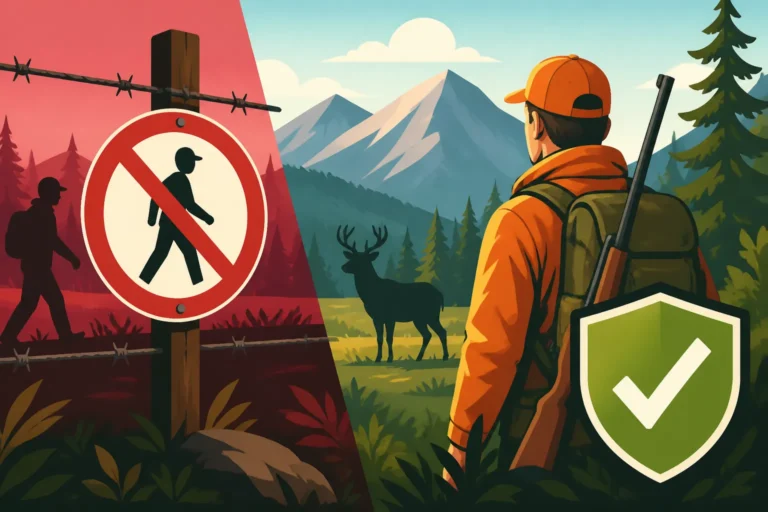
Beyond Crown land, British Columbia also has significant amounts of private land, often owned by large timber companies. These lands can appear just like Crown land, with similar forest types and terrain, but access rules are entirely different. Many private timberlands are gated, restricting vehicle access, sometimes year-round, sometimes seasonally. Some companies offer permits for recreational access, while others strictly prohibit it. It’s a common frustration to drive for miles, only to find a locked gate blocking your path to a promising area.
It's absolutely critical to know where these private boundaries lie. Trespassing, even unknowingly, can lead to fines and loss of hunting privileges. This is where modern mapping apps become invaluable. Tools like onX Hunt, for example, clearly delineate property boundaries, showing you at a glance whether you're on Crown land, private timberland, or another form of restricted access. Always assume a gate is locked for a reason, and if you're unsure about access on private land, it's best to err on the side of caution and find another spot. Ignoring these boundaries can not only ruin your hunt but also give all hunters a bad name. British Columbia Trespass and Private Land Law is something every hunter needs to understand thoroughly.
Lesser-Known Access Points
While FSRs and official trailheads are common, British Columbia's hunting areas also have numerous lesser-known access points. These might include old, overgrown skid trails, decommissioned logging spurs that aren't on modern maps, or even utility corridors like power lines or pipelines that offer long, linear routes into otherwise dense bush. These can be goldmines for hunters looking to escape pressure, but they come with their own set of challenges.
Finding these spots often requires diligent scouting, either in person or using high-resolution satellite imagery on mapping platforms. What looks like a promising faint track on a satellite image might be completely impassable on the ground due to dense brush or blowdowns. Conversely, an obscure game trail might lead you exactly where you want to go. The key is to verify these potential access points whenever possible, perhaps with a short recon trip during the off-season, or by consulting local knowledge. Sometimes, a quiet conversation at a small-town diner can yield incredible insights into these hidden gems.
Strategic Parking for Foot Access
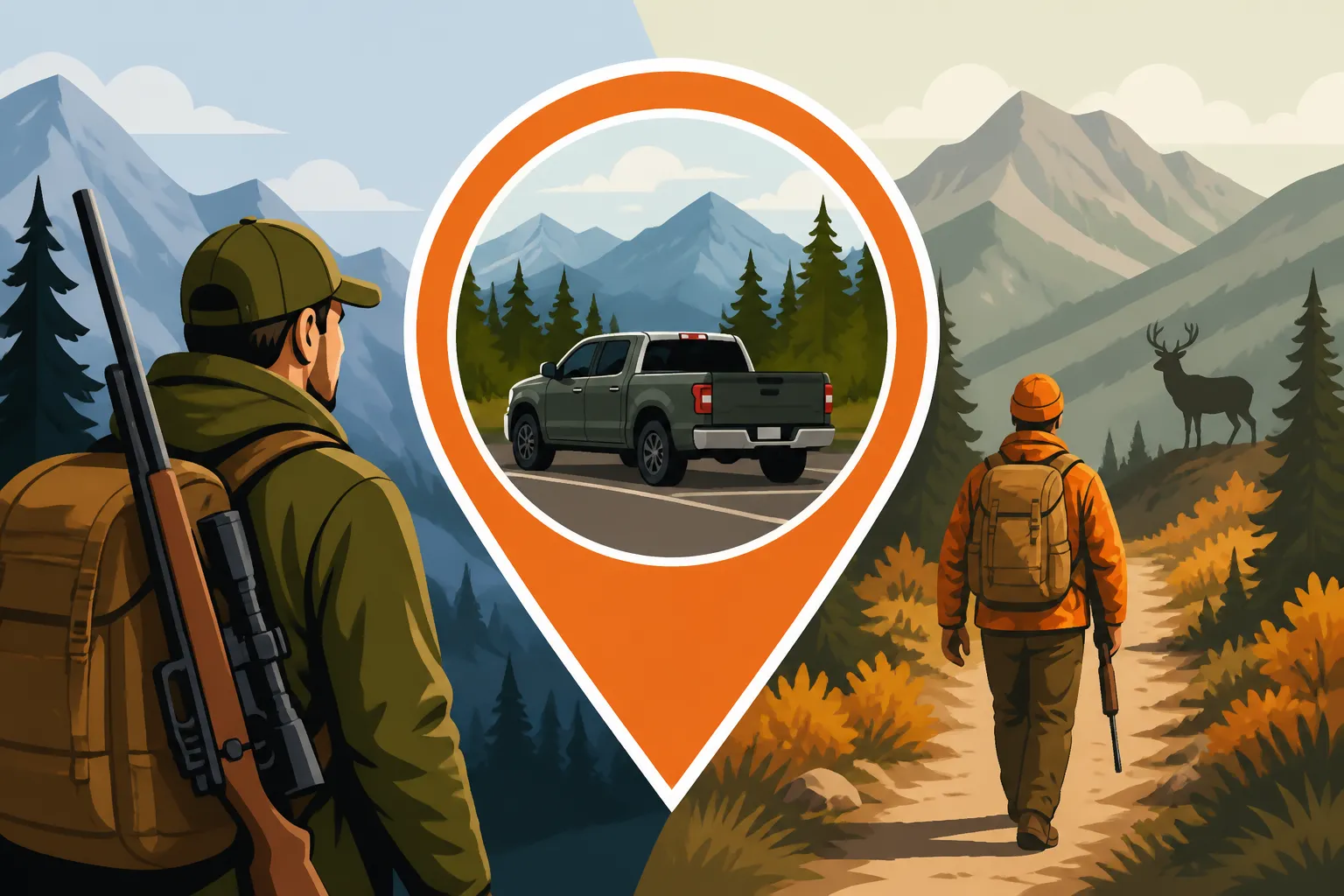
Once you've identified a promising hunting area on Crown land, the next hurdle is finding a safe, legal, and strategic place to park your vehicle before you start walking. This isn't just about convenience; it's about vehicle security, preventing road blockages, and adhering to regulations.
Parking Smart: Safety and Legality
Randomly pulling off to the side of an FSR might seem harmless, but it can create problems. First and foremost, safety: ensuring your vehicle isn't obstructing traffic, especially industrial vehicles like logging trucks, is paramount. These trucks are massive, move fast, and often operate on tight schedules. Parking in a blind corner or on a narrow stretch of road is not only illegal but incredibly dangerous. Always pull completely off the road, leaving plenty of room for large vehicles to pass.
Legality also plays a role. While informal parking is often tolerated on FSRs, specific rules might apply in certain areas, especially near active work sites or within specific management units. Check for any posted signage. Theft and vandalism are also a concern in remote areas, sadly. Parking your vehicle conspicuously or leaving valuables in plain sight is an invitation for trouble. Try to park in a spot that's somewhat concealed from the main road, if possible, or at least visible enough that passing traffic might deter opportunists. Ensuring your vehicle is reliable and well-maintained before heading into these remote spots is also a must; a breakdown hours from the nearest town is a serious problem. Vehicle Rules on British Columbia Crown Land often dictate where you can and cannot park.
| Parking Scenario | Legality & Safety | Considerations for Hunters |
|---|---|---|
| Wide Shoulder on Active FSR | Generally legal if clear | Ensure full vehicle clearance for logging trucks; visible from both directions if possible. |
| Designated Pull-Off/Turnaround | Ideal, often safest | Likely to be used by others; good for vehicle security due to visibility. |
| Deactivated Road Entrance | Legal if no gate/signage | Often leads to good walk-in access; consider vehicle security if remote. |
| Recreation Site Parking Lot | Legal, sometimes fees | Safe for vehicle, but you might be sharing with campers/hikers. Check rules. |
| Narrow Road/Blind Corner | Illegal & dangerous | Avoid at all costs! Risks collision with industrial traffic. |
| Private Land (Unpermitted) | Illegal (trespassing) | Absolutely avoid! Use mapping tools to confirm land ownership. |
Deactivated Roads and Pull-Offs
Deactivated roads are often the holy grail for walk-in access. These are FSRs that have been officially closed to vehicle traffic, often with a large ditch, berm, or gate. While your vehicle can't proceed, your boots certainly can. Parking at the entrance of a deactivated road can provide miles of relatively easy walking into prime hunting territory, often bypassing areas that are heavily road-hunted. These roads frequently become excellent game trails over time, offering clear lines of travel through dense bush.
When parking at a deactivated road, remember the principles of safe and legal parking. Pull well off to the side, ensuring you're not blocking the access point itself, in case equipment or personnel need to get through. Sometimes, other hunters will also be using these spots, so being considerate of space is important. The condition of deactivated roads can vary wildly; some are pleasant gravel paths, while others are severely overgrown, eroded, or crossed by numerous washouts. Always factor in the time and effort it will take to walk these paths. Deactivated Roads on British Columbia Crown Land are a fantastic resource for the prepared hunter.
Trailheads and Recreational Sites
For certain areas, particularly those bordering provincial parks or designated wilderness zones, official trailheads and recreation sites offer established parking. These spots are usually well-maintained, clearly signed, and often provide better security for your vehicle than a random pull-off on an FSR. They are designed for public access, and parking here is generally straightforward and legal.
However, these areas can also attract more recreational users, meaning you might be sharing the trail with hikers, mountain bikers, or other outdoor enthusiasts. This isn't a bad thing, but it's something to be aware of, especially if you're seeking solitude. Always check the specific rules for recreation sites, as some may have camping fees or restrictions on certain activities. Using these sites as a jumping-off point for a hunt means you're operating within an established framework, which can be reassuring when you're deep in the backcountry. Camping Rules on British Columbia Crown Land often go hand-in-hand with parking and access at these sites.
Navigating and Planning Your Walk-In Hunt
Parking your vehicle is just the beginning. The real work starts when you shoulder your pack and begin your walk into the hunting grounds. Effective navigation and meticulous planning are key to making the most of your foot access and ensuring a safe and successful hunt.
Mapping Tools for the Modern Hunter
Gone are the days when a paper map and compass were your only reliable tools. While still essential backups, modern digital mapping apps have revolutionized how we plan and execute walk-in hunts. Applications like onX Hunt and GoHunt provide an incredible level of detail, including property boundaries, topographic maps, satellite imagery, forest cover types, and even potential game migration routes. I use onX Hunt extensively to scout new areas from home, identifying potential parking spots, deactivated roads, and likely game corridors long before I even drive there. It’s an absolute game-changer for understanding the terrain you're about to walk.
Before heading out, download offline maps to your phone or GPS device. Cell service is often non-existent in British Columbia's remote hunting areas, so relying on a live connection is a recipe for disaster. Mark your parking spot, potential game-holding areas, water sources, and escape routes. These tools allow you to visualize elevation changes, plan the least strenuous approach, and identify natural funnels or pinch points that game might use. Learning how to effectively Scouting a British Columbia Management Unit Online can save you countless hours and significantly boost your success rate.
Reading the Landscape for Foot Access
Once you're out of the truck and on foot, your ability to "read" the landscape becomes paramount. A walk-in hunt isn't just about covering distance; it's about moving through the terrain efficiently and quietly, maximizing your chances of encountering game. Look for natural pathways: old game trails, dry creek beds, the edges of clearings, or sparsely treed ridges. These routes often offer easier going than busting through thick underbrush and are frequently used by animals themselves.
Understanding elevation changes is also critical. What looks like a short, steep climb on a map might feel like an endless vertical assault with a heavy pack. Planning your ascent and descent to minimize energy expenditure can make a huge difference, especially if you're planning an overnight trip or know you'll have a heavy load to pack out. Pay attention to how the sun hits certain slopes or how wind currents flow through valleys – these environmental factors dictate game movement and can help you choose the most advantageous route for your stalk. For example, in the mountains, Hunting a Subalpine Basin at First Light often means navigating a challenging approach in the dark.
Planning Your Pack Out Route
This is perhaps the most overlooked, yet critical, aspect of a walk-in hunt: how you're going to get an animal out. It's one thing to walk in light, but it's an entirely different beast to pack out hundreds of pounds of meat, hide, and antlers. Before you even leave your vehicle, consider your pack-out strategy. Where is the closest point you could potentially get a vehicle to? Are there any old roads, trails, or even navigable drainages that would make the retrieve easier?
If you're hunting particularly steep or rugged country, a simple mile walk in can become a multi-hour epic when carrying heavy quarters. Knowing the terrain and planning for the worst-case scenario will save you immense grief. Some hunters even pre-position game carts or cache supplies at strategic points if they know they'll be going deep. Don't let the excitement of a successful hunt overshadow the reality of getting that animal home. It’s a physical challenge that requires forethought. Packing Out of British Columbia's Steep Country is a grueling but essential part of the experience.
Respecting Boundaries and Ethical Considerations
Every hunter has a responsibility to act ethically and legally, especially when it comes to land access. This isn't just about avoiding fines; it's about maintaining a positive public image for hunting and ensuring future access for everyone.
Understanding Trespass Laws
British Columbia's trespass laws are clear: you cannot enter private land without permission. Even if a property isn't explicitly fenced or marked with "No Trespassing" signs, it is still considered private, and you are still legally obligated to have permission. This applies whether you're driving, walking, or even just retrieving an animal that crossed a boundary. The onus is entirely on the hunter to know where they are. This is another area where modern mapping applications really shine, allowing you to quickly verify land ownership.
A common scenario is an animal falling just over a property line. While many landowners are understanding and will grant permission for retrieval, you absolutely must obtain that permission before crossing the line. Showing up on someone's property with a rifle, even with good intentions, can quickly escalate into a negative situation. Always carry a copy of your hunting license and ID, and be prepared to explain your intentions respectfully if you encounter a landowner. Remember, a courteous request is almost always better received than an apology after the fact.
Leaving No Trace and Respecting Other Users
When you're walking into remote hunting areas, you are often sharing that space with countless other users: hikers, campers, trappers, even other hunters. Our actions reflect on the entire hunting community. The principle of "Leave No Trace" is not just for backpackers; it's for hunters too. Pack out everything you pack in, including spent shell casings, food wrappers, and any other garbage. Properly dispose of gut piles away from trails and water sources.
Beyond physical traces, respect the experience of others. If you encounter hikers on a trail, be polite and give them space. If you're on a multi-use trail, consider how your presence might affect others. Parking your vehicle in a way that blocks access for others, or acting disrespectfully, undermines the public's perception of hunters. We want to be seen as responsible stewards of the land, not as individuals who disregard others or the environment.
Communal Parking and Sharing Access
In many popular hunting areas, particularly at the start of general open seasons or for draw hunts, you might find several vehicles parked at a single access point. This communal parking highlights the shared nature of these public lands. When parking, be mindful of others. Don't take up more space than you need, and ensure there's still room for additional vehicles to pull off safely.
Sometimes, establishing communication with other hunters at a shared parking spot can even be beneficial. You might learn about recent game sightings, road conditions, or other helpful information. While competition is a natural part of hunting, a spirit of camaraderie and respect among hunters at shared access points goes a long way. After all, we're all out there for similar reasons, seeking connection with the wild places of British Columbia. It's a privilege to access these lands, and treating them, and each other, with respect ensures that privilege continues for generations to come.
Disclaimer
This article is for general informational purposes only and does not constitute professional advice. Laws, prices and regulations vary by location and change over time. Consult a qualified professional for guidance on your specific situation.