Horse and Backcountry Access in British Columbia
British Columbia is a land of incredible wild beauty and truly epic hunting opportunities, but let's be honest, much of that prime real estate is utterly inaccessible by truck. You can stare at a map all day and see vast swaths of green that seem tantalizingly close, only to find the logging road you were counting on is long deactivated, gated, or simply doesn't go where you need it to. This guide is all about equipping you to push past those vehicle boundaries and unlock the deepest, wildest corners of BC through the power of horses or your own two feet, turning those frustrating dead ends into exciting new beginnings.
The Lure of British Columbia's Backcountry for Hunters
For many of us, the roar of an engine fading into the distance is the real start of a hunt. British Columbia's vastness truly opens up when you commit to leaving the roads behind, whether on horseback or with a pack on your back. It's a different kind of hunting, a more immersive experience that tests your limits and rewards you with a profound connection to the wild.
Why Go Beyond the Road?
Think about it: where do most hunters go? As far as their vehicle will take them, and then maybe a short hike from there. That's why those areas often see more pressure, and the game can be warier, moving deeper into cover or becoming nocturnal. By going beyond the road, you're literally stepping into a different world. You're seeking out unpressured game, animals that haven't heard a truck door slam every morning or seen blaze orange through the trees.
The deeper you go, the more pristine the wilderness becomes. You'll encounter country that truly feels untouched, where the silence is only broken by the wind, a ravens call, or the rustle of an animal moving through the brush. This isn't just about bagging an animal; it's about the entire wilderness experience – the solitude, the challenge, the pure immersion. You learn more about the landscape, more about the animals, and a whole lot about yourself. It's a commitment that pays dividends in memories and satisfaction, regardless of what you punch your tag on.
Understanding British Columbia's Terrain Challenges
Let's not sugarcoat it: British Columbia's backcountry is famously rugged. It's not a gentle stroll through rolling hills. We're talking about steep mountains, dense timber, tangled blowdowns, slick moss-covered rocks, and seemingly endless elevation changes. The weather can turn on a dime, from sunny warmth to freezing rain or snow in mere hours, especially in the mountains. Rivers and creeks can swell quickly, making crossings dangerous or impossible.
The sheer scale of the province means that remote often means truly remote. Cell service is non-existent in much of the backcountry, and help can be days away. This isn't meant to deter you, but to highlight the need for thorough preparation and respect for the environment. Knowing what you're up against, whether it's navigating through an ancient Old Growth Draw or pushing up an Avalanche Chute in September, is the first step in planning a safe and successful trip. These challenges are precisely what makes reaching those deep pockets of wilderness so rewarding.
Horse Packing: Your Equine Advantage
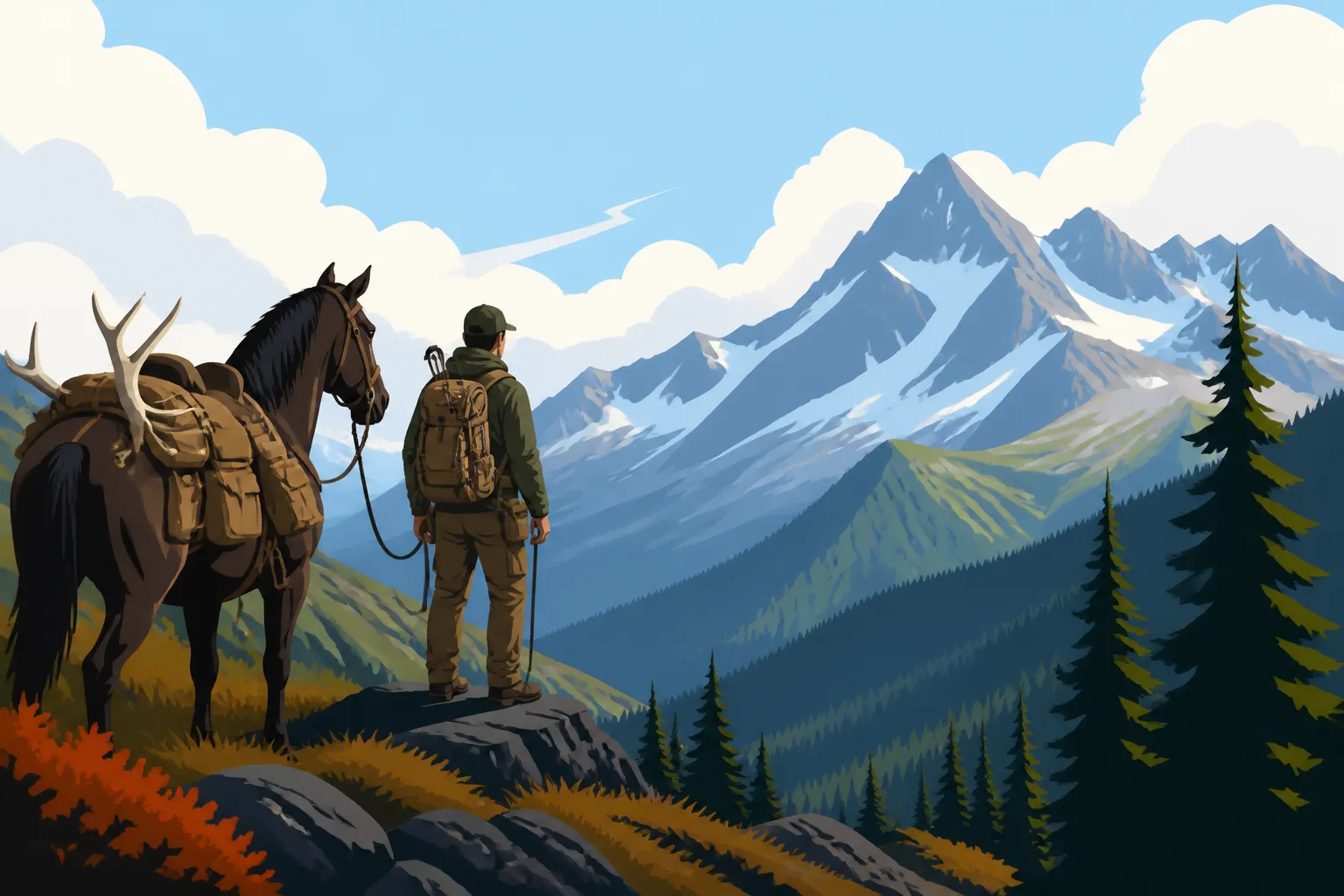
For centuries, horses have been the ultimate backcountry vehicle, and in British Columbia's rugged terrain, they remain an invaluable asset for serious hunters. They allow you to cover significant distances, carry substantial loads, and get into country that would be nearly impossible otherwise.
The Benefits of Hunting with Horses
The biggest advantage of hunting with horses is undeniably their carrying capacity. Imagine trying to pack in enough food, fuel, tents, sleeping gear, and all your hunting essentials for a 10-day trip for multiple people on your back alone. It's a monumental task. With a string of reliable pack horses, suddenly you can bring along more comfortable camp gear, better food, and enough supplies to truly extend your stay deep in the mountains. This also means when you do punch a tag on an animal, the thought of Getting Meat Out of Steep British Columbia Country becomes a lot less daunting. Horses can haul out hundreds of pounds of meat, capes, and horns, saving your back and ensuring you don't waste any precious game.
Beyond carrying capacity, horses are fantastic at covering ground, particularly over varied terrain. They can maintain a steady pace across miles of rolling hills, through thick timber, and up steep mountain trails that would exhaust even the fittest backpacker. This efficiency allows you to reach truly remote hunting grounds quickly, establish a comfortable base camp, and then hunt radiating out from there. Plus, there's just something incredibly classic and satisfying about experiencing the backcountry from horseback; it connects you to a long tradition of wilderness exploration and hunting. For a deeper dive, check out Horseback Hunting British Columbia's Backcountry.
Key Considerations for a Horse Pack Hunt
Venturing into the BC backcountry with horses is not a casual undertaking; it requires significant planning, experience, and specialized knowledge. First and foremost, you need reliable, well-trained horses that are accustomed to mountain terrain, crossing water, and being handled in remote settings. This is not the place for green horses or inexperienced riders. If you don't own such animals or lack the expertise, hiring an experienced outfitter or packer is a wise, if not essential, investment. They know the country, the trails, and how to manage a string of horses safely.
Logistics are complex. You'll need to consider how to transport your horses to the trailhead, where to park trailers safely, and how to manage feed and water for your stock while in the backcountry. Horse care in camp is crucial – you'll need to picket, high-tie, or electric-fence your horses, ensuring they have access to forage or supplemental feed. Equipment like proper pack saddles, panniers, and cinches are critical to prevent sores and keep loads secure on rough trails. A solid understanding of basic veterinary first aid for horses is also a must, as a lame horse deep in the wilderness can quickly turn into a major emergency.
Planning Your Horseback Route and Camp
Careful route planning is paramount when taking horses into British Columbia's backcountry. You can't just follow game trails; you need trails that are navigable for stock. This means researching old forestry roads, established hiking trails, and known pack routes. Topographic maps, like those available through services such as onX Hunt, are essential for identifying suitable terrain, water sources, and potential campsites. Pay close attention to contour lines to avoid impassable draws or excessively steep climbs. When examining these maps, remember to consider the difficulty of Driving a Deactivated Logging Road to get to your starting point.
When selecting a camp location, water is always a primary consideration for both humans and horses. You'll also need suitable grazing or a spot to picket where horses won't get tangled or injure themselves. Flat, well-drained ground for tents and a sheltered area from wind and rain are also vital. Always look for natural barriers or features that can aid in containing your horses, making morning round-ups easier. When scouting, think about how close you are to potential game areas, but also consider factors like exposure, safety from falling snags, and accessibility for daily routines. Remember that in many areas, particularly popular ones, designated campsites might exist, or you might need to establish a truly wilderness camp, following strict Leave No Trace principles.
Backpack Hunting: Embracing the Self-Sufficient Challenge
For those who prefer to rely solely on their own two feet, backpack hunting offers the ultimate test of self-reliance and the most intimate connection with the British Columbia wilderness. It's about shedding the excess and embracing a minimalist approach to access the deepest, most remote areas.
The Appeal of Human-Powered Backcountry Hunts
There's a unique satisfaction that comes from carrying everything you need on your back, navigating by map and compass (or GPS), and earning every mile into truly wild country. Human-powered hunts are characterized by their stealth and quietness. You move through the landscape like another animal, minimizing disturbance and often getting closer to game. There's no vehicle noise, no horses munching, just the sound of your boots on the trail and the wind in the trees. This minimalist approach fosters an incredible sense of freedom and independence. You're not tied to a vehicle or a specific trail; you can go wherever your legs and resolve will take you, provided it's safe and permissible.
It's also an incredibly personal journey. The physical and mental demands of Backpacking Into British Columbia Sheep Country, for instance, force you to confront your limits and discover inner strengths you might not have known you possessed. The rewards are often disproportionately large, not necessarily in antler size, but in the profound sense of accomplishment and the unforgettable encounters with wildlife and untouched landscapes. It's about a deep immersion in the natural world, understanding its rhythms and challenges on a fundamental level.
Essential Gear for a British Columbia Backpack Hunt
Every ounce counts in backpack hunting, so your gear choices are critical. Start with a high-quality, lightweight pack that fits well and can comfortably carry heavy loads when you're packing out meat. Shelter needs to be robust enough to handle BC's unpredictable weather – think a durable, three-season tent or a reliable tarp system. A warm sleeping bag and pad are non-negotiable, even in early fall, as nights can get surprisingly cold at elevation.
Beyond the basics, think about specialized tools. A water filter or purification tablets are essential, as is a reliable cooking system. Navigation tools are paramount: a GPS device, a detailed topographic map, and a compass are all necessities, and knowing how to use them is even more so. Consider a satellite messenger for emergency communication where cell service is non-existent. For animal retrieval, a strong game bag system, a sharp knife, and a lightweight game hoist or rope can make a huge difference. Don't forget layers of clothing suitable for both warm hiking and cold glassing, prioritizing moisture-wicking and waterproof materials. Every item should serve multiple purposes or be deemed absolutely essential to justify its weight. If you're wondering about specific gear for getting your harvest out, check out Packing Meat With a Frame Pack.
Navigating and Scouting Remote Units
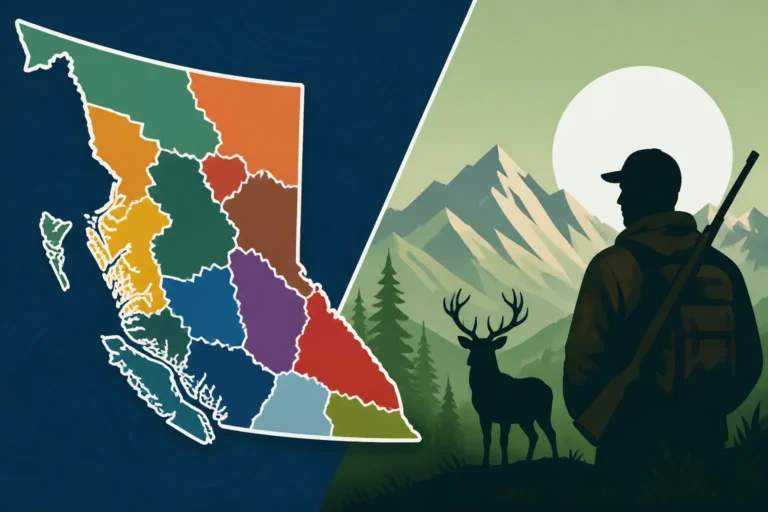
Successfully navigating British Columbia's vast and often unmarked backcountry is a skill that takes practice and good tools. Before you even set foot on the trail, dedicate significant time to scouting your chosen British Columbia Management Units and Regions from home. This is where digital mapping tools truly shine.
Platforms like onX Hunt and GoHunt allow you to overlay satellite imagery with topographic maps, property boundaries, and even game habitat data. You can identify potential access points, mark water sources, pinpoint likely game corridors, and even trace possible routes up drainages or along ridges. Look for key features like Hunting a Subalpine Basin at First Light or Hunting a Burn on a South Slope. These applications allow you to download maps for offline use, which is critical since you won't have cell service.
Once in the field, use your GPS device in conjunction with your downloaded maps and a physical map and compass as a backup. Pay attention to natural landmarks, drainages, and ridge lines to maintain your bearings. Knowing how to read terrain and anticipate what's over the next ridge is an acquired skill that comes from experience. Always be aware of your surroundings, and don't push into areas you're not confident you can navigate safely, especially as daylight fades or weather deteriorates. Being able to read a map like a British Columbia MU map can be the difference between a successful hunt and a serious predicament.
Accessing Trailheads and Remote Drop-Off Points
While the bulk of your backcountry hunt involves human or horse power, actually getting to your starting point often relies on other means. British Columbia's geography demands creativity and sometimes significant investment to reach those true wilderness portals.
Forest Service Roads as Your Gateway
British Columbia's extensive network of Forest Service Roads (FSRs) is the primary artery for accessing vast tracts of Crown land. These roads, often gravel and unmaintained, are your initial gateway to the backcountry. However, they come with their own set of challenges. Many are "deactivated," meaning culverts have been pulled, bridges removed, or sections intentionally made impassable to prevent vehicle access, or to allow for natural remediation. Others are actively used by logging companies, requiring vigilance, proper radio channels, and an understanding of industrial traffic rules.
Before heading out, research current road conditions thoroughly. Government websites, local forestry offices, and even community social media groups can provide valuable, albeit sometimes anecdotal, information on closures, washouts, and gate statuses. A locked gate often means you'll be walking or riding from that point, which can significantly add to your planned distance and time. Always assume that conditions can change rapidly, especially after heavy rain or snow. A reliable 4×4 vehicle with good ground clearance and sturdy tires is often necessary, and carrying a full-size spare, chains, and recovery gear is highly recommended when navigating these sometimes rough and remote routes. Finding Open Forest Roads in British Columbia is a constant dance of research and on-the-ground recon.
Partnering with Air or Water Transport
For truly deep wilderness access, beyond what even the most robust FSRs or horse trails can offer, you'll need to look to air or water. Float planes are a game-changer, allowing you to fly directly into remote lakes or rivers with all your gear, setting up a base camp far from any road. This is particularly popular for Moose Hunting British Columbia's Interior or accessing high alpine sheep country where trails simply don't exist for the last leg of the journey. Charters can be costly, but the time saved and the quality of the hunting experience often make it worthwhile. You'll need to book well in advance, understand weight restrictions, and be prepared for potential weather delays.
Jet boats offer another incredible option, especially for accessing river valleys and lake chains. Many of British Columbia's major rivers and their tributaries are navigable by jet boat, allowing hunters to penetrate deep into areas with no road access, or to quickly move between different hunting zones. Jet Boat Access on British Columbia Rivers can open up vast stretches of prime habitat along river bars and benches. Similar to float planes, this requires specialized equipment and expertise. Hiring a professional jet boat operator who knows the river well is crucial, as hidden snags, shallow gravel bars, and strong currents can pose serious hazards. These methods greatly expand your hunting horizons but require careful planning and often a substantial budget.
Safety and Preparedness in British Columbia's Wilds
British Columbia's backcountry is wild and unforgiving. While the rewards of hunting here are immense, they come hand-in-hand with significant risks. Proper safety planning and preparedness are not just good ideas; they're absolute necessities.
Encountering Wildlife and Bear Safety
When you venture into BC's backcountry, you are entering the domain of some formidable apex predators. Grizzly bears, black bears, cougars, and wolf packs are all present, and encounters are a real possibility. While most interactions are non-aggressive, it's vital to be prepared. Always carry bear spray, know how to access it quickly, and understand how to use it effectively. Firearms should never be your first line of defense against a bear, but should be readily accessible and handled safely.
Practice vigilance: make noise while hiking, especially in dense brush or near water where an animal might not hear you coming. Pay attention to fresh sign like scat, tracks, and claw marks. Store food and attractants securely, preferably in bear-resistant containers or hung from a tree, well away from your sleeping area. If you encounter a bear, know how to react differently for black bears versus grizzlies, and for defensive versus predatory behaviour. Education is your best defense; understanding Bear Safety While Hunting in British Columbia will go a long way in ensuring a safe trip. This is not Disney-level wildlife; these are powerful, wild animals.
Emergency Communication and Navigation
Cell service is virtually non-existent in much of British Columbia's backcountry. Relying on your phone for communication or GPS is a dangerous mistake. A dedicated satellite communication device is arguably the most critical piece of safety gear for any remote hunt. These devices allow you to send and receive text messages, provide your exact location, and most importantly, trigger an SOS call to emergency services if things go sideways. Ensure you test your device before leaving and understand its functionality. Satellite Communication on a Remote Hunt can literally be a lifesaver.
Beyond communication, robust navigation skills are paramount. While GPS devices are incredibly helpful, batteries die, and electronics can fail. A detailed paper map and a reliable compass, and the knowledge to use them, are indispensable backups. Familiarize yourself with the topography of your hunting area before you leave, understanding the major drainages, ridges, and escape routes. Always let someone responsible know your detailed itinerary, including your route, expected return time, and who to contact if you don't check in. Developing a comprehensive Emergency Planning in British Columbia's Backcountry strategy before you leave is non-negotiable.
Physical Conditioning for Backcountry Success
Let's be blunt: British Columbia's backcountry will humble you if you're not in shape. Whether you're riding horses or backpacking, the terrain is demanding, and the elevation changes can be relentless. A successful and enjoyable hunt here requires a solid level of physical fitness. This isn't just about being able to walk; it's about being able to walk with a heavy pack, ascend steep slopes, navigate challenging ground, and still have the stamina and focus to hunt effectively. And then, there's the potentially gruelling task of packing out heavy meat, often through the same difficult terrain.
Start your conditioning program well in advance of your hunt. Focus on cardiovascular endurance through hiking, running, or cycling. Incorporate strength training, particularly for your legs, core, and back, as these will bear the brunt of the work. Practice hiking with a weighted pack on uneven terrain, simulating the conditions you'll face. The better your physical condition, the more you'll enjoy your hunt, the safer you'll be, and the more capable you'll be of capitalizing on an opportunity when it arises. Remember, the mountain doesn't care how badly you want that animal if your body can't keep up.
Preserving the Backcountry Experience
Hunting in British Columbia's backcountry is a privilege, and with that privilege comes a responsibility to protect these wild places for future generations. Our actions in the wilderness have a lasting impact, and adhering to ethical practices ensures that the pristine nature of these areas endures.
Leave No Trace Principles for Hunters
The core tenet of backcountry ethics is Leave No Trace. This means minimizing your impact on the environment to the greatest extent possible. Pack out everything you pack in, including all garbage, spent cartridges, and even organic waste like fruit peels. Aim to leave your campsite looking as if no one was ever there. When nature calls, dig a cathole at least 200 feet from water sources, trails, and camp. Use biodegradable soap sparingly and away from water.
When travelling, stick to existing trails where possible, or spread out in durable areas to avoid creating new ones. When preparing game, carry out all inedible parts, or scatter them widely away from trails and water to allow them to decompose naturally without attracting predators to concentrated areas. Be mindful of fires: use existing fire rings when available, keep fires small, and ensure they are completely extinguished before you leave. Following these principles isn't just about compliance; it's about being a respectful steward of the land.
Respecting Indigenous and Private Land
British Columbia has a complex tapestry of land ownership and use, including vast areas of Crown land, private holdings, and Indigenous territories. Understanding and respecting these boundaries is crucial for ethical and legal hunting. While much of BC's backcountry is Crown land and generally open to hunters, there are exceptions. Private forest lands, even if they appear remote, may have restricted access, gates, or require permits. Always verify access rules for any private land you might encounter or need to cross.
Furthermore, Indigenous peoples hold constitutionally protected Aboriginal rights and title across much of British Columbia. While Crown land remains open for resident hunting, it's vital to be aware of and respect Indigenous communities and their traditional territories. Local knowledge from First Nations can be invaluable, and showing respect for their land and traditions is paramount. Always consult current regulations and maps, and if in doubt about access to a specific area, seek clarification. Unintentionally trespassing or disrespecting land rights can lead to legal issues and erode the privilege of public hunting for everyone. Knowing how to interpret boundaries on your mapping apps is key here, and understanding the general concept of Public Hunting Land in British Columbia will set you off on the right foot.
| Feature | Horse Packing | Backpack Hunting |
|---|---|---|
| Gear Capacity | High (can bring comforts, heavy meat out) | Low (minimalist, essentials only) |
| Speed | Moderate to fast over varied terrain | Moderate (dependent on fitness/terrain) |
| Physical Demand | Moderate (riding, but still demanding work) | High (carrying heavy pack, navigating rough terrain) |
| Stealth | Lower (horses make noise, leave clear signs) | Higher (silent movement, less impact) |
| Cost | High (horse purchase/rental, feed, gear) | Moderate (quality lightweight gear) |
| Required Skills | Horse handling, packing, veterinary, navigation | Navigation, survival, self-reliance, fitness |
| Game Retrieval | Excellent (can haul full animal parts) | Challenging (multiple trips, boning out) |
| Comfort in Camp | Potentially high (can bring larger tents, stoves) | Basic (ultralight, compact camp) |
| Environmental Impact | More noticeable (hoof prints, grazing) | Minimal (Leave No Trace principles) |
| Best For | Extended trips, heavy loads, larger game | Fast, light incursions, ultimate solitude |
Disclaimer
This article is for general informational purposes only and does not constitute professional advice. Laws, prices and regulations vary by location and change over time. Consult a qualified professional for guidance on your specific situation.