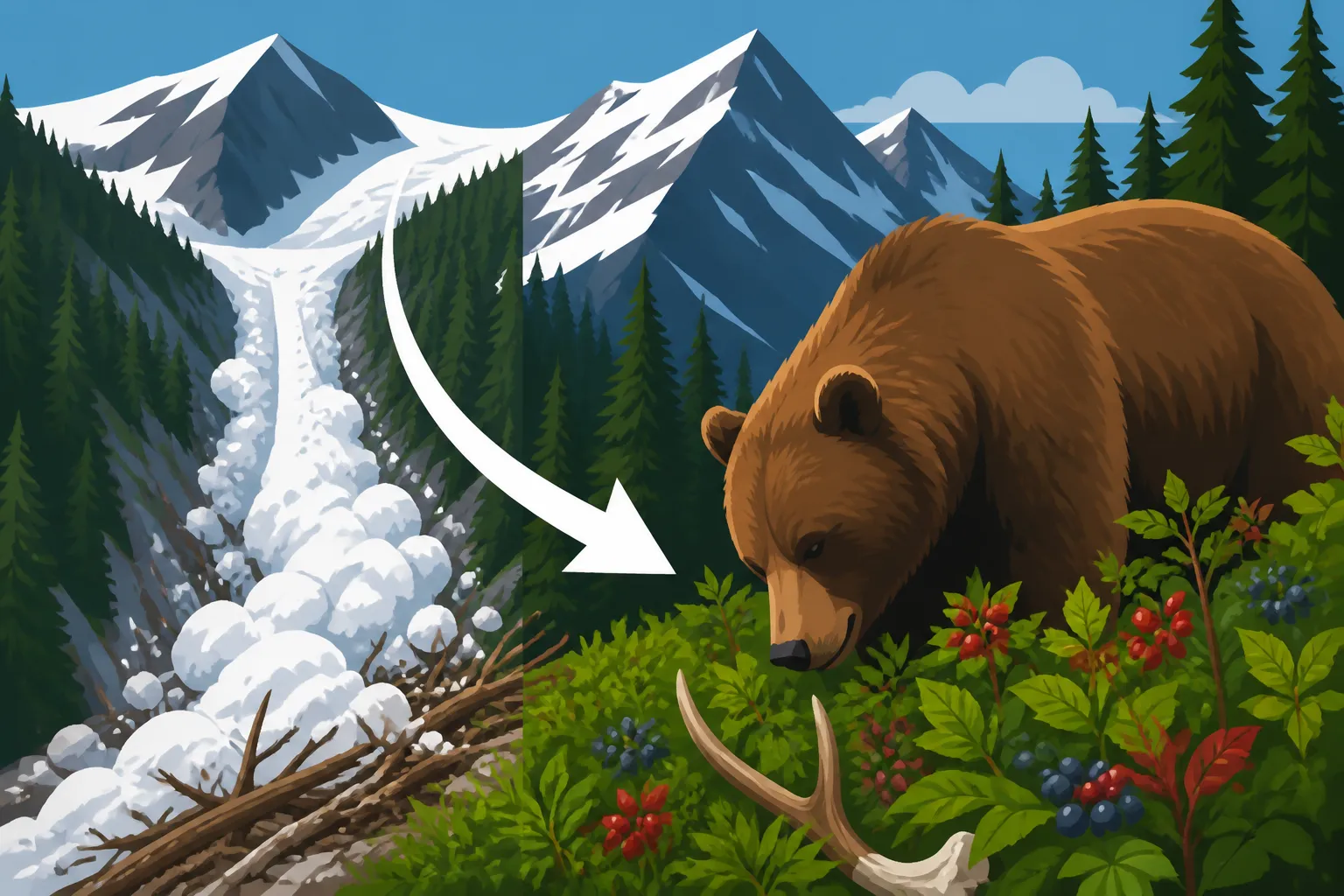
How Avalanche Chutes Feed Bears
For anyone who spends time in the wild country of British Columbia, especially those who venture into the mountains, it's easy to overlook the subtle clues that dictate wildlife movement and feeding patterns. One such feature, often underestimated, is the avalanche chute. These natural clearings, carved by cascading snow, are absolute magnets for bears, providing a seasonal smorgasbord that sustains them from the moment they emerge from their dens until the snow flies again. This guide will reveal the secrets of these productive areas, helping you understand why they are so crucial to British Columbia's bear populations and what makes them such prime locations for observation.
The Springtime Buffet: Early Green-Up and Foraging Opportunities
When the snow begins to recede in the high country, bears are ravenous, their bodies starved after months of hibernation. While much of the forest floor might still be frozen or just beginning to stir, avalanche chutes come alive with an early flush of nutritious greens, offering a critical first meal.
Why Avalanche Chutes Green Up First
Avalanche chutes are essentially natural clearings in the timber, often running for hundreds or even thousands of vertical feet down a mountain face. This open exposure, combined with the way snow melts and water drains through them, creates a microclimate perfect for early plant growth. The sun hits these slopes directly, melting snow faster than in the surrounding shaded forest. As the snow melts, it carries nutrients down the chute, depositing them in the rich soil at lower elevations, effectively fertilizing the entire system. This means that while dense timber might still be holding deep snow, the chutes are already pushing vibrant green shoots. Bears, with their incredible sense of smell and instinct, are drawn to these verdant strips like a magnet. You can see them, often with binoculars from a considerable distance, slowly working their way up or down a chute, methodically grazing on the fresh growth.
It's a stark contrast to the thick, often uniform undergrowth of the untouched forest, which takes much longer to emerge from winter's grip. The disturbed soil, the consistent moisture, and the direct sunlight create an environment where pioneering plant species can truly thrive. This initial burst of easily digestible forage is vital for bears looking to replenish their energy stores and kickstart their digestive systems after a long winter's fast. These early feeding opportunities are not just convenient; they are essential for the bears' recovery and the survival of any cubs born in the den. Many times, if you're out looking for bears early in the season, particularly during British Columbia Spring Bear Season Dates, these chutes are the first place to check.
Key Plant Species That Attract Bears
The plants found in avalanche chutes are specifically adapted to these dynamic, nutrient-rich environments. For bears, these aren't just any greens; they're packed with essential nutrients and calories. One of the most common and sought-after plants is cow parsnip. Its large, broad leaves and hollow stems emerge early and are highly palatable to bears, providing bulk and early nutrition. You'll often see entire patches of it mowed down or trampled where a bear has been feeding. Other important species include various sedges and new grasses, which provide easy-to-digest carbohydrates and fibre. As the season progresses, other flowering plants move in, eventually giving way to the berry crops.
The specific mix of plants can vary depending on elevation and region. In higher alpine chutes, you might find more hardy grasses and low-lying shrubs. In chutes closer to timberline or in more coastal areas, the variety might be even greater, including devil's club and salmonberry. The consistent access to water from melting snow and seasonal rain showers ensures these plants remain lush and productive throughout the spring and early summer. It’s this consistent availability of high-quality forage that makes avalanche chutes such critical habitats, far surpassing the sporadic food sources found in mature forests. Understanding these plant cycles is key to figuring out when and where bears will be actively feeding.
A Seasonal Pantry: From Early Greens to High-Energy Berries
The bounty of an avalanche chute isn't limited to spring. These areas transition into a continuous feeding ground, offering a succession of different food sources that keep bears coming back throughout the warmer months.
The Succession of Forage Through Summer
As spring turns into summer, the types of vegetation available in avalanche chutes evolve, providing a continuous supply of food. The tender green shoots of early spring mature, and new species begin to flourish. This plant succession ensures that the chute remains a productive feeding area for an extended period. For instance, after the initial flush of cow parsnip and grasses, you'll see fireweed emerge, its vibrant purple flowers attracting pollinators, but its leaves and roots also providing sustenance for bears. Ferns, such as lady fern, also grow prolifically in these moist, shaded areas within the chute, offering another food source.
Bears will often follow this progression, sometimes moving up the chute to higher elevations where the green-up is slightly delayed, extending their access to tender growth. This creates a kind of moving buffet line for them. From mid-summer onwards, the focus shifts. As flowering plants go to seed, the real prize begins to ripen: berries. The continuous availability of diverse forage means bears can often spend weeks or even months within a relatively small area of interconnected chutes, moving between elevation bands to capitalize on peak ripeness. This seasonal flow makes them incredibly predictable hotspots, particularly for hunters or photographers who use tools like GoHunt to analyze terrain and historical wildlife data, helping to pinpoint these productive corridors.
Berries: The Ultimate Calorie Boost
When late summer and early fall arrive, avalanche chutes transform into prime berry patches, offering an indispensable food source for bears preparing for winter. Huckleberries, blueberries, and saskatoons are absolute favourites, growing in dense clusters along these open slopes. These berries are incredibly rich in sugars and carbohydrates, providing the concentrated calories bears need to put on critical fat reserves for their long winter hibernation. A bear's sole focus during this time is to eat as much as possible, and these berry-laden chutes make it easy.
You'll often find bears intensely focused on feeding in these patches, sometimes for hours on end. Their movements might be slow and deliberate, or they might move through quickly, raking berries into their mouths with their lips. The sheer volume of berries available in a productive chute can support multiple bears, though they usually keep a respectful distance from one another. This is also when bears can be most visible, especially if they are feeding during daylight hours to maximize their intake. If you're looking for bears in the fall, particularly Hunting Fall Bears on British Columbia Berry Slopes, understanding which chutes historically produce abundant berry crops is paramount. These high-energy food sources are not merely a bonus; they are a fundamental part of the bear's annual cycle, directly influencing their health and reproductive success.
Chutes as Bear Highways and Habitat
Beyond providing a consistent food supply, avalanche chutes serve multiple critical functions for bears, acting as efficient travel corridors, escape routes, and even potential denning sites. They are truly multi-purpose habitats within the mountain landscape.
Travel Corridors and Natural Funnels
Imagine trying to navigate through dense, old-growth timber, where visibility is limited to a few feet and fallen logs create a constant obstacle course. Now picture an open avalanche chute, providing a clear, relatively easy path up or down a mountain. For bears, these chutes are natural highways. They allow for much more efficient travel through otherwise impenetrable terrain, connecting different feeding areas, water sources, and bedding grounds. A bear might use a chute to quickly ascend to a high alpine basin in search of food or to descend towards a river valley. This efficiency of movement is vital, especially when energy conservation is key.
Furthermore, these chutes act as natural funnels. Any game animal moving along a mountain face will often be drawn into the path of least resistance, which is frequently an avalanche chute. This can concentrate bear activity within these linear features, making them excellent locations for observation, particularly from a distance using quality optics. For hunters, knowing these natural travel routes can be invaluable. It's often where you'll find fresh tracks or other signs of recent activity. They can also provide good escape routes for bears if they feel threatened, offering open ground to quickly cover or dense cover at the edges to disappear into. When you're scouting areas, looking at topographical maps on platforms like GoHunt can help you identify these natural funnels before you even set foot in the field.
Thermal Regulation and Denning Sites
Avalanche chutes aren't just about food and travel; they also offer important microclimates that bears utilize for comfort and safety. In the heat of summer, the upper reaches of a chute, especially those with some remaining snow patches or shaded rock faces, can provide cooler air and a respite from the sun. Conversely, in the cooler spring and fall, the open exposure of a chute allows bears to bask in the sun, warming themselves more quickly than they could in the dappled light of the forest. This ability to regulate their body temperature efficiently saves energy and contributes to their overall well-being.
Moreover, the rugged and dynamic nature of avalanche chutes can create ideal denning sites. The jumbled rocks, root wads from dislodged trees, and deep snow accumulation can form natural caves or provide insulation for excavated dens. Bears often look for secure, undisturbed locations for their winter sleep, and the often remote and broken terrain associated with chutes can offer just that. While a bear might not den directly in the path of a future avalanche, the stable edges of a chute or the rock slides adjacent to them provide suitable conditions. Identifying these areas where When British Columbia Bears Leave the Den can be key to understanding early season movements, as they won't travel far from these secure locations initially.
Reading the Signs and Staying Safe in Chutes
Being aware of how bears use avalanche chutes is one thing; recognizing their presence and ensuring your safety while exploring these areas is another. Knowledgeable observation and adherence to safety protocols are crucial.
Identifying Active Bear Feeding Areas
When you're exploring an avalanche chute, bears leave behind a clear trail of evidence. Learning to read these signs is fundamental to understanding their habits and ensuring you're aware of their presence. Fresh bear scat is perhaps the most obvious indicator. The appearance of the scat can tell you a lot about what they've been eating – fibrous spring greens, berries, or even animal remains. If you see scat predominantly composed of purple-stained berry seeds, you know you're in a prime fall feeding zone. What Bears Eat on a Coastal Estuary might differ slightly, but the principle of identifying food sources remains the same.
Beyond scat, look for trampled vegetation. Bears aren't exactly delicate eaters; they'll often flatten large areas of cow parsnip or berry bushes as they feed. Broken branches, especially on berry bushes where a bear might have pulled a branch down to reach ripe fruit, are another sign. Tracks in soft soil or lingering snow patches can also confirm recent activity. On some trees at the edges of chutes, you might even see rub marks or claw marks where bears have scratched, marking their territory or just having a good stretch. Using binoculars or a spotting scope to glass a chute from a safe distance before entering is always a smart strategy. This allows you to identify any bears present without disturbing them.
Safety Precautions and Ethical Considerations
Given the high likelihood of bear activity in avalanche chutes, especially during prime feeding times, safety is paramount. The first rule is always to make noise. Calling out, clapping, or talking loudly as you move through these areas will alert any bears to your presence, giving them a chance to move off before a surprise encounter. Carrying bear spray, readily accessible, is not just a good idea, it's essential. Make sure you know how to use it effectively. Always be aware of your surroundings, paying close attention to wind direction, as bears have an incredible sense of smell.
It's also crucial to avoid approaching bears, particularly sows with cubs. They are extremely protective, and a perceived threat can lead to a dangerous situation. If you spot a bear, give it a wide berth and observe from a respectful distance. If you encounter a bear unexpectedly and it doesn't immediately move off, speak calmly, back away slowly, and avoid direct eye contact. Never run. Understanding bear behaviour and remaining calm are your best defenses. Always adhere to local regulations and ethical hunting practices. Bear Safety While Hunting in British Columbia is not just a guideline; it's a way of ensuring both your safety and the continued health of British Columbia's magnificent bear populations.
By understanding the vital role avalanche chutes play in the life cycle of British Columbia's bears, we gain a deeper appreciation for these powerful animals and the rugged landscapes they call home. These chutes are much more than just scars on a mountainside; they are dynamic ecosystems that offer life-sustaining forage, safe passage, and essential habitat, making them true hot spots for bear activity throughout the seasons.
| Bear Food Source in Avalanche Chutes | Seasonal Availability | Nutritional Value for Bears | Common Locations |
|---|---|---|---|
| New Grasses & Sedges | Early Spring – Mid-Summer | High fibre, digestible carbohydrates | Lower to mid-chute |
| Cow Parsnip (leaves/stems) | Early Spring – Mid-Summer | High bulk, essential minerals | Moist, lower to mid-chute |
| Fireweed (leaves/roots) | Mid-Spring – Late Summer | Carbohydrates, some protein | Throughout chute, especially disturbed areas |
| Huckleberries | Mid-Summer – Early Fall | High sugar, critical fat-building calories | Mid to upper chute |
| Blueberries | Mid-Summer – Early Fall | High sugar, critical fat-building calories | Mid to upper chute |
| Saskatoon/Serviceberries | Mid-Summer – Early Fall | High sugar, essential for pre-hibernation fat | Edges of chutes, lower elevations |
Disclaimer
This article is for general informational purposes only and does not constitute professional advice. Laws, prices and regulations vary by location and change over time. Consult a qualified professional for guidance on your specific situation.