What Counts for a British Columbia Record
You've just wrapped up an incredible hunt in British Columbia, the kind where everything clicked. Maybe it was that monster bull moose you called in, the wary mule deer buck you finally outsmarted, or the elusive black bear that emerged from the timber. Now, staring at your hard-earned trophy, a thought crosses your mind: "Is this thing a record?" It's a natural question, a way to quantify the achievement, but understanding what truly counts for a British Columbia record is more nuanced than just raw size. This guide will help you navigate the world of official scoring, ethical hunting, and what it really means to have a "record-book" animal from BC.
Understanding "Record Book Worthy" in British Columbia
When we talk about a "British Columbia record," it's rarely just a local competition. Instead, it almost always refers to animals taken within the province that meet the stringent criteria of internationally recognized trophy record-keeping organizations. These organizations uphold the highest standards of fair chase and provide a standardized method for comparing trophies from across the continent and, in some cases, the world.
The Different Record Keeping Organizations
There are a few major players in the world of big game record keeping, and each has its own focus and specific criteria. Understanding these distinctions is crucial if you believe your trophy has the potential to be truly exceptional. While there might be local club contests, the records that truly stand the test of time and are recognized across the hunting community come from these established institutions.
First, you have Boone and Crockett Club. This is arguably the most prestigious record-keeping system for North American big game animals, founded on principles of fair chase and wildlife conservation. They focus exclusively on animals taken by legal hunting methods, typically with a firearm, and their entries represent the pinnacle of trophy quality. If someone says "record book," they are often referring to Boone and Crockett. Then there's Pope and Young Club, which is essentially the archery equivalent of Boone and Crockett. They use the same scoring system and uphold the same fair chase ethics but specifically for animals harvested with a bow and arrow. For those who embrace the challenge of Bowhunting British Columbia's September Seasons, Pope and Young is the standard-bearer. Lastly, Safari Club International (SCI) has a more expansive record book, including both North American and international species, and different categories for various hunting methods (e.g., rifle, bow, muzzleloader). While not as strictly focused on North American fair chase as B&C, SCI's book still provides a robust system for recognizing exceptional animals and can be a good option for a British Columbia hunter. Many hunters use resources like GoHunt to research historical data and understand the typical range of scores coming out of particular regions, which can give you a preliminary idea of your animal's potential.
General Principles of Scoring Big Game Animals
Regardless of the specific organization, the fundamental principles of scoring big game animals follow a similar pattern. It's about taking precise measurements that quantify the size and symmetry of horns, antlers, or skulls. It's not just about the overall visual "wow factor" of a trophy, but rather a methodical process that removes subjectivity as much as possible.
The core of trophy scoring revolves around gross versus net scores. A gross score is the total of all positive measurements. A net score, which is what Boone and Crockett and Pope and Young use for official rankings, subtracts any asymmetries or abnormalities from the gross score. This means that a perfectly symmetrical animal might have a lower gross score than a non-symmetrical one, but a higher net score, as points or lengths that don't match on both sides are deducted. This often surprises hunters who are new to the scoring system, as a massive but uneven rack might not score as high "net" as a slightly smaller but more perfect one. Then there's the distinction between typical and non-typical categories. A typical trophy is one where the antlers or horns grow in a relatively standard, symmetrical pattern, true to the species. Non-typical trophies have abnormal points, drop tines, or unusual formations that deviate from the normal growth pattern. These animals are scored in a separate category, acknowledging their unique characteristics rather than penalizing them for being "different." This ensures that incredible, unique animals get the recognition they deserve without being directly compared to perfectly symmetrical specimens. Finally, the measurements themselves involve assessing various aspects like main beam length, point length, circumferences at specific points, and inside spread. Each species has a specific scoring diagram and rules, so a Moose Hunting British Columbia's Interior trophy will have very different measurement points than a Mule Deer Hunting in British Columbia trophy.
Key Criteria for British Columbia Big Game Records
British Columbia is home to a spectacular diversity of big game, and each species has its own unique characteristics that factor into its record book potential. Whether you're looking at magnificent antlers, impressive horns, or formidable skulls, the criteria for what makes a "record" are meticulously defined.
Horn and Antlered Species
For most of British Columbia's iconic big game species, the score revolves around the intricate architecture of their headgear. These measurements capture not just raw size, but also the animal's age, genetics, and the quality of its habitat. Every hunter who has been Glassing an Interior Hillside for Mule Deer knows that even small differences in tine length or main beam sweep can add up on the score sheet.
Mule Deer: When it comes to mule deer, the Boone and Crockett scoring system focuses heavily on symmetry and size. Key measurements include the length of the main beams, the length of all typical points (G-points), the circumference measurements taken at four specific locations on each beam, and the inside spread. Abnormal points are added to the gross score but then deducted to arrive at the net typical score. For a non-typical mule deer, all abnormal points are added to the gross score, and then a larger set of deductions for asymmetry is applied. Hunters often spend years chasing that true record-book buck, understanding the nuances of Judging a Four-Point Mule Deer Buck to determine if their animal has the mass and tine length required.
Moose: British Columbia is renowned for its moose, particularly the Shiras moose and the Canadian moose subspecies found here. Moose scoring is all about the impressive size and spread of their paddles. Measurements include the greatest spread, the width of each palm, the length of each palm, the number of points on each palm, and the circumference of the main beam at its smallest point. The larger and wider the palms, and the more points they carry, the higher the score. A truly giant BC bull moose is an unforgettable sight, and a trophy that takes significant effort, often calling in the rut. Calling Moose in the Rut can sometimes lead to encountering one of these behemoths.
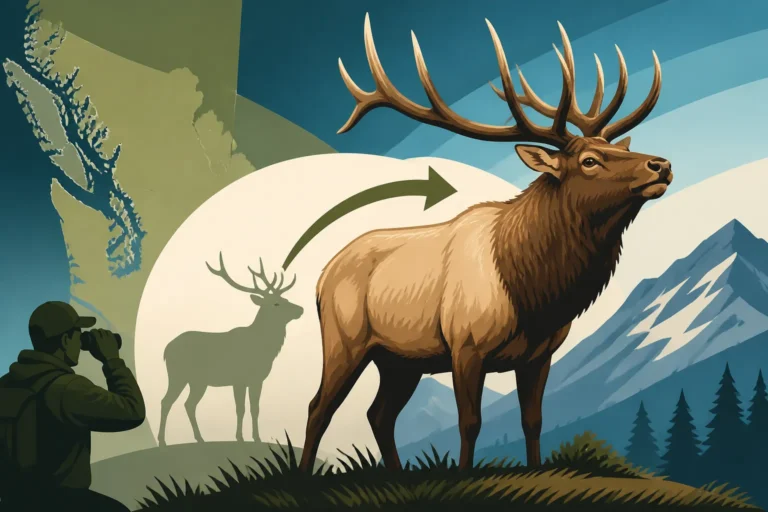
Elk: Both Roosevelt Elk on the coast and Rocky Mountain Elk in the interior of British Columbia produce incredible antlers. Elk scoring is similar to mule deer, focusing on the main beam length, the length of all six typical points (brow, bez, trez, and three upper points), and circumference measurements. The inside spread is also a significant factor. A long, heavy main beam with impressive point length and good symmetry are hallmarks of a high-scoring elk. Many hunters dream of hearing a bull Bugling to a Roosevelt Elk Bull and then harvesting a trophy that will stand for generations.
Sheep and Goats: British Columbia is one of the few places in the world where hunters can pursue multiple species of wild sheep and mountain goats. For sheep like Rocky Mountain Bighorn, California Bighorn, and Stone's Sheep, the score is based on the length of each horn and four circumference measurements taken along the horn's length. The more mass and length the horns possess, the higher the score. A "full curl" ram, as recognized by the regulations and Judging a Ram's Horn Curl and Age, is often a prerequisite for harvest and is highly sought after. Mountain goats, while not strictly "horned" in the same way as sheep, are also scored based on horn length and circumference. A long, thick, symmetrical set of black horns is the key to a high-scoring billy.
Skull and Hide Records for Bears and Predators
While antlers and horns dominate the record books for ungulates, bears and predators like cougars are scored differently. For these formidable animals, it's the skull that tells the story of their size and age.
Black Bears: British Columbia is home to a vast population of black bears, and many grow to truly impressive sizes. For black bears, the Boone and Crockett and Pope and Young systems measure the skull. The score is simply the sum of the skull's greatest length and its greatest width, taken after a mandatory drying period. The bigger the bear, the larger its skull, and thus the higher the score. Hunters often need to be skilled at Judging a Boar From a Sow With Cubs in the field to ensure they are making an ethical and legal harvest choice. GoHunt can be an invaluable tool for researching past harvest sizes in specific management units, giving you an idea of the trophy potential for black bears in a particular area.
Cougars: Similar to bears, cougar trophies are scored based on their skull measurements. The greatest length and greatest width of the skull are added together to determine the score. A mature tom cougar can have a surprisingly large and heavy skull, reflecting its predatory power. These hunts are incredibly challenging, often involving tracking through rugged terrain or utilizing hounds. While the official records focus on skull measurements, many hunters also consider the quality and size of the hide to be an important aspect of the trophy, even if it's not formally scored.
Wasting Game Meat: An important ethical consideration, and one enshrined in British Columbia regulations, is the prohibition against wasting game meat. Regardless of whether an animal is record-book size or not, hunters are legally and ethically obligated to retrieve and utilize all edible portions of the animal. This means that focusing solely on the "trophy" at the expense of proper Meat Care in British Columbia's Warm Early Seasons or retrieval is never acceptable.
| Species Category | Primary Scoring Criteria | Typical Measurements | Minimum Score (B&C, Rough Example) |
|---|---|---|---|
| Deer (Mule/Blacktail) | Antler Size & Symmetry | Main Beam Length, Tine Length, Circumferences, Inside Spread | ~170 (Typical) / ~195 (Non-Typical) |
| Moose | Paddle Size & Spread | Greatest Spread, Palm Width, Palm Length, Points, Circumferences | ~170 (Typical) |
| Elk | Antler Size & Symmetry | Main Beam Length, Tine Length, Circumferences, Inside Spread | ~360 (Typical) / ~385 (Non-Typical) |
| Sheep (Bighorn/Stone's) | Horn Length & Mass | Horn Length, Circumferences (4 points) | ~160 |
| Mountain Goat | Horn Length & Mass | Horn Length, Circumferences | ~47 |
| Black Bear | Skull Size | Greatest Length + Greatest Width | ~19 |
| Cougar | Skull Size | Greatest Length + Greatest Width | ~15 |
Note: The minimum scores provided above are approximate for Boone and Crockett entry; exact figures should always be verified on the official Boone and Crockett, Pope and Young, or SCI websites.
Minimum Scores and Fair Chase Rules
Every record-keeping organization establishes minimum scores that an animal must meet to be considered for entry into its record book. These minimums are designed to ensure that only truly exceptional animals are recognized, maintaining the prestige and integrity of the records. For example, a mule deer might need a net typical score of around 170 inches to make the Boone and Crockett Awards book, and even higher to make the All-Time list. These minimums vary by species and by organization, so it’s always important to consult the specific rulebook for the species you’ve harvested.
Beyond the numbers, the concept of fair chase is absolutely paramount. All major record-keeping organizations, especially Boone and Crockett and Pope and Young, are founded on strict fair chase ethics. This means the animal must be taken legally, ethically, and without undue advantage over the animal. This includes rules against hunting from vehicles, using artificial lights, or any method that removes the challenge and inherent wildness of the hunt. In British Columbia, adhering to all provincial hunting regulations, as outlined in British Columbia's Two-Year Regulations Synopsis, is a fundamental aspect of fair chase. Using a tool like GoHunt to understand historical harvest trends can inform your hunting strategy, but it never supersedes the ethical responsibility to hunt within the spirit of fair chase. Taking a record-book animal under questionable circumstances diminishes the achievement, not just for the individual, but for the entire hunting community.
The Process of Getting Your British Columbia Trophy Scored
You've put in the hard work, made an ethical shot, and now you have an animal that might just be "the one." The journey from the field to the record book involves several distinct steps, each requiring patience and precision. It's not a rush job; proper preparation is key to an accurate and accepted score.
Preparing Your Trophy for Measurement
The scoring process doesn't begin the moment you retrieve your animal. There's a crucial preparation period that ensures the skull, horns, or antlers are stable and ready for accurate measurement. Ignoring these steps can lead to an invalid score or unnecessary delays.
For horned and antlered animals, the most critical step is the drying period. Antlers and horns, being organic material, contain moisture that will dissipate over time, causing slight shrinkage. To get a stable, accurate measurement, Boone and Crockett, Pope and Young, and SCI require a minimum 60-day drying period after the skull has been properly cleaned. This means no measuring right after the hunt! For deer, elk, and moose, the skull cap with antlers attached needs to be cleaned of all flesh and membrane. This might involve boiling, beetle cleaning, or maceration. For sheep and goats, the entire skull must be retained and cleaned. Ensuring that the skull is properly cleaned is essential, as any remaining tissue can cause decay or interfere with accurate measurement.
For bears and cougars, the skull also requires a thorough cleaning and the same 60-day drying period. The skull must be complete, with no breaks, and all flesh, cartilage, and membranes removed. Many hunters opt for professional taxidermy services for skull cleaning, as they have the expertise and tools to ensure the skull is prepared correctly without damage. It's important to keep the trophy in a stable environment during the drying period, away from extreme heat or humidity, which could cause cracking or further shrinkage. Taking a photo of the trophy at the time of harvest can be a good reference, but remember, the measurements are always taken after the full drying period.
Finding a Certified Scorer in British Columbia
Once your trophy has completed its mandatory drying period and is properly prepared, the next step is to locate a certified measurer. You can't just have anyone with a tape measure score your trophy; it needs to be an official, certified individual recognized by the specific record-keeping organization.
Each organization maintains a directory of certified measurers. For Boone and Crockett and Pope and Young, you can usually find a list on their respective websites. These individuals have undergone training and passed rigorous exams to ensure they understand the complex rules and can apply them consistently. In British Columbia, there are certified measurers located in various communities, from the Okanagan Valley to the Peace River region. It's a good idea to contact a few different measurers, introduce yourself, and discuss their availability and any fees they might charge for the service. They are often volunteers who are passionate about big game and conservation. When you contact a measurer, be prepared to share details about your hunt and the trophy, as they will need to ensure it meets the fair chase requirements. They will also instruct you on how to properly bring the trophy to them for the scoring session. Sometimes, a measurer might also be a good resource for questions about British Columbia's Compulsory Reporting Rules for certain species, ensuring you've completed all necessary steps after your successful hunt.
Submitting Your Entry and What to Expect
After your trophy has been officially measured by a certified scorer, the final stage is submitting the paperwork to the record-keeping organization. This is where your score becomes part of the official records.
The scorer will typically complete the official score chart, which meticulously details every measurement. You, as the hunter, will need to complete an affidavit attesting to the fair chase nature of the hunt and providing information about where and when the animal was harvested. This includes the specific Management Unit, date, and method of take. This affidavit is a crucial component, as it reinforces the ethical standards of the record book. You'll then submit the completed score chart, affidavit, and any required fees to the organization. For Boone and Crockett, for example, there's usually a processing fee. The organization will review your submission, and if everything is in order, your trophy will be entered into their record book. This process can take some time, as submissions are often reviewed in batches. You might receive a certificate, and your trophy will be listed in their publications and online databases. This is a moment of immense pride for hunters, seeing their achievement recognized alongside other exceptional animals. Don't forget that many species in British Columbia still require Which Species Still Need Compulsory Inspection, which is a separate process from official trophy scoring but just as important for wildlife management data.
The Value Beyond the Score
While achieving a record book score is undoubtedly a remarkable accomplishment, the true value of a successful hunt in British Columbia often extends far beyond the numbers on a score sheet. It's about the entire experience, the personal growth, and the contribution to a larger conservation effort.
Personal Achievement vs. Public Recognition
For many hunters, the quest for a "record book" animal is deeply personal. It represents years of honing skills, enduring tough conditions, and intimately understanding the habits of big game. The journey to harvest a trophy animal, whether it makes the book or not, is a profound experience that builds character and creates lasting memories.
The moment you stand over a hard-earned animal, especially after a challenging hunt like Backpacking Into British Columbia Sheep Country, the sense of accomplishment is immense, regardless of the tape measure. This internal satisfaction is often far more meaningful than any public recognition. The shared stories with hunting partners around a campfire, the lessons learned from mistakes, and the sheer joy of being in British Columbia's wild places — these are the true trophies. Public recognition, in the form of a record book entry, is a wonderful bonus, a testament to an extraordinary animal and a well-executed hunt. It offers a way to commemorate an exceptional animal and share its story within a broader community of ethical hunters. However, it's vital to remember that not every magnificent animal will make the book, and that doesn't diminish the quality of the hunt or the trophy in the slightest. The real success is in the experience itself and the personal connection forged with nature.
Using Data for Future Hunts
The comprehensive data compiled by record-keeping organizations isn't just for bragging rights; it's a valuable resource for understanding big game populations, habitat quality, and trophy potential across different regions. This information can be a powerful tool for ethical hunters looking to plan future adventures.
By studying record book entries, you can identify patterns: which British Columbia Management Units consistently produce high-scoring animals, what time of year these animals are typically harvested, and even the general age classes that yield the largest trophies. This kind of data-driven approach, often facilitated by platforms like GoHunt that aggregate and analyze harvest information, can help you make more informed decisions when applying for draw tags or planning general open season hunts. For instance, if you're interested in Hunting Roosevelt Elk in British Columbia Old Growth, historical records might highlight specific areas or habitat types that are more likely to hold larger bulls. This doesn't guarantee success, as hunting is always unpredictable, but it certainly improves your odds and helps you focus your efforts in promising areas. This strategic planning also extends to understanding the specific regulations, like British Columbia's Four-Point Antler Restriction in some areas, which are designed to manage herds for sustainable trophy quality.
Conservation and Legacy
Ultimately, the pursuit of record-book animals is deeply intertwined with wildlife conservation. The existence of large, healthy trophy animals is a direct indicator of robust, well-managed wildlife populations and pristine habitats. Hunters, through their license fees, conservation stamps, and participation in organizations like Boone and Crockett, are major contributors to these conservation efforts.
Every record-book animal tells a story of successful wildlife management and the importance of preserving wild spaces. The funding generated by hunting, directly and indirectly, supports habitat restoration, anti-poaching initiatives, and scientific research that benefits all wildlife, not just game species. When you harvest a record-book animal in British Columbia, you become part of that legacy, showcasing the success of conservation efforts in this incredible province. It’s a testament to the fact that responsible hunting, far from being detrimental, is a vital component of modern wildlife management. By adhering to fair chase principles, respecting game laws, and promoting ethical conduct, hunters ensure that future generations will also have the opportunity to pursue magnificent animals and perhaps even achieve a "British Columbia record" of their own.
Disclaimer
This article is for general informational purposes only and does not constitute professional advice. Laws, prices and regulations vary by location and change over time. Consult a qualified professional for guidance on your specific situation.